
Paving Contractor Insurance by State
Virginia Paving Contractor Insurance
Virginia licenses paving and sealcoating as a contractor specialty, outlaws high-PAH pavement sealer, prequalifies every VDOT bidder and requires covered employers to carry workers’ compensation.
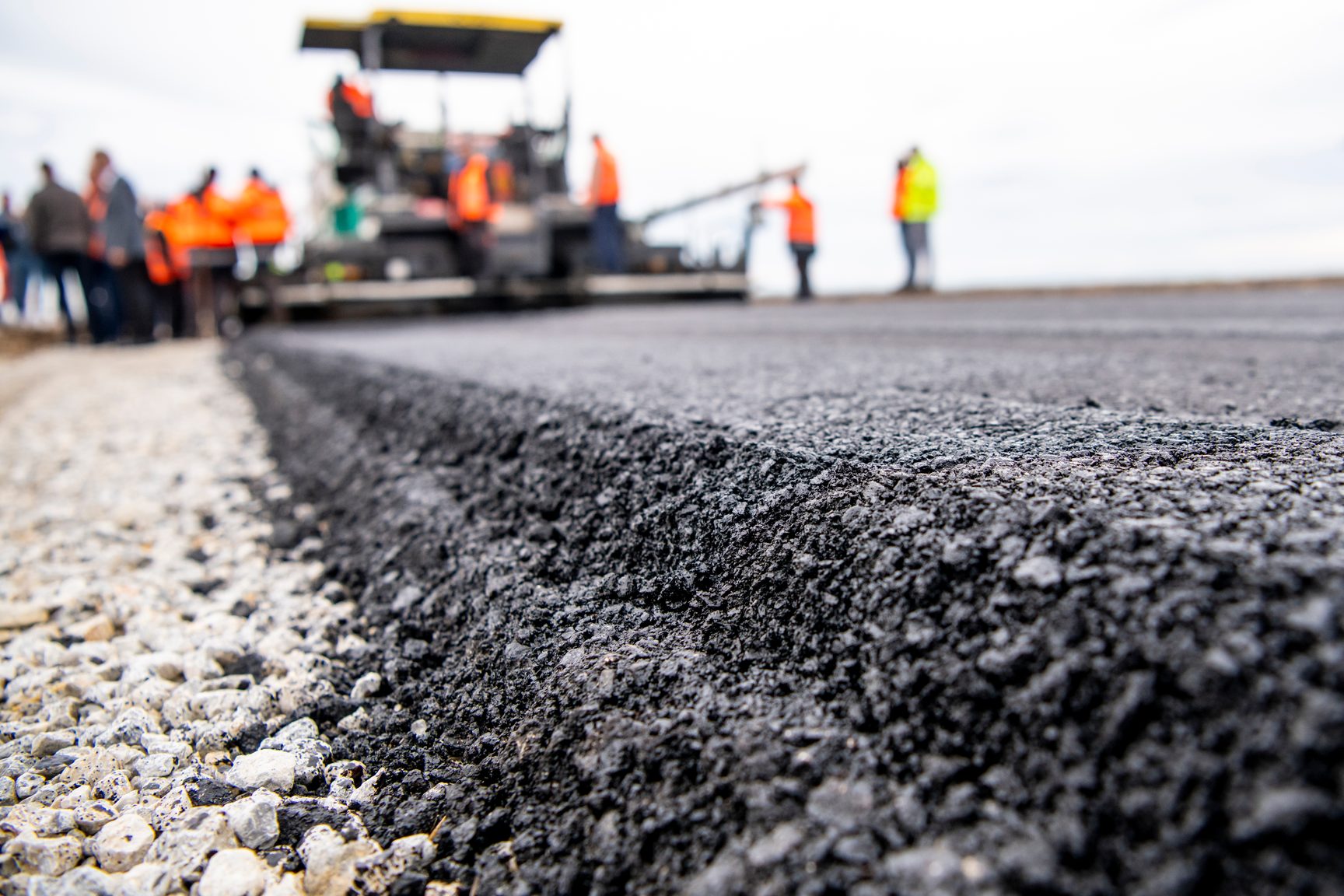
For a Virginia paving, sealcoating or striping firm, the insurance program is general liability, contractors equipment, commercial auto, workers’ compensation and property, and Virginia law shapes a good deal of what each of those policies has to prove. The Commonwealth licenses the work through its contractor board, outlaws high-PAH pavement sealer, prequalifies every firm that bids its transportation department’s contracts, and makes workers’ compensation compulsory with no state fund to buy from.
A sealcoating crew on a shopping-center lot meets the license and the sealer law before it meets the owner’s contract; a paving firm subcontracting on a state highway meets prequalification, bonding and certificate deadlines on top of both. Below, every layer is quoted from the authority that creates it, followed by what it changes in the program.
Licensed by the Board for Contractors: where paving and sealcoating sit
Virginia makes anyone who contracts to build, repair or improve property owned by someone else hold a license from the Board for Contractors, which sits within the Department of Professional and Occupational Regulation. The Board’s rules give asphalt paving and sealcoating a specialty of their own, reaching subdivision streets, driveways and parking lots, and its highway/heavy classification lists paving and road marking among the functions its contractors carry out.
The license has two parts, a class that caps the value of work a firm may take on and a classification or specialty that sets the kind of work, and contracting without a license, or without the proper class for the value of the work, is a criminal misdemeanor. A contractor that works unlicensed generally cannot enforce its contract, although the statute leaves room when the work was performed in good faith without knowing a license was needed. Work bid for the Virginia Department of Transportation on a highway or bridge is exempt from the chapter, while every other contractor working for a government or governmental agency must be licensed. Striping has no specialty of its own: road marking appears only among the highway/heavy functions.
Authority Code of Virginia §§ 54.1-1100, 54.1-1101(A)(4), 54.1-1103(A), 54.1-1115; 18VAC50-22-20; 18VAC50-22-30 · read the source · checked
Virginia starts from a flat prohibition on unlicensed contracting:
“No person shall engage in, or offer to engage in, contracting work in the Commonwealth unless he has been licensed under the provisions of this chapter.”
For this trade the Board’s sorting is unusually clean. Asphalt paving and sealcoating are written into the same specialty, and the definition reaches the surfaces a lot contractor works on every week:
“means the service that provides for the installation, repair, improvement, or removal of asphalt paving or sealcoating, or both, on subdivision streets and adjacent intersections, driveways, parking lots, tennis courts, running tracks, and play areas, using materials and accessories common to the industry.”
Striping has no specialty of its own
Road marking appears among the highway/heavy functions and nowhere else in the Board’s scheme; no specialty is written for parking-lot striping. This page will not fill that gap with a guess. A firm that stripes and does no paving or sealcoating should describe its work to the Board for Contractors, Virginia Department of Professional and Occupational Regulation and keep the written answer, because contracting under the wrong license is a misdemeanor and, as quoted below, can leave the firm unable to enforce its own contract. The striping program is written around the exposures of paint on live lots, whatever license the firm ends up holding.
The highway exemption, read with the paragraph that follows it
The contractor chapter lists work it does not reach, and department road work is on that list:
“Work bid upon or undertaken for the Department of Transportation on the construction, reconstruction, repair, or improvement of any highway or bridge;”
Read alone, that looks broader than it is. The same section closes by pulling every other government job back in:
“All other contractors performing work for any government or for any governmental agency are subject to the provisions of this chapter and are required to be licensed as provided herein.”
So a city street, a county parking lot or a school district’s bus loop needs the license, even where a department highway contract would not. Getting it wrong costs more than a fine:
“A construction contract entered into by a person undertaking work without a valid Virginia contractor's license shall not be enforceable by the unlicensed contractor undertaking the work unless the unlicensed contractor (i) gives substantial performance within the terms of the contract in good faith and (ii) did not have actual knowledge that a license or certificate was required by this chapter to perform the work for which he seeks to recover payment.”
The license also travels with the certificate. Owners and permit offices commonly ask for proof of liability coverage beside the license number, and the general liability program is what answers them, with the additional insured and primary wording each owner names.
High-PAH sealer: banned from sale, then from use
Virginia law outlaws high-PAH pavement sealant, a sealer for asphalt surfaces such as driveways and parking lots whose polycyclic aromatic hydrocarbon content passes the share by weight the statute sets. Retail sale and distribution were barred first, with a retailer allowed to sell through stock already on hand, and applying or using the product became unlawful from a later date the statute sets.
A violation draws a civil penalty paid into the Virginia Environmental Emergency Response Fund; the section names no agency to administer it and prints no exemption for any place or owner. Because the test is chemistry rather than the words coal tar, a sealcoating crew needs the PAH content of whatever sealer it puts down, on any asphalt surface in the state.
Authority Code of Virginia § 62.1-196.1; § 10.1-2500(B)(4) · read the source · checked
The statute bans no brand by name. It defines the product by its chemistry:
“"High-PAH pavement sealant" means a sealant product intended for application on asphalt pavement surfaces, including driveways and parking lots, containing levels of polycyclic aromatic hydrocarbons in excess of one percent by weight.”
Retail sale was barred first, with a sell-through for stock a retailer already held:
“No person shall sell or distribute at retail or offer for retail sale or distribution a high-PAH pavement sealant on or after July 1, 2024. This subsection shall not restrict the continued sale of such a product by a retailer of any existing inventory in stock on July 1, 2024.”
Application followed, and that subsection reaches anyone holding a sprayer or a squeegee:
“No person shall apply or use a high-PAH pavement sealant on or after July 1, 2025.”
The use bar carries no matching sell-through, so a drum a retailer was allowed to sell is not thereby lawful to spread. This is a sale-and-use law, not a labeling rule, and it does not say how a buyer learns a product’s PAH content, so the contractor has to ask the supplier and keep the answer. The consequence the section prints is a civil penalty:
“Any person who violates any provision of this section is subject to a civil penalty of $250, to be paid into the state treasury and deposited by the State Treasurer into the Virginia Environmental Emergency Response Fund established in § 10.1-2500 .”
Nothing in the section assigns an agency to administer it, and this page names none. The exposures the sealcoating program is built around come with any sealer — overspray on a parked car, tracking into a storefront, runoff toward a drain before it cures — and whether a spill reaching water reads as a liability or a pollution loss is a question of policy wording.
Bidding VDOT work: prequalification first, bonds and certificates at award
The Virginia Department of Transportation will not take a bid or proposal on the contracts it administers from a firm it has not prequalified, and its rules extend the requirement to subcontractors before they start work, with first-tier subcontractors named on its program page unless a contract says otherwise. The application covers ownership, the experience of the firm’s people, safety and performance history and equipment, and a firm may list the work classifications it seeks, among them asphalt concrete paving, asphalt repairs, slurry seal of pavement and pavement markings.
Prequalifying buys no insurance and posts no bond, although the application needs a letter from an insurance company certifying the firm’s workers’ compensation experience rating. Surety and coverage attach at award: VDOT’s rules hold every prime contractor to the bid-bond and contract-bond sections of its specifications notwithstanding prequalification, and a winning bidder that fails to furnish acceptable bonds, workers’ compensation certificates and certificates of liability coverage for injury to others and their property in time loses the award and its proposal guaranty. The bond sections apply above a contract size the specifications print, not to every job.
Authority Code of Virginia § 2.2-4317(A) and (F); VDOT Rules Governing Prequalification, Parts II and III; VDOT Road and Bridge Specifications §§ 102.01, 102.07, 103.05, 103.06, 103.07 · read the source · checked
Qualification is not only for the prime. The rules put it ahead of the first bid and ahead of a subcontractor’s first day on site:
“All Contractors must be Prequalified prior to submitting a bid or proposal as a Prime Contractor, or beginning work as a Subcontractor, and must meet the following requirements, unless otherwise excluded from Prequalification by the Road and Bridge Specifications.”
“In addition to prime contract work, prequalification is also required for first-tier subcontractors, unless otherwise indicated in the contract.”
Equipment under the firm’s control is part of the application, and it is the same fleet the contractors equipment floater schedules; a single list for both avoids the mismatch a reviewer notices first. The classifications a firm can seek include several that describe this trade as the department prints them:
The only insurance paper prequalification asks for proves a number rather than a policy:
“EMR Letter: A current certification of EMR issued by an insurance company that is registered active and in good standing in the Commonwealth.”
That rate comes out of the firm’s own claims history, so the safety record the workers’ compensation program builds is also a line on the prequalification file.
Bonds and certificates after the award
Qualifying does not excuse a prime from bonding:
“All Prime Contractors must comply with the bonding requirements in Sections 102.07 and 103.05 of the Road and Bridge Specifications notwithstanding Prequalification.”
The bond sections reach only contracts above a size the specifications set. Every winning bidder, though, faces a short window to deliver the paperwork:
“The successful bidder’s failure to furnish to the Department acceptable bonds, workers’ compensation insurance certificates or the Contractor’s Bodily Injury and Property Damage Liability Insurance certificates within 15 days after the date of Award Recommendation Letter shall be considered just cause for cancellation of the award and forfeiture of the proposal guaranty.”
A surety bond is written on the balance sheet and a certificate on the policies, and both have to be ready the week an award letter arrives, not the week after.
Workers’ compensation in Virginia: compulsory, and bought privately
Every employer that Virginia’s Workers’ Compensation Act reaches must insure the payment of compensation, by a policy from an insurer authorized to write the line in the Commonwealth, or by one of the other routes the statute lists, such as the Virginia Workers’ Compensation Commission’s certificate as an individual self-insurer. The Commission states plainly that Virginia has no State Fund.
The Act leaves out a business that regularly has fewer employees in the same business in Virginia than the number it prints, unless it elects coverage, and the Commission counts a hiring contractor’s subcontractors’ employees toward that number when they do the same trade or fill the contractor’s contract. Once coverage is required, the Commission says there are no waivers and no exceptions.
Authority Code of Virginia §§ 65.2-800(A), 65.2-801(A), 65.2-101 · read the source · checked
Of the routes the statute lists for meeting the duty, the first is the one a paving firm takes:
“Insuring and keeping insured his liability in an insurer authorized to transact the business of workers' compensation insurance in this Commonwealth;”
There is no public fund to fall back on, and the Virginia Workers’ Compensation Commission puts it without qualification:
“Virginia does not have a State Fund. Coverage is available through an insurance agent or carriers.”
The Act does leave very small employers outside it, but that exclusion has to be read with the Commission’s counting rule beside it:
“Employees of any person, firm or private corporation, including any public service corporation, that has regularly in service less than three employees in the same business within this Commonwealth, unless such employees and their employers voluntarily elect to be bound by this title.”
“If a business hires subcontractors to perform the same trade, business or occupation, or to fulfill a contract of the business, the subcontractors’ employees are included in determining the total number of employees.”
A small sealcoating or striping outfit that hires subcontractors for the same work can cross the line without a single new hire. Once it does, the Commission leaves no room for argument:
“For those employers required to have coverage, it is mandatory; there are no waivers and no exceptions.”
The Bureau of Insurance, State Corporation Commission regulates the insurers that write this line and the rest of the program. How wages divide among paving, sealcoating and striping, how a working owner is treated, and what a subcontractor must show before it steps onto the job are worked through on the workers’ compensation page.
The Virginia agencies a paving firm answers to
Each agency below touches a different part of the business, and none of them speaks for the others:
Virginia paving markets and their VDOT districts
The department maintains state roads through construction districts and publishes the counties and cities each covers. Every market below is an independent city the department lists by name inside a district; no population, traffic or market-size figure is attached.
Virginia Beach
City of Virginia Beach (independent city, listed by VDOT among the district’s cities). Hampton Roads District.
The card names the city itself, not a county around it. A private lot contract here and a state-road subcontract nearby carry separate insurance articles and separate certificates.
Richmond
City of Richmond (independent city, listed by VDOT among the district’s cities). Richmond District.
City and district share a name, which makes it easy to mistake whose job a crew is on. The contract settles that, and the certificate follows the contract.
Alexandria
City of Alexandria (independent city, listed by VDOT among the district’s cities). Northern Virginia District.
A district named for its region rather than a city. City streets, private lots and state roads each bring a different owner and different additional insured wording.
Roanoke
City of Roanoke (independent city, listed by VDOT among the district’s cities). Salem District.
The district that lists this city is named for another place. Moving between city and state work changes the owner along with the job.
Lynchburg
City of Lynchburg (independent city, listed by VDOT among the district’s cities). Lynchburg District.
City and district share a name, yet a city contract and a district contract remain separate owners with separate paperwork.
Charlottesville
City of Charlottesville (independent city, listed by VDOT among the district’s cities). Culpeper District.
A district named for another place. Bidding state work across it puts trucks and trailers on the road between sites, and that driving belongs on the vehicle schedule.
What sets the price of a Virginia paving program
What moves the price of a paving program — the mix of paving, sealcoating and striping work, the payroll and loss history behind it, and how workers compensation is bought — is set out in our national guide to what paving contractor insurance cost depends on. This page keeps to Virginia’s rules, agencies and markets.
Where Virginia paving claims tend to come from
Patterns, not statistics, and no figure attached to any of them.
Fresh work, damaged by traffic. A driver ignores a cone line, rolls across a curing lot and tracks sealer into the next building. The car belongs to someone else; the ruined surface is your own work, and the general liability page explains why those halves are answered differently.
Pedestrians in a live lot. Retail and apartment customers keep walking through a job while it is wet, and a fall on fresh paint becomes a claim against whoever the owner’s contract made responsible.
Moving traffic on a public road. A crash in a work zone beside open lanes draws in the traffic control setup, the owner and the contractor together, and tests the limits the contract demanded against what the policy carries.
Injuries on the crew. Burns from hot mix, a worker struck by a reversing truck, a back strained on a long pull. In Virginia those land on a privately bought policy, and the workers’ compensation program has to describe the work the crew actually does.
Virginia: Contractor license, a state license or registration can reach this work, connected to the General Liability page. Coal-tar sealant, a state rule governs its use or sale, connected to the Asphalt Sealcoating Insurance page. Transportation department prequalification, applies to department road work, connected to the Commercial Auto page. Workers’ compensation, bought in the open market, connected to the Workers Compensation page. The diagram pairs each state rule with the page on this site that discusses it and shows no figures.
Nearby states we also write
Virginia’s neighbors are in the licensed footprint too, and each has its own page built from its own record. Licensing, sealer rules and workers’ compensation all change at the state line, so nothing said here should be carried across it.
Related coverage and services
What we insure
Coverage lines
Virginia paving contractor insurance questions
Which Virginia license covers asphalt paving and sealcoating work?
A contractor license from the Board for Contractors, Virginia Department of Professional and Occupational Regulation, carrying the specialty the Board writes for asphalt paving and sealcoating together. The license pairs a class, which limits how large a job a firm may take, with that specialty, which sets the kind of work. Firms doing heavier road work may instead hold the highway/heavy classification, whose function list includes paving.
What license does a striping-only company need in Virginia?
The record behind this page cannot say, and we will not guess. The Board writes no specialty for striping; road marking shows up only inside the highway/heavy function list. A firm that stripes and does nothing else should put its scope to the Board for Contractors, Virginia Department of Professional and Occupational Regulation in writing and keep the answer, because working under the wrong license carries criminal and contract consequences.
Can my crew still apply coal-tar sealer in Virginia?
Not if the product is high-PAH as the statute defines it. The law turns on the sealer’s polycyclic aromatic hydrocarbon content, not on what the label calls it, and the bar on applying it reaches any person, not only retailers. Ask the supplier for the PAH content in writing before a product goes in the tank, and keep it with the job file.
Does VDOT prequalification mean my insurance is already in order?
No. Prequalifying proves who you are and what you have done; it places no policy and posts no bond. The application does ask for an insurer’s letter certifying your experience modification rate, which is a rating, not coverage. Insurance and bonds are demanded after a Virginia Department of Transportation award, and missing them in time costs the award itself.
Do subcontractors on VDOT jobs have to prequalify too?
First-tier subcontractors generally do, unless the contract says otherwise, and the rules require it before a subcontractor starts work rather than at bid time. A paving or striping firm working under a prime on a department contract should settle its prequalification early, because the prime cannot use an unqualified sub and will not wait for one.
Is there a state workers’ compensation fund in Virginia?
No. The Virginia Workers’ Compensation Commission states that Virginia has none, so a covered employer buys a policy from an insurer authorized in the state or qualifies through another route the statute allows, such as individual self-insurance. Small firms should count carefully: subcontractors’ workers in the same trade can count toward the threshold that brings a business under the Act.
We also work in Maryland and North Carolina. Can a single program cover the whole territory?
The liability, equipment and auto lines can usually follow the work across state lines if every state is named when the program is written. Licensing does not travel: a Virginia license is Virginia’s. Workers’ compensation needs each state checked on its own terms, and each neighboring state has its own page here with its own verified findings.
This page describes insurance for paving and asphalt contractors operating in this state. It is general information, not legal advice and not a statement of coverage. Licensing, permitting and environmental requirements change; verify current requirements with the agency named before relying on them.
Get a quote for your Virginia paving work
Send us your Virginia license class and specialty, a recent bid package or lot contract and your crew list, and we will build the program to those terms.