
Coverage line
Commercial Auto for Paving and Sealcoating Fleets
The trucks, the trailers, the rented unit and the employee running for parts — and the symbols on your declarations that decide which of them your policy has ever heard of.
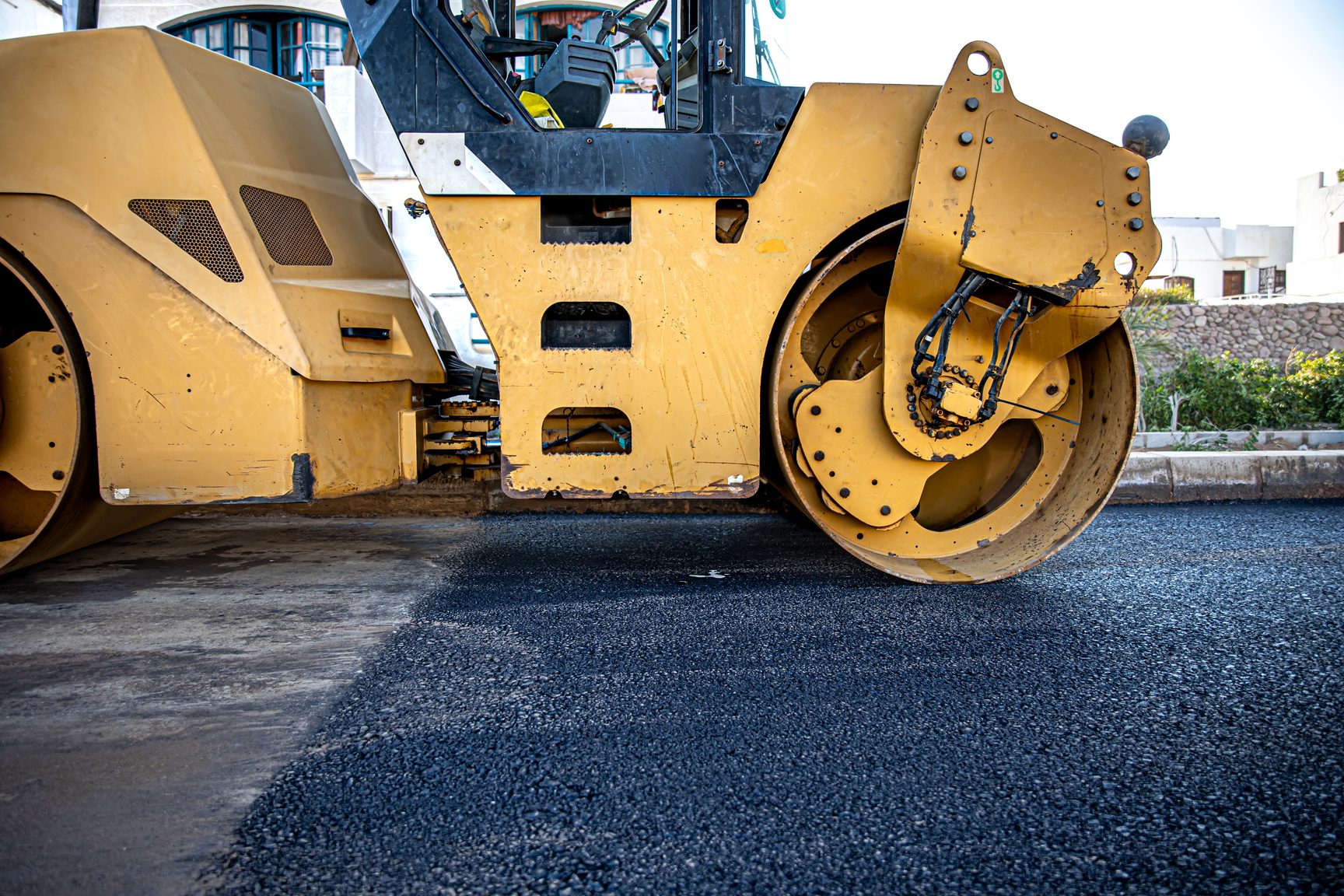
Commercial auto answers when a vehicle connected to your paving business injures somebody or damages property belonging to somebody else. Which of your units it answers for is not settled by the word auto at all — it is settled by the designation symbols printed beside each coverage on your declarations, and a paving yard is where those symbols do their most interesting work.
The wording in general use is the business auto coverage form, CA 00 01 10 13. It treats an auto as a land motor vehicle, trailer or semitrailer designed for travel on public roads, or any other land vehicle subject to a compulsory or financial responsibility law where it is licensed or principally garaged. Then the definition closes with a sentence that sends part of your yard elsewhere: auto does not include mobile equipment.
That closing sentence is where your auto policy and your liability policy touch, and symbol 19 is the handle that carries a machine back across it. What follows walks a paving fleet through the form.
Your declarations page is the coverage
The insuring agreement is broad and plain: the insurer pays all sums an insured legally must pay as damages because of bodily injury or property damage caused by an accident and resulting from the ownership, maintenance or use of a covered auto. Everything turns on that adjective, because the form grants nothing to your fleet at large.
The designations that matter on a paving account, each described in the form beside its own number:
- Symbol 1 — any auto. The label is the whole of it; nothing narrows what the coverage reaches.
- Symbol 2 — owned autos only. The autos you own, plus, for covered autos liability coverage, trailers you do not own while they are attached to power units you do.
- Symbol 7 — specifically described autos. Only what is listed in Item Three of the declarations with a premium charge shown against it. A truck bought in season is not on it until somebody reports it.
- Symbol 8 — hired autos only. Autos you lease, hire, rent or borrow — expressly not one you borrow from an employee.
- Symbol 9 — non-owned autos only. Autos you do not own, lease, hire, rent or borrow that are used in connection with your business; the form says that category includes autos owned by your employees.
- Symbol 19 — registered mobile equipment. Autos that are land vehicles and would have qualified as mobile equipment if they were not subject to a compulsory or financial responsibility law where they are licensed or principally garaged.
Symbol 19, read from the auto side
The business auto form and the general liability form were drafted as a matched pair and carry the same definition of mobile equipment, word for word. That list includes road construction or resurfacing equipment such as graders, scrapers or rollers, so the paver, the roller and the milling machine begin as mobile equipment and the auto form has nothing to say about them.
The definition then takes a step back. A land vehicle subject to a compulsory or financial responsibility law, or another motor vehicle insurance law where it is licensed or principally garaged, is not mobile equipment — it is an auto. Plates are the switch, and nothing else about the machine has to change for it to throw.
Symbol 19 is the designation written for what is left standing after that step: autos that are land vehicles and that would have qualified as mobile equipment if they were not subject to such a law. No other symbol on the form is drafted around a machine rather than a vehicle.
That is the seam. On the liability side, the form takes back the operation of machinery attached to a registered land vehicle that would otherwise have been mobile equipment. On the auto side, symbol 19 is how the same unit gets named deliberately rather than by accident. The liability half is worked through on the general liability page.
A further carve-out sits inside the definition. Self-propelled vehicles carrying permanently attached equipment designed primarily for snow removal, street cleaning, or road maintenance but not construction or resurfacing are treated as autos rather than as mobile equipment. Street cleaning is named, so a sweeper belongs on the auto policy — while construction and resurfacing were kept outside the carve-out, which is what keeps the paving machines on the far side of it.
None of this pays to repair your own machines, wherever the plates are. The contractors equipment floater answers for physical loss to the units themselves, and a registered roller can sit on that schedule and on your auto declarations at the same time.
Trailers, floats and the units you never bought
A paving fleet is full of units being towed, rented or borrowed, and the form answers each differently.
Trailers. Trailers with a load capacity at or under a threshold stated in the form, designed primarily for travel on public roads, are covered autos without appearing on the declarations. Above that threshold a trailer has to be described like any other unit, and the capacity is stamped on it, so a walk around the yard settles the question.
Machines under tow. Mobile equipment while it is being carried or towed by a covered auto is itself a covered auto for covered autos liability coverage. That is the paver on the float: while it rides, the liability side of the auto policy has it.
Substitutes. A non-owned auto used with the owner’s permission as a temporary substitute for a covered auto out of service for breakdown, repair, servicing, loss or destruction is addressed on its own terms, which is a different arrangement from a seasonal rental.
Rented and borrowed units. Symbol 8 reaches autos you lease, hire, rent or borrow and stops short of anything borrowed from your own employees — the gap symbol 9 closes, since it reaches autos used in connection with your business including those your employees own.
Where a paving fleet generates auto claims
Categories rather than case studies, because a claim story carrying a figure is a fabricated figure wearing an anecdote.
Reversing to the paver in an occupied lot
Tri-axles backing to a screed in a lot the public has not fully left is the routine movement on this trade and the routine loss: a heavy vehicle reversing, parked cars around it, and a spotter doing another job.
Entering and leaving the traveled way
Trucks pulling out of a taper into moving traffic, and back in loaded, put a slow unit into a stream of faster ones. Traffic control and flagger discipline are the controls an underwriter asks about.
Loads that move, spill or leave the bed
Hot mix, sealer, tools and a machine shifting on a float all produce the same kind of file. The trigger is the one that runs the rest of the form — injury or damage arising out of the ownership, maintenance or use of a covered auto — and whether a given incident lands inside it is a question your own wording answers.
The errand nobody scheduled
Parts runs, supply pickups and a crew member moving between jobs in a personal vehicle are business use of a vehicle nobody inspected, described or rated — the category symbol 9 exists for, and the one most often missing.
Structure first, figures afterward
No amounts appear here on purpose. A limit described as usual on a web page is a figure nobody underwrote, and the right structure on this class comes out of the contracts you sign rather than out of what is common.
What is worth understanding is the order in which the policy is assembled. The symbols decide which units a coverage reaches; the schedule decides what is described where a symbol requires description; the limit decides how much. A generous limit on a designation that never reached the unit in question is the most expensive kind of tidy declarations page.
Two habits follow. Reconcile the schedule against the yard whenever equipment moves in or out, because symbol 7 is only ever as current as the last report. And read the symbols across the coverages rather than down the page, because a policy can carry a broad designation on one line and a narrow one on the next with nothing announcing the difference.
What we do with a paving fleet submission
Everything above describes a standard form, and a standard form is only ever part of a policy. The rest is the schedule and the endorsements attached to yours, and on this class those are what move the seams this page has described.
Being independent means your account goes in front of the specialty markets whose appetite currently fits a paving, sealcoating and striping operation rather than the single market an agent happens to be tied to. It also means somebody reads your auto declarations beside your liability declarations and says where the registered machines landed.
A licensed agent reads every submission across the states we publish. What you run, what is registered and what is not, and what has gone wrong before are the inputs; the answer comes back with the seams named.
This page describes a widely used standard form, identified by the edition printed on it. Editions change and insurers amend them. The declarations, the schedule of covered autos and the endorsements on your own policy control your claim, and nothing here substitutes for reading them.
Reading the rest of the program
Coverage that meets this one
- General Liability — the other half of the registered-machine seam.
- Contractors Equipment — physical loss to the pavers, rollers and tanks this form sets aside.
- Workers Compensation — the line that answers when the injured person was driving for you.
Operations we write
Outside authorities
Questions about trucks, trailers and plates
What do the numbers printed beside each coverage on our auto declarations mean?
They are covered-auto designation symbols, and they decide which of your units the coverage beside them applies to. Symbol 1 is labeled any auto. Symbol 2 is owned autos only, and for covered autos liability coverage it reaches trailers you do not own while they are attached to power units you do own. Symbol 7 is specifically described autos — only those listed in Item Three of the declarations with a premium charge shown against them. Symbol 8 is hired autos, symbol 9 is non-owned autos, and symbol 19 is the one for registered machines. The same policy can carry different symbols on different coverages, which is why reading the declarations across rather than down is the useful habit.
We put plates on a roller so it could move itself between lots. What did that do?
It moved the machine across the line the two forms share. The CA 00 01 10 13 definition of mobile equipment includes road construction or resurfacing equipment such as graders, scrapers or rollers, so an unregistered roller is mobile equipment and is not an auto. But a land vehicle that is subject to a compulsory or financial responsibility law, or another motor vehicle insurance law where it is licensed or principally garaged, is excluded from that definition. Symbol 19 is the designation written for exactly that unit: autos that are land vehicles and that would have qualified as mobile equipment if they were not subject to such a law. Registering a machine is therefore an insurance decision as well as a yard decision, and it is worth telling whoever handles your policies before the plates go on.
Is the paver covered while it is riding on our lowboy?
The form answers this directly. Mobile equipment while it is being carried or towed by a covered auto is itself a covered auto for covered autos liability coverage, so the machine on the float is inside the auto policy for liability purposes while it is riding. That is a liability answer and not a repair answer — it speaks to what the load does to other people and their property, not to what happens if the machine itself is damaged in transit. Damage to your own paver is an inland marine question, and the contractors equipment page takes it from there.
Do we have to schedule a small utility trailer we tow behind a crew pickup?
Not necessarily, and the form draws the line by load capacity rather than by what you tow it with. Trailers with a load capacity at or below a threshold stated in the form, designed primarily for travel on public roads, are covered autos in their own right without being described on the declarations. Above that threshold a trailer is a unit like any other and belongs on the schedule. The threshold is printed in the form itself, and reading it against the rating plate on each trailer takes a walk around the yard rather than a phone call.
An employee ran to the supply house in his own truck and hit somebody. Whose policy answers?
His own auto policy is the first place the claim lands, and your exposure is the reason symbol 9 exists. Non-owned autos are described as autos you do not own, lease, hire, rent or borrow that are used in connection with your business, and the form says the category includes autos owned by your employees. A parts run in a personal pickup is business use of a vehicle you never bought, never scheduled and never inspected. If your declarations do not carry that symbol on the liability coverage, the errand your crew runs as a matter of routine is happening outside the policy.
We rented a dump truck for the busy stretch. Is it on our policy?
Only if the declarations say so. Hired autos are designated by symbol 8, described as autos you lease, hire, rent or borrow — with an exclusion worth noticing, because that designation does not reach an auto you lease, hire, rent or borrow from one of your own employees. There is also a separate provision for a substitute: a non-owned auto used with the owner’s permission as a temporary substitute for a covered auto that is out of service because of breakdown, repair, servicing, loss or destruction. A borrowed truck standing in for one that is down is not the same arrangement as a seasonal rental, and the form treats them differently.
Is our sweeper mobile equipment or an auto?
An auto, by the form’s own list. The definition of mobile equipment carves out self-propelled vehicles carrying permanently attached equipment designed primarily for snow removal, street cleaning, or road maintenance but not construction or resurfacing — and it makes those units autos rather than mobile equipment. Street cleaning is named, so a sweeper sits on the auto side. The exception inside that carve-out is the part that matters to this trade: construction and resurfacing were deliberately kept out of it, which is why the paver and the roller do not follow the sweeper across.
Send us the schedule of autos
The declarations page and the list of covered units tell us more than any intake form can. A licensed agent reads them against what is actually in your yard and comes back with where the gaps are.