
Paving Contractor Insurance by State
Florida Paving Contractor Insurance
Florida’s contractor license reaches drainage but not pavement and its code is silent on coal-tar sealer; road bids and workers’ compensation carry the state’s firmest requirements.
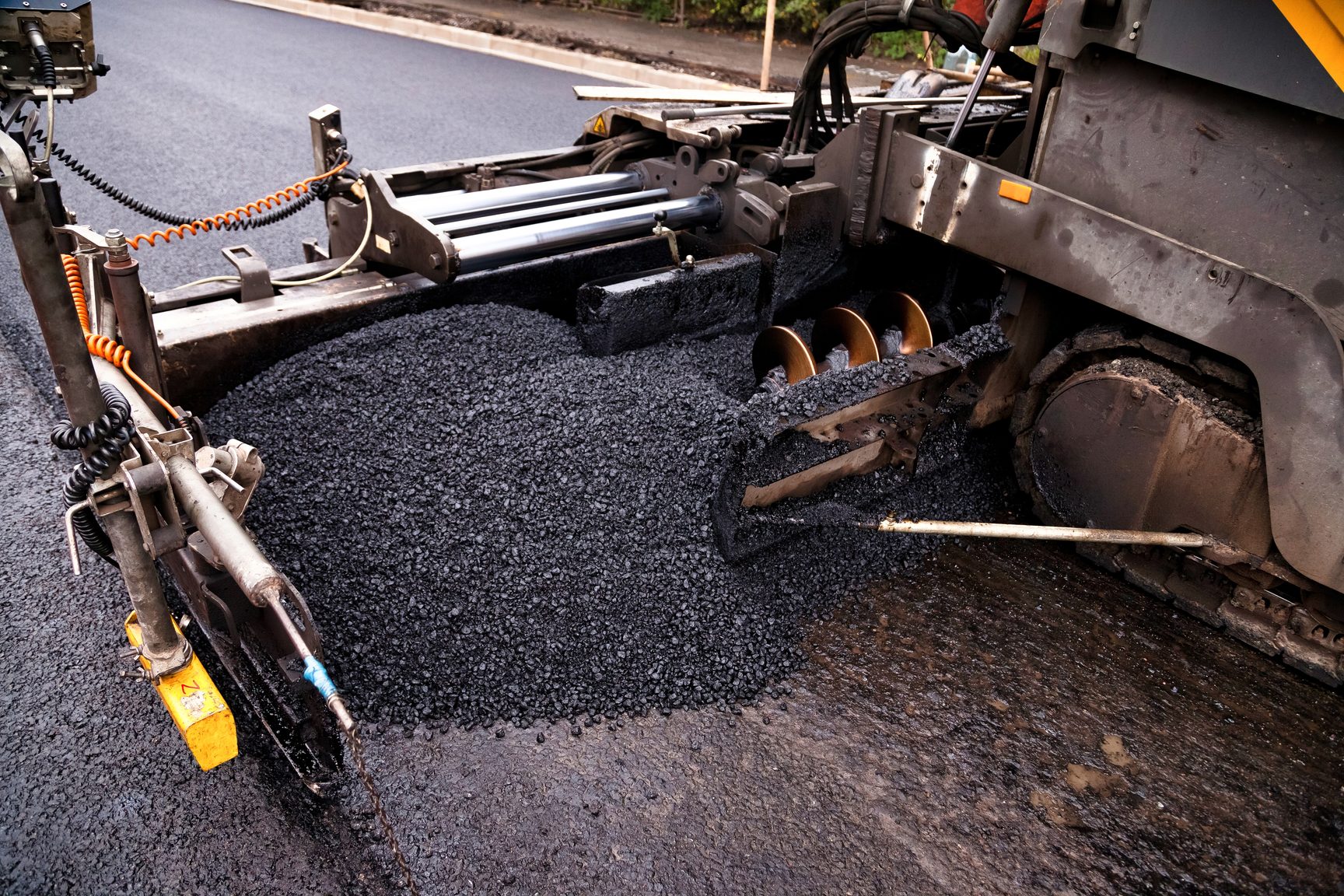
Florida paving contractor insurance is the familiar asphalt program — general liability, a contractors equipment floater, commercial auto, workers’ compensation and property — fitted to the particular points where Florida law meets the trade. Those points are specific: a statewide contractor license that stops short of pavement, no state rule on coal-tar sealer, a workers’ compensation law that binds every construction employer, and a certification the transportation department requires before a contractor bids its larger road contracts.
Private lots answer mostly to the owner’s contract and the local permit office. Public road work adds the department’s certificate, a contract bond and closer attention to whose employees are on the job — yours or a subcontractor’s. Each section below takes one layer and turns it into a decision about coverage.
Florida’s contractor license, and why pavement falls outside it
Florida licenses contractors statewide through the Construction Industry Licensing Board, but none of the contractor categories its licensing law defines is written around asphalt paving, sealcoating or the striping of lots and roads. The same law exempts contractors working on roads, streets and highways from its licensing part, and it lists driveway installation among the kinds of work that do not substantially correspond to any state license category.
Falling outside the license does not make every part of a job unlicensed. Storm sewer lines are the underground utility and excavation contractor’s work on public or private property, so drainage built into a private lot can need a contractor licensed for it. Florida also bars cities and counties from demanding their own license for driveway installation, even to issue a permit, which moves the local question from licensing to the permit and inspection rules where the work is done.
Authority § 489.105(3); § 489.103(1); § 489.117(4)(a), Florida Statutes · read the source · checked
The licensing structure itself is not in doubt, and the state says plainly who runs it:
“The Construction Industry Licensing Board is responsible for licensing and regulating the construction industry.”
The nearest a paving contractor comes to one of the board’s categories is the catch-all at the end of the list, and it is tied back to the paragraphs before it:
“‘Specialty contractor’ means a contractor whose scope of work and responsibility is limited to a particular phase of construction established in a category adopted by board rule and whose scope is limited to a subset of the activities described in one of the paragraphs of this subsection.”
None of those paragraphs describes laying, sealing or striping asphalt, so a specialty license has nothing to attach to. Road work is not left out by silence but exempted in terms:
“This part does not apply to:(1) Contractors in work on bridges, roads, streets, highways, or railroads, and services incidental thereto. The board, in agreement with the Department of Transportation, shall, by rule, define “services incidental thereto” for the purposes of this subsection only.”
The board rule defining incidental services does not stretch that exemption to building construction or to the licensed trades on a road job. Driveways get a sentence of their own, and it stops local governments from licensing the work:
“A local government may not require a state or local license to obtain a permit for such job scopes. For purposes of this section, job scopes for which a local government may not require a license include, but are not limited to, painting; flooring; cabinetry; interior remodeling when the scope of the project does not include a task for which a state license is required; driveway or tennis court installation; handyman services; decorative stone, tile, marble, granite, or terrazzo installation; plastering; pressure washing; stuccoing; caulking; and canvas awning and ornamental iron installation.”
Driveway installation is the paving job that list names; for any other paving work, ask the permit office where the job sits. A licensed trade does meet paving below the surface, because storm drainage belongs to a defined category:
“‘Underground utility and excavation contractor’ means a contractor whose services are limited to the construction, installation, and repair, on public or private property, whether accomplished through open excavations or through other means, including, but not limited to, directional drilling, auger boring, jacking and boring, trenchless technologies, wet and dry taps, grouting, and slip lining, of main sanitary sewer collection systems, main water distribution systems, storm sewer collection systems”
On a lot rebuild with new inlets and pipe, a crew without that license hands the drainage to a subcontractor who holds it, and that subcontractor’s liability and workers’ compensation certificates belong in your file before it arrives. Read your own general liability policy for how it treats work a subcontractor performs for you; a drainage failure under fresh pavement can reach both layers.
Coal tar and cutbacks: what Florida’s rules do and do not reach
Florida’s statutes and its Administrative Code are silent on coal-tar pavement sealant: nothing at the state level prohibits it, confines where it may be applied or requires a label on it.
A quiet state layer still leaves the product choice open to other rules. This research found and read no Florida city or county ordinance aimed at coal-tar sealant, yet one may apply where a job sits, and an owner’s or a bid specification can name the sealer outright. Florida’s air rules separately restrict cutback asphalt used to pave or maintain roads, streets, highways and parking lots, allowing it only in listed situations, but that rule governs petroleum cutbacks, not coal tar.
Authority Florida Statutes and Florida Administrative Code, both searched; Florida Department of Environmental Protection air rule on cutback asphalt · read the source · checked
The air rule administered by the Florida Department of Environmental Protection restricts petroleum cutback — liquid asphalt thinned with a solvent — not the sealer a sealcoating rig sprays. One statute, § 379.29, does name coal tar, but as a substance that may not be drained into fresh running waters where it injures fish: a discharge prohibition, not a limit on selling or applying pavement sealer.
For a sealcoating contractor the live question is in the policy. Overspray on parked cars, sealer tracked into a lobby and rinse water heading for a storm inlet are liability questions, and whether a release that reaches water is covered, excluded or pushed to a separate pollution form depends on the wording of your sealcoating program, whichever product the specification calls for.
Department road contracts: certification first, then the bond
The Florida Department of Transportation must certify a contractor as qualified before it bids on the road, bridge and public transportation construction contracts the department lets above a contract size the statute sets. FDOT examines whether each applicant is competent, responsible and financially able to do the work, and its certificate fixes the classes of work the contractor may bid and how much uncompleted work it may carry. Subcontractors, maintenance contracts and smaller prime contracts are outside the requirement, although a bidder on a maintenance contract made up mostly of guardrail, signal or striping repair must still show the qualifications, equipment and experience for that work. Nothing in the prequalification statute or FDOT’s rule requires insurance. Bonds attach to the contract instead: the winning bidder on a department construction contract must furnish a contract bond before award, and the department may waive all or part of that bond on smaller contracts.
Authority § 337.14(1), (2), (3), (5) and (8); § 337.18(1), Florida Statutes · read the source · checked
Certification is a review of the company, not of any one bid. The statute describes what the department does when an application arrives:
“Upon the receipt of an application for certification, the department shall examine it, verify its statements when necessary, and determine whether the applicant is competent, is responsible, and possesses the necessary financial resources to perform the desired work.”
The result is a certificate with limits written into it, which the department describes in its own words:
“The annual Contractor Prequalification process for construction contractors establishes the approved work classes and maximum capacity rating (MCR) for each successful applicant.”
The classes appear on the department’s work-class list, and several of them describe this trade directly, as printed:
The equipment list and financial statements behind a capacity rating are the ones an underwriter reads for the contractors equipment floater and a surety reads for bonding, so a machine sold last season should leave all three files at once.
Who sits outside the requirement
Not every contractor on a department job needs its own certificate. The department’s list of bids that do not call for prequalification includes this one:
“To bid as a subcontractor in any amount”
Maintenance work is carved out too, with a condition that lands on striping contractors:
“This section does not apply to maintenance contracts. Notwithstanding any other provision of law, a contractor seeking to bid on a maintenance contract in which the majority of the work includes repair and replacement of safety appurtenances, including, but not limited to, guardrails, attenuators, traffic signals, and striping, must possess the prescribed qualifications, equipment, record, and experience to perform such repair and replacement.”
A striping crew on that kind of maintenance contract still has to prove it can do the job, and marking a live road carries its own exposures — paint on a passing vehicle, a layout error that becomes a traffic question — which the striping program is written around.
Bonds attach to the contract
With the prequalification statute and rule silent on insurance, whatever coverage a department job requires is read from that job’s own contract documents. Bonding is statutory: the low bidder on a department construction contract furnishes a contract bond before award, sized to the awarded price, and the department can waive part or all of it on smaller, noncritical work. Its rule also lets a contractor whose surety will bond beyond its computed rating ask for a higher one, so the surety relationship — built on your finances and work on hand, well before a letting — can move the certificate as well as the bond.
Workers’ compensation on Florida construction sites
Florida’s workers’ compensation law requires every contractor and subcontractor working on public or private construction in the state to secure compensation for its employees, either through a policy with an insurer authorized in Florida or by qualifying to pay compensation directly under one of the self-insurance routes the law provides. Florida has no state fund. When a contractor sublets work, it is answerable for the employees of any subcontractor that has not secured that coverage, and the state’s Division of Workers’ Compensation tells contractors to confirm their subcontractors are covered before work begins.
Authority § 440.10(1)(a) and (b); § 440.38(1), Florida Statutes · read the source · checked
“Any contractor or subcontractor who engages in any public or private construction in the state shall secure and maintain compensation for his or her employees under this chapter as provided in s. 440.38.”
The obligation does not stop at your own crew. When part of a job is sublet, the statute pulls the subcontractor’s workers into your business for this purpose:
“In case a contractor sublets any part or parts of his or her contract work to a subcontractor or subcontractors, all of the employees of such contractor and subcontractor or subcontractors engaged on such contract work shall be deemed to be employed in one and the same business or establishment, and the contractor shall be liable for, and shall secure, the payment of compensation to all such employees, except to employees of a subcontractor who has secured such payment.”
The closing clause of that passage is your protection, and securing coverage is done through the open market or through the self-insurance routes the chapter allows. The policy route reads this way:
“Every employer shall secure the payment of compensation under this chapter:(a) By insuring and keeping insured the payment of such compensation with any stock company or mutual company or association or exchange, authorized to do business in the state;”
The Florida Department of Financial Services, Division of Workers’ Compensation frames the same duty for employers generally, and then states the practical step for contractors in a single line:
“Employers conducting work in the State of Florida are required to provide workers’ compensation insurance for their employees. Specific employer coverage requirements are based on the type of industry, number of employees and entity organization.”
“Contractors are required to make certain that all sub-contractors have the required workers' compensation insurance before they begin work on a project.”
For a paving contractor the consequences are concrete. A subcontractor that cannot show coverage — or, for an officer who has taken the statute’s exemption, the exemption certificate — is a subcontractor whose injured workers can become your claim. How paving, sealcoating and striping payroll is classified, and how owners who work on the crew are treated, is worked through on the workers’ compensation page. Insurers writing this policy, and every other line in the program, answer to the Florida Office of Insurance Regulation.
Florida agencies that bear on a paving business
Each of these answers a different question, and knowing which one to ask saves a round of calls:
Florida paving markets by transportation district
The department runs its road program through districts and publishes the counties each one serves. Every market below is listed with its county and the district that serves it; the notes speak to the paperwork a contractor meets there, and no population, mileage or market-size figure is attached.
Miami
Miami-Dade County. South Florida.
The county carries the city’s own name inside its hyphenated one, and the city, the county and the department district can each let paving work of their own. One certificate program has to satisfy all three without being rebuilt for every job.
Tampa
Hillsborough County. West Central Florida.
State roads here answer to a district office rather than to the city or the county, so the owner named on a certificate changes with the road being milled, not with the neighborhood the crew is parked in.
Orlando
Orange County. Central Florida.
A week here can hold a private retail lot, a municipal street and a district contract. Keeping a current list of what each of those owners requires is what stops a certificate from satisfying the city and failing the county.
Jacksonville
Duval County. Northeast Florida.
The district serving this county keeps its own website, linked above, apart from the department’s statewide pages. A contractor chasing district work reads both, and keeps its bonding and certificate paperwork ready before a job is advertised.
Fort Myers
Lee County. Southwest Florida.
A job in the next county over can sit in the same district while the owner, the permit office and the certificate holder all change. The program should follow the crew and its trailers, not the county line.
Pensacola
Escambia County. Northwest Florida.
A contractor based here that also takes work in a neighboring state needs that state named on the program from the start; a Florida policy does not settle what another state’s law requires of the crew.
What moves a Florida paving premium
What moves the price of a Florida paving program — the mix of paving, sealcoating and striping work, the payroll and loss history behind it, and how the state’s workers compensation system is bought — is set out in our Florida paving insurance cost guide. This page keeps to Florida’s rules, agencies and markets; the guide keeps to what an underwriter reads.
Where Florida paving claims come from
Recurring shapes, not statistics.
An uncovered subcontractor’s injured worker. A drainage or striping sub arrives without proof of coverage, a worker is hurt, and the claim climbs the contract chain to the company that sublet the work.
A buried line struck during excavation. Trenching for new inlets can hit a pipe or cable, and repair, delay and the line owner’s losses arrive together; how your general liability wording treats underground work decides the outcome.
Sealer or paint on someone else’s car. Wind carries overspray across a lot, or a driver ignores the tape and rolls through a fresh coat. The car’s owner claims against your liability policy; redoing your own coat is a separate matter.
A work-zone incident on a department road. A crash near the cones draws in the traffic control plan, the prime and every sub on the job, and each party can look to the others’ policies first — which is where contract limits and additional insured wording are tested.
Florida: Contractor license, no statewide license reaches this work, connected to the General Liability page. Coal-tar sealant, no state rule on the product, connected to the Asphalt Sealcoating Insurance page. Transportation department prequalification, applies to department road work, connected to the Commercial Auto page. Workers’ compensation, bought in the open market, connected to the Workers Compensation page. The diagram pairs each state rule with the page on this site that discusses it and shows no figures.
Nearby states we also write
Florida’s land border touches only the states listed below, and each is in the licensed footprint. Their pages carry their own verified findings; nothing Florida’s statutes say about licensing, sealer or workers’ compensation applies across that line, so a crew working on both sides needs both states named on the program.
Related coverage and services
What we insure
Coverage lines
Florida paving contractor insurance questions
Does Florida’s contractor license cover asphalt paving work?
No license category is written for it. The Construction Industry Licensing Board licenses a list of defined contractor types, and none of them describes paving, sealcoating or striping; road and highway work is exempted from that part of the law altogether. The license can still touch your job through adjacent work — storm drainage is a licensed underground trade — and cities and counties keep their own permit and inspection rules.
Can a Florida city require a local license before I install a driveway?
Not as a condition of the permit. Florida’s statute puts driveway installation among the kinds of work that cities and counties are barred from licensing, even when all you want is a permit. The permit itself, its inspections and any proof of insurance the permit office asks for still apply, so call the office that issues it before the job goes on the schedule.
Who may install storm drainage in a Florida parking lot?
Storm sewer work is defined as the work of a licensed underground utility and excavation contractor, and the definition reaches private property as well as public. If your company does not hold that license, subcontract the drainage to a firm that does, collect its liability and workers’ compensation certificates before it starts, and confirm how your own policy treats work a subcontractor performs for you.
Is coal-tar sealer restricted anywhere in Florida law?
Not at the state level: neither the statutes nor the administrative code limit its sale, its use or its labeling. A local ordinance, an owner’s specification or a set of bid documents can still name the sealer, so read them before you order material. Florida’s air rule on cutback asphalt is a separate matter; it restricts petroleum cutbacks and does not address coal tar.
When does a paving company need FDOT prequalification?
When it bids as a prime on the department’s construction contracts above the size the statute sets. The Florida Department of Transportation does not require it for subcontract bids, for maintenance contracts or for smaller prime contracts. One condition survives for maintenance work that is mostly safety repair such as striping: the bidder still has to demonstrate the qualifications, equipment, record and experience the work calls for.
Do my subcontractors need their own workers’ compensation in Florida?
Yes, and that protects you as much as them. When you sublet construction work, Florida treats the subcontractor’s employees as part of your business for compensation purposes unless the subcontractor has secured coverage of its own. Ask for its certificate before the crew starts — or, for an exempt corporate officer, the exemption certificate — and keep it on file.
Does a Florida program cover our crews when they work in Georgia or Alabama?
That depends on the line, and it has to be checked before a crew crosses. Liability, equipment and auto coverage can usually be written to follow the work, but workers’ compensation answers to each state’s own law, and neither neighbor’s rules are described on this page. Name every state your crews work in when the program is written, and read each state’s own page.
This page describes insurance for paving and asphalt contractors operating in this state. It is general information, not legal advice and not a statement of coverage. Licensing, permitting and environmental requirements change; verify current requirements with the agency named before relying on them.
Get a quote for your Florida paving work
Send us the Florida contracts you are bidding, private or public, and we will match the program to what each owner actually asks for.