
Services we insure
Asphalt Sealcoating Insurance
Sealer goes down as a liquid, and a liquid does not care what it lands on — which is why the coverage question on this trade starts at the edge of the lot rather than in the middle of it.
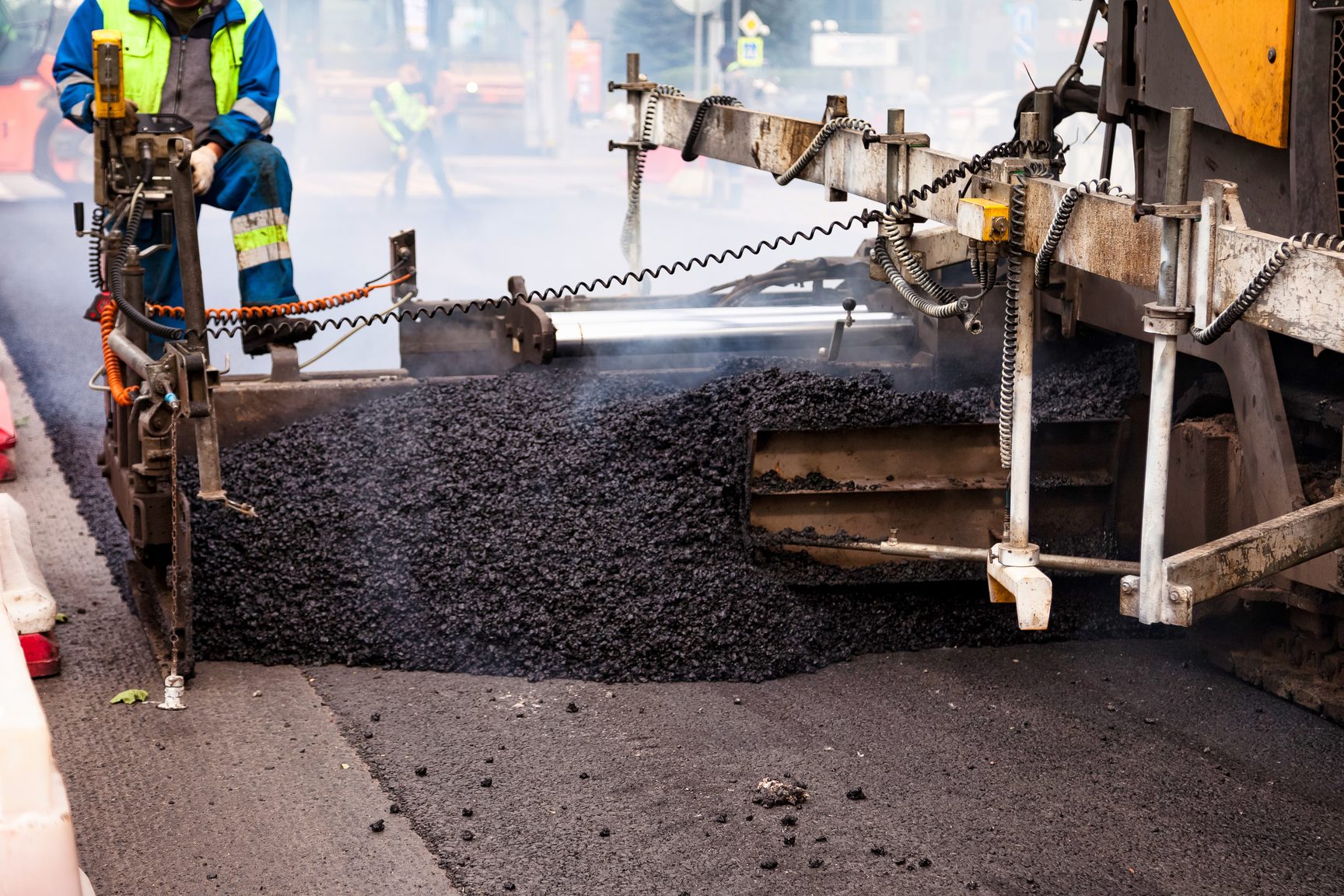
Asphalt sealcoating insurance is a program rather than a policy: liability cover for what your material does to property that is not yours, an equipment floater for the tanks and spray rigs, workers compensation for the people handling the product, and property cover for the yard it is stored in. What binds those lines together on this trade is a physical fact none of the paperwork mentions — sealer is applied as a liquid, and a liquid does not care what it lands on.
That single characteristic separates a sealcoating operation from the paving crew it often shares a truck with. Hot mix is placed where it is put and stays there. Sealer is sprayed or squeegeed across an open surface in open air, it stays active long after the crew has packed up, and it leaves the lot on tires and on shoes. The property most at risk is rarely the property you were hired to treat.
The work is broader than the coat, too. A sealcoating account usually takes in surface preparation, crack sealing ahead of the application, the coat itself, and frequently the restriping that follows. Part of that book is commercial — shopping centers, office lots, apartment complexes — and part of it is residential driveways and aprons, which bring a different sort of customer and a different sort of argument. Sealcoating and resealing are the same job under two names, and the exposure does not change with the label.
What follows walks the exposure end to end: what a general commercial form misses about a fluid-applied product, where the chemistry of the material becomes a legal question rather than a technical one, which lines answer which loss, and what the market wants to know before a quote exists. None of it outranks the declarations page and endorsement schedule in your own file, which is the only document that decides your claim.
The material goes where the air takes it
A general commercial policy is drafted for a contractor who installs something in a defined place, and its exclusions turn on how close the damage sat to the work — a workable test when the work has an edge you can point at. A fluid-applied product blurs that edge on purpose. Spray equipment atomizes the material, wind carries the fine end of it past the barricade, and slope moves the heavy end toward the low corner of the lot, which is usually where the drain is.
So a sealcoating crew generates third-party property damage on jobs where nothing went wrong in any ordinary sense. Nobody dropped anything, nobody struck anything, and the coat itself may be excellent. Parked vehicles, a glass storefront, a brick facade, a monument sign and low landscaping all sit within reach of a routine day’s work, and black material on any of them is somebody’s repair bill.
Where that bill goes is settled by the property exclusions in the liability form, worked out in full on the general liability page rather than repeated here. In sealcoating terms: the surface you were paid to treat generally sits outside the policy, and the property standing beside it generally sits inside it. The wind decides which of those your loss becomes.
The exposure does not end when the truck pulls off. A fresh coat has to cure, so the crew leaves behind a closed surface, a run of cones and a customer whose tenants still need somewhere to park. Whoever walks across it takes the material home on their shoes. Barricading, signage and the handback to the owner are as much a part of this risk as the spray is, and they are what an adjuster asks about first.
The crack sealing that precedes the coat adds a different hazard on the same job. That material is handled hot, out of a kettle, largely by hand, and burns to the forearms and wrists are what it produces. Injury to your own people belongs to the workers compensation line rather than to the liability policy, and fume and skin exposure from hot material is a recognized occupational hazard.
Residential work changes the tone of a dispute more than the physics of it. A homeowner is not a property manager: there is often no contract worth the name, and the complaint arrives as a phone call. Written scope and written handback instructions are the cheapest controls on that half of the book.
Then the machinery. Tanks, agitators, spray rigs, hose reels, squeegee and broom units, blowers, kettles and the trailers they ride on are not covered by any liability policy at all. Damage to your own property is an inland marine question, covered on the contractors equipment page.
Sealant chemistry is answered where you work
On most trades the regulatory question is about how the work is done. On this one it can be about whether the product may be used at all. Sealant chemistry is regulated by state and local government, and that regulation reaches the sale of the material as well as its application.
Here is a worked example, quoted because we read the statute itself rather than a summary of it. Minnesota Statutes § 116.202 prohibits coal tar sealant products. Its use provision reads that “a person shall not apply coal tar sealant products on asphalt-paved surfaces.” Its sale provision reaches the drum as well: “a person shall not sell a coal tar sealant product that is formulated or marketed for application on asphalt-paved surfaces.” The same statute allows the commissioner to grant an exemption for research into environmental effects or for the development of an alternative technology.
That is one state’s statute, and this page claims nothing beyond it. Restrictions of this kind are local: legislatures write them, counties and municipalities write their own, and plenty of places have none. Whether the product your supplier sells may be applied on the lots you serve has a local answer, which is why it belongs on the page for where you work rather than on a national overview.
Runoff is the other half of the environmental question, and it reaches the yard as well as the job. Washing equipment, rinsing hoses and working a lot that drains to a storm inlet all put material somewhere it was not meant to go. The federal requirements for stormwater discharges from construction activity are published by the EPA, and state environmental agencies administer these programs locally — the Minnesota Pollution Control Agency’s material on coal tar-based sealants is an example of what one such agency puts in front of applicators. On the crew side, the hazard recognition material for asphalt fume exposure is published by OSHA.
All of which bears on a coverage question worth raising before a loss rather than during one. A liability policy limits what it will do about pollutants, and how far that limitation reaches varies: some wording is broad enough to be argued against a sealer that reached a drain, some is cut back by endorsement, and some accounts carry a separate contractors pollution cover alongside. This page prints no form number for it, because none was verified that would hold across the market on this class. Put the question to your agent concretely instead: if material we applied reaches water, soil or a drainage system, what does this policy do, and which endorsement is giving me that answer?
The lines that answer a sealcoating loss
No single policy answers a sealcoating operation, and a quote that looks like one is a set of lines arranged on one invoice. Each is triggered by something different, and knowing which is which decides who you telephone on a bad afternoon.
Liability comes first here, by some distance. It answers for bodily injury and property damage you become legally obligated to pay to somebody who does not work for you — which describes almost everything drift does. The property at the perimeter of a lot is the recurring subject of these files, and a pedestrian who crosses a curing surface is the injury version of the same story. See general liability.
The floater answers for your own machines. Liability insurance will never repair your tank, your spray rig or the trailer under them, because damage to property you own sits outside that policy by definition. Inland marine cover is written to a schedule of units and triggered by physical loss rather than by fault. What matters most about it is mundane: whether the schedule still matches the yard. See contractors equipment.
Workers compensation answers for the crew. Hot material, chemical handling, fume and skin exposure, lifting hose and squeegee units, and long days on black surface are what this payroll produces. Benefits are paid without regard to fault. How your crack sealing and restriping hours are classified is worth getting right before an audit does it for you. See workers compensation.
Property cover answers for the yard. Drums and totes of sealer, additives, sand and striping paint, plus the shop, the fence and the racking, are a fixed-location exposure rather than a jobsite one — and a stored chemical inventory is the part most worth valuing honestly. See property.
The auto policy answers for what moves on the road. Registered trucks, the tank units and trailers they tow, and driving to and from the lot belong there instead. The boundary between a registered unit and a piece of mobile equipment is the seam the commercial auto page picks up — worth reading if a rig of yours carries plates.
What moves the price on a sealcoating account
No figure appears here, and the absence is deliberate. A sealcoating account is priced off the specifics below; a range published without them would describe somebody else’s operation.
What you apply. The product is an underwriting fact, not only a purchasing one: chemistry moves appetite, and it decides whether your material is permitted everywhere your trucks go.
The split between commercial and residential. Driveways and lots are different customers, different contracts and different dispute patterns, and markets hold views on that mix.
What else happens under the same policy. Crack sealing, restriping, thermoplastic marking and patching each add their own hazard; an operation that seals and nothing else is a narrower risk than one that also runs a paver.
Payroll, the equipment schedule and the fleet. What your people are paid and what they are called is the exposure base on the compensation line, and both are checked at audit. What is on the floater and what it is worth drives that line, while radius of operation and driver records sit behind the auto line.
What your contracts demand. Additional insured status, waivers of subrogation, indemnity language and required limits are set by the agreements you sign rather than by what is common, and they decide the shape of the program.
Loss history, controls, and where you work. A run of overspray files says something specific about procedure and is read that way. Against it sits what you do about the problem — a written wind rule, masking, clearing adjacent vehicles, barricading and handback, wash water — and then the state law and local sealant rules wherever the trucks go.
Where a sealcoating file usually comes from
Grouped by mechanism, with no dollar attached to any of them: an example loss quoted with a number on it would be a number nobody underwrote.
Material on property nobody asked you to treat
The signature loss of this trade. Vehicles in the next row, glass, painted metal, masonry, signage and planting around the edge of a lot belong to somebody else and were never in your scope. Individually these are modest files; collectively they drive frequency on the class. Severity arrives with the setting rather than with the material — a lot that abuts a vehicle dealership or a showroom glass line turns an ordinary afternoon into an expensive one.
The lot that was still closed
A curing surface is an attractive shortcut. Pedestrians cross it, ruin footwear and carry material into a lobby that then has to be cleaned; drivers move barricades and take a vehicle across it. The property files here are small and the injury files are not, and the owner’s complaint about losing the use of the parking arrives alongside them.
Complaints about the finish itself
Blotching, lifting, tracking, early wear, a resealing that failed to hide what the owner wanted hidden. Most of this is the cost of coming back and doing the work again, which is your own expense rather than a liability claim. The separable part is what the finish did to something else — water into a slab through a joint that was sealed over, material tracked into an interior.
Handling the material
Hot crack sealant burns, splash into the eyes, skin contact with additives, strain from dragging hose and squeegee units, and fume exposure in still air. These are the most serious injuries on the class, and they are why an underwriter asks how the kettle is run before asking about price.
What the market asks a sealcoating applicator
Appetite here is narrower than on paving generally, and the questions that decide it are about material and procedure rather than about size. A submission that answers them plainly reads as a managed operation; one that leaves them blank gets priced as whatever the class average is.
Expect to be asked what product you apply and who supplies it, because chemistry sits behind both the environmental question and the pollution wording. Expect a question about how the material goes down — spray, squeegee, broom — since atomized product travels further than product that is pushed. Expect questions about what keeps it where it belongs: a written rule about the wind, how adjacent vehicles are cleared, what gets masked, and who walks the perimeter before the first pass.
Then the handback: how the lot is barricaded and signed, what your own procedure says about reopening it, and what gets photographed on the way out. A contractor who can describe that sequence without making it up on the spot is describing the control behind a whole category of loss.
The rest is the ordinary furniture of a contractor submission read through a sealcoating lens. Who works for you and who is subcontracted. What your contracts require. What is stored at the yard. Where the trucks go. What has gone wrong before, and what changed afterward — that last answer is frequently worth more to an underwriter than the loss run it accompanies.
Why this account is worth placing by hand
A sealcoating operation is easy to quote badly. It looks like a small contractor with a truck and a tank and gets rated as one — right up until somebody has to answer, out of a policy nobody read closely, what happens when the product leaves the lot. The wording that decides that is not on the quote sheet. It is in the exclusions and the endorsement schedule.
Being independent means your file goes to whichever specialty markets have appetite for a sealcoating and paving operation this year, rather than to a captive shelf. It also means a person looks at your liability policy, your floater and your compensation policy together and reports where they leave a gap.
Every state on this site is a state we hold a license in, and what you send is read by a licensed agent rather than sorted by a form. The inputs are your product, your territory, the residential share of the book and your own history. You get the answer in plain words, with the pollution question settled out of your own wording.
General descriptions of coverage, plus one statute read from the text the enacting state publishes. Statutes get amended, local rules sit underneath them, and carriers rewrite their forms. The policy in your file is the document that answers your claim; treat this page as background and not as advice on your account.
Related coverage and services
Coverage lines
- General Liability — the policy that answers when your material lands on somebody else’s property.
- Contractors Equipment — tanks, spray rigs, kettles and the trailers under them.
- Workers Compensation — burns, chemical handling and the rest of the crew exposure.
- Property — the yard, the shop and the sealer stored in it.
What we insure
Outside authorities
Questions sealcoating contractors bring us
Is sealcoating insurance a single policy?
No — it is the set of lines a sealcoating operation actually needs, quoted together and issued separately. Liability answers for what your material does to property that is not yours. An inland marine equipment floater answers for your own tanks, spray rigs and kettles. Workers compensation answers for the crew that handles the product. A property policy answers for the yard the drums are stored in, and an auto policy answers for the trucks and trailers that get all of it to the job. When a quote arrives described as a package, that word is telling you how the lines are billed and serviced, not that a single form has been written to answer everything a sealer can do.
Our sealer stained a customer’s garage apron and the walkway beside the drive. Which side of the policy is that?
The question the liability form asks is whether the stained surface was part of what you were engaged to treat. An apron and a walkway that were never in the scope are other property, which puts them on a different footing from the driveway itself — the form’s reasoning about the treated surface and the property standing beside it is worked out on our general liability page. The practical answer on a residential job is usually different from the coverage answer, because a homeowner will not accept a framing that pays for the walkway and not the apron. Cleaning it quickly, and writing the scope down before you spray, settles more of these than any policy does.
Overspray reached a building’s brick and will not wash off. Does the policy pay to clean it?
Damage to a facade you were not engaged to treat is third-party property damage, which is the liability policy’s territory rather than your own pocket. What complicates a masonry claim is the remedy rather than the coverage: porous brick holds the material, ordinary washing can drive it deeper, and the repair may involve a specialist cleaning contractor or the replacement of a section. Report it rather than settling it quietly out of the truck. A repair you paid for yourself, with no notice and no inspection, is a loss your carrier never had the chance to investigate, and it is the version of this claim that goes badly later.
Is coal tar sealer legal where we work?
That has a local answer, and this page will not guess at yours. Some places prohibit the product by statute. Minnesota, for one, writes it into Minnesota Statutes § 116.202: the use provision reads that “a person shall not apply coal tar sealant products on asphalt-paved surfaces.” The sale provision reads that “a person shall not sell a coal tar sealant product that is formulated or marketed for application on asphalt-paved surfaces.” Its exemption provision lets the commissioner allow an exception for research into environmental effects or for developing an alternative technology. Elsewhere the material may be regulated differently, or not at all, and counties and municipalities write rules of their own that do not follow the state line. What your supplier may sell you and what you may apply are the same local question, and our state pages are where we work through it.
Will a pollution exclusion be argued if sealer reaches a storm drain?
It may be, which is exactly why the wording is worth reading before it matters rather than after. Liability policies limit what they will do about pollutants, and how far that limitation reaches varies by carrier and by endorsement. This page names no form number for it, because none was verified that we could stand behind across the market on this class — and an invented form number is the worst thing a page like this can print. Ask the question concretely instead: if material we applied reaches water, soil or a drainage system, what does this policy do, and which endorsement is that answer coming from? Some sealcoating accounts are written with a separate contractors pollution cover sitting alongside the liability policy for precisely this reason.
We seal residential driveways as well as commercial lots. Does that change anything?
It changes underwriting appetite, the paperwork and the way a complaint arrives. A commercial account comes with a contract, an insurance article, a certificate request and a property manager who understands what a claim is. A driveway comes with a conversation in the driveway. The physical exposure is smaller and the relationship is closer, so disputes that a commercial customer would route through a claim arrive as a phone call about how the finish looks. Markets differ on how much residential work they want to see on an account, and they will ask. A written scope, a written cure and handback instruction, and a written statement of what the finished surface will look like are the cheapest controls available on that half of the book.
A customer says the finish went blotchy and wants the lot redone. Is that a claim?
Usually it is a business problem before it is an insurance one. A liability policy is not a warranty on your own application, so the cost of coming back and recoating a surface that disappointed the owner is generally yours — the exclusions that produce that result are set out on our general liability page. What can separate out is damage the finish caused to something else: material that lifted and was tracked into a lobby, a coat that bridged a crack which then opened and let water into a slab, a stained walkway beside the lot. Those are damage to other property and belong to a different analysis than the recoat does, and the two are frequently argued in the same letter.
Put the sealcoating operation in front of the markets
Send what you apply, what is on the equipment schedule and the declarations page you carry now. A licensed agent reads all of it and tells you how the markets are likely to see the account.