
Paving Contractor Insurance by State
Illinois Paving Contractor Insurance
Illinois licenses no paving contractor statewide, and its coal-tar law is a notice and bidding rule for public owners. The duties that reach you run through home driveways, IDOT lettings and workers’ compensation.
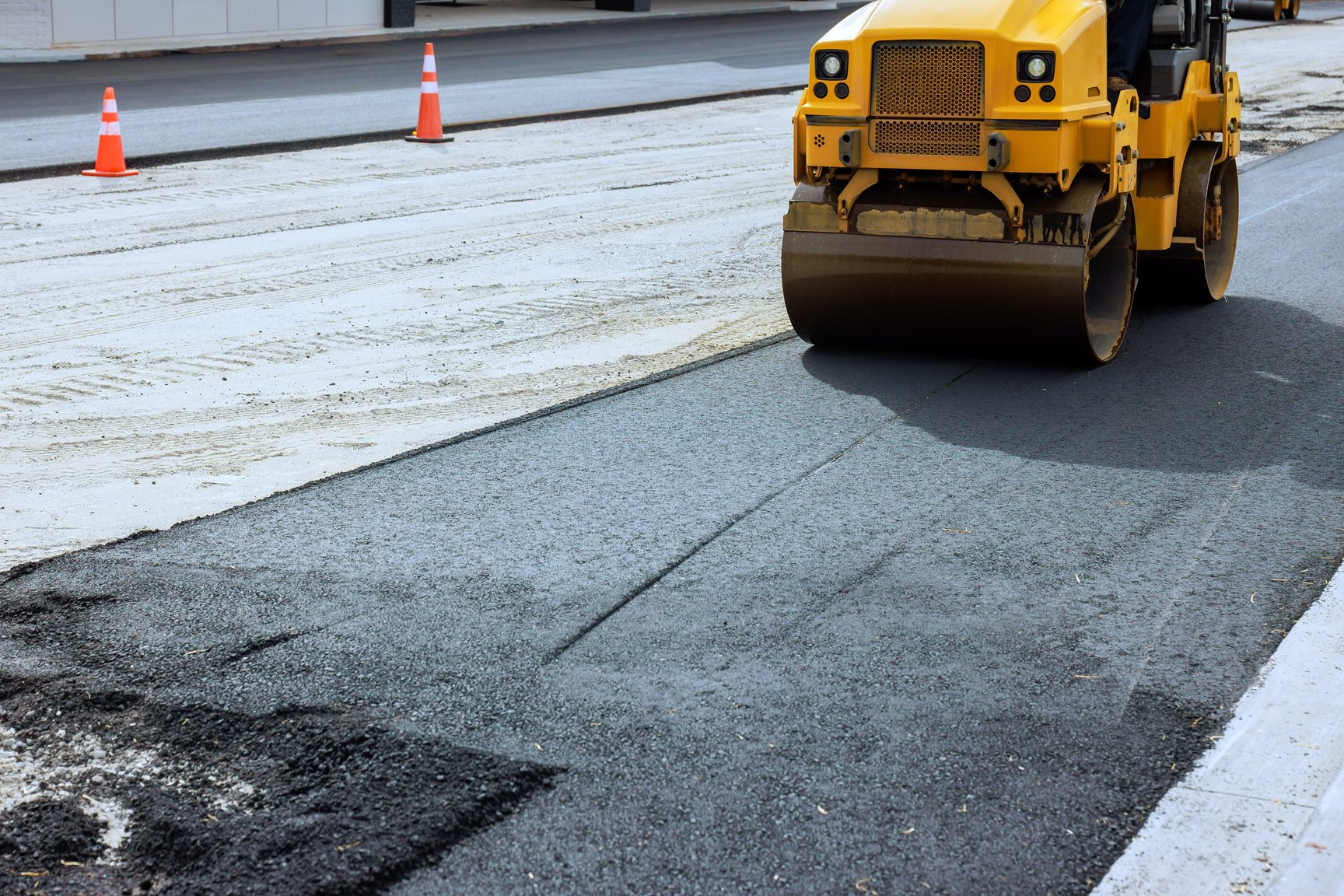
Illinois paving contractor insurance is a general liability, contractors equipment, commercial auto and workers’ compensation program, fitted to the few places Illinois law actually touches asphalt work. Those places are narrower than many owners expect: no state license covers paving, sealcoating or striping, the coal-tar statute places its duties on public schools, early care providers and State agencies rather than on the applicator, and the firmest requirements arrive through driveway work at homes, IDOT’s bidding rules and a workers’ compensation law that reaches construction without being asked.
The dividing line that matters most here is not public against private but the home against everything else. A residential driveway is the one private job where an Illinois statute writes an insurance duty onto the contractor, so a crew moving between homeowners, retail lots and state lettings works under different rules on each.
Illinois licenses named trades, and paving is not among them
Illinois has no statewide general, building or paving contractor license, so asphalt paving, sealcoating and pavement striping carry no state trade license. The contractor licenses Illinois does issue cover named trades, and the nearest one to this work, roofing, is defined by roofs over occupiable space rather than by pavement.
Two duties remain. Paving or sealing a driveway at a home can fall under the Home Repair and Remodeling Act, which requires the contractor to carry public liability and property damage insurance unless it meets the Act’s net-worth exception, and the Illinois Constitution gives home-rule cities and counties their own power to license, so a local license or registration can apply where the job is.
Authority 225 ILCS 335/2(e); 815 ILCS 513/10; 815 ILCS 513/25; Ill. Const. art. VII, sec. 6(a) · read the source · checked
The contractor licenses Illinois issues come from single-trade acts — roofing, fire sprinklers, water wells and pumps, petroleum equipment, plumbing — and none is written for pavement. Roofing is the nearest trade, and its definition shows where it stops:
“"Roofing contractor" is one who has the experience, knowledge, and skill to construct, reconstruct, alter, maintain, and repair roofs and use materials and items used in the construction, reconstruction, alteration, maintenance, and repair of all kinds of roofing and waterproofing as related to roofing over an occupiable space”
The closing words carry the point: the license is tied to roofs over space people occupy. A lot, a driveway or a stripe painted on either sits outside it.
Driveways at a home: an insurance duty inside a consumer law
The nearest thing to a state rule for this trade is not a license. The Home Repair and Remodeling Act exists to protect homeowners; it creates no license or registration, yet it names driveways when it defines the work it governs:
“"Home repair and remodeling" includes the construction, installation, replacement, or improvement of driveways”
Its reach is residential — property built or used as a residence, leaving out original construction, larger buildings and small repairs below a floor it sets — which is why the finding speaks of a driveway at a home and never of a retail center. For the work it reaches, it states the coverage it expects:
“Any person engaged in the business of home repair and remodeling shall obtain and maintain in full force and effect during the operation of the business public liability and property damage insurance in the amount of $100,000 per person and $300,000 per occurrence of bodily injury and $50,000 per occurrence for property damage, unless the person has a net worth of not less than $1,000,000 as determined on the basis of the person's most recent financial statement, prepared within 13 months.”
Read it to the end. The exception for a business with the net worth it describes means it does not bind every contractor; where it binds, it asks for liability and property damage coverage, the core of a general liability program. Its amounts are a floor written to protect the homeowner, not an estimate of what a paving loss costs.
Local licensing rests on home rule
The second duty in the finding comes from the Illinois Constitution. Home-rule cities and counties hold a broad grant of power, and licensing is named in it:
“Except as limited by this Section, a home rule unit may exercise any power and perform any function pertaining to its government and affairs including, but not limited to, the power to regulate for the protection of the public health, safety, morals and welfare; to license; to tax; and to incur debt.”
That is how a contractor can meet a license or registration in one town and nothing in the next. Home-rule status belongs to some local units and not others, and a unit without it has only the powers state law gives it, so the reliable answer comes from the city or county where the job sits, asked before the job is scheduled.
Coal-tar sealant in Illinois: a notice and bidding law, not a ban
Illinois does not ban coal-tar pavement sealant, but its Coal Tar Sealant Disclosure Act governs its use on public property. A public school, school district or early care and education provider must notify parents, guardians and employees before any coal-tar or high-PAH sealant is applied, and a public school or State agency that bids a project using one must also ask for an asphalt-based or latex-based alternative. A State agency must use the alternative when it costs the same or less.
Authority 410 ILCS 170/5; 410 ILCS 170/10(a) and (b); 410 ILCS 170/15(a) and (c); 410 ILCS 170/20; 410 ILCS 170/99 · read the source · checked
The Coal Tar Sealant Disclosure Act identifies the products it covers by what is in them:
“"Coal tar-based sealant or high polycyclic aromatic hydrocarbon sealant product" means a pavement sealant material containing coal tar or a high polycyclic aromatic hydrocarbon content greater than 0.1% by weight.”
Its duties land on public owners. A school, a school district or an early care and education provider gives notice first:
“A public school, public school district, or early care and education provider shall provide written or telephonic notification to parents and guardians of students and employees prior to any application of a coal-tar based sealant product or a high polycyclic aromatic hydrocarbon sealant product.”
A State agency applies a cost test with a preference built in:
“The State agency shall consider whether asphalt-based or latex-based sealant product should be used for the project based upon the costs involved and shall incorporate asphalt-based or latex-based sealant product into a pavement engineering project if the cost of using asphalt-based or latex-based sealant product is equal to or less than the coal tar-based sealant or high polycyclic aromatic hydrocarbon sealant product.”
That section stops short of highway structures handled under the transportation department, and another section sets roofing aside entirely:
“This Section does not apply to a pavement engineering project requiring the use of a coal tar-based sealant or high polycyclic aromatic hydrocarbon sealant product for pavement engineering-related use on a highway structure conducted by or under the authority of the Department of Transportation.”
“This Act takes effect January 1, 2023.”
Nothing in the Act forbids selling or applying the product, and the state’s public health agency says as much about content in its guidance:
“The Coal Tar Sealant Disclosure Act does not restrict the amount of PAHs in pavement sealants applied on school or day care center property.”
For a sealcoating contractor the effect turns on who owns the lot. On a school or early care lot the notice is the owner’s duty, but it must come before application, so a crew that arrives early can put its customer out of compliance. On a public school or State agency bid, expect the specification to invite a non-coal-tar alternative. On a private lot the Act adds nothing. Whether a city or county restricts the product by ordinance is a question this page does not answer; ask the local government before ordering a season’s material.
What the Act changes is the paper trail. A complaint about odor or residue on a school lot now has a notice, a product and a date attached from the start. Keep the product sheet and application date for every public job: if an exposure claim arrives, those answers decide whether the liability side of the sealcoating program responds or pollution wording has to.
IDOT work: a rating to bid, registration to subcontract
The Illinois Department of Transportation prequalifies contractors before authorizing them to bid on the construction and maintenance contracts it advertises, rating each firm’s financial condition and the work categories it has the experience and equipment to perform. IDOT’s rule says a rating is neither a license to do business nor a right to a contract, and prequalification carries no insurance requirement of its own. Bonds come from the Illinois Highway Code, which requires the winning bidder on a highway construction contract to furnish bonds for the work, and subcontractors on IDOT projects register with the department instead of prequalifying.
Authority 44 Ill. Adm. Code 650.10(b); 44 Ill. Adm. Code 650.30(a); 44 Ill. Adm. Code 650.380; 605 ILCS 5/4-103 · read the source · checked
The department presents prequalification to firms as a required step:
“For firms seeking to work as contractors or consultants—whether in construction, engineering, land surveying, or architecture—prequalification is a mandatory step.”
The rule is more exact about what that step grants. It puts prequalification ahead of Authorization to Bid, and denies that a rating means anything more:
“As required by Subpart B, each contractor shall be prequalified, or deemed eligible, prior to being granted Authorization to Bid on contracts advertised by the Department.”
“A prequalification rating grants neither a license to do business nor a right to bid on or to be awarded a Department contract.”
Where a web page and a rule describe one process differently, this page follows the rule. A rating makes a firm eligible to be considered; it promises no letting and stands in for no local license. The categories it rates read in places like a job list for this trade:
One of them, the second type of seal coat, any lot sealer would recognize:
“Consists of sealing parking lots and driveways.”
The rating asks a firm to prove experience, equipment and finances, not insurance, so a firm can hold a category and still be under-insured for a given contract.
Subcontractors register instead
“However, subcontractors must be registered in accordance with Subpart C before being approved to work on projects.”
A firm working under a prime meets a lighter entry step, not lighter contract terms. The rules mention insurance only as a line in a firm’s financial statements, so the limits, additional insured wording or waiver a job needs come from the contract documents and the subcontract — the pages to read before a certificate is issued.
Bonds come from the Highway Code
“the Department shall also require the successful bidder, or bidders, to furnish good and sufficient bonds to insure proper and prompt completion of such work in accordance with the provisions of such contracts.”
That sentence carries no threshold and no split by contract size. Illinois also has a separate public construction bond statute, which this page has not read and makes no claim about. The bond and the insurance are placed separately, and a contract asking for both will want evidence of both.
Workers’ compensation in Illinois: automatic for construction
Illinois workers’ compensation is a competitive market with no state fund. Construction is one of the businesses the Workers’ Compensation Act covers automatically, without any election, and a covered employer must secure the liability by insuring it with a carrier authorized in Illinois, by obtaining the Illinois Workers’ Compensation Commission’s approval to self-insure, or through another arrangement the Commission accepts.
Authority 820 ILCS 305/3; 820 ILCS 305/4(a) · read the source · checked
The Act does not wait for an employer to opt in. Its coverage section opens with the businesses it treats as extra hazardous, and construction is on the list:
“The provisions of this Act hereinafter following shall apply automatically and without election to the State, county, city, town, township, incorporated village or school district, body politic or municipal corporation, and to all employers and all their employees, engaged in any department of the following enterprises or businesses which are declared to be extra hazardous, namely:”
“2. Construction, excavating or electrical work.”
Nothing is bought from the state. The Act lists the ways a covered employer secures its liability — approved self-insurance, a group pool under the state’s insurance code, another arrangement the Commission accepts, or an authorized carrier:
“(3) Insure his entire liability to pay such compensation in some insurance carrier authorized, licensed, or permitted to do such insurance business in this State.”
The Commission’s own summary places the obligation on the employer:
“Workers' compensation is a no-fault system of benefits paid by employers to workers who experience work-related injuries or diseases.”
The Illinois Department of Insurance regulates the insurers in that market and every other line of the program. The workers’ compensation page covers how a paving policy is rated. Because construction is covered automatically, a subcontractor arriving without coverage of its own is a question to settle before the job starts, with a current certificate in hand.
The Illinois agencies a paving business deals with
Illinois paving markets by IDOT district office
Each market is shown with the county the city sits in and the district office the department prints for that area. No population, mileage or market-size figure is attached.
Chicago
Cook County. IDOT district office, Schaumburg.
State routes here answer to an office outside the city. City streets, state routes and private lots belong to different owners, and the city decides which local license or permit a paving crew needs.
Rockford
Winnebago County. IDOT district office, Dixon.
A crew can go from a homeowner’s driveway to a retail lot in one afternoon. The consumer statute’s insurance duty follows the first job and not the second, so the certificate on file should cover both.
Urbana
Champaign County. IDOT district office, Paris.
On a public school or early care lot, the sealant notice sits on the owner’s calendar before a sealcoating crew can start, and the job keeps the school’s schedule.
Springfield
Sangamon County. IDOT district office, Springfield.
The district office shares the city’s name. A state letting here runs through the same rating, authorization and bond steps as anywhere in Illinois.
Effingham
Effingham County. IDOT district office, Effingham.
The district office is in the same city. A crew working outward from here crosses many local jurisdictions, and whether each one licenses paving is asked town by town.
Carbondale
Jackson County. IDOT district office, Carbondale.
The district office is in the same city. For a small outfit doing driveways and modest lots, the residential insurance duty and automatic workers’ compensation are the state rules that reach it first.
What moves the price of an Illinois paving program
What moves the price of a Illinois paving program — the mix of paving, sealcoating and striping work, the payroll and loss history behind it, and how the state’s workers compensation system is bought — is set out in our Illinois paving insurance cost guide. This page keeps to Illinois’s rules, agencies and markets; the guide keeps to what an underwriter reads.
Illinois paving claim patterns worth planning for
Damage at a customer’s home. A loaded truck cracks a walk, a skid steer tears up a lawn, sealer rides a tire into a garage. Each is a homeowner’s property damage claim — the kind of loss the consumer statute expects a residential contractor to be insured for.
A complaint from a school lot. A parent or staff member raises odor or residue after sealing. Whether the liability policy or a pollution form answers depends on what was applied and how the policy is worded.
Something struck under the milling drum. A shallow line, a curb or a neighbor’s apron gets caught while a lot is milled. Damage to property the firm does not own is a third-party claim; the general liability page explains why the firm’s own work is treated differently.
A crew member hurt on the job. A burn at the screed or a foot under a roller runs through the workers’ compensation policy, not the liability program; how that policy is built for a paving crew is covered on the workers’ compensation page.
Illinois: Contractor license, no statewide license reaches this work, connected to the General Liability page. Coal-tar sealant, a state rule governs its use or sale, connected to the Asphalt Sealcoating Insurance page. Transportation department prequalification, applies to department road work, connected to the Commercial Auto page. Workers’ compensation, bought in the open market, connected to the Workers Compensation page. The diagram pairs each state rule with the page on this site that discusses it and shows no figures.
Related coverage and services
What we insure
Coverage lines
Illinois paving contractor insurance questions
Is there an Illinois license for asphalt paving or sealcoating?
Not at the state level. Illinois licenses certain trades one act at a time, and none of those acts is written for pavement, sealer or stripes; the Illinois Department of Financial and Professional Regulation is the place to confirm that. Local rules are different. A home-rule city or county can require its own license or registration, so call the local permits office before the first job in a new town.
Does paving a homeowner’s driveway bring any insurance rule in Illinois?
It can. Illinois treats driveway work at a residence as home repair and remodeling, and the statute behind that term tells a business doing such work to keep liability and property damage coverage in force, unless it meets the net-worth exception the statute writes in. Commercial lots fall outside it, which is why the certificate a homeowner sees and the one a property manager sees may differ.
Can I still apply coal-tar sealer in Illinois?
State law does not prohibit it. The Illinois statute on coal-tar sealant works through notice and purchasing: public schools and early care providers must tell families and staff before it goes down, and public schools and State agencies bidding such work must invite a non-coal-tar option. A private lot carries no duty under that statute. Local ordinances are a separate question, so check with the city or county.
What changes when the job is a school parking lot?
The school, not the contractor, owes the notice to parents, guardians and employees if a coal-tar or high-PAH product will be used, and it has to come before application. In practice that ties your start date to the owner’s paperwork. If the school bid the work, expect the specification to ask for an asphalt or latex alternative too, and keep a record of the product actually applied.
Do I need IDOT prequalification to subcontract on a state job?
Not as a subcontractor. The Illinois Department of Transportation requires a prime bidder to be prequalified before it is authorized to bid, while subcontractors register with the department instead. A rating is not a license and does not promise any contract. Whatever insurance the job needs is set by the contract documents and the subcontract, so read those before you sign rather than relying on your registration.
Does IDOT prequalification come with insurance or bond requirements?
Prequalification itself carries no insurance requirement; the department’s rules touch insurance only as an item on a firm’s financial statements. Bonds are a separate matter set by the Illinois Highway Code, which has the winning bidder on a highway construction contract furnish bonds for the work. Any insurance the contract calls for comes from that contract, so the bid documents are where to look.
Is workers’ compensation optional for a small Illinois paving crew?
No. Illinois applies its workers’ compensation law to construction automatically, with no election for the employer to make. There is no state fund; an employer secures the liability through an authorized insurer, approved self-insurance, a group pool or another arrangement the Illinois Workers’ Compensation Commission accepts. In practice that means a policy bought alongside the rest of the program.
This page describes insurance for paving and asphalt contractors operating in this state. It is general information, not legal advice and not a statement of coverage. Licensing, permitting and environmental requirements change; verify current requirements with the agency named before relying on them.
Get a quote for your Illinois paving work
Send us the shape of your Illinois season — home driveways, commercial lots, IDOT lettings — and we will fit the program to the work you actually do.