
Paving Contractor Insurance by State
Ohio Paving Contractor Insurance
Ohio licenses no paving trade and sets no state coal-tar sealant rule — but department bids start with prequalification, and workers compensation is bought from the state fund.
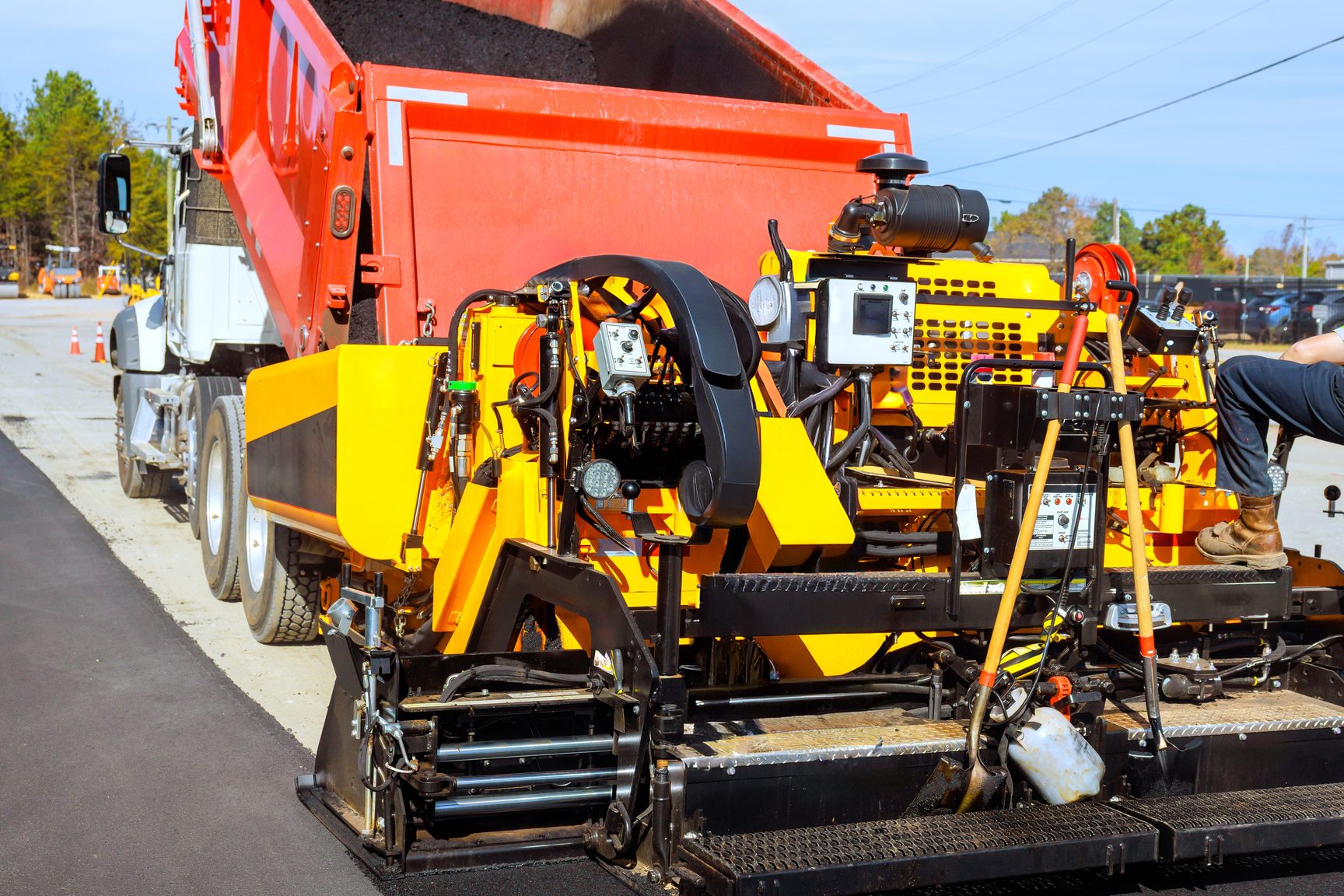
An Ohio paving business insures itself with general liability, contractors equipment, commercial auto and property bought from insurers, and with workers compensation bought from the state. That last line is what sets Ohio apart: a paving, sealcoating or striping crew here does not shop its workers compensation at all, and the rest of the program is arranged around the fund rather than beside a competing policy.
Past that, the state layer is thin in some places and firm in others. No Ohio license covers asphalt work and no state rule touches coal-tar sealer, so private-lot work answers mainly to the owner, the contract and the local permit office. Bid a contract the Ohio Department of Transportation awards, though, and the bidder must be prequalified before the bid can stand, subcontractors need their own standing, and bonds attach once the contract is signed.
Ohio’s contractor license stops at the building trades
Ohio does have a statewide contractor license, but it stops well short of this work. The Ohio Construction Industry Licensing Board licenses only electrical, plumbing, hydronics, heating, ventilating and air conditioning, and refrigeration contractors on commercial building projects, and paving, sealcoating and pavement striping sit outside every one of those trades.
Work outside the state license still answers to other authorities. Ohio’s licensing chapter itself refers to local contracting licenses and registrations issued by municipalities and other government agencies, so the city or other local authority where a job is done may impose its own requirements, and work for the Ohio Department of Transportation goes through the separate prequalification described below.
Authority ORC 4740.01(A), (D) and (F); ORC 4740.13(A); ORC 4740.10(B)(2) · read the source · checked
Ohio’s licensing chapter is not vague about contractors; it is exact about which ones it means. The definition that governs the rest of the chapter names its trades one at a time:
“(A) "License" means a license the Ohio construction industry licensing board issues to an individual as a heating, ventilating, and air conditioning contractor, refrigeration contractor, electrical contractor, plumbing contractor, or hydronics contractor.”
The projects those trades are licensed for are then tied to the state building code, which is a statement about buildings:
“(F) "Construction project" means a construction project involving a building or structure subject to Chapter 3781. of the Revised Code and the rules adopted under that chapter, but not an industrialized unit or a residential building as defined in section 3781.06 of the Revised Code.”
A parking lot or a township road is not the building or structure that definition describes, and asphalt is not a named trade, so the chapter never reaches the work — laying a mat, sealing one or striping one. The board that administers it describes its reach the same way:
“The Licensing Board regulates commercial contractors who perform the above five specialty trades.”
What the chapter does recognize is that licensing also happens below the state, in a section on disciplining its own license holders:
“upon receiving notice that a municipal corporation or any other governmental agency has suspended or revoked the local contracting license or registration of an individual or contracting company that also holds a license pursuant to this chapter.”
That passage recognizes local licensing without granting any, and this page does not claim that a particular Ohio city requires a paving contractor to register; the question is asked jurisdiction by jurisdiction. Where a permit office does ask, proof of insurance can come with the request, and the certificate for a street-opening permit is the one a property manager wants the following week. That puts the weight on the general liability program and how quickly it can produce additional insured and primary wording for a new owner.
Coal tar in Ohio law: a street-dust power, not a sealant rule
No Ohio statute or administrative rule restricts coal-tar pavement sealant, whether by ban, use limit or labeling requirement. The one place the Revised Code mentions coal tar on pavement is an old municipal street-maintenance power that lists light coal tar products among permitted dust treatments.
Silence at the state level leaves the choice of sealant to whoever else controls the job. No Ohio municipal ordinance on sealants was verified for this record; where one exists, or where a property owner or project specification names the product, that controls.
Authority Ohio Revised Code and Ohio Administrative Code, each keyword-swept in full; ORC 723.23 · read the source · checked
The search behind that finding ran the whole Revised Code and Administrative Code. The one passage that puts coal tar on a pavement is a municipal power over dust:
“Municipal corporations may treat the surface of streets, alleys, squares, and public roadways with calcium chloride, road oil, light coal tar products, light asphalts, or any other suitable light bituminous substances for the purpose of providing a temporary improvement in laying the dust on and preserving such surface.”
That section lets a city treat street dust with bituminous products that happen to include light coal tar; it says nothing about what a sealcoater may spread on a parking lot. The chip and fog sealing notice in ORC 5517.08 is different again — a duty on the transportation director to notify counties and townships, not a rule on material. And the search stopped at the statute and rule books: the Ohio Environmental Protection Agency site was not searched, so runoff and disposal questions belong with that agency directly.
For a sealcoater, the exposure lives in where the sealer goes rather than what it is made of — a squeegee pass onto a neighbor’s concrete, a rinse heading for a catch basin. Those losses sit with the sealcoating program whatever the product, and whether a spill reaching water is property damage or pollution turns on the policy form.
Department bids: prequalification before the proposal
Ohio requires a bidder to be prequalified by the Ohio Department of Transportation before bidding on contracts the director of transportation awards, and a contract awarded to anyone not previously qualified is void. The statute carves out bidders on environmental remediation and specialty projects for which the department has set no class of work. Prequalification carries no liability-insurance requirement of its own, but an applicant that is or has been an Ohio employer must show it has complied with the state’s workers’ compensation law.
Authority ORC 5525.02; ORC 5525.03(A); ORC 5525.04; ORC 5525.06; OAC 5501:2-3-04 · read the source · checked
The requirement and its exception share one sentence:
“Sections 5525.02 to 5525.09 of the Revised Code shall govern the qualification and classification of all bidders desiring to offer bids for the performance of contracts proposed to be awarded by the director of transportation, and all contracts attempted to be awarded to any person other than a bidder previously qualified in compliance with such sections shall be void, except that bidders submitting bids on environmental remediation and specialty projects for which there are no classes of work established by rules adopted by the director are not subject to the qualification requirements of sections 5525.02 to 5525.09 of the Revised Code.”
Its reach is the contracts the director of transportation awards. Work a city, village or county lets on its own was outside this page’s research, so for that work the bid documents hold the answer. For department lettings, the certificate is a ceiling as well as a permission: under ORC 5525.03(C) it fixes an aggregate amount of uncompleted work the holder may carry and can confine the holder to a class of work. The process runs online:
“New and renewed contractor prequalification processes are managed electronically.”
Qualification also runs down the chain to subcontractors:
“No successful bidder shall enter into a subcontract with any other person, involving the performance of any part of any work upon which the bidder may be engaged for the department of transportation, unless the subcontractor has been properly qualified for the work sublet to the subcontractor or the subcontractor is eligible for participation without previous qualification under rules adopted by the director of transportation under section 5525.05 of the Revised Code.”
For a striping or sealcoating outfit working under paving primes, that is a paperwork question first. A prime that must confirm your standing will ask for it, and the equipment list behind it describes the same machines an underwriter reads for the contractors equipment floater. When the lists disagree, both readers notice.
What prequalification asks about coverage
Very little. The prequalification sections of the Revised Code never mention insurance; surety companies appear only as a source of financial information about an applicant. The department’s rules mention insurance as a balance-sheet asset and, for a joint-venture bid, in a rule putting the contract, its bond and the policies in the venture’s name (OAC 5501:2-3-06(C)) — a contract rule, not a certificate rule. The condition that does touch coverage is workers compensation:
“If an applicant for either type of certificate of qualification is or has been an employer in this state the application shall be accompanied by satisfactory evidence that the applicant has complied with Chapter 4123. of the Revised Code.”
That evidence comes from the Ohio Bureau of Workers’ Compensation, where Ohio coverage is bought. Any liability limits a department job carries come from somewhere other than prequalification, so read the proposal and contract for them.
Bonds arrive with the award
Before the director enters into a contract, ORC 5525.16(A) calls for a performance bond and a payment bond with sufficient sureties, and ORC 5525.16(C)(2) is the other half: force account work is outside that requirement, though the director may still ask for bonds there. ORC 5525.13 caps how much of a department bond one surety may carry against its own capital and surplus unless it reinsures, and lets the director demand a replacement if a surety fails. None of that is insurance. A surety underwrites your balance sheet and backlog, so bonding capacity is built between bid seasons, not the morning a proposal closes.
Workers compensation in Ohio runs through the state fund
Ohio is a state-fund workers’ compensation state. A private employer covered by the law pays its premium into the state insurance fund run by the Ohio Bureau of Workers’ Compensation, or else obtains the Bureau’s approval to pay compensation directly as a self-insuring employer. Ohio law voids contracts that would insure an employer against that liability, so a private workers’ compensation policy is not how Ohio coverage is bought.
Authority Ohio Constitution, Article II, Section 35; ORC 4123.35(A) and (B); ORC 4123.82(A) · read the source · checked
The arrangement starts in the state constitution:
“laws may be passed establishing a state fund to be created by compulsory contribution thereto by employers, and administered by the state”
The Revised Code makes payment into the fund the default for a private employer:
“Except as otherwise provided in this section, for a policy year commencing on or after July 1, 2015, every private employer and every publicly owned utility shall pay annually in the month of June immediately preceding the policy year into the state insurance fund the amount of estimated annual premium the administrator fixes for the employment or occupation of the employer,”
The alternative is carrying the liability directly, with approval from the Ohio Bureau of Workers’ Compensation:
“may be granted the privilege to pay individually compensation, and furnish medical, surgical, nursing, and hospital services and attention and funeral expenses directly to injured employees or the dependents of killed employees, thereby being granted status as a self-insuring employer.”
And the private-policy route is closed in terms:
“No license or authority to enter into any such agreements or issue any such policies of insurance shall be granted or issued by any public authority in this state.”
That prohibition has narrow limits. A self-insuring employer may buy excess coverage above a retention the section sets (ORC 4123.82(B)(1)), and coverage for work in other states is permitted through ORC 4123.292 (ORC 4123.82(C)); neither lets a private insurer write primary Ohio coverage for a paving crew. Other workers compensation products fall under the superintendent of insurance alone (ORC 4123.82(D)).
For a paving business, the work shifts from shopping to classification, with no competing quote to fall back on. The workers compensation page walks through those questions. A crew that crosses a state line for a job raises the other-states question, and it belongs in the program before the trailer leaves.
The Ohio offices behind these rules
Each office below handles a different piece, and none speaks for the others:
Ohio paving markets by transportation district
The department organizes its road work by district and publishes the counties each district serves. Each market below is shown with the county it is the seat of and the district that county falls in, under the name the department gives it.
Columbus
Franklin County. Columbus Area.
The department’s district here carries the city’s name. As a county seat it hosts county government beside the city’s, so a contractor can hold municipal, county and private owners at once, each with its own certificate request.
Cleveland
Cuyahoga County. Cleveland Area.
Another district named for the city itself. Where private and public work sit close together, the difference shows less in the pavement than in the indemnity clause each owner writes.
Dayton
Montgomery County. Dayton Area.
The district shares the city’s name. Worth settling early here: which jobs are department lettings and which belong to the city or county, since prequalification as written reaches the first kind.
Toledo
Lucas County. Toledo Area.
A county seat whose district bears its name. Machines left overnight at a job site are covered only as the floater’s schedule lists them, rented or owned.
Akron
Summit County. Akron-Canton Area.
Its district is named for this city together with another, so it reaches well past the city. A crew can cross county lines without leaving the district, and the auto schedule should match the trucks making those runs.
Mansfield
Richland County. North Central Ohio.
The one market here whose district carries a regional name rather than a city’s.
What moves the price of an Ohio paving program
What moves the price of a Ohio paving program — the mix of paving, sealcoating and striping work, the payroll and loss history behind it, and how the state’s workers compensation system is bought — is set out in our Ohio paving insurance cost guide. This page keeps to Ohio’s rules, agencies and markets; the guide keeps to what an underwriter reads.
Claim patterns on Ohio paving jobs
Shapes, not statistics — no figure is attached to any of these.
Sealer carried indoors. A lot is sealed while the store stays open, and a customer walks it across a new floor. The floor is third-party property damage; a complaint about the lot’s finish concerns your own work, and the general liability page explains why those halves are answered differently.
A machine gone overnight. A roller left at a job site is missing in the morning. That floater claim is settled against the schedule on file, so a machine nobody added is a problem the policy cannot fix afterward.
A loaded truck in traffic. Hot mix travels from plant to job on public roads, and a rear-end collision or a spilled load follows the truck, not the job — an auto claim, against the trucks the schedule names.
An injury on the mat. In Ohio a hot-mix burn or a back strain behind the roller is filed with the Ohio Bureau of Workers’ Compensation, not with an insurer. The rest of the program answers for whatever else the incident touches — a damaged vehicle, an owner’s demand.
Written separately with the state fund, not placed in this program, so no connector is drawn.
Ohio: Contractor license, no statewide license reaches this work, connected to the General Liability page. Coal-tar sealant, no state rule on the product, connected to the Asphalt Sealcoating Insurance page. Transportation department prequalification, applies to department road work, connected to the Commercial Auto page. Workers’ compensation, bought only from the state fund, which is written separately and has no connector. The diagram pairs each state rule with the page on this site that discusses it and shows no figures.
Nearby states we also write
Ohio’s workers compensation arrangement is the part of this page least likely to hold across a border: it is the state-fund state among the neighbors listed here, and each neighbor’s page is built from that state’s own verified record. Read the page for the state a job sits in, not the state the yard sits in.
Related coverage and services
What we insure
Coverage lines
Ohio paving contractor insurance questions
Is there an Ohio license for paving, sealcoating or striping work?
Not at the state level. Ohio’s contractor license exists, but the Ohio Construction Industry Licensing Board issues it only for specific mechanical and electrical trades on commercial buildings, and asphalt work is not among them. Local rules are a separate matter: the licensing chapter itself acknowledges that cities and other agencies issue their own contracting licenses and registrations, so ask the permit office in each jurisdiction before the first job there.
Can I use a coal-tar sealer on an Ohio lot?
Ohio law does not stop you. Neither the Revised Code nor the Administrative Code bans or limits coal-tar sealer or requires a label for it, and the only coal-tar passage touching pavement is an old municipal power to keep street dust down. A city ordinance, an owner’s specification or a bid document can still name the product, so check each of those before choosing what goes in the tank.
Do I have to prequalify with ODOT to pave a city street?
The statute ties prequalification to contracts the director of transportation awards, and a department contract given to an unqualified bidder is void. A street job a city or county lets on its own was outside what this page’s research examined, so the answer for that work sits in its bid documents. If you plan to bid the Ohio Department of Transportation directly, prequalify well ahead of the letting you want.
What does ODOT prequalification ask about insurance?
Almost nothing. The prequalification statute sets no liability-insurance requirement, and its rules mention insurance only as a balance-sheet asset and in a naming rule for joint-venture contracts. The one coverage condition is workers compensation: an applicant that employs, or has employed, people in Ohio must show it has complied with the state’s compensation law, which in practice means its standing with the Ohio Bureau of Workers’ Compensation.
Can a private insurer write our Ohio workers compensation?
Not for primary Ohio coverage. A private employer pays premium into the state insurance fund, or qualifies to carry the liability itself with approval from the Ohio Bureau of Workers’ Compensation, and Ohio law voids contracts that would insure that liability privately. There are narrow exceptions — excess coverage for a self-insurer and coverage for work in other states — but neither replaces the fund for an Ohio crew.
When does a bond come into a department paving contract?
At the contract, not at prequalification. Before the director enters into a contract, the statute calls for a performance bond and a payment bond with sufficient sureties, while force account work is carved out of that requirement unless the director asks anyway. Because a surety underwrites your finances and backlog rather than your loss history, arrange bonding capacity before a bid season, not the week a proposal closes.
Does a striping subcontractor on a department job need its own qualification?
Yes, unless the rules exempt it. A successful bidder may not sublet part of department work to anyone who is not qualified for that part or eligible to take part without prior qualification under the director’s rules. A prime will therefore ask a striping or sealcoating subcontractor to show its standing, and the equipment and financial records in that file should match what your insurance program lists.
This page describes insurance for paving and asphalt contractors operating in this state. It is general information, not legal advice and not a statement of coverage. Licensing, permitting and environmental requirements change; verify current requirements with the agency named before relying on them.
Get a quote for your Ohio paving work
Send us the next Ohio contract you plan to sign, and we will show you which parts of the program it touches and how the state-fund piece fits beside them.