
Paving Contractor Insurance by State
Indiana Paving Contractor Insurance
Indiana licenses no paving contractor at the state level and has no state coal-tar sealant rule — but public road work runs through prequalification and a liability floor written into statute.
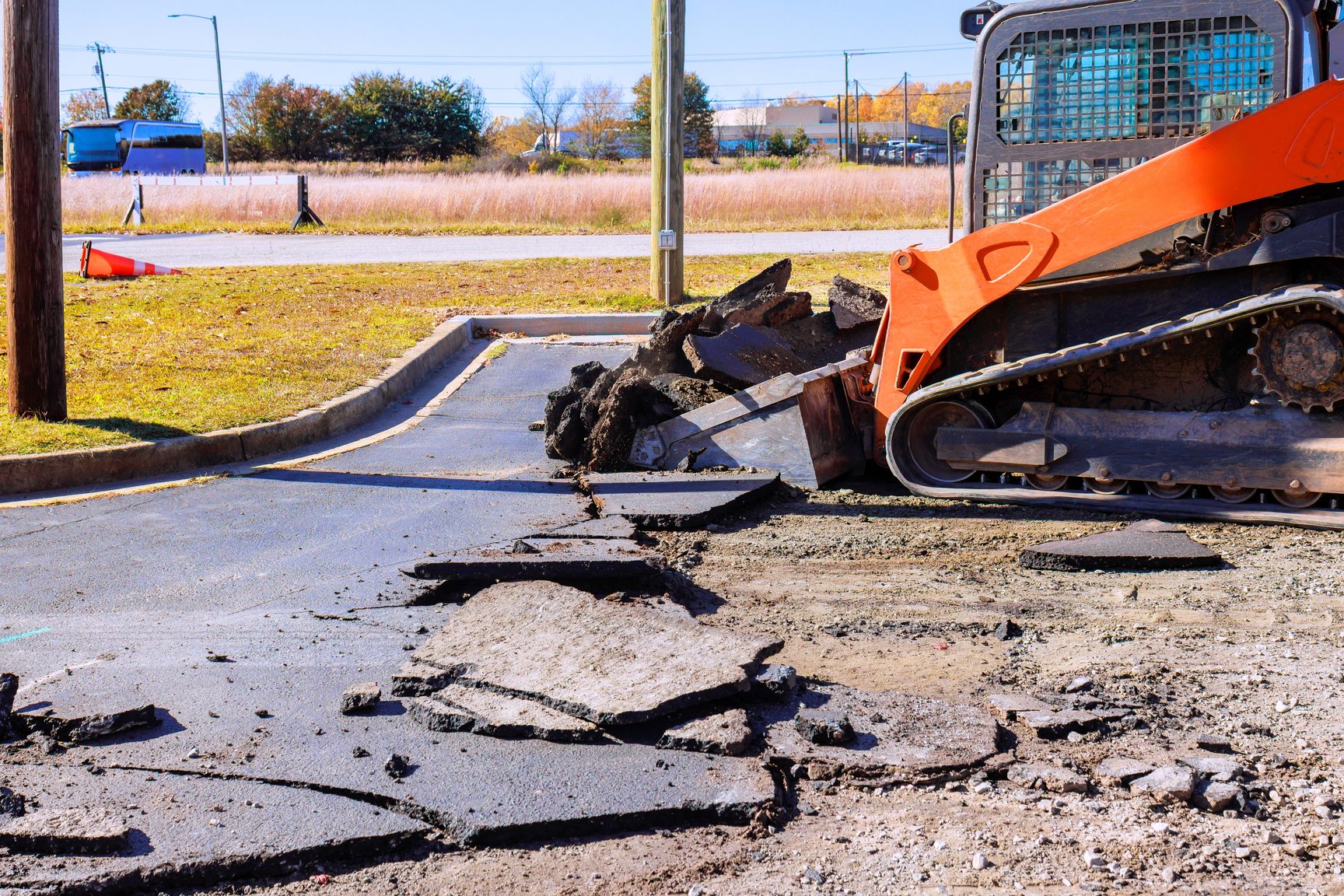
Paving contractor insurance in Indiana is the same program it is anywhere — general liability, contractors equipment, commercial auto, workers compensation and property — and what Indiana changes is who asks you for it and when. The state does not license a paving contractor, does not regulate coal-tar sealant, and buys workers compensation in the open market; the place it reaches hardest is public road work, where prequalification and a liability floor written into statute decide whether you can bid at all.
That makes Indiana a state of two very different customers. A paving, sealcoating or striping contractor working private lots — retail centers, apartment complexes, churches, driveways — meets almost no state layer, and the requirements that land come from the owner, the contract and the city. The same contractor bidding a county road or subcontracting on a state highway meets a qualification process, a statutory insurance minimum and bonding, all before the first ton goes down. Most Indiana paving operations do some of both, which is why the program has to be read against the contracts rather than against the state.
What follows takes each state layer in turn, quotes the authority it rests on, and says what it means for the policies — starting with the one most contractors ask about first, and the one Indiana answers with a verified no.
No statewide paving license in Indiana — and what fills the gap
Indiana issues no statewide contractor license that reaches paving, sealcoating or pavement striping. The trades Indiana does license statewide are single trades such as plumbing, elevator work and water well drilling, and none of them covers this work.
That is not the same as nothing being required. Indiana law contemplates local licensing: a city, town or county may issue its own licenses and permits and require a license bond as a condition of one, so the answer for a particular job is the local unit where the work is done.
Authority IC 25-28.5-1-32; IC 36-1-4-22(a) · read the source · checked
Indiana does license some construction trades at the state level, one trade at a time — plumbing, elevator contracting and water well drilling among them. None of them is a general contractor license, none reaches asphalt, and the list of professions the Indiana Professional Licensing Agency governs carries no contractor license of this kind. The plumbing statute goes further and writes road work out of its own scope in terms:
“This chapter does not apply to the following: (1) Contractors in work on bridges, roads, streets, highways, railroads, or utilities and services incidental to the work.”
So the absence is not an oversight a contractor can fall into; it is the shape of the state layer. What exists instead is local, and state law assumes it exists. The statute on license bonds describes exactly the arrangement a paving contractor meets when a city or county does require something:
“As used in this section, "license bond" refers to a surety bond required by a political subdivision as a condition that the political subdivision issue a license or a permit to a person.”
That has consequences for the program. A license bond is not insurance. It is a surety instrument guaranteeing your compliance to the political subdivision that asked for it, and it is underwritten on your finances rather than on your loss history; if a city on your route asks for one, it is a separate placement with its own paperwork. And local permits routinely ask for proof of liability coverage, and the certificate that satisfies a right-of-way permit is the same document that goes to a property manager — which is where the general liability program has to be able to show the right additional insured and primary wording on short notice.
Coal-tar sealant: Indiana has no state rule
Indiana has no state statute or rule that bans, restricts or requires labeling of coal-tar pavement sealant.
An empty state layer does not settle the question for a job. No Indiana municipal restriction was verified for this page, and a local ordinance, a property owner’s specification or a project’s own documents can still decide which sealant goes down.
Authority Indiana Code and Indiana Administrative Code, both swept in full · read the source · checked
The sweep behind that finding covered the whole of the Indiana Code and every edition of the administrative code in force, and the environmental agency’s own published material. The single passage in Indiana’s air rules that mentions sealing a parking lot is not a restriction at all — it is one of the routine activities the permit-review rule sets aside:
“Activities associated with the repair and maintenance of paved and unpaved roads, including paving or sealing, or both, of parking lots and roadways.”
That leaves product choice where the job puts it. A property owner’s specification, a municipality’s own ordinance or a project’s bid documents can each name what goes down, and none of those is a state rule. For a sealcoating operation the insurance question is less about the product than about where it ends up: overspray on a parked car, tracking onto a storefront floor, runoff toward a storm drain before it cures. That exposure sits with the sealcoating program whichever product is in the tank, and whether a spill that reaches water is a liability loss or a pollution one is decided by the policy wording, not by the state’s silence.
The agency that would administer such a rule is the Indiana Department of Environmental Management, and it is the right place to check again before a large sealcoating season: a state rule written later would appear there first, and this page records only what was true when it was last checked.
Public road work: prequalification, a liability floor and bonds
Indiana requires a contractor to be prequalified by the Indiana Department of Transportation before doing work on a public works project that builds, improves, repairs or maintains a highway, street, road or alley, and it is unlawful to award such a contract to a bidder that has not qualified. The statute exempts smaller contracts on projects a local unit awards under its own public works statute, at a contract size it sets. Prequalification itself imposes no insurance requirement.
Authority IC 8-23-10-0.5(b) and (d); IC 8-23-10-1; IC 8-23-10-2(a) · read the source · checked
This is the one layer in Indiana that reaches a paving contractor before the work rather than after it. The qualification requirement is written into the transportation title, and it reaches further than state highway work alone:
“a contractor must be qualified under this chapter before doing any work on a public works project that is the construction, improvement, alteration, repair, or maintenance of a highway, street, or road (as defined in IC 8-23-1.1-22 ) or alley.”
A public works project on a street or an alley is a city or county project as often as a state one, so qualification can matter to a contractor who never bids the Indiana Department of Transportation directly. The department describes what it is qualifying you for in its own terms, and what it reviews to decide:
“INDOT prequalifies companies for public works projects that are related to the design, construction, and maintenance of the State of Indiana’s transportation infrastructure.”
“Eligibility is based on a thorough review of each company’s financial position, technical competency and experience, equipment and personnel, and performance history.”
Equipment and financial position are both on that list, which is why the equipment schedule and the financial statements a prequalification file asks for tend to be the same ones an underwriter wants for the contractors equipment floater. Keeping one set of numbers for both avoids the most common embarrassment in a public-works submission: an equipment list that does not match the one on the policy. The department publishes the kinds of work it prequalifies, and several read as a description of this trade as printed:
The insurance minimum sits in a separate statute
Prequalification itself imposes no insurance requirement — the chapter that creates it never mentions insurance. The requirement a public-works contractor carries comes from a separate chapter on public works contractors, and it is written to reach down the chain:
“This section applies to each contractor in any contractor tier of a public works project.”
“A contractor must maintain general liability insurance in at least the following amounts: (1) For each occurrence limit, one million dollars ($1,000,000). (2) For the general aggregate limit, two million dollars ($2,000,000).”
“This chapter applies only to a public works contract awarded after June 30, 2015.”
Read that passage closely. The minimum reaches every contractor tier, which puts a subcontractor paving a turn lane or striping a lot on a public job under the same floor as the prime. It is a floor, not a recommendation: an invitation for bids or a contract that asks for more simply asks for more, and the chapter voids a provision inconsistent with it, so one that asks for less cannot lower it. And the chapter reaches only the public works statutes it names — design-build, public-private and construction-manager-as-constructor projects are defined out of it — so the contract in front of you still decides which rule applies.
Bonds on department contracts
Bonding runs on its own track. On contracts the department lets, the statute requires a bid guarantee and a performance bond above a project cost it sets, and lets the department require them on smaller projects too. A performance bond answers to the owner if the work is not completed; the contractor then answers to the surety. Because a bond is underwritten on the balance sheet and the work program rather than on loss history, the time to arrange bonding capacity is before a bid season, not the week a proposal is due.
How workers compensation is bought in Indiana
Indiana requires an employer covered by its worker’s compensation law either to insure that liability with an insurer authorized to write it in Indiana or to satisfy the Worker’s Compensation Board of Indiana that it can pay compensation directly. There is no state fund.
Authority IC 22-3-5-1(a); IC 22-3-2-2(a) · read the source · checked
“(1) insure and keep insured the employer's liability under IC 22-3-2 through IC 22-3-6 in some corporation, association, or organization authorized to transact the business of worker's compensation insurance in this state; or”
Indiana is a competitive state. There is no state fund to buy from, and the board that administers the law says so in a sentence:
“In Indiana, workers’ compensation benefits are paid by employers, not the State.”
The Indiana Department of Insurance is the insurance regulator for that market and for every other line in the program. For a paving crew, the practical questions are the ones the workers compensation page works through: how payroll is split between paving, sealcoating and striping, how an owner who works on the crew is treated, and what a subcontractor has to show before it sets foot on your job. A crew that also works across the Ohio line is a separate conversation, because that state does not buy coverage this way.
Who regulates what for an Indiana paving contractor
These are the agencies that touch this trade in Indiana, and they rarely talk about the same thing:
Where Indiana paving work sits, by department district
The department maintains the state road network through districts, and it publishes which counties each one covers. The markets below are named with the county each is the seat of and the district that county falls in; no population, lane-mile or market-size figure is attached, because none belongs on a page like this one.
Indianapolis
Marion County. INDOT Greenfield District - East Central Indiana.
The district lists a sub-district by this city’s own name. A contractor based here can run private lots, apartment drives and municipal streets in the same week — three kinds of owner, each with its own idea of what a certificate has to show.
Fort Wayne
Allen County. INDOT Fort Wayne District - Northeast Indiana.
The district’s own page lists parts of some counties rather than whole ones, a reminder that the line a trailer crosses between jobs is not always a county line. The equipment floater follows the machine, not the map.
Evansville
Vanderburgh County. INDOT Vincennes District - Southwest Indiana.
A same-name sub-district inside a district named for a different city. State-road work here and city work here answer to different owners, and each owner writes its own insurance article into the contract.
South Bend
St. Joseph County. INDOT LaPorte District - Northwest Indiana.
No sub-district carries the city’s name; state roads here are maintained from a district named for another city. For a contractor that means the owner on a state job is rarely down the street, and the paperwork travels further than the crew does.
Lafayette
Tippecanoe County. INDOT Crawfordsville District - West Central Indiana.
A county seat in a district named for a different city; the nearest sub-district name is West Lafayette. Work that crosses a county line here can cross a district line with it, which is where a job-site schedule and a policy schedule start to disagree.
Bloomington
Monroe County. INDOT Seymour District - Southeast Indiana.
The district lists a sub-district by this city’s name. County, city and private work sit close together here, and each owner type tends to ask for its own additional insured wording on the same certificate.
What drives the cost of paving insurance in Indiana
What moves the price of a Indiana paving program — the mix of paving, sealcoating and striping work, the payroll and loss history behind it, and how the state’s workers compensation system is bought — is set out in our Indiana paving insurance cost guide. This page keeps to Indiana’s rules, agencies and markets; the guide keeps to what an underwriter reads.
Common Indiana paving claims we see
Patterns rather than counts, and no figure attached to any of them.
A vehicle driven onto a fresh surface. Barricades go up, somebody moves one, and a car tracks sealer or leaves ruts in a new mat. The damage to the car is a third-party claim; the damage to your own work is a different question, and which policy answers each half is exactly the seam the general liability page works through.
A slip on a lot that stayed open. Retail and apartment owners rarely close a whole lot, so pedestrians walk through a job that is still curing or still wet with paint. The owner’s contract usually made you responsible for that before you arrived.
An incident in a public work zone. On a county or state road the public is driving past the crew all day. A work-zone claim involves the traffic control plan, the owner and the contractor at once, and it is where the difference between the statutory minimum and the limits a contract actually asks for tends to show.
A crew member hurt at the paver or the roller. Burns from hot mix, a run-over by a backing machine, a strain on a long day. Indiana handles it through a policy bought in the open market, so the question is which insurer writes the class.
Indiana: Contractor license, no statewide license reaches this work, connected to the General Liability page. Coal-tar sealant, no state rule on the product, connected to the Asphalt Sealcoating Insurance page. Transportation department prequalification, applies to department road work, connected to the Commercial Auto page. Workers’ compensation, bought in the open market, connected to the Workers Compensation page. The diagram pairs each state rule with the page on this site that discusses it and shows no figures.
Related coverage and services
What we insure
Coverage lines
Indiana paving contractor insurance questions
Do I need a state license to pave or sealcoat in Indiana?
No. Indiana issues no statewide contractor license that reaches paving, sealcoating or striping, and the Indiana Professional Licensing Agency lists no such profession. That does not mean nothing is required: a city, town or county can require its own license or permit, and can attach a license bond to it. Before a job in a new jurisdiction, ask the local building or permits office what it requires of a paving contractor.
Does Indiana restrict coal-tar sealant?
Not at the state level. No Indiana statute or administrative rule bans, restricts or requires labeling of coal-tar pavement sealant; the state code and administrative code were swept for it and neither contains one. That leaves the choice to the job: a local ordinance, a property owner’s specification or a project’s bid documents can still name the product, so read the specification before the tank is loaded.
Do I need INDOT prequalification to work on a city street?
Often, yes. Indiana requires a contractor to be qualified before doing work on a public works project that builds, improves, repairs or maintains a highway, street, road or alley, and that reaches local projects as well as state ones. The statute exempts smaller contracts on some projects a local unit awards under its own public works statute, so check the bid documents, which will say whether qualification is required.
Does INDOT prequalification require me to carry insurance?
Prequalification itself does not; the chapter that creates it never mentions insurance. The requirement sits in a separate public works statute that applies to every contractor tier, including subcontractors, and sets minimum general liability limits for each occurrence and in the aggregate. On a public works job that statute covers, a subcontractor is held to those minimums whether or not it bid the job itself.
Will a public road contract require a bond?
On department contracts, the statute requires a bid guarantee and a performance bond above a project cost it sets, and lets the department require them below it. A bond is a surety instrument, not an insurance policy: it answers to the owner if the contractor does not perform, and the contractor answers to the surety afterward. It is written on your financials, which is why it moves on a different timetable from the insurance.
How is workers compensation bought in Indiana?
In the open market. Indiana runs no state fund: an employer covered by the law either insures the liability with an insurer authorized to write it in Indiana or satisfies the Worker’s Compensation Board of Indiana that it can pay compensation directly. For a paving crew that usually means a policy placed alongside the rest of the program.
We pave in Indiana and Ohio. Does the same program work in both?
Not without checking the workers compensation side first. Indiana buys it from private insurers; Ohio runs a state-fund system, so coverage for work in Ohio is arranged differently and an Indiana policy does not simply extend across the line. The liability, equipment and auto lines can usually follow the work, but every state a crew works in should be named when the program is written.
This page describes insurance for paving and asphalt contractors operating in this state. It is general information, not legal advice and not a statement of coverage. Licensing, permitting and environmental requirements change; verify current requirements with the agency named before relying on them.
Get a quote for your Indiana paving work
Tell us whether your Indiana work is private lots, public streets or both, and we will read the program against the contracts you actually sign.