
Paving Contractor Insurance by State
West Virginia Paving Contractor Insurance
West Virginia licenses road contractors through a state board, prequalifies every bidder and subcontractor on state road lettings, and has no state fund selling workers compensation.
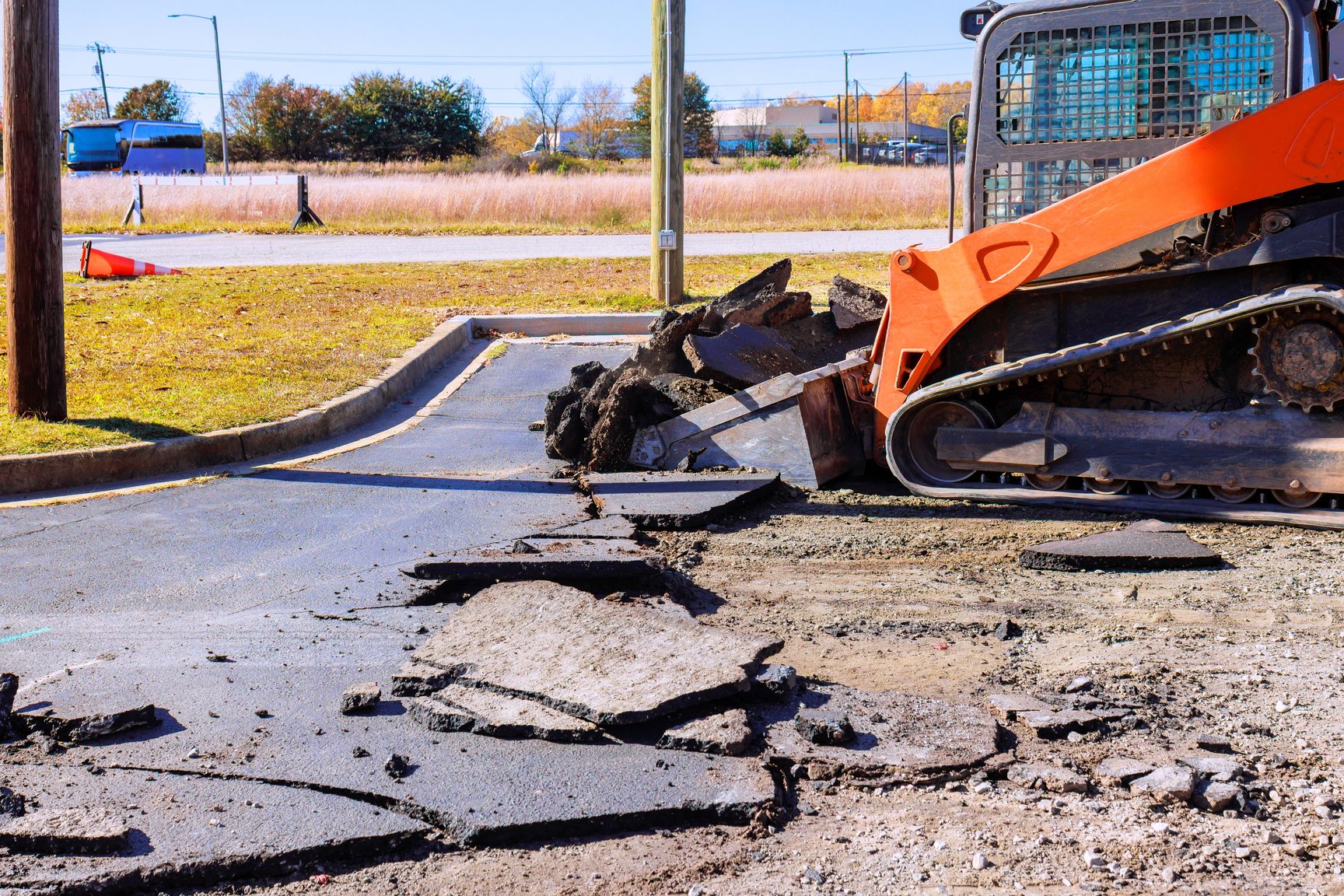
West Virginia paving contractor insurance is built from general liability, contractors equipment, commercial auto, workers compensation and property, and the state decides much of when and by whom each line gets tested. A firm that contracts to build or repair a road here needs a license from a state board once the job reaches the cost level the act sets, a highway-division certificate before it bids or subcontracts on a state letting, and workers compensation bought from private carriers, because no state fund sells a policy.
Private jobs and public jobs meet those layers from different directions. On a retail lot, the owner’s contract and the local permit office can set most of the paperwork. On a road the Division lets, prequalification, bonds and a contract insurance clause all stand between the estimate and the first load of mix.
Licensed by the state: where paving sits among West Virginia’s contractor classes
West Virginia puts road and site contractors under a state license. The West Virginia Contractor Licensing Board must license anyone who contracts or bids to build, alter, repair or improve a highway, road or excavation once the undertaking reaches the residential or commercial cost level the licensing act sets, and of the classes the Board licenses, the general engineering contractor is the one whose statutory definition lists highways. Neither the act nor the Board’s rule creates a class named for asphalt work, sealcoats or line painting on parking lots and roadways.
Because no class carries the trade’s name, the Board asks each applicant to send it a description of the work so it can tell the firm which classification and exams apply, and the Board’s rule lets it order a license holder working outside its classifications to cease and desist, just as it can an unlicensed contractor. No local building permit may go to anyone who needs a license and lacks one, an unlicensed contractor is ordered to stop all operations in the state, and once a firm holds a Board license no city or county may demand another contractor license from it.
Authority W. Va. Code §30-42-3(d) and (g); §30-42-6(a); §30-42-10(a); §30-42-14(a)(1); §30-42-20; W. Va. Code St. R. §28-2-3.7 · read the source · checked
Paving reaches that license through the words highway, road and excavation in the statute’s definition of a contractor, and the same definition writes in the cost level at which the license starts to apply. Of the classes the West Virginia Contractor Licensing Board issues, the one whose definition reaches highways is general engineering:
“‘General engineering contractor’ means a person whose principal business is in connection with public or private works projects, including, but not limited to, one or more of the following: Irrigation, drainage, and water supply projects; electrical generation projects; swimming pools; flood control; harbors; railroads; highways; tunnels; airports and airways; sewers and sewage disposal systems; bridges; inland waterways; pipelines for transmission of petroleum and other liquid or gaseous substances; refineries; chemical plants and other industrial plants requiring a specialized engineering knowledge and skill; piers and foundations; and structures or work incidental thereto.”
Asphalt, sealcoat and line paint appear nowhere in that definition, or anywhere else in the act or the Board’s rule. Which class a firm lands in is the Board’s decision, made from the firm’s own account of what it does:
“Contact and provide the West Virginia Contractor Licensing Board with your scope of work in order to verify the classification(s) and the exam(s) required for obtaining your contractor license.”
That step matters most to a firm that only seals or only stripes. Whether a sealcoat or a fresh set of stall lines alters, repairs or improves a road is a question the act does not answer in terms, and the Board’s own view was not obtained for this page — so nothing here says that sealing or striping alone is licensed, or that it is not. Send the Board a scope of work before assuming either; work outside a firm’s assigned classes can draw the same stop order as unlicensed work.
Once licensed, a firm cannot be asked by a city or county for a second contractor license, though permits still apply — and a permit office, a property manager and a general contractor may each want proof of liability coverage. The general liability program is the document that has to show each of them the additional insured and primary wording it expects.
Sealer on West Virginia lots: no coal-tar law, and a solvent rule that is not about it
West Virginia’s Code, like its environmental and highway rules, contains no provision on coal-tar sealer for pavement. No state law forbids selling it, controls where crews apply it or dictates what its label must say.
State silence does not decide the product on a given lot. This record verified no West Virginia city or county sealant ordinance and did not survey local codes, so the property owner’s spec, the contract documents and any local rule are where the choice of sealer gets made. The state air rule that does restrict paving asphalts reaches petroleum cutback and emulsified asphalt in named counties during the ozone season, which makes it a solvent rule rather than a rule about coal tar.
Authority West Virginia Code (all chapters) and the active rules of the Division of Air Quality, the Division of Water and Waste Management and the Division of Highways, swept by term · read the source · checked
That finding rests on a term search of the whole Code and of the active air, water, waste and highway rules. No quotation sits under it because no text in any of them speaks to coal-tar sealer, and no city or county code was searched, so a local ordinance cannot be ruled out.
The rule that does restrict paving asphalts belongs to the state’s air program. While the ozone season lasts, cutback asphalt needs the Secretary’s approval and emulsified asphalt that contains volatile organic compounds is barred, for sources in the counties the rule names. Its text was read in a Word rendering of the official filing, so it is described here rather than quoted; the air quality rule list is where to read it. It limits petroleum-solvent asphalts and says nothing about coal tar or about which sealer a lot owner may specify.
Product choice therefore stays with the lot owner’s specification, the contract documents and any local rule. Overspray on a parked car, sealer tracked into a lobby and a rinse that reaches a storm inlet are the exposures the sealcoating program is built around whatever the product, and whether a spill that reaches water is a liability loss or a pollution loss is settled by policy wording. A later state sealant rule would come through the West Virginia Department of Environmental Protection.
Highway-division lettings: prequalification comes before the bid
Every bidder and every subcontractor on a road project the West Virginia Division of Highways lets must first be prequalified, which means filing the Division’s application and receiving a Certificate of Contractor Qualification that lists the categories of work the firm may perform; no firm may do an item of work it is not prequalified for. The Commissioner of Highways holds that power under the state road contracting statute, and the Division reserves the right to exclude projects of a special nature. The Division counts prequalification and the state contractor license as two separate gates: apart from federal-aid jobs, it accepts bids only from firms that pass both, and on federal-aid work the license must be in hand before work begins.
The certificate itself carries no insurance condition, but the surety relationship starts early. A bid bond comes with every bid and a performance bond with every award, and the bond amount follows the performance rating the Division publishes for the contractor before the letting. Liability, workers’ compensation and auto coverage are contract terms set by the Division’s construction rule, not conditions of prequalifying. A prime contractor does not have to be prequalified in work it will subcontract, though the categories it holds must cover the minimum share of the job that the Division’s specifications set.
Authority W. Va. Code §17-4-19(d); §17-4-20; W. Va. Code St. R. §157-3 · read the source · checked
The Commissioner’s authority sits in the road contracting statute, and the sentence that grants it carries a proviso shutting a debarred vendor out whatever its qualifications:
“The commissioner shall have the power to prescribe proper prequalifications of contractors bidding on state road construction work: Provided, That a vendor who has been debarred pursuant to the provisions of sections thirty-three-a through thirty-three-f, article three, chapter five-a of this code, may not bid on or be awarded a contract under this section.”
The requirement runs down the chain to subcontractors, and it applies item by item:
“No company can perform an item of work, whether as a prime contractor or subcontractor, for which they are not prequalified.”
A firm hired to mill, seal cracks or lay markings on a Division job therefore needs those categories on its own certificate, whatever the prime holds. The category worksheet of the West Virginia Division of Highways names several that read as this trade’s own work, as printed:
The license and the certificate are separate gates, and the Division says when each has to be cleared:
“Bids on Division contracts – except Federal-Aid Projects – will only be accepted from contractors that are both prequalified and licensed contractors in West Virginia. For Federal-Aid projects, only prequalification is required at the time of bid; however, a West Virginia contractor’s license will be required before work can begin.”
On a federal-aid project a firm can therefore win on prequalification alone and still be unable to start until the Board has licensed it.
Insurance is a contract term here, not a prequalification condition
Nothing in the prequalification statute, page or application mentions insurance. The requirement arrives with the contract: the Division’s construction rule writes commercial general liability, workers compensation with employer’s liability, and commercial auto into its construction contracts, each for the life of the contract, at limits the rule prints. That rule’s official filing is an image scan and its text was read in a Word rendering, so it is stated here in words, its limits are not repeated, and the highway division’s rule list holds the current text. The liability, auto and workers compensation policies all have to stay in force for the full contract term; a certificate that lapses mid-job becomes a contract problem as well as an insurance one.
Bid bonds, performance bonds and the rating that sizes them
“It should be noted that bid bonding will be required by contractors prior to submitting bids. Performance bonding will be required upon awarding all Division contracts to the successful bidder (see §17-4-20).”
The statute makes the performance bond answer to suppliers and laborers as well as to the state, and the amount follows the performance rating the Division publishes ahead of each letting, so a change in the rating changes what the surety is asked to write.
Workers compensation in West Virginia: mandatory, and bought from private carriers
West Virginia makes workers’ compensation a requirement for any employer that regularly employs people in the state, subject to a short statutory list of employers who may carry it by choice, among them domestic, casual and certain agricultural employers, and the Offices of the Insurance Commissioner police compliance. Private carriers licensed in West Virginia write the coverage; an employer they turn down can get a policy through the assigned risk plan the Commissioner oversees, and an employer with the financial strength can apply to self-insure. No state fund sells policies.
Contractors carry an extra layer of exposure. A prime contractor that uses an uncovered subcontractor it hired directly can end up paying that subcontractor’s injured workers unless it got a certificate of coverage from the subcontractor first, and a private employer that fails to carry the coverage it owes can be sued by its workers and may not defend by blaming a co-worker, the injured worker’s own carelessness or a danger the worker accepted.
Authority W. Va. Code §23-2-1(a) and (b); §23-2C-15(a); §23-2C-10(a); §23-2-9(a); §23-2-1d(a); §23-2-8 · read the source · checked
None of the statute’s optional categories describes a firm that keeps a regular paving crew, though certain owners, partners and officers can be excluded by election. The market that sells the coverage is private:
“Private carriers are permitted to sell workers’ compensation insurance through licensed agents in the state.”
A firm the voluntary market declines goes to the assigned risk plan, and a financially strong employer can seek the Commissioner’s approval to self-insure. The West Virginia Offices of the Insurance Commissioner regulates the carriers and agents behind each route and checks whether an employer carries coverage at all. For a paving prime, the sharper rule is the one about subcontractors:
“The Legislature finds that every prime contractor should be responsible to ensure that any subcontractor with which it directly contracts is either self-insured or maintains workers’ compensation coverage throughout the periods during which the services of a subcontractor are used and, further, if the subcontractor is neither self-insured nor covered, then the prime contractor rather than the Uninsured Employer Fund should be responsible for the payment of statutory benefits.”
“Provided, That receipt by the prime contractor of a certificate of coverage from a subcontractor shall be deemed to relieve the prime contractor of responsibility regarding the subcontractor’s workers’ compensation coverage.”
Collected before the sub starts, a certificate of coverage relieves the prime; missing, it can leave the prime paying the sub’s injured workers. How payroll is split between paving, sealcoating and striping, and how a working owner is treated, are questions the workers compensation page takes up — insurance practice rather than West Virginia law.
Agencies that touch a West Virginia paving firm
Each governs a different piece of the work, and none speaks for the others:
West Virginia paving markets by highway district
The Division runs the state road system through numbered districts, and each district page lists the counties it covers. Each market below is linked to the district page that lists its county, no card shares a district with another, and no population, mileage or ranking goes with them.
Charleston
Kanawha County. WVDOH District 1.
The state license covers the work here as it does anywhere in West Virginia, and the owner’s specification, not a state rule, settles which sealer goes on a lot.
Huntington
Cabell County. WVDOH District 2.
The city cannot demand a second contractor license from a Board licensee, only its permit, so any certificate request tends to arrive with that permit.
Parkersburg
Wood County. WVDOH District 3.
The air rule on paving asphalt reaches petroleum cutback and emulsified products in the counties it names; check the rule itself for a given job, since no state text here speaks to coal-tar sealer.
Morgantown
Monongalia County. WVDOH District 4.
Its district page lists several neighboring counties with it, so a crew can cross county lines without changing the district that maintains nearby state roads.
Martinsburg
Berkeley County. WVDOH District 5.
A city or county here may not stack its own contractor license on top of the Board’s, though a permit can still arrive with a certificate request.
Beckley
Raleigh County. WVDOH District 10.
Its district is shared by no other market listed, so Division work here answers to a different district page; the license and coverage rules stay the same.
What moves a West Virginia paving premium
What moves the price of a paving program — the mix of paving, sealcoating and striping work, the payroll and loss history behind it, and how workers compensation is bought — is set out in our national guide to what paving contractor insurance cost depends on. This page keeps to West Virginia’s rules, agencies and markets.
Claims that come up on West Virginia paving jobs
Wet sealer and the car that crossed it. Cones and tape go down, a driver ignores them, and sealer ends up on tires, fenders and the next space over. The car is a third-party property claim; the re-sealed section is your own work, and the split between the two is what the general liability page works through.
Foot traffic through a working lot. Owners who leave part of a lot in use during sealing or striping send customers past fresh coats and wet paint, and the contract may already have put that risk on the contractor.
A collision inside a Division work zone. A crash beside a paving crew on a state route draws in the traffic control plan, the Division and the contractor together, and the contract insurance clause decides what coverage has to be there to answer it.
An injury at the paver, roller or mill. An asphalt burn, a worker caught by a reversing roller, a strain late in a shift. Here the claim runs through a private carrier’s policy, the assigned risk plan or a self-insured program — and, if the injured worker belonged to an uncovered sub, possibly through the prime.
West Virginia: Contractor license, a state license or registration can reach this work, connected to the General Liability page. Coal-tar sealant, no state rule on the product, connected to the Asphalt Sealcoating Insurance page. Transportation department prequalification, applies to department road work, connected to the Commercial Auto page. Workers’ compensation, bought in the open market, connected to the Workers Compensation page. The diagram pairs each state rule with the page on this site that discusses it and shows no figures.
Nearby states we also write
The states below share a border with West Virginia, and each page is built from its own record. Licensing, prequalification and workers compensation all change at a state line, so a crew that crosses one should expect a different set of answers on the other side.
Related coverage and services
What we insure
Coverage lines
West Virginia paving contractor insurance questions
Does a sealcoating-only or striping-only job need a West Virginia contractor license?
The statute does not settle it. The licensing act never uses the words sealcoat or striping, and whether sealing or painting lines on an existing surface counts as altering, repairing or improving a road is a question the text leaves open. The Board asks each applicant for a description of its work before it assigns a classification, so send yours to the West Virginia Contractor Licensing Board before you bid rather than guessing either way.
Which Board classification fits an asphalt paving firm?
No classification is named for asphalt. Among the classes the Board issues, general engineering is the one whose definition lists highways, and the rule also defines excavation, concrete and specialty classes that reach parts of site work. The Board decides which applies from the scope of work a firm submits, and it can order a licensee working outside its classes to stop, so the classification and the work should match.
Can a West Virginia city make us buy a local contractor license too?
Not once you hold a Board license. State law bars a municipality, county or other local government from demanding an extra occupational license or proof of competence from a Board licensee as a condition of working there. A city can still require a building permit, and its permit office cannot issue one to a contractor who needs a state license and does not have one, so the license comes first.
Is coal-tar sealer restricted anywhere in West Virginia law?
Not in state law. A term search of the Code and of the air, water, waste and highway rules found no provision on coal-tar pavement sealer. Local codes were not searched, so an ordinance or an owner’s specification can still decide the product. The state air rule that limits cutback and emulsified asphalt in the ozone season, in counties it names, concerns petroleum solvents, and it is not a sealant rule.
Does WVDOH prequalification make us carry insurance?
The certificate does not. Nothing in the prequalification statute, page or application asks for insurance. The obligation comes with the contract: the Division’s construction rule writes general liability, workers compensation with employer’s liability, and commercial auto into its construction contracts for their full term, at limits the rule prints. Bonds run on their own track, with a bid bond at bidding and a performance bond at award.
Are we on the hook if a subcontractor has no workers compensation?
You can be. A prime that hires an uncovered sub directly can become responsible for the benefits owed to that sub’s injured workers. The statute relieves the prime of that responsibility once it has received a certificate of coverage from the sub, so collect a current certificate from every sub you hire directly before its crew starts, and keep it with the job file.
Where does a West Virginia paving firm buy workers compensation?
From a private carrier licensed in the state, placed through a licensed agent. A firm the voluntary market declines can get coverage through the assigned risk plan the West Virginia Offices of the Insurance Commissioner runs, and an employer strong enough financially can apply to carry its own risk with approval. None of those routes is a state fund, and the law requires coverage of nearly every employer with a regular workforce.
This page describes insurance for paving and asphalt contractors operating in this state. It is general information, not legal advice and not a statement of coverage. Licensing, permitting and environmental requirements change; verify current requirements with the agency named before relying on them.
Get a quote for your West Virginia paving work
Send us your West Virginia license classification, your prequalification categories if you hold them and the contracts you sign, and we will build the program around them.