
Paving Contractor Insurance by State
Tennessee Paving Contractor Insurance
Tennessee ties larger paving contracts to the Board’s license, gates TDOT lettings with prequalification, and makes construction firms insure every worker, owners included.
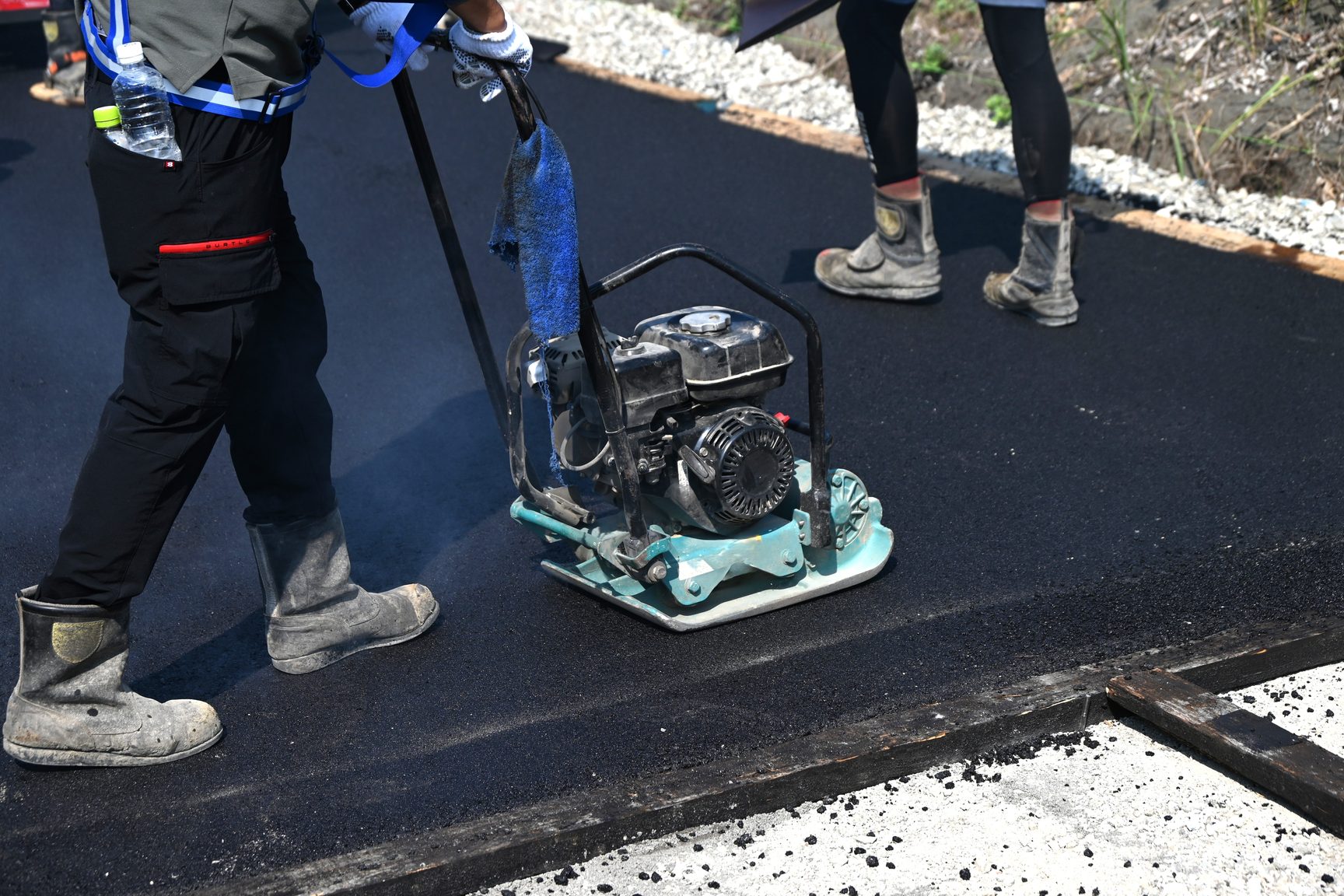
Tennessee paving contractor insurance is built from the usual lines — general liability, contractors equipment, commercial auto, workers compensation and property — and Tennessee sets more of the conditions around them than a private-lot operator might expect. The state requires a contractor’s license from the Tennessee Board for Licensing Contractors for larger prime contracts, prequalifies every bidder and subcontractor on Tennessee Department of Transportation lettings, and makes a construction business insure every worker, its owners included, in a private market with no state fund.
Where that leaves a crew depends on who signs the contract. A sealcoating or striping outfit serving shopping centers and apartment owners meets the licensing law through its cost trigger and, in some counties, the home improvement license; the owner’s contract then decides what the general liability program must show. A paving firm chasing department work adds prequalification, the Board’s license in the right classification, and bonds. The workers compensation rule reaches both, owners included.
The Board’s license, and the classification it has to carry
Tennessee licenses paving contractors at the state level. A firm needs a contractor’s license from the Tennessee Board for Licensing Contractors before it bids, offers or negotiates a price as a prime contractor on a project at or above the cost the licensing law sets, and the Board’s own summary of the statutory definition of contracting reaches highways and roads along with grading and excavation. The Board’s outline of classifications puts hot and cold mix asphalt inside a base and paving group under highway, railroad and airport construction, and again under municipal and utility construction.
The license only answers if it fits the job: the Board treats contracting, bidding or pulling a permit without the proper classification and a monetary limit that covers the contract as a violation of the licensing law. No classification in the outline is written around sealcoating or parking-lot striping, so for that work the test is the definition and the cost trigger rather than a trade title, and the Board’s list of subcontractor trades that need their own license does not include paving. Separately, certain counties the Board names require a home improvement license for smaller residential jobs, and the Board’s description of that work names driveways.
Authority T.C.A. § 62-6-102; T.C.A. § 62-6-103; T.C.A. § 62-6-120; T.C.A. § 62-6-501(4)(A); Tenn. Comp. R. & Regs. 0680-01-.12(1) and 0680-01-.16 · read the source · checked
Tennessee’s license turns on the contract rather than the trade. The Board’s contractor page frames the trigger by who the firm contracts with and what the project costs:
“A contractor’s license is required before contracting, including bidding, offering to engage, or negotiating a price, for projects of $25,000 or more when acting as a prime contractor, certain subcontractor, or construction manager/consultant. A prime contractor is one who bids or contracts directly with the owner.”
Holding a license answers only half the question. Each one carries a classification and a monetary limit, and a bid or a permit outside either is a breach in its own right:
“A contractor who contracts, bids, offers to engage or obtains a permit without a license with proper classification and monetary limit, is in violation of T.C.A. §62-6-120.”
Asphalt sits in the Board’s outline under highway, railroad and airport construction, and the same base-and-paving items repeat under municipal and utility construction:
“HRA – Highway, Railroad and Airport Construction A. Grading and Drainage-Includes grading, drainage pipe and structures, clearing and grubbing. B. Base and Paving 1. Base Construction 2. Hot and Cold Mix Asphalt 3. Surface Treatment Asphalt 4. Concrete Paving”
The outline lists surface treatment asphalt without saying what it covers, and this page does not read it as sealcoating. Nothing in the outline is titled for sealcoating or striping, so whether a given contract in those trades needs the license is not settled by a heading — it is a question for the Tennessee Board for Licensing Contractors, asked before the bid.
Homeowner driveway work has a separate track where a county has adopted it:
“A Home Improvement license is required for residential remodeling projects from $3,000 to $24,999; however, this only applies to the counties adopting the law. Currently, this applies to the following counties: Bradley, Davidson, Hamilton, Haywood, Knox, Marion, Robertson, Rutherford, and Shelby.”
None of this is insurance, but it tends to arrive alongside it: the permit office or property manager that checks a license number usually asks for a certificate too, and the general liability page explains the additional insured wording such a request turns on.
Coal-tar sealant in Tennessee: a rules answer, not a statute answer
None of the rules adopted by Tennessee’s environmental, air-quality, transportation or agriculture agencies prohibits sealant made from coal tar, restricts where crews may spread it or sets labeling terms for it. A search of the state’s statute books for such a law could not be completed for this record.
Rules still shape the material on some jobs. Tennessee’s air-quality rules bar the use and application of cutback asphalt, a petroleum product, through the warm months apart from the exceptions the rule lists, and a contract can shut coal tar out on its own terms, as a Tennessee Department of Transportation airfield pavement maintenance contract did in its sealcoat specification. No city or county sealant ordinance was verified for this record, so the owner’s specification and the local code decide the product where no state rule does.
Authority Tenn. Comp. R. & Regs. 1200-03-18-.32 (the adjacent petroleum-asphalt rule); rules of TDEC, the Air Pollution Control Board, TDOT and the Department of Agriculture swept in full · read the source · checked
Read that finding for exactly what it covers. The rules of the agencies that would write a sealant restriction were read in full, and none contains one. The state code is another matter: its official text sits behind a public-access host that could not be read in full, so the statute layer was not searched and nothing here speaks for it — no agency rule, and no finding either way on statute.
The air rule that does govern asphalt concerns a different material, defined by its petroleum origin, and its seasonal prohibition is the part a crew can run into:
“(a) “Asphalt” means a dark-brown to black cementitious material (solid, semisolid, or liquid in consistency) of which the main constituents are bitumens that occur naturally or are a residue of petroleum refining.”
“(a) No person shall cause, allow, or permit the manufacture, mixing, storage, use, or application of cutback asphalts April 1 through October 31, except: 1. For long-life stockpile storage; and 2. When the cutback asphalt is to be used solely as a penetrating prime coat.”
Coal tar can still be kept off a job by the contract rather than by the state. A Tennessee Department of Transportation maintenance contract for airports in the middle of the state wrote it out of the sealcoat material:
“shall not contain any tall oil pitch or coal tar material”
That is a single project’s specification, not a rule, and local ordinances were not checked, so the job’s specification and the local code decide what goes in the tank. What the insurance cares about is where the material ends up — on a customer’s car, tracked into a store, down a storm inlet before it sets. The sealcoating program is built around those losses whatever product is allowed, and the policy wording, not the state, settles whether material reaching water is a pollution loss.
Bidding TDOT work: prequalified first, licensed as well
The Tennessee Department of Transportation issues a proposal form only to a bidder its Construction Division’s Prequalification Office has already prequalified, and a subcontractor must be prequalified before TDOT will approve it on a department contract. The rule reaches the building, improvement and maintenance of the roads and bridges TDOT lets, and the prequalification questionnaire lists asphalt paving and pavement marking among its work classifications; for a project whose work sits outside every listed classification, TDOT may seek applications in a new classification or waive prequalification in whole or part.
Prequalification does not replace the state contractor’s license. TDOT’s bidding requirements have every prime contractor other than mowing and litter removal firms hold a Board for Licensing Contractors license in the classification that matches the work, and the questionnaire says the Board’s licensing is separate from TDOT’s own review. Neither the prequalification rule nor the questionnaire sets an insurance requirement; bonding capacity is something an applicant may document or the department may ask about. Bonds arrive at the bid and the contract: a bid guaranty goes with every bid, and the successful bidder must execute a contract bond.
Authority T.C.A. § 54-5-117; Tenn. Comp. R. & Regs. 1680-05-03-.01(2) and (3), 1680-05-03-.03, 1680-05-03-.10(1)(b) · read the source · checked
The department’s gate stands at the proposal form, for primes and subcontractors alike:
“(a) A prospective bidder or contractor must be prequalified by and in good standing with the Department prior to the issuance of a proposal form. (b) A prospective subcontractor must be prequalified by and in good standing with the Department prior to being approved as a subcontractor.”
The rule speaks to the department’s own lettings; a city or county contract says what it wants in its own bid documents. Among the questionnaire’s work classifications, printed in its capitals:
Prequalification is not the license, and the questionnaire says so plainly:
“PLEASE NOTE: The Board for Licensing Contractors is not a part of this Department and its licensing requirements are separate from this Department’s prequalification requirements.”
What prequalification leaves out
Insurance is missing from it: the rule, the questionnaire and the bidding page were each read, and none sets an insurance requirement. Whatever a department job asks a certificate to show comes from that job’s documents, which the commercial auto program and the liability program are read against. Bonding capacity is optional in the file — an applicant can document it, and the department can ask.
Bid guaranty and contract bond
Bonds enter at the letting. Every bid carries a guaranty, a bid bond or a cashier’s or certified check, and the successful bidder then executes a contract bond. A bond offered as the guaranty has conditions of its own:
“If a bid bond is offered as guaranty, the bond must be submitted electronically via the AASHTOWare Project Bids bid file, must be made by a surety company qualified and authorized to transact business in the State of Tennessee and must be acceptable to the Department.”
A bond is a surety’s guarantee to the department, not an insurance policy, and it is arranged on a separate track from the program this page describes.
Workers compensation: every construction worker, owners included
Tennessee’s Bureau of Workers’ Compensation says construction businesses must carry workers’ compensation for everyone, their owners included, while businesses outside construction need it only once they reach the employee count the law sets. The coverage is bought in the private market: from an insurer licensed in Tennessee, through the assigned risk plan when insurers have refused a policy, or by self-insuring alone or in a group the Department of Commerce and Insurance approves. Tennessee has no state fund.
An owner of a construction business can step outside the requirement only by qualifying for the Bureau’s exemption registry, and the exemption protects that owner alone: every employee still has to be covered. A construction firm based in another state must hold a Tennessee policy from its first day of work in Tennessee, and the Bureau tells contractors to confirm that each subcontractor is covered or exempt.
Authority Tennessee Workers’ Compensation Law, T.C.A. Title 50, Chapter 6, including T.C.A. §§ 50-6-102(10) and 50-6-115(e)(1) as the Bureau cites them · read the source · checked
The Bureau sets the construction rule beside the general one:
“Generally speaking, businesses engaged in the construction industry are required to have workers’ compensation coverage for everyone including the business owners. Other businesses need insurance if there are five or more employees.”
For a paving business the first sentence is the rule. An owner has to be covered by default, and the Bureau’s registry releases the owner and nobody else:
“Exempt owners are still required to have insurance coverage for all of their employees, even if they have only one employee.”
Crews that come in from another state need the state named on their policy from the day work starts:
“Construction Services Providers from other states operating in Tennessee must maintain a Tennessee workers’ compensation policy with “Tennessee” listed in section “3A” of the policy from the first day of operation in the state.”
There is no state fund. A firm buys from a licensed insurer through an agent, joins an approved self-insurance group, qualifies to self-insure alone, or, once insurers have turned it down, goes to the assigned risk plan:
“From the Assigned Risk Plan, you may qualify if you have been refused a policy by two or more insurance companies licensed and actively writing policies in Tennessee.”
The Tennessee Department of Commerce and Insurance licenses the insurers in that market and approves self-insured employers. The Bureau also tells a contractor to confirm each subcontractor is covered or exempt; how that is documented, and how a crew’s work is split for rating, are worked through on the workers compensation page.
Tennessee agencies behind the findings on this page
Each body below answers a different question, and every finding above traces back to one of them:
Tennessee markets and the TDOT regions that serve them
The department runs its road program through regional offices and publishes the counties each takes in. It keeps no page per region, so every card links the same department page, and each note names the office that serves the county.
Nashville
Davidson County. Region 3 Office - Nashville.
The regional office for this part of the state sits in the city. Davidson County is on the Board’s home improvement list as quoted above.
Memphis
Shelby County. Region 4 Office - Jackson.
The department’s county map puts Shelby County under the regional office in Jackson, not one in Memphis. Shelby is on the home improvement list too.
Knoxville
Knox County. Region 1 Office - Knoxville.
Home to its own regional office. Knox County is on the home improvement list, which matters to a crew mixing homeowner driveways with commercial lots.
Chattanooga
Hamilton County. Region 2 Office - Chattanooga.
Another city with a regional office of its own. Hamilton County is on the home improvement list; the commercial licensing test is the statewide one.
Murfreesboro
Rutherford County. Region 3 Office - Nashville.
Rutherford County is mapped to the regional office in Nashville. It is on the home improvement list as printed, like Davidson County.
Jackson
Madison County. Region 4 Office - Jackson.
Seat of the regional office that also takes in Shelby County. Madison County was not on the home improvement list as the Board printed it when checked.
What moves a Tennessee paving premium
What moves the price of a paving program — the mix of paving, sealcoating and striping work, the payroll and loss history behind it, and how workers compensation is bought — is set out in our national guide to what paving contractor insurance cost depends on. This page keeps to Tennessee’s rules, agencies and markets.
Claim patterns on Tennessee paving jobs
A car across a fresh mat. Cones get shifted, a driver takes a shortcut, and the new surface comes away rutted or the car comes away coated. The driver’s loss and the damage to your own work are separate questions, and the general liability coverage page sets out which one a policy answers.
A pedestrian on a lot kept open. Shopping-center and apartment owners seldom shut an entire lot, so people cross a job still curing or freshly painted, and the contract signed beforehand has typically made that your problem.
A subcontractor without coverage. The Bureau’s instruction to confirm each sub is covered or exempt exists for a reason: an injury on an uncovered crew lands in the hiring firm’s job, and the workers compensation coverage page covers the records that head it off.
An exempt owner hurt on site. The registry lets an owner step out of coverage on themselves, and a burn at the paver or a backing roller is when that choice is felt.
Tennessee: Contractor license, a state license or registration can reach this work, connected to the General Liability page. Coal-tar sealant, state code could not be fully read, connected to the Asphalt Sealcoating Insurance page. Transportation department prequalification, applies to department road work, connected to the Commercial Auto page. Workers’ compensation, bought in the open market, connected to the Workers Compensation page. The diagram pairs each state rule with the page on this site that discusses it and shows no figures.
Nearby states we also write
Tennessee touches more states than the licensed neighbors listed here, and each listed state has a page built on its own verified record. A crew crossing any of those lines should read that state’s page rather than assume Tennessee’s answers on licensing and workers compensation travel with it.
Related coverage and services
What we insure
Coverage lines
Tennessee paving contractor insurance questions
Does a sealcoating or striping job in Tennessee need a contractor’s license?
No classification in the Board’s outline is written for either trade, so the answer does not come from a trade title. It turns on what the licensing law counts as contracting and on the project cost that triggers the license, both described on this page. Before bidding a larger lot, especially as the prime, put the question to the Tennessee Board for Licensing Contractors and keep its answer in the job file.
Is coal-tar sealant allowed in Tennessee?
This page can answer only part of that. The rules of the environmental, air, transportation and agriculture agencies were read in full and none restricts coal-tar sealant, but the state code itself could not be searched completely, so nothing here speaks for the statutes. A contract can still exclude coal tar, as a Tennessee Department of Transportation airfield job did, and local ordinances were not checked.
What does TDOT need from me before I bid or sub on its work?
Prequalification by the department, in good standing, before it issues you a proposal form, and before it approves you as a subcontractor. A prime also needs the Tennessee Board for Licensing Contractors license in the classification the project’s work falls under; the department treats that licensing as separate from its own review. Asphalt paving and pavement marking both appear among the questionnaire’s classifications.
Will prequalification ask for proof of insurance?
No insurance requirement appears in the prequalification rule, in the questionnaire or on the bidding requirements page; bonding capacity is something the department may ask about rather than a condition. Bonds arrive later, with a guaranty on every bid and a contract bond from the winning bidder. Look for any certificate terms in the documents for the particular job, and have the liability program read against them.
I own a small paving company. Do I have to cover myself?
By default, yes. Tennessee expects a construction business owner to carry coverage on themselves unless they qualify for the Tennessee Bureau of Workers’ Compensation’s exemption registry, and that exemption is personal: it releases the listed owner and nobody else, so every employee must still be insured. An exempt owner hurt on a job has set aside the benefit a policy would have paid, which is worth weighing before applying.
Can a Kentucky or Georgia crew work here on its home-state policy?
Only if that policy names Tennessee the way the Bureau requires. A construction services provider based in another state must hold a Tennessee workers compensation policy, with Tennessee listed in the section of the policy the Bureau specifies, from its first day of operation here. Confirm that listing before the crew crosses the line, and read the neighboring state’s own page for its rules.
Do residential driveway jobs need a home improvement license?
In some counties they can. The Board requires a home improvement license for residential jobs inside a set cost range, but only where a county has adopted the law, and its description of home improvement work names driveways. The county list and the range are quoted on this page as the Board prints them; whether a given sealcoating job counts is a question for the Tennessee Board for Licensing Contractors.
This page describes insurance for paving and asphalt contractors operating in this state. It is general information, not legal advice and not a statement of coverage. Licensing, permitting and environmental requirements change; verify current requirements with the agency named before relying on them.
Get a quote for your Tennessee paving work
Send us your Tennessee contract mix and where your owners stand on the exemption registry, and we will fit the program to the work you actually bid.