
Coverage line
Property Coverage for a Paving Contractor’s Yard
The shop, the stock, the fence line and everything standing at the address you come back to each night — but not the paver in the yard, which belongs on a different policy.
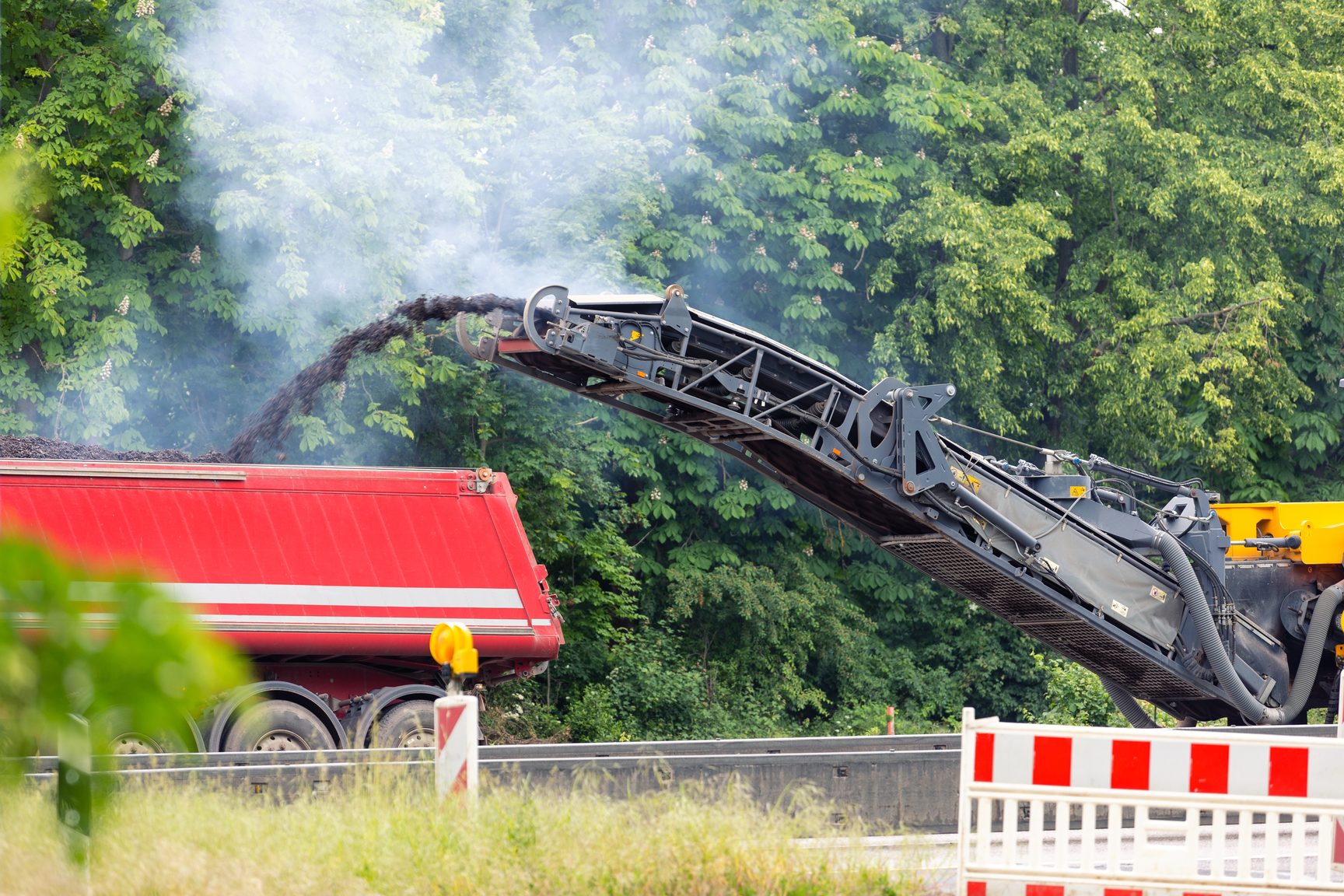
Commercial property insurance covers what a paving contractor owns and leaves standing still: the yard, the shop, the office trailer, the stock inside the fence and the fixtures attached to the building. It does not cover the machines that leave every morning — a paver, a roller, a milling machine and a sealcoat tank ride on an inland marine floater instead, and that division decides more claims here than any wording argument does.
The yard is usually the least-examined address on a paving account. Attention goes to the work — traffic control, crews, fleet — while the building holding every hand tool and every drum of sealer sits behind a limit chosen when the account was written and never revisited. One boundary belongs here too: we insure the contractor who buys and places the mix rather than the plant that produces it — a hot mix plant is a different class in a different market.
Property wording varies between carriers more than liability wording does, so what follows describes the shape of the coverage rather than any particular contract. What settles a claim is the schedule on your own policy: the locations listed, what is listed at each, and the amount beside it.
The yard, the shop and everything inside the fence
Property coverage attaches to described locations rather than to jobs. Whatever stands at an address listed on the policy is its subject, and for a paving contractor that generally means:
- The buildings you own. The shop, the storage building, the wash bay and the office when it is yours rather than rented.
- Business personal property. Benches, welding gear, hand tools, the parts shelf, compressors and office contents.
- Stock and material. Aggregate, sealer, striping paint and thermoplastic, crack-seal material, drums, cones, signage and barricades — bought to install and not installed yet.
- Outdoor property. Fencing, gates, yard lighting and the sign at the road, usually carried at a smaller amount than anything under roof.
What it sets aside is a shorter list still. The rolling plant — paver, roller, milling machine, sealcoat tank, striping rig — is not contents, whatever address it is sitting at. Registered trucks belong to the auto policy, and what somebody else claims over your ground belongs to general liability.
Where the building policy stops and the floater starts
This is the seam that produces uncovered losses on this class, and it is not intuitive. A paver sitting in your own yard on the night the shop burns is not contents of that shop. It is scheduled equipment, answered by an inland marine floater that follows the unit — to the job, onto the lowboy, into a rented yard.
The line is not about where a machine stood at the moment of loss: property answers for what is fixed at an address, the floater for what moves. A whole winter parked behind your fence does not make a machine part of the building.
The failure this produces is a unit that ended up on neither policy — bought mid-season and added to nothing, rented in a hurry, or an attachment bought on its own. Small tools and the contents of a service truck are the gray band, and which side they land on is an underwriting answer on your account rather than a general rule. How units get scheduled belongs on the contractors equipment page.
An owned yard and a leased yard are not the same risk
If you own the yard, the structure is yours to insure. If you lease it, part of the exposure moves into the lease, and the lease is where the answer often lives: it decides who insures the building, who insures the paving, fencing and racking you added to ground you do not own, and what you must carry to stay there.
The common mistake runs both ways — insuring a structure you do not own and were never asked to insure, or assuming a landlord’s policy answers for your tools, your stock and the improvements you paid for. It was written for the landlord’s property.
The liability side of a leased yard, damage to premises you rent, carries its own limit on the general liability policy rather than this one.
A bundled policy or a package built to the schedule
Smaller and simpler operations are often written on a businessowners policy, which bundles property and liability into one contract. More complicated ones are written as a commercial package, where the property section is built to the schedule.
Which route fits is an underwriting decision, not one to make from a web page: eligibility is carrier-specific and it moves. What can be said is what pushes an account toward the package — the locations you occupy, what is stored at them, how the yard is protected, and what your contracts oblige you to carry.
What actually goes wrong at a paving yard
Categories, not case studies. No severities are printed here: one nobody can trace reads exactly like one somebody could.
Fire and smoke in a building that stores fuel and solvent
A paving shop keeps fuel, sealer, thinner, torches and welding gear under one roof, often with hot work beside the material rack. Smoke travels further than flame: a fire contained to one bay can leave the parts, paint and electronics through the rest of the building unusable.
Theft of material, fuel and metal out of the yard
A yard is portable value stacked behind a fence anybody can cut — drums of sealer, pallets of traffic paint, diesel in a tank, copper out of whatever is parked. How the yard is lit, fenced, gated and watched is among the first things an underwriter asks about.
Wind, hail and water on the outdoor side of the yard
Fencing goes down, the sign at the road comes off its posts, yard lighting shears and material stored in the open takes water. Outdoor property usually sits at a smaller amount than the building beside it, so one storm can land against limits that are nothing alike.
The stoppage that follows the loss
The building is rarely the expensive part. A yard out of service in season means crews standing down, jobs moved, equipment relocated and material bought again, while nothing is being paved. Business income and extra expense are written for that gap, and they are the agreements most often left off a schedule.
What a property schedule is, and what decides it
There are no amounts on this page. What belongs on your schedule comes out of a walk through your yard and a reading of what your contracts demand; a figure published as normal would be a guess wearing the clothes of guidance.
A schedule lists locations, and under each it lists what is insured there — the structure, the contents, the stock, the outdoor property — with an amount beside each. Those are separate amounts rather than one pool, which is why a loss crossing categories settles differently than a contractor expects.
Business income and extra expense sit apart from all of it, answering for what the stoppage costs rather than what the building costs. The deductible is the other lever, and one of the few places a contractor can knowingly trade premium against retained risk.
What decides the schedule is your operation: the locations you occupy, what is stored at each, how the yard is protected, what you added to a building you lease, and what your contracts require. Leases end and yards move, and a schedule stops describing the operation quietly rather than loudly.
Why we ask to see the schedule before we talk about price
A property quote is easy to make cheap. Leave the outdoor property off, carry the stock at whatever was there before, skip business income, and the premium falls — and none of that is visible until the yard has burned. We read the schedule you hold against what is standing at your address and tell you where the two have drifted apart.
Independent means the account goes to the specialty markets whose appetite currently fits a paving, sealcoating and striping operation. It also means somebody reads your property schedule and your equipment floater beside each other.
A licensed agent handles every submission across the states we publish, and nothing on this site prices or declines an account on its own. Send the declarations page, the property schedule and the equipment list.
No form number appears on this page. Property wording is not uniform across the market in the way the liability form is, and naming a form we have not read would be worse than naming none. Your own policy controls your claim.
Related coverage and services
Other coverage lines
- Contractors Equipment — the floater that answers for the pavers, rollers and tanks the property policy sets aside.
- General Liability — what somebody else claims because of your work, including the premises you rent.
- Commercial Auto — the registered trucks and trailers that leave the yard each morning.
Trades we write
Regulators and primary sources
Questions we get about the yard side of the policy
Is my paver covered while it is parked in my own yard?
Not by this policy, and the reason is which policy the machine lives on rather than where the machine was standing. A property policy insures what is fixed at a described location — the structure, the fixtures, the shop contents, the stock. A paver, a roller, a milling machine or a sealcoat tank is scheduled equipment, and it is answered by an inland marine floater that follows the unit to the job, onto the trailer and into a rented yard. Parking it behind your own fence does not convert it into contents of your building, and a property policy written for the building will not read it as one. The contractors equipment page covers how those units are scheduled.
We lease our yard. Do we still need property coverage?
Usually yes, and the lease is where the shape of it gets decided. Leasing shifts the structure itself onto somebody else, but it does not move your shop tools, your parts inventory, your stored material, your office contents or the paving, fencing, racking and lighting you added to ground you do not own. A landlord’s policy is written for the landlord’s property, not for yours, and the insurance article of the lease frequently obliges you to carry cover of your own as a condition of staying in the building. Read the lease beside the policy — the obligations in the lease are what the schedule has to satisfy.
Is a businessowners policy enough, or do we need a package?
That is an underwriting decision on your specific account, and any answer given from a web page would be a guess. A businessowners policy bundles property and liability into a single contract and is aimed at smaller, simpler operations. A commercial package builds the property section to the schedule and places the liability section beside it on its own terms, which is the route when the locations, the stored material or the contract requirements outgrow the bundled form. Eligibility is carrier-specific and it moves, so we quote the account rather than publish a rule about it.
Does this policy cover the sealer, aggregate and paint stored at the yard?
Stored material is ordinarily part of what a property policy insures at a described location, alongside the shop contents and the fixtures — drums of sealer, pallets of traffic paint and thermoplastic, crack-seal material, aggregate, cones, signage and barricades all sit on that side of the line. What matters is whether the amount on the schedule still describes what is actually stacked in the building. Stock swings hard through a paving season, and a limit set when the account was written tends to describe an empty yard rather than a full one.
Somebody cut the fence overnight and took fuel and copper. Which policy is that?
Theft of material, fuel and metal from the yard is a property question rather than a liability one, because the property taken was yours. It is an ordinary exposure on this trade, not an exotic one — a paving yard is portable value stacked behind a fence anybody can cut. How the yard is lit, fenced, gated, alarmed and watched is among the first things an underwriter asks about, and it is one of the few places where what you do to the yard changes what the account looks like. Damage the intruder did to the fence and the lighting is outdoor property, which is its own line on the schedule.
A fire in the shop stopped work. Does the policy answer for the jobs we lost?
Only if business income and extra expense were written, and they are the agreements most often left off a contractor’s property schedule. The building is rarely the expensive part of a yard loss. A yard out of service in season means crews standing down, jobs moved, material bought a second time and equipment relocated, and those costs run on while nothing is being paved. Business income answers for the income the operation would have earned; extra expense answers for what you spend to keep working somewhere else while the shop is put back. Neither is automatic, so it is worth confirming they are on the schedule before the season rather than after the fire.
The fence and the sign at the road blew down. Is that the same coverage as the building?
It is on the same policy and generally not on the same line. Fencing, gates, yard lighting and the sign at the road are outdoor property, which a property schedule typically treats separately from everything under roof and usually at a smaller amount. That is the mechanism worth knowing: a single storm can produce one loss to the building and another to the yard around it, settled against limits that are nothing alike. We will not print what yours is — that is on your own declarations — but it is the line most worth looking at before a storm season rather than during one.
Tell us what is standing at your yard
Send the declarations page and the property schedule, with the equipment list beside them. A licensed agent reads all of it together and tells you what is insured at the address, what is on the floater, and what is insured by neither.