
Paving Contractor Insurance by State
Michigan Paving Contractor Insurance
Michigan licenses residential builders by trade and names no paving craft, has no coal-tar sealant rule, and takes road bids only from prequalified contractors.
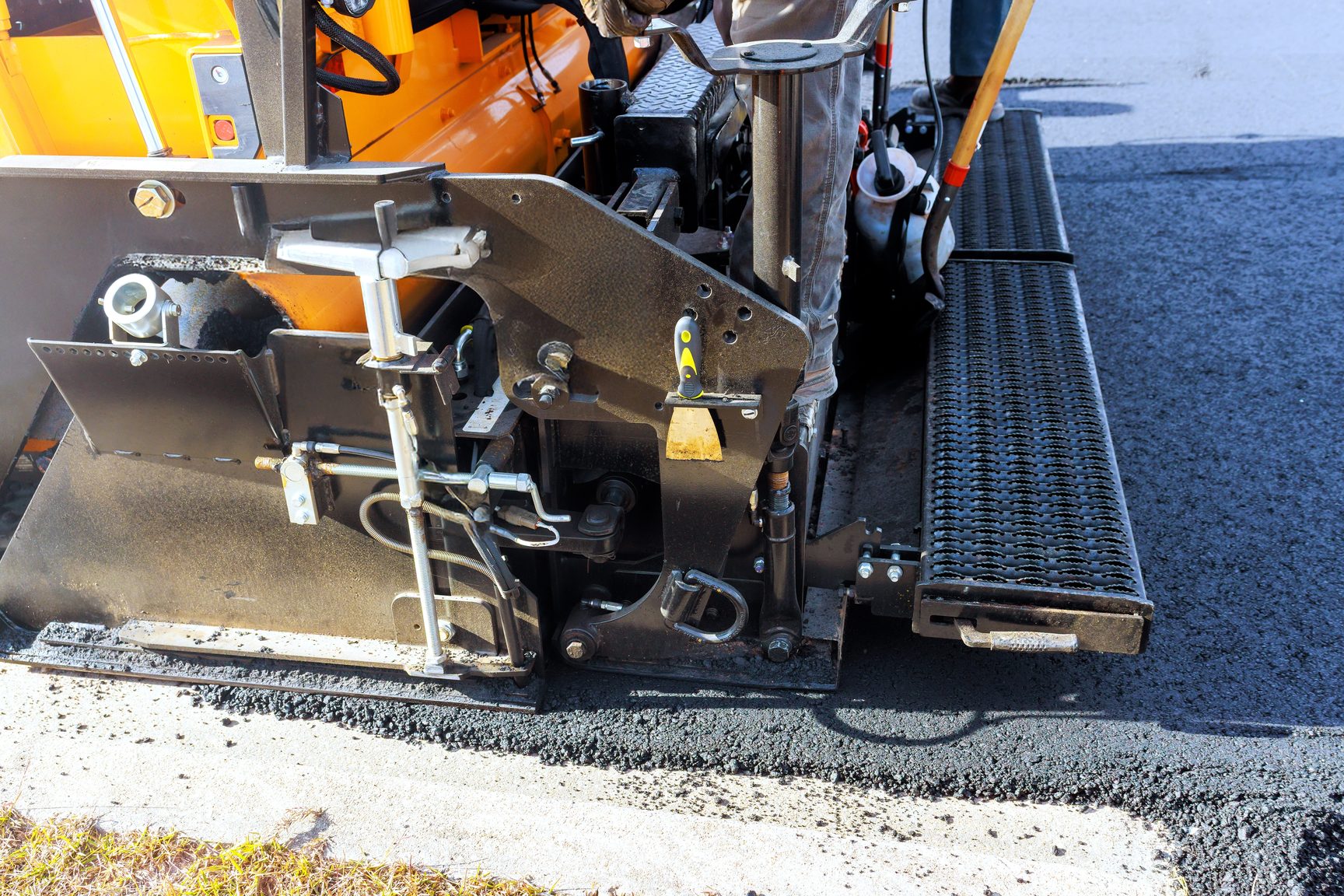
To insure an asphalt paving, sealcoating or striping business in Michigan, you build the program from general liability, contractors equipment, commercial auto, workers compensation and property, written around what an asphalt crew actually does. Michigan’s own rules decide who needs a license, who may bid state road work and how workers compensation is purchased — and each of those answers is narrower, or less settled, than it first looks.
Those rules land differently depending on the customer. A homeowner’s drive sits near the edge of a residential license whose reach the state declines to define; a shopping-center lot is commercial work that license does not cover; a subcontract on a state road job brings prequalification into play before a price is submitted. Each section below quotes the authority and then says what it does to the policies.
Michigan licenses residential builders, and no paving trade is on the list
Michigan’s statewide contractor license is a residential license. The Department of Licensing and Regulatory Affairs licenses residential builders and residential maintenance and alteration contractors; the maintenance and alteration trade list names concrete and excavation but not asphalt paving, sealcoating or pavement striping, and the bureau that issues the license says Michigan does not license commercial builders.
Out of scope does not mean unregulated. The residential definitions reach the repair and improvement of a house and the facilities appurtenant to it, and the laying of concrete on residential property, while the licensing bureau declines to say whether any particular job needs a license. A contractor doing work that does require one cannot sue to collect payment or place a lien without it, so residential driveway work should be checked against the statute before it is bid, and commercial work against the requirements of the city or township where it is done.
Authority MCL 339.2401(b) and (c); MCL 339.2404(3); MCL 339.2412(1) and (3) · read the source · checked
The narrower of Michigan’s residential licenses is issued trade by trade, and the statute prints the full list:
“A license includes the following crafts and trades: carpentry; concrete; swimming pool installation; waterproofing a basement; excavation; insulation work; masonry work; roofing; siding and gutters; screen or storm sash installation; tile and marble work; and house wrecking.”
Asphalt is not on it. A company that also pours concrete aprons or curbs should read the contractor definition on its own terms, because it names concrete on a house lot outright:
“Undertakes with another for the repair, alteration, or addition to, subtraction from, improvement of, wrecking of, or demolition of a residential structure, or building of a garage, or laying of concrete on residential property.”
The driveway question no source settles
The license reaches work on a residential structure, and the statute defines that term to include more than the house:
“A detached 1- or 2-family dwelling and all related facilities appurtenant to that dwelling, used or intended to be used as an adjunct of residential occupancy.”
Whether a paved drive counts as one of those related facilities, neither the statute nor the rules nor the bureau’s guidance says, and the bureau will not make the call for anyone:
“The bureau's position is not to determine if an individual needs a license, but rather to guide our applicants through the licensing process.”
This page does not make it either. The reason to take the question seriously is what happens to a contractor who needed a license and lacked one:
“shall not bring or maintain an action in a court of this state for the collection of compensation for the performance of an act or contract for which a license is required by this article without alleging and proving that the person was licensed under this article during the performance of the act or contract.”
Collection is not an insurance question, but a residential payment dispute can arrive with an allegation about the work, and that half lands on the general liability program. Read the statute against the house work you take on, with counsel if the answer matters to the business.
Commercial lots answer to the city or township
Commercial work sits outside the state license, on the bureau’s own account:
“The State of Michigan Bureau of Construction Codes requires the licensing of Residential Builders not Commercial Builders.”
That does not make a retail or church lot an unregulated job. The bureau points toward local government and stops there:
“Certain municipalities may have additional requirements, but I cannot advise you regarding them.”
On a commercial lot the requirements arrive through the local permit and the owner’s contract, and either can ask for a certificate naming the owner as additional insured. A program that issues that wording quickly, with primary and noncontributory language where a contract calls for it, keeps the season from stalling at the certificate.
No coal-tar sealant rule, and an asphalt air rule that is easy to misread
No Michigan statute or administrative rule bans coal-tar pavement sealant, limits its use or requires it to be labeled.
The state layer being empty leaves the job-level answer open. No Michigan municipal ordinance on coal-tar sealant was verified for this record, and a local rule, an owner’s specification or the contract documents can still name the sealer. Separately, Michigan’s air rules restrict the volatile content of cutback and emulsified paving asphalt during the warm season, which is a petroleum-asphalt rule, not a coal-tar one.
Authority Michigan Compiled Laws and Michigan Administrative Code, both swept; R 336.1618 noted as a related paving-asphalt rule · read the source · checked
The nearest thing the search turned up is not a sealant rule. It sits in the air-quality rules the Department of Environment, Great Lakes, and Energy administers:
“A person shall not manufacture, mix, store, use, or apply cutback or emulsified paving asphalt, from March 1 to October 31, unless the cutback or emulsified paving asphalt contains no greater than 3% volatile organic compounds by volume, which is equivalent to 6.0 milliliters of oil distillate, from a 200 milliliters sample, at 500 degrees Fahrenheit as determined by a test method in subrule (2) of this rule.”
The rule concerns petroleum paving asphalt, and it reaches anyone who mixes, stores, uses or applies the material, not only the maker. It says nothing about coal tar. A crew using cutback or emulsified material in the season it names should keep product records, because the rule has its own record-keeping subsection.
On coal tar the product choice comes from the job, and the sealer the documents name is the one that goes down. Where the product travels after it leaves the wand — onto a parked car, a storefront entry or a catch basin — is the exposure that matters to a sealcoating operation. Whether material reaching a drain is a liability loss or a pollution loss turns on the policy language; settle that before the season, not after.
MDOT road work: prequalified by work classification, with a waiver built in
The Michigan Department of Transportation requires contractors to be prequalified to bid on or perform its projects, and its rules bar a bidder from bidding on or being awarded a project unless it is prequalified in the work classification the project requires; when the work is not among the listed classifications, the department may instead evaluate bidders for that project or waive prequalification. MDOT’s bidding guide applies the requirement to subcontractors in the work they perform. Prequalification itself imposes no insurance or bond requirement.
Authority Mich Admin Code R 247.61(1) and (2); R 247.21; MCL 123.501 to 123.503; MCL 129.201 · read the source · checked
The Michigan Department of Transportation states the requirement broadly, and its list of covered work reads like the public side of this trade:
“Contractors must be prequalified to bid on or perform MDOT projects, including work such as bridge, road, utility, electrical, demolition, painting, signing, guardrail, landscaping, pavement marking, and rail construction.”
The binding version sits in the administrative rules, written as a requirement and a safety valve that belong together and should never be read apart:
“To bid on, or receive award of, any project advertised by the department, the bidder shall be prequalified in the required prime work classification or classifications with a numerical rating and a net financial rating equal to or greater than the rating for the project.”
“If the work is not among the listed work classifications, the department may make a new or project specific evaluation of bidder qualifications to determine suitable bidders for the work, or may waive the prequalification requirement.”
The first is the gate: a bidder qualifies in the classification a project calls for, with ratings that meet the project’s. The second is the department’s room to move when the work fits no listed classification, and the bid proposal says which applies. Several printed classifications describe asphalt work directly:
The hot mix classification reaches past the mainline mat:
“Also includes paver placed surface seal, HMA curb, HMA shared-use paths, paved ditches.”
Subcontractors qualify in the work they perform
A striping or sealcoating firm that never bids a prime contract can still meet this layer:
“Subcontractors must be prequalified in the work classification they intend to perform.”
That comes from the department’s guidance, not the rule text, which speaks of bidders; they do not conflict, but read the proposal for the project in front of you. The rule also rates a bidder’s finances, one more reason to keep the statements in a prequalification file consistent with the ones an underwriter and a surety see.
Insurance and bonds come from somewhere else
Prequalification brings no insurance or bond requirement of its own. Any limits a department project asks for will be in its proposal and contract, so a certificate for a state job is read against those documents.
Bonds come from a separate statute: on a public building or public works contract above the threshold that law sets, the prime has to post both a performance bond and a payment bond ahead of award. Both are written on the contractor’s balance sheet rather than its loss history, so bonding capacity is an off-season conversation, not a bid-week one.
Workers compensation in Michigan: an authorized insurer or approved self-insurance
Michigan requires each employer covered by the Workers’ Disability Compensation Act to secure payment of compensation in one of two ways: insurance with an insurer authorized to write workers’ compensation in Michigan, or self-insurance authorized by the state. There is no state fund to buy from.
Authority MCL 418.611(1)(a) and (b); MCL 418.115 · read the source · checked
“Each employer under this act, subject to the approval of the director, shall secure the payment of compensation under this act by either of the following methods:”
“By insuring against liability with an insurer authorized to transact the business of worker's compensation insurance within this state.”
Michigan is a competitive market for this coverage. The statute gives an employer covered by the act a choice of routes, subject to the director’s approval, and the Workers’ Disability Compensation Agency describes its compliance work in the same terms:
“The Insurance Compliance Division works to ensure that all Michigan employers subject to the Workers’ Disability Compensation Act comply with the law by securing coverage either through an insurance policy or through approved self-insurance.”
Self-insurance is an approval process in its own right, so for a paving company that is not set up for it the answer is a policy from an insurer authorized in Michigan. The workers compensation page covers what shapes that policy: how payroll divides between paving, sealcoating and striping, how a working owner is treated, and what a subcontractor has to hand over before it starts on your job. The Department of Insurance and Financial Services regulates the insurers that write it, along with every other line in the program.
Which Michigan agency answers which question
Each of these agencies touches a different part of the work, and none of them speaks for the others:
Michigan paving markets by transportation region
The department divides the state road network into regions and publishes the counties each region covers. Each card below names a city, the county it lies in and the region that county falls under, as the department prints them, so a contractor can see which office owns the state roads around the work.
Detroit
Wayne County. MDOT Metro Region.
A contractor based here can meet city, county, state and private owners in the same season, each with its own insurance article. Certificate requests stack up, and a program that turns additional insured wording around quickly is worth more than a marginally lower rate.
Grand Rapids
Kent County. MDOT Grand Region.
Municipal streets and private lots can share a week’s schedule here. A city job can ask for a certificate naming the city and its engineer as well as the prime contractor, and that wording belongs on the policy before the bid rather than after the award.
Flint
Genesee County. MDOT Bay Region.
A crew subcontracting on state roads here works under the prime’s contract and the project’s traffic control plan at once. Both set the work-zone rules a claim will later be measured against, so read them together before the cones go out.
Kalamazoo
Kalamazoo County. MDOT Southwest Region.
For a sealcoating or striping crew on occupied lots, the exposure here is pedestrians and parked cars rather than passing traffic, and the owner’s contract decides who has to keep them off a surface that has not cured.
Ann Arbor
Washtenaw County. MDOT University Region.
Institutional and municipal owners can write long insurance articles, with waiver of subrogation and primary wording beside the limits. Read the article at bid time; endorsements take longer to issue than a certificate.
Marquette
Marquette County. MDOT Superior Region.
For a crew that travels here from a yard elsewhere in the state, longer hauls and machines left overnight at the job are the exposures to schedule before the trip — on the auto policy and on the equipment floater.
What moves a Michigan paving premium
What moves the price of a Michigan paving program — the mix of paving, sealcoating and striping work, the payroll and loss history behind it, and how the state’s workers compensation system is bought — is set out in our Michigan paving insurance cost guide. This page keeps to Michigan’s rules, agencies and markets; the guide keeps to what an underwriter reads.
Claim patterns on Michigan paving work
These are patterns, not statistics; no count or amount is attached to any of them.
Sealer where it was not meant to go. Wind carries overspray onto a parked car, or a tire tracks wet sealer across a sidewalk and into a lobby. The cleanup claim comes from a third party, and whether the owner’s own building or the tenant’s floor is involved changes who is making it.
A pedestrian on a lot that stayed open. A lot being sealed or striped in sections still has people crossing it, and a trip at a fresh edge or a fall on a wet line becomes a bodily injury claim against the contractor, the owner or both.
A work-zone incident on a public road. On a state or municipal job the public passes the crew all day, and an incident there pulls in the traffic control plan, the prime, the owner and the subcontractor together. That is where contract limits, rather than the policy’s standard ones, tend to be tested.
A truck and trailer between jobs. Hauling a paver, roller or striper on public roads puts the auto policy and the equipment floater in play in the same accident, and both have to agree on what was being towed.
An injury on the crew. A hot-mix burn, a worker struck by a machine backing up, a strain late in a long day. In Michigan that claim goes to a privately written workers compensation policy.
Michigan: Contractor license, no statewide license reaches this work, connected to the General Liability page. Coal-tar sealant, no state rule on the product, connected to the Asphalt Sealcoating Insurance page. Transportation department prequalification, applies to department road work, connected to the Commercial Auto page. Workers’ compensation, bought in the open market, connected to the Workers Compensation page. The diagram pairs each state rule with the page on this site that discusses it and shows no figures.
Nearby states we also write
The states that share a land border with Michigan are all in the licensed footprint. Every one of them has a page built from its own verified record, and no finding on this page — on licensing, sealant, road work or workers compensation — carries across the line.
Related coverage and services
What we insure
Coverage lines
Michigan paving contractor insurance questions
Is a Michigan residential builder license needed to pave a home driveway?
No primary source settles it, and this page does not guess. The trade list for the maintenance and alteration license leaves asphalt out, but the statute’s idea of a residential structure reaches facilities that belong to the house, and the Bureau of Construction Codes, Michigan Department of Licensing and Regulatory Affairs will not rule on individual jobs. Because unlicensed work that needed a license cannot be collected on in court, read the statute with your own counsel before bidding house drives.
Does a commercial parking lot job in Michigan need a state license?
The state licensing bureau says it licenses residential builders and not commercial ones, so a retail, office or church lot sits outside that license. The requirements on a commercial job come from elsewhere instead: the city or township where the lot is, which may add its own rules, and the owner’s contract, which sets the insurance and certificate terms you have to meet.
Can a Michigan lot be sealed with coal-tar sealer?
Nothing in state statute or rule stops it, and no local ordinance on it was verified for this page. The product choice therefore comes from the job: a municipal rule, the owner’s specification or the bid documents may name the sealer. The state air rule on cutback and emulsified asphalt is about petroleum paving products and should not be read as a coal-tar rule in either direction.
Does a subcontractor on an MDOT job have to be prequalified?
The department’s bidding guidance says yes, in the classification of the work the subcontractor will actually perform. The rule text itself speaks of bidders and prime classifications, and the guidance adds the subcontractor step without contradicting it. A striping or sealcoating firm that only ever works under a prime can still need its own prequalification, so check before agreeing to a scope.
Is insurance or a bond part of MDOT prequalification?
Neither. The prequalification rules carry no coverage requirement and no bond requirement; insurance appears in them only as an accounting entry on a balance sheet. Bonds come from Michigan’s separate public works bond law, which requires the prime on larger public contracts to post performance and payment bonds, and any insurance terms will be in the project’s proposal and contract, so read those.
Can a Michigan paving company buy workers compensation from the state?
No. Michigan runs no state fund. A covered employer either buys a policy from an insurer authorized to write the coverage in Michigan or is approved to self-insure, and the Workers’ Disability Compensation Agency checks that one or the other is in place. For a paving company, that means choosing an insurer that writes the work.
Our crews also work in Indiana and Wisconsin. What should we check?
Start with workers compensation, because how it is bought is decided state by state and a policy written for Michigan work does not automatically reach every neighboring state. Every state a crew works in should be listed when the program is written. Liability, auto and equipment coverage can usually travel with the work, but the certificates and contract terms still follow each job’s owner.
This page describes insurance for paving and asphalt contractors operating in this state. It is general information, not legal advice and not a statement of coverage. Licensing, permitting and environmental requirements change; verify current requirements with the agency named before relying on them.
Get a quote for your Michigan paving work
Send us the contracts you sign in Michigan, from a homeowner’s drive to an MDOT subcontract, and we will match each policy to what those contracts require.