
Paving Contractor Insurance by State
New York Paving Contractor Insurance
New York leaves contractor licensing to cities and counties, bans coal-tar pavement sealer by statute, and reviews state highway bidders after the bid rather than before it.
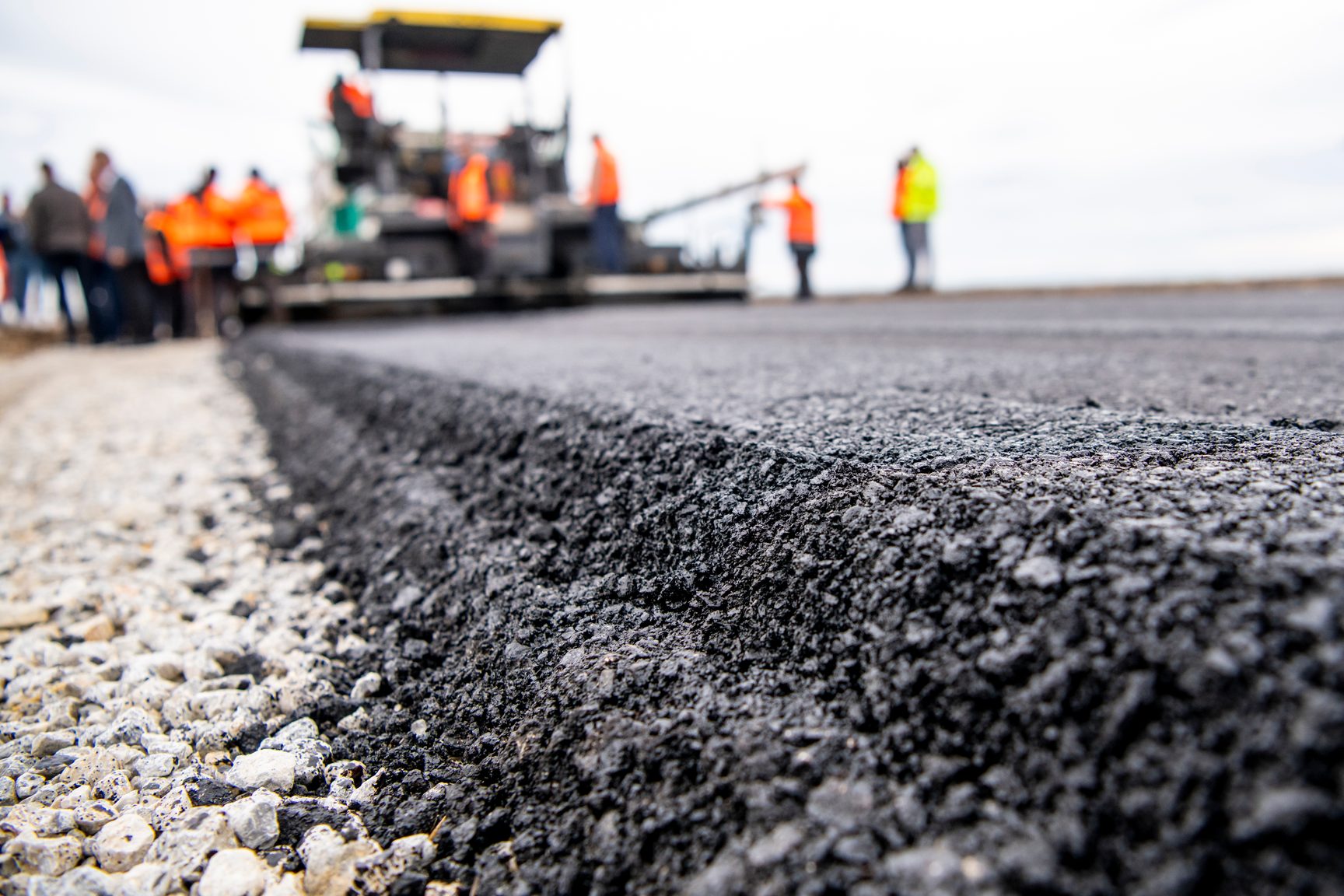
A New York paving, sealcoating or striping business insures itself with general liability, contractors equipment, commercial auto, workers compensation and property coverage, sized to the contracts it signs and the crews it runs. What New York adds is specific: no state license, a statutory ban on coal-tar sealer, a state highway department that checks bidders after the bid instead of before it, and workers compensation that is compulsory but can be bought from more than one kind of source.
Each of those shapes the program differently. A driveway crew in a city that licenses home improvement work meets a local license before any state rule. A sealcoating operation meets the coal-tar statute every time it buys material. A firm that wins a state highway contract meets a responsibility review, bid security and a bond. The sections below take each layer, quote its source, and say what it means for the policies.
Licensing in New York happens at the city and county level
New York State has no statewide contractor license that covers paving, sealcoating or line striping, and its Department of State says plainly that the state does not license home improvement contractors.
Licensing still applies at the local level. Some New York counties and cities license home improvement contractors themselves; in New York City, for example, a Home Improvement Contractor license from the Department of Consumer and Worker Protection is required for home improvement work on residential property, and the City lists driveways among that work. Check with the city or county where the job is before bidding it.
Authority New York Department of State, Division of Consumer Protection consumer alerts; New York City Department of Consumer and Worker Protection, Home Improvement Contractor license checklist · read the source · checked
The New York Department of State, Division of Licensing Services licenses a closed list of occupations, and no construction trade that reaches asphalt is on it. The state’s consumer protection office puts the position in a single line, and in the same breath points to where licensing does happen:
“NYS does not license home improvement contractors, however, some counties and local municipalities do.”
That local layer is real and it varies. New York City is the example rendered here, because its rule is written down in terms a paving contractor can test against a job:
“A person or business must have a Home Improvement Contractor license to do construction, repair, remodeling, or other home improvement work to any residential land or building in New York City.”
“Other home improvement work includes, but is not limited to, the construction, replacement, or improvement of basements, driveways, fences, garages, landscaping, patios, porches, sidewalks, swimming pools, terraces, and other improvements to structures or upon land that is next to a home or apartment building.”
Read the scope carefully. The city’s license covers home improvement work on residential land or buildings, and the city calls its list a general explanation rather than a complete rule. Nothing here says it reaches a commercial lot, a municipal contract or a striping job, and whether a residential sealcoat counts is for the New York City Department of Consumer and Worker Protection to decide. Outside the city, the question has to be asked town by town.
Where a local license applies, it brings paperwork the program has to support. A license bond, if one is required, is a surety placement written on your finances rather than your claims. Proof of liability coverage often travels with the application, which is where the general liability program needs to produce a certificate with the right holder and wording quickly.
Coal-tar sealer is banned in New York: sale and application
New York law bans the sale of any pavement product containing coal tar, and separately bars applying a pavement product labeled as containing coal tar to a driveway or parking area. The law defines coal tar by its polycyclic aromatic hydrocarbon content and defines pavement product to include sealcoat.
For a sealcoating crew this is a rule about the material itself: a coal-tar product may not be bought from a New York seller, and one labeled as coal tar may not go down on a driveway or lot. The Department of Environmental Conservation tells property owners to ask contractors for the safety data sheet and takes complaints about sellers and applicators.
Authority N.Y. Environmental Conservation Law § 37-0119 (Coal tar; prohibited — the second of two sections so numbered) · read the source · checked
The statute treats the market and the job site separately, and the rules do not reach the same ground. The first is about the market: nobody may sell the product.
“A person shall not sell or offer for sale a pavement product containing coal tar.”
The second is about the job site, and it is narrower. It is triggered by what the product’s label says, and it applies to driveways and parking areas:
“A person shall not apply a pavement product that is labeled as containing coal tar on a driveway or parking area.”
Neither is a labeling rule. The sale ban reaches any pavement product with coal tar in it, labeled or not; the application ban turns on the label and the surface. The section defines both of its key terms, and the definition of a pavement product names sealcoat outright:
“"Coal tar" means a viscous substance obtained by the destructive distillation of coal and containing levels of polycyclic aromatic hydrocarbons (PAHs) in excess of ten thousand milligrams per kilogram.”
“"Pavement product" means a material that is for use on an asphalt or concrete surface, including but not limited to sealcoat.”
Both prohibitions are in force. The section contains no exemption or variance, and it names no agency to run it; the New York State Department of Environmental Conservation publishes the guidance and takes complaints about sellers and applicators, and says the sale side plainly:
“Pavement products containing coal tar can no longer be sold or offered for sale in New York State.”
The department’s guidance describes the rule in broader terms than the statute does, and where the two differ this page follows the statute’s own words. A local rule adopted before the state law also survives it, because the enacting law says so:
“Nothing in this act shall be deemed to preempt any local law restricting the use of coal tar pavement products adopted prior to the effective date of this act.”
So a county or town with an older coal-tar ordinance may still apply it on top of the state ban; ask where you work. A bill that would renumber the section and widen its definition was pending when this page was last checked. It is not law, and nothing on this page relies on it, but if it passes the section cited above will change.
For the sealcoating program, the practical point is paper. Keep the product name and the safety data sheet for every batch; an owner who has read the department’s advice may ask for it, and a complaint is easier to answer with the sheet in the truck. The insurance exposures stay the same whatever the product: overspray on a parked car, sealer tracked into a lobby, runoff toward a drain before the surface cures. Whether a spill that reaches water is a liability claim or a pollution claim turns on policy wording, so ask before the season.
State highway work: a responsibility review, not prequalification
The New York State Department of Transportation does not prequalify construction contractors. In its own words, unlike many other states New York does not require firms to pre-qualify before they bid; the apparent low bidder and any proposed subcontractor instead post-qualify through a vendor responsibility review that NYSDOT must approve before a contract is awarded or a subcontract approved.
No prequalification does not mean an open door. State highway contracts go to the lowest responsible bidder, a firm must stay responsible for the life of the contract, and each bid carries its own security while the contractor must furnish bonds under the Highway Law, which also lets the commissioner dispense with performance and payment bonds on smaller projects.
Authority NYSDOT, Bidder Qualifications and Responsibility; N.Y. Highway Law § 38(2), (3) and (6) · read the source · checked
This is the department’s own statement, not an inference from silence. The New York State Department of Transportation sets out the rule and the replacement for it on its page for construction contractors:
“New York State law requires that public works contracts be awarded to responsible bidders. Unlike many other States, New York does not require firms to pre-qualify prior to their submission of bids.”
“Instead the Apparent Low Bidder/Winner and proposed subcontractor must "post-qualify" and a New York State Vendor Responsibility Questionnaire For-Profit Construction (CCA-2) form must be approved by NYSDOT prior to the award of a contract or approval to subcontract.”
The review happens after the bid, and it applies to the subcontractor as well as the prime. A paving or striping firm working under a general contractor on a state highway job is therefore not waved through because someone else won the bid; its own questionnaire has to be approved before the subcontract is. The Highway Law backs the award side of this under § 38(3): state highway contracts go to the lowest responsible bidder, and an award to anyone else needs the comptroller’s written approval. The obligation does not end at award, either:
“The Contractor shall at all times during the contract term remain responsible.”
What the review is not, on the department’s own pages, is an insurance test. Its bidder material does not mention insurance, and the insurance terms of a state contract live in the contract documents, which this page does not summarize. Treat each bid package as the source for limits and additional insured wording, and put the contractors equipment schedule and the financial statements you give the department in the same order you give an underwriter, so the two files never tell different stories about the same fleet.
Federal-aid, design-build and locally administered projects, and a county or city letting its own road work, were outside this research. The bid documents are the authority there.
Bid security and the Highway Law bond
Bonding on state highway work comes from the Highway Law and runs on a separate track from the review. Every proposal carries bid security, and under § 38(6) a contractor gives a bond approved by the commissioner before entering the contract. The statute has a second half that the department’s bidder page leaves out: under § 38(2) the commissioner may dispense with the performance and payment bond requirement below a project size the law sets, and on certain single-contract projects in the public interest. Whether a bond is needed is found in each bid, not assumed from the last one, and because a surety writes on your balance sheet, that relationship is best built before a large state job arrives.
Workers compensation: private insurer, the state fund or self-insurance
New York employers must carry workers’ compensation coverage and can get it from a private insurer authorized in the state, from the New York State Insurance Fund, or by qualifying to self-insure. The state fund competes alongside private insurers and must offer coverage to employers of any type, size or safety record, though it can refuse one that owes it money from an earlier account.
Authority N.Y. Workers’ Compensation Law § 50(1)–(3) · read the source · checked
“Workers’ compensation insurance is mandatory for most employers of one or more employees.”
“Insurance policies can be obtained through a private insurance carrier, State Insurance Fund, or becoming self-insured.”
New York is not a monopolistic state. The New York State Insurance Fund is one route among several, and it sells alongside private insurers rather than instead of them. Its obligation to take an employer is broad but conditional, as the New York State Workers’ Compensation Board explains in the sentence that follows it:
“NYSIF must provide insurance to any employer seeking coverage, regardless of the employer’s type of business, safety record or size. However, if an employer owes NYSIF money from a previous bill or account, coverage can be denied.”
For a paving operation, the choice between those routes usually comes down to what the workers compensation page works through in detail: how payroll is split between paving, sealcoating and striping, how a working owner is treated, and what certificate a subcontractor has to hand over before it starts on your job. An unpaid balance with the state fund is worth clearing before it matters, because it is the one thing the Board names as a reason the fund can say no.
The New York agencies behind each rule
Each of these offices answers a different question, and none of them speaks for the others:
New York paving markets and their NYSDOT regions
The department runs state roads through regional offices and publishes which counties each covers. Each market below is listed with the county it sits in and the region that county belongs to, as the department prints them. Size, traffic and population figures are left off on purpose.
Buffalo
Erie County. NYSDOT Western New York Region.
City, county and state work can all sit inside this county, and each owner writes its own certificate request. Keep the named insured and additional insured wording consistent across them.
Rochester
Monroe County. NYSDOT Genesee Valley Region.
Ask the city and the county separately whether either licenses home improvement contractors before taking residential driveways; the answer decides whether a local license belongs on the renewal list.
Syracuse
Onondaga County. NYSDOT Central New York Region.
State work through the regional office beside it and private lots can share a season. The state review comes after the bid, so keep the financial and safety file current all year.
Albany
Albany County. NYSDOT Capital District Region.
State road work in this county runs through the region office named here. Confirm which office a contract names before the paperwork goes out.
White Plains
Westchester County. NYSDOT Hudson Valley Region.
Before a residential driveway job, ask the county and the city whether either licenses home improvement contractors; the state does not. Commercial and public work may differ again.
Binghamton
Broome County. NYSDOT Southern Tier Region.
A crew crossing county lines can cross from one state region into another with it. The equipment floater and the auto schedule should follow the trailer wherever the job sits.
What moves a New York paving premium
What moves the price of a New York paving program — the mix of paving, sealcoating and striping work, the payroll and loss history behind it, and how the state’s workers compensation system is bought — is set out in our New York paving insurance cost guide. This page keeps to New York’s rules, agencies and markets; the guide keeps to what an underwriter reads.
Claim patterns on New York paving jobs
Described as patterns, with no count or amount attached.
The wrong sealer on the wrong surface. A crew lays down a product whose label says it contains coal tar, on a driveway or a parking area, and the owner wants it stripped and redone. The cost of undoing your own work, and whether any general liability wording responds to a removal demand at all, are questions to settle before the season rather than after the call.
Someone on foot inside the cones. Shoppers and tenants cut across lanes still wet with paint or sealer whenever a property stays open during the work, and the owner’s contract usually settled whose policy answers that walk long before anyone slipped.
A driveway job that turns into a dispute. On residential work, a complaint about the finish can reach the local licensing office as well as your mailbox. Keep the contract, the photographs and the product sheet together.
An injury on the crew. Burns from hot mix, a backing roller, a strain late in a long day. The claim goes to whichever route the employer chose.
New York: Contractor license, no statewide license reaches this work, connected to the General Liability page. Coal-tar sealant, a state rule governs its use or sale, connected to the Asphalt Sealcoating Insurance page. Transportation department prequalification, no prequalification for paving work, connected to the Commercial Auto page. Workers’ compensation, open market or the state fund, connected to the Workers Compensation page. The diagram pairs each state rule with the page on this site that discusses it and shows no figures.
Nearby states we also write
New York’s neighbors in the licensed footprint each have their own page, built from their own verified record. The coal-tar ban on this page is a New York statute and stops at the state line; licensing and workers compensation have to be checked state by state as well.
Related coverage and services
What we insure
Coverage lines
Outside authorities
- New York State Department of Financial Services
- New York State Department of Transportation
- New York State Department of Environmental Conservation
- New York State Workers’ Compensation Board
- New York State Insurance Fund
- New York Department of State, Division of Licensing Services
- New York City Department of Consumer and Worker Protection
New York paving contractor insurance questions
Is there a New York State license for paving or sealcoating contractors?
No. The state issues no contractor license that covers paving, sealcoating or striping, and the New York Department of State, Division of Licensing Services does not license home improvement work. Licensing can still apply where the job is: some counties and cities license home improvement contractors on their own, and New York City requires its own license for residential work that includes driveways. Call the local office before bidding a job in a new town.
Can I still use coal-tar sealer on jobs in New York?
Not in the way a sealcoater works. Nobody in New York may sell or offer a pavement product that contains coal tar, and a product labeled as containing coal tar may not be applied to a driveway or a parking area. Both prohibitions are in force. Keep the safety data sheet for each sealer you use, because a property owner may ask to see it before you start.
Does NYSDOT require prequalification before I bid a state highway job?
No. The New York State Department of Transportation does not prequalify contractors. Instead, the apparent low bidder and any proposed subcontractor go through a responsibility review after bids are opened, using the state’s vendor responsibility questionnaire, and the department has to approve it before a contract is awarded or a subcontract approved. A firm must stay responsible for as long as the contract runs.
Does the NYSDOT responsibility review ask about insurance?
The department does not describe the review as an insurance requirement, and its bidder pages say nothing about insurance at all. That does not settle what a contract will demand: the insurance terms sit in the contract documents and specifications for each project, which this page does not summarize. Read those before bidding, and send them to us with the bid package.
Do New York State highway contracts require bonds?
Yes, unless the commissioner waives one. Every proposal carries bid security, and the Highway Law requires a contractor to give a bond approved by the commissioner before entering a state highway contract. The same statute lets the commissioner waive the performance and payment bond requirement on smaller projects, so check each bid. A bond is a surety arrangement written on your financial condition, not an insurance policy.
Where can a New York paving contractor buy workers compensation?
From a private insurer authorized in New York, from the New York State Insurance Fund, or by qualifying to self-insure. The state fund competes with private insurers rather than replacing them, and it is expected to take any employer, although it may turn away one that owes it money on an older account. Which route fits turns on your history and the work your crews do.
We pave driveways in New York City. Do we need a city license?
For residential driveways, the city’s own list points to yes. The New York City Department of Consumer and Worker Protection requires a Home Improvement Contractor license for home improvement work on residential property in the city, and its own list includes driveways. The city calls that list a general explanation, and it is not asserted here to reach commercial lots, public work or striping. Confirm with the city before bidding.
This page describes insurance for paving and asphalt contractors operating in this state. It is general information, not legal advice and not a statement of coverage. Licensing, permitting and environmental requirements change; verify current requirements with the agency named before relying on them.
Get a quote for your New York paving work
Tell us whether your New York work is residential driveways, commercial lots, state highway jobs or a mix, and we will build the program around the contracts you sign.