
Paving Contractor Insurance by State
Alabama Paving Contractor Insurance
Alabama licenses larger paving jobs through its General Contractors Board, qualifies every ALDOT bidder before a bid is read, and leaves workers compensation to private insurers and self-insurers.
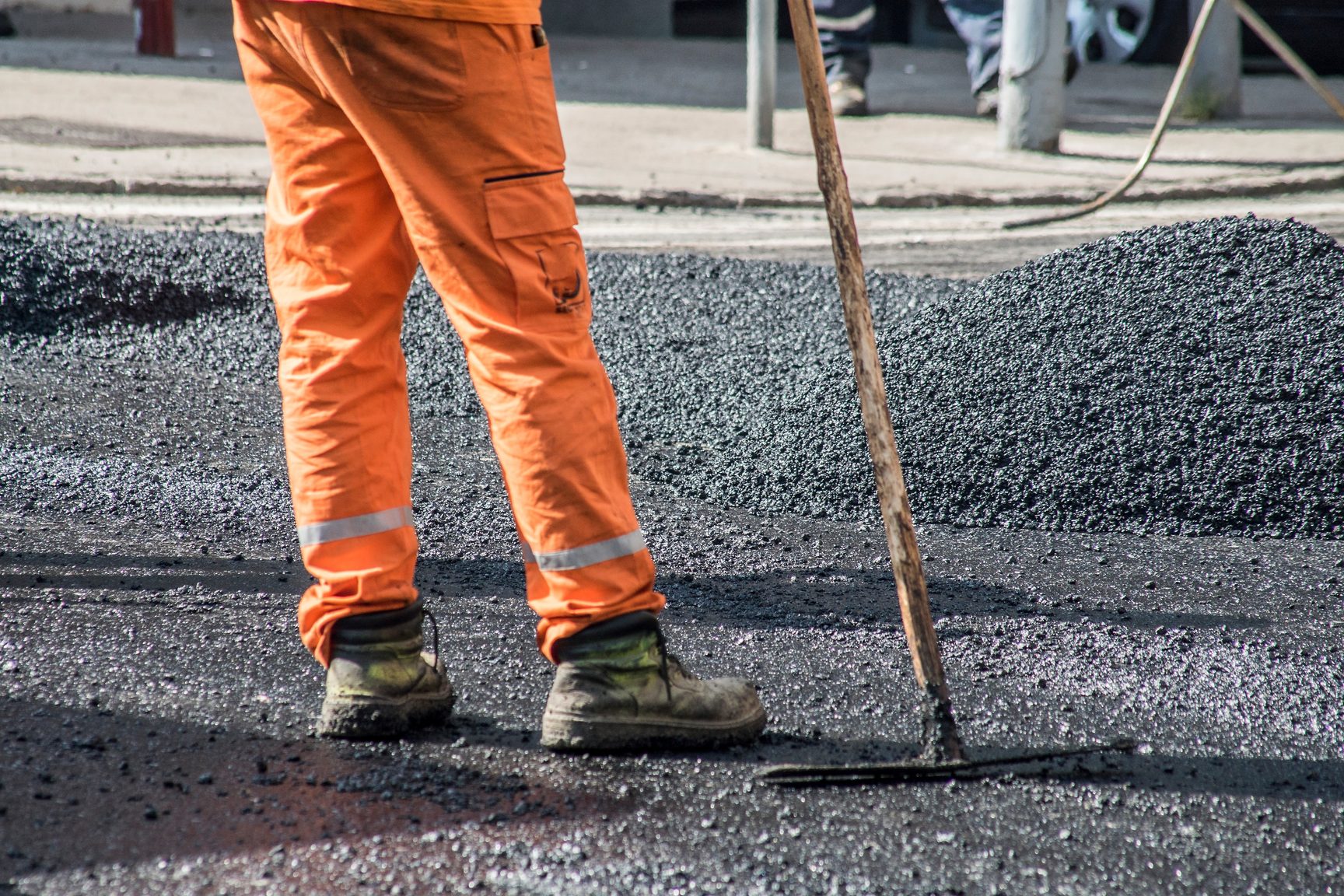
Alabama paving contractor insurance is made of the familiar lines — general liability, contractors equipment, commercial auto, workers compensation and property — but in Alabama a license comes ahead of them on larger commercial work. The Alabama Licensing Board for General Contractors licenses paving by classification once a contract reaches the cost line in its chapter, Alabama Department of Transportation work adds qualification before any bid is considered, and workers compensation is bought from private insurers or self-insured, with no state fund among the choices.
The license matters to an insurance buyer for a plain reason: the application asks for proof of liability coverage, so the general liability program is part of getting licensed, not only of getting hired. A crew bidding state roads adds qualification, bonds and the department’s insurance article on top. The paving contractor insurance program is built to answer both kinds of work from a single set of policies.
A General Contractors Board license, triggered by contract cost
Commercial paving in Alabama needs a license from the Alabama Licensing Board for General Contractors. The licensing chapter treats anyone paid to build, maintain or repair paving, site work, a highway or any other improvement as a general contractor when the job’s cost meets the figure the chapter prints, and the Board’s classification rule lists asphalt plant-mix paving and asphalt surface treatment among the highways and streets specialties, with paving and asphalt also offered as a municipal and utility specialty, a class whose scope names driveways.
The license is granted by classification and carries conditions an insurance buyer will meet early. An applicant has to show proof of liability insurance, doing general contracting without authorization is a Class A misdemeanor, and an owner, engineer or private awarding authority that considers a bid from an unlicensed firm commits an offense too. A subcontractor may bid without a license but has to hold one before it starts work. The Board’s rules treat repair and maintenance as licensed work, yet no classification is written for sealcoating or pavement striping, so a crew doing only that work measures it against the statutory definition and the cost trigger; the Board was not asked for its reading of such a job for this record.
Authority Code of Alabama §§ 34-8-1(a), 34-8-2(a), 34-8-6(a), 34-8-7; Ala. Admin. Code r. 230-X-1-.11, 230-X-1-.27 · read the source · checked
The chapter’s definition is deliberately wide. It covers repair and upkeep as well as new construction, and it puts paving and site work in the same list as buildings and highways:
“(a) For the purpose of this chapter, a “general contractor” is defined to be one who, for a fixed price, commission, fee, or wage, undertakes to construct or superintend or engage in the construction, alteration, maintenance, repair, rehabilitation, remediation, reclamation, or demolition of any building, highway, sewer, structure, site work, grading, paving, or project or any improvement in the State of Alabama where the cost of the undertaking is one hundred thousand dollars ($100,000) or more.”
The cost trigger lives inside that sentence and nowhere else on this page, so the figure on each agreement a crew signs matters more than the size of its season. The Board then sorts licensed work into classifications, and both the highways and streets list and the municipal and utility list carry asphalt by name:
“6. Hot and Cold Asphalt Plant Mix Paving 7. Asphalt Surface Treatment”
“9. Paving and Asphalt”
Upkeep is not a way around the license either. The Board’s rules say so in a single line:
“Repair and Maintenance Requires a license to comply with General Contractors Law as amended during the 1996 Regular Legislative Session.”
That is where sealcoating and striping get awkward. No classification carries either name, so a sealing-only or striping-only firm has no class to point to, and the chapter’s definition and cost trigger decide the question contract by contract. Nobody put it to the Board for this page; a firm holding a large sealing or restriping contract should ask. The exposures are the familiar ones — drift onto parked cars, a tracked-in floor, a lot kept open during the cure — and the sealcoating program and the striping program are written around them.
Coverage is part of the application from the first page:
“The applicant shall apply for a license covering the type or types of contracts on which he or she wishes to perform, and shall provide proof of liability insurance.”
Because an owner or engineer who considers an unlicensed bid commits an offense too, owners check, and the license number and the certificate of insurance travel in the same bid package. The general liability page covers the additional insured and primary wording those certificates are asked to show.
Sealer and Alabama’s air rules: solvent, not coal tar
Nothing in the Code of Alabama or the Alabama Administrative Code addresses coal-tar pavement sealant. The state neither prohibits the product nor limits where crews may apply it, and it sets no labeling duty for it.
The state rules that do touch paving materials are about petroleum solvents. The Alabama Department of Environmental Management’s air rules restrict cutback asphalt in highway paving and maintenance in Mobile, Russell, Madison and Morgan counties, and restrict cutback and emulsified asphalt the same way in Jefferson County; the rules define cutback asphalt as asphalt cement liquefied by blending it with petroleum solvents. No Alabama city or county rule on sealer was located and read for this record, so on a given lot the sealer is settled by the owner’s specification, the contract’s terms and whatever local code applies.
Authority Code of Alabama and Alabama Administrative Code, each swept by full-text search; Ala. Admin. Code r. 335-3-6-.13 and 335-3-6-.34 (the adjacent petroleum-asphalt rules) · read the source · checked
The only state rules that touch a paving material are air-quality rules, and the product they care about is solvent. The definition that frames them, and the Jefferson County version that brings emulsified asphalt in as well:
“(b) "Cutback Asphalt" shall mean asphalt cement which has been liquefied by blending with petroleum solvents (diluents).”
“(2) This Rule shall apply to the manufacture and use of cutback and emulsified asphalts in highway paving and maintenance operations in Jefferson County.”
Those rules govern highway paving and maintenance in the counties they name, and reading them as a sealer rule would misstate them. On a private lot the product choice belongs to the owner’s specification and the contract. What a policy has to answer is where the material ends up — on a customer’s car, carried indoors on shoes, washed toward a drain before it sets — which is the work the sealcoating program does. The Alabama Department of Environmental Management administers the air rules and is where a state sealer rule would first appear.
ALDOT lettings: qualified before the bid, insured before the work
Alabama law forbids its Department of Transportation to consider any bid filed by a firm it has not qualified, and awarding a contract to an unqualified bidder is unlawful; its specifications add that proposal forms go only to prospective bidders holding a valid certificate of qualification. An applicant files a sworn financial statement together with equipment and experience questionnaires, and the department issues a certificate that fixes how much uncompleted ALDOT work the firm may carry and may confine it to certain classes of work. The questionnaire’s classes include bituminous hot mix courses, flexible paving, pavement repair that lists sealing, and permanent marking that lists traffic stripe painting.
The one insurance-related condition of qualifying is workers’ compensation: every application must carry evidence that the firm has complied with that law. Bonds and liability coverage come later, with the proposal and the signed contract. ALDOT considers no proposal that arrives without a cashier’s check on an Alabama bank or a bid bond, and the contractor awarded the job must furnish bonds for performance and for payment from a surety authorized in Alabama; the state’s public works bond statute requires those bonds before work begins but does not require them on contracts below the size it prints. ALDOT’s specifications then require the contractor to carry bodily injury and property damage liability and automobile liability coverage, to require the same of its subcontractors, and to have a valid insurance certificate, with workers’ compensation coverage, on file with the Bureau of Office Engineer before any work starts. On a project with no federal funding a proposal needs a state contractor license to be considered, and on a federally funded one award waits until the license is shown.
Authority Code of Alabama §§ 23-1-56(a), (b), (d), (g); 39-1-1(a), (e); 39-2-4(a); 39-2-8; ALDOT Standard Specifications for Highway Construction, Articles 102.02, 102.09, 103.05, 107.15 · read the source · checked
The statute behind that finding is short and leaves no discretion:
“(g) Unqualified bidders. The State Department of Transportation shall not be authorized to consider any bid filed with it by any person who has not been qualified under the terms of this chapter.”
Qualification is not a simple yes or no, either. The certificate carries a ceiling on unfinished department work:
“The certificate of qualification shall contain a statement fixing the actual amount of work in terms of estimated cost which the applicant will be permitted to have on contract with the State Department of Transportation and not completed at any one time.”
The sworn application behind that ceiling includes an equipment questionnaire, so the machines listed there and the machines scheduled on the contractors equipment floater should match. The questionnaire’s classifications, as printed, read close to a description of this trade:
Pavement repair lists sealing and permanent marking lists stripe painting, so a sealcoating or striping firm has department classes to qualify under even where the Board’s license list names neither trade.
Certificates and bonds arrive with the contract
Qualification itself asks for no liability policy. Liability and auto coverage come with the contract, and the department wants the paperwork before anyone moves a machine:
“Before beginning work, the Contractor shall have on file with the Department's Bureau of Office Engineer a valid insurance certificate showing the amounts of insurance carried and the risks covered thereby, or a copy of the policies, covering the requirements outlined herein in this Article, along with Workmen Compensation coverage, before he will be allowed to perform any work on a contract.”
The limits live in the specification, not on this page. A subcontractor should expect the prime to collect its certificate before the first load, and the commercial auto program has to reflect every truck that will run on the contract. Bonds follow the same calendar: a bid guaranty with the proposal, then performance and payment bonds from the winning bidder. A surety bond is credit extended on the contractor’s finances rather than insurance, so capacity has to exist before the letting.
Workers compensation in Alabama: covered by headcount, bought privately
An employer covered by Alabama’s workers’ compensation law can meet its duty by insuring the liability with a carrier or employer group whose plan the Department of Insurance has approved and which it has authorized to transact workers’ compensation business in Alabama, or by proving the financial ability to pay benefits directly and being authorized as a self-insurer. The Alabama Department of Workforce names the voluntary commercial market, the assigned risk pool, group self-insurance funds and individual self-insurance as the routes, and none of them is a state fund.
Headcount decides who is covered, but construction of new homes is carved back in. Alabama’s law leaves out employers that regularly employ fewer workers than the number it prints, along with domestic, farm and casual employment, and lets them elect coverage; the carve-back keeps any business building or helping build new single-family detached homes on site inside the law at any size. An employer that is required to secure compensation and fails to commits a misdemeanor and becomes liable for a multiple of the benefits that would have been owed.
Authority Code of Alabama §§ 25-5-8(a), (b), (e); 25-5-50(a) · read the source · checked
The Department of Workforce states the threshold and its construction exception in its own words:
“If you regularly employ fewer than five employees—full-time or part-time, including corporate officers—you are generally not required to carry workers’ compensation insurance under Alabama law. The exception is businesses involved in constructing or assisting on-site with new single-family, detached residential homes, which are required to maintain coverage.”
For a paving firm the carve-back is narrow but real. A company that paves or seals driveways on home sites still under construction should ask whether that counts as assisting on site before relying on its size. When the voluntary market will not write the policy, the state points to a pool rather than a fund:
“You can purchase insurance through the Assigned Risk Pool when insurance carriers decline to write an insurance policy for you.”
The Alabama Department of Insurance approves the plans insurers write under and regulates every other line in the program. How payroll is split between paving, sealing and striping crews, and how working owners are treated, are worked through on the workers compensation page.
Alabama agencies and what each one decides
Alabama paving markets and their ALDOT regions
Each card names a county the city lies in, the department region that county falls under, and the area office as the department prints it. No population or market-size figure is attached.
Birmingham
Jefferson County. East Central Region, Birmingham Area.
Jefferson is the county the air rules single out for emulsified as well as cutback asphalt in highway paving and maintenance. That rule governs road work; it is not written as a sealer rule.
Huntsville
Madison County. North Region, Guntersville Area.
Madison appears on the cutback asphalt rule’s county list quoted above, which reaches highway paving and maintenance operations. Private lot work is not what that rule describes.
Montgomery
Montgomery County. Southeast Region, Montgomery Area.
This card and Auburn’s share an area office, so state road work in Montgomery County and in Lee County runs through the same part of the department.
Mobile
Mobile County. Southwest Region, Mobile Area.
Mobile is on the cutback asphalt list as well. A crew that also takes county road maintenance here should read that rule before the season, not after.
Tuscaloosa
Tuscaloosa County. West Central Region, Tuscaloosa Area.
Neither air rule quoted on this page names this county. State road work here goes through the same department qualification that applies everywhere in the state.
Auburn
Lee County. Southeast Region, Montgomery Area.
Lee sits under the same area office as Montgomery. It is not on either air rule’s county list as quoted, so the product question on a job here comes back to the contract.
What sets the price of an Alabama paving program
What moves the price of a paving program — the mix of paving, sealcoating and striping work, the payroll and loss history behind it, and how workers compensation is bought — is set out in our national guide to what paving contractor insurance cost depends on. This page keeps to Alabama’s rules, agencies and markets.
Loss patterns on Alabama lots and roads
A car on a surface that has not set. Cones get moved, a driver cuts through, and the car picks up sealer or leaves ruts. The car is a third-party claim, the repair to your own surface is a separate question, and the general liability page sets out which policy answers which.
A crash inside a lane closure. The department’s article requires liability and auto coverage from the contractor and its subcontractors, and a collision in a work zone tests both at once, along with the traffic control plan.
An injury at the paver or the roller. A burn from hot mix, a backing machine, a strain late in a long day. The claim goes to whatever route the firm chose — a private policy, an employer group or self-insurance.
Alabama: Contractor license, a state license or registration can reach this work, connected to the General Liability page. Coal-tar sealant, no state rule on the product, connected to the Asphalt Sealcoating Insurance page. Transportation department prequalification, applies to department road work, connected to the Commercial Auto page. Workers’ compensation, bought in the open market, connected to the Workers Compensation page. The diagram pairs each state rule with the page on this site that discusses it and shows no figures.
Nearby states we also write
Each neighboring state has a page of its own, built from its own verified record. Nothing this page says about licensing, sealer rules or workers compensation carries over a state line, so read the neighbor’s page before a crew crosses it.
Related coverage and services
What we insure
Coverage lines
Alabama paving contractor insurance questions
Does a sealcoating-only job in Alabama need a general contractor license?
No classification on the Board’s list is written for sealcoating or striping, so there is no class name to look up. Its rules count repair and maintenance as licensed work, and the chapter’s definition reaches paving above a cost figure it prints, so the size of the contract decides. Nobody asked the Board about such a job for this page; put the question to the Alabama Licensing Board for General Contractors before signing a large one.
Is coal-tar sealer restricted anywhere in Alabama law?
Not in state law. The statutes and the administrative rules were both searched in full, and neither mentions coal-tar pavement sealer. The nearest rules are air rules on cutback asphalt, a petroleum-solvent product, in certain counties’ highway paving and maintenance work. No city or county sealer ordinance was read for this page, so check the owner’s specification and the local code office before choosing a product.
Can I bid an ALDOT paving project before I am qualified?
No. The department may not consider a bid from a firm it has not qualified, awarding to one is unlawful, and proposal forms go only to qualified bidders. Qualifying means a sworn financial statement plus equipment and experience questionnaires, and the resulting certificate caps how much unfinished department work you may carry. On a project without federal money, a state contractor license must also stand behind the proposal.
Does ALDOT qualification require liability insurance?
Not at the qualification stage. The only insurance-related item there is evidence that the firm complies with the workers compensation law. Liability and auto coverage are contract conditions: the specifications require them of the contractor and of its subcontractors, and a certificate has to be on file with the department before work begins. Bonds arrive with the proposal and the signed contract, on a separate schedule.
Do I need workers compensation with a small Alabama crew?
That turns on headcount and on the kind of work. Alabama’s law leaves out employers below the employee count quoted on this page from the Department of Workforce, but not firms that build or assist on site with new single-family homes, which must carry it at any size. Excluded employers may still elect coverage. Count every regular worker, part-time staff and corporate officers included, as that quote does.
Is there a state fund for workers compensation in Alabama?
No. A covered Alabama employer insures with an authorized carrier or an approved employer group, qualifies to pay benefits directly as a self-insurer, or, when the voluntary market turns it down, buys through the assigned risk pool. None of those routes is a state insurer. For a paving firm the choice sits alongside the liability, auto and equipment lines and is best made in the same conversation.
Will an Alabama public works contract require bonds?
Yes, above the contract size the bond statute prints. Before work begins the contractor executes a performance bond and a payment bond, and on department work the winning bidder furnishes both from a surety authorized in Alabama. Contracts below that size fall outside the statute’s requirement, so compare the contract against the exception quoted on this page. A bond is credit written on your finances, not an insurance policy.
This page describes insurance for paving and asphalt contractors operating in this state. It is general information, not legal advice and not a statement of coverage. Licensing, permitting and environmental requirements change; verify current requirements with the agency named before relying on them.
Get a quote for your Alabama paving work
Send us your Alabama license classification and the mix of lot and road contracts you bid, and we will build the program around those documents.