
Paving Contractor Insurance by State
Georgia Paving Contractor Insurance
Georgia’s contractor board treats asphalt paving as a specialty trade outside its license, so the firm state requirements come from GDOT qualification and a workers’ compensation law met in the private market.
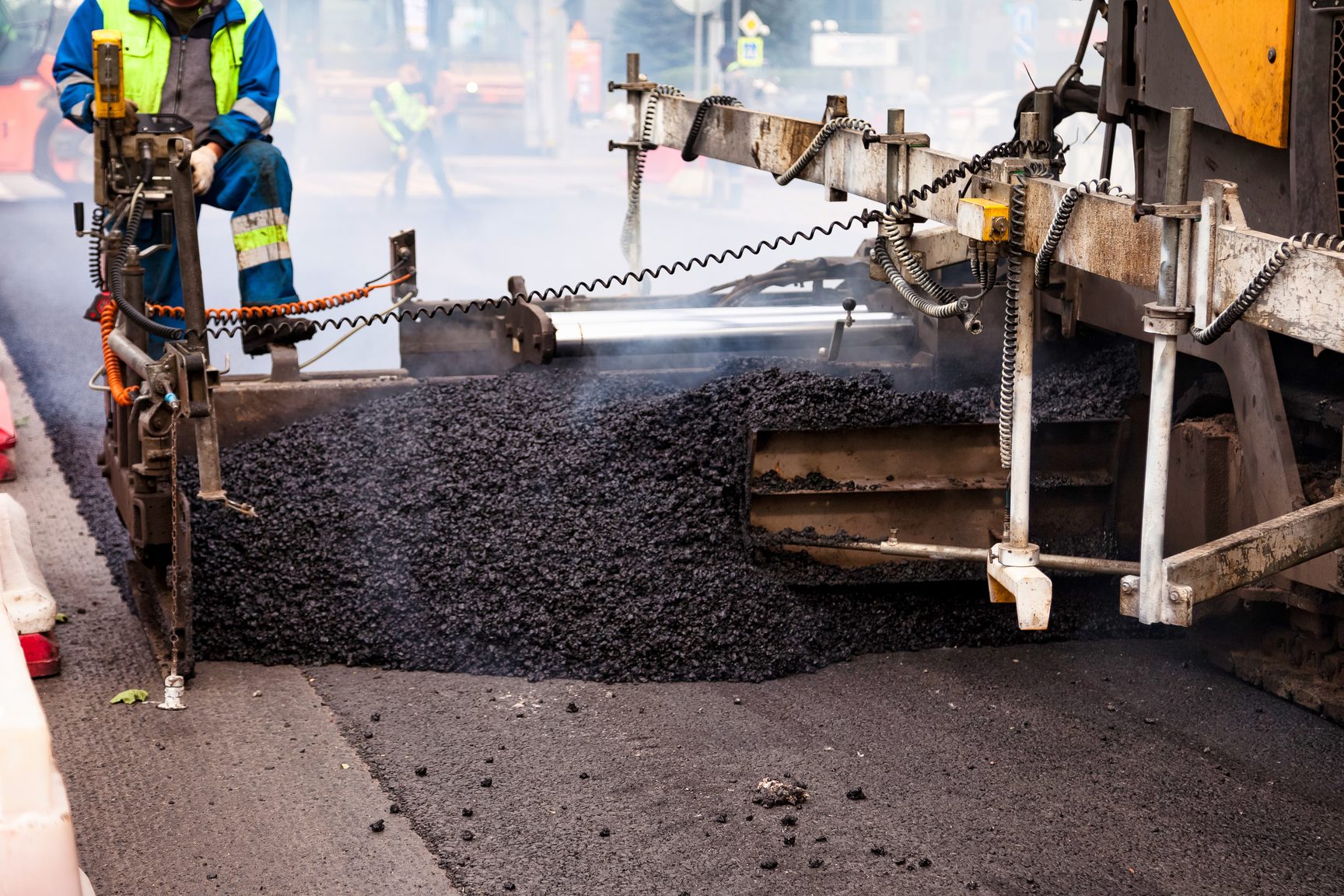
A Georgia paving contractor buys the same core program any paving firm does — general liability, an equipment floater, commercial auto, workers’ compensation and property — and Georgia shapes it less through licensing than through public road work and its workers’ compensation law. The state’s contractor board treats asphalt paving as a specialty trade outside its license, the official rules code carries no sealer restriction that a search could find, and the firm state-level duties sit with the Georgia Department of Transportation and the State Board of Workers’ Compensation.
For a crew that works shopping-center lots, apartment drives, churches and homeowners, the requirements that arrive are mostly written by other people: the owner’s contract, the property manager’s certificate request, the city or county permit office. For a crew that wants state road work, the order reverses. Qualification with the department comes before the first bid, insurance proof is part of that application, and a surety has to stand behind every proposal and every contract.
Asphalt paving and Georgia’s general contractor license
Georgia licenses residential and commercial general contractors through a state board under the Secretary of State, but asphalt paving is not work that board reserves to its licensees. The board’s policy page puts Asphalt Paving on its roster of traditional specialty trades, and its answers to contractors say that work qualifying as a specialty trade needs no license from it.
Falling outside the license is not a release from every rule. The board expects specialty firms to follow each national, state and local code and ordinance that applies to the job, and it calls its roster a work in progress that may change. Sealcoating and pavement striping are not on the roster by name, so a crew that only seals or stripes should get the board’s reading of that work before it counts on the exemption.
Authority O.C.G.A. § 43-41-17, as the board’s policy page cites it; Ga. Comp. R. & Regs. ch. 553 · read the source · checked
Georgia does license general contractors statewide, for residential and for commercial work; the open question for this trade is only whether paving falls inside that license. The board answers it in its own published policy, starting with the general rule for specialty trades:
“Traditional specialty contractors will not be required to carry a residential or general contractor license but will be required to comply with all applicable national, state, and local codes and ordinances.”
Its roster of those trades then names this work outright:
“Asphalt Paving”
The board’s answers to contractors say the same thing from the other side, directly after confirming that residential and commercial general contracting does call for its license:
“However, licenses are not required to perform work that qualifies as a specialty trade.”
This page rests the exemption on those published statements, not on a reading of the licensing statute, and it carries the board’s caution with it. A roster the board is still writing can move, so a paving firm should treat its exempt position as something to re-check rather than a permanent fact. A firm whose work is mostly sealer and paint has not been told by name that it sits outside the license, and asking the board in writing costs far less than finding out at a permit counter. The exemption also runs only to the general contractor license; local building, right-of-way and business rules still reach the job.
What a local permit office or a property manager does ask for is often evidence of coverage. The certificate that satisfies a city right-of-way office is the same document a retail landlord files, and the general liability program has to produce the additional insured and primary wording each of them names, on short notice.
Pavement sealer in Georgia: a rules search, with the statutes still open
A search of every department in Georgia’s official rules code found no rule that prohibits coal-tar or other high-PAH pavement sealer, restricts the places a crew may use it or requires a warning on it. The state’s statutes, which Georgia publishes through an outside publisher’s gateway, went unsearched here, which leaves open whether any law addresses the product.
The closest state rule is about a petroleum material. Georgia’s air quality rules restrict cutback asphalt in paving, allowing it only for the uses the rule names, and define it as asphalt cement liquefied with petroleum solvents. With no city or county sealer ordinance read for this record, the sealer on a given lot is settled by local code, by the owner’s specification and by the contract.
Authority Rules and Regulations of the State of Georgia, every department; Ga. Comp. R. & Regs. r. 391-3-1-.02(2)(dd) · read the source · checked
Read that finding as the split it is. The rules side is a completed search of every department’s chapters, and it turned up no sealer rule. The statute side was never searched. So nothing here says Georgia has no sealer law; the statute question stays exactly where the finding leaves it, unanswered.
The nearest state rule governs a different material. Georgia’s air quality rules, administered by the Georgia Environmental Protection Division, restrict cutback asphalt and define it by the petroleum solvent that thins it:
“"Cutback Asphalt" means asphalt cement which has been liquified by blending with petroleum solvents (diluents).”
Nothing in that definition reaches coal tar, which is why it appears here as a neighboring rule and not as a sealer rule. It says nothing about what a sealcoating crew sprays on a parking lot.
No city or county ordinance was read for this record, so a local restriction can be neither ruled in nor ruled out from here. The insurance question sits beside the product choice rather than inside it: overspray drifting onto a parked car, sealer tracked into a storefront, runoff reaching a storm inlet before the coat has cured. Those are the exposures the sealcoating program is written around, whichever product is in the tank, and whether a release that reaches water is a liability loss or a pollution loss turns on policy wording worth reading before the season.
Qualifying for state road work in Georgia
The Georgia Department of Transportation requires anyone who wants to bid on or work its projects to be prequalified or registered first. Above the contract size its rule sets, a bidder needs a Certificate of Qualification, applied for under oath on forms from the department’s Prequalification Committee; a prime bidder on a contract at or below that size, like a subcontractor, registers instead. The rules exclude routine or preventative maintenance contracts unless the department asks for prequalification, and the Engineer may exempt bidders on designated specialty items.
Insurance is part of qualifying in Georgia. An applicant for the certificate must prove workers’ compensation and general liability coverage, or self-insurance, and update that proof each year, while the registration rule asks for none. Surety follows at each letting: the department considers no proposal without a proposal guaranty, and contract bonds go on its forms with a surety it accepts that is authorized to do business in Georgia.
Authority Ga. Comp. R. & Regs. rr. 672-5-.01(b), 672-5-.02(d), 672-5-.04(1), 672-5-.04(2), 672-5-.05; GDOT Standard Specifications §§ 102 and 103.5 · read the source · checked
This is the state layer that reaches a Georgia paving firm before the work starts rather than after it. The department states the gate plainly on its own qualification page:
“Anyone seeking to bid on and/or perform work on Georgia DOT projects must be prequalified or registered with the Department. Currently, the Department has two types of qualifications: Prequalified Contractor and Registered Subcontractor.”
Which route a firm takes turns on the size of the contract and on whether it bids as a prime or works under one; the dividing figure sits in the department’s rules and is not repeated here. The certificate route asks for equipment and financial detail as well, and a floater priced on an old schedule is the kind of gap that shows only after a loss, so a firm adding machines to chase state work should have its contractors equipment schedule updated as each one arrives.
Not every department contract runs through this process. Routine and preventative maintenance contracts sit outside unless the department asks otherwise, and the Engineer can carve specialty items out:
“The Engineer may designate certain specialty items of work and exempt Prospective Bidders bidding to perform such work from the requirements of these Rules.”
For a striping or sealing crew, whether an item has been designated and exempted is decided on that contract, not held as a standing category from one letting to the next.
Insurance proof inside the certificate application
Georgia writes insurance evidence into the certificate application itself:
“Provide proof of any insurance or self-insurance for workers compensation insurance and general liability insurance to be supplemented on a yearly basis.”
That is a proof requirement, not a limit. The rule as quoted names no amount, and the registration route carries no such line at all. The limits that govern a job come from its contract, and a prime can ask a registered subcontractor for more than the department did. That is why the liability policy and the workers’ compensation policy have to be current on the day a certificate goes out, not only on the day each was bound.
Proposal guaranties and contract bonds
Surety attaches later than qualification, at the letting and then at award:
“No Proposal will be considered unless it is accompanied by a Proposal Guaranty of the character and in an amount not less than the amount indicated in the Proposal.”
“The Bonds shall be made on forms furnished by the Department and executed by the Contractor and a Surety Company acceptable to the Department, authorized to do business in Georgia.”
Neither instrument is an insurance policy. The surety stands behind the contractor’s promise to the department and recovers from the contractor if it ever has to pay, so it underwrites the balance sheet and the work in progress rather than loss history. The amounts sit in the department’s specifications and are not repeated here. Bonding capacity belongs in place before a bid season, since a proposal that arrives without its guaranty is not read.
Georgia workers’ compensation: private insurers, no state fund
A Georgia business must provide workers’ compensation once it regularly employs the number of people the State Board of Workers’ Compensation names, regular part-timers counted, and in a corporation or LLC the officers or members count too. The Board sells no policies and Georgia runs no state fund; coverage comes from private insurers, from an assigned risk plan a national rating organization administers, or from self-insurance the Board certifies.
Owners should settle their own status early. An officer who waives coverage still counts toward the total, and sole proprietors and partners are treated as employers unless they elect coverage by telling their carrier in writing. The Board may fine an employer for each failure to be insured, and its Enforcement Division takes reports of employers that go without required coverage.
Authority State Board of Workers’ Compensation, Workers’ Compensation Insurance FAQs, Workers’ Compensation Law FAQs and Enforcement Division page; Board Rule 121(b) · read the source · checked
“If you regularly employ three or more persons in your Georgia business, you are required to provide the benefits. If your company is incorporated or an LLC, the officers or members are included in the employee count.”
That count is wider than a field roster suggests. Regular part-time help is included, and so are a corporation’s officers or an LLC’s members, so a small firm with working owners can cross the line sooner than its crew size implies. Sole proprietors and partners sit the other way round:
“The Georgia Law considers sole proprietors and partners to be employers not employees, just the opposite of corporations. However, they can elect to be covered as an employee by advising their insurance carrier in writing.”
For an owner-operator who spends the day on the roller, that election is a real decision: without it, the owner is not an employee under the policy. The workers’ compensation page works through how owners, officers and subcontractors are treated on the policy itself.
There is no public insurer to fall back on:
“Does Georgia have a State Fund? No.”
Coverage is written by private insurers or carried by a self-insurer the Board certifies, and going without it is not treated as a paperwork lapse:
“The Board may assess a penalty of not less than $500.00 nor more than $5,000.00 per violation for an employer’s failure to be insured for workers’ compensation.”
The Office of the Commissioner of Insurance and Safety Fire regulates insurers and the agencies that sell their policies, in this line and in every other line of the program.
The agencies behind each Georgia requirement
Each agency below owns a different piece of the state layer, and none speaks for another:
Georgia paving markets by GDOT field district
The department runs the state road network through field districts and publishes the district each county falls in. Each card gives the county a city sits in, how the Census relates city to county, and the district; no population, traffic or market-size figure is attached.
Atlanta
Fulton County (city in the county). Metro Atlanta.
Census also lists Atlanta in DeKalb County, which GDOT places in the same district.
The city reaches past its home county, as the note above records. A crew working either side of that county line can face a different local permit office for the same kind of job.
Savannah
Chatham County (city in the county). Southeast Georgia.
State roads here run through the district shown, city streets through the city, private lots through their owners — each owner writing its own insurance article.
Augusta
Richmond County (consolidated city-county (Census lists Augusta-Richmond County consolidated government)). East Central Georgia.
City and county are one consolidated government here, as the Census lists it, so municipal and county work can come from the same owner and the same certificate wording.
Columbus
Muscogee County (city in the county). West Central Georgia.
A city inside its county, with state road work handled through the district shown. Public and private jobs sit close together, and each owner type wants its own additional insured language.
Albany
Dougherty County (city in the county). Southwest Georgia.
A crew that follows state work around its district puts road time on trucks and trailers between sites, and that driving is where a vehicle schedule falls out of date.
Gainesville
Hall County (city in the county). Northeast Georgia.
A department subcontract one week and a private lot the next: the first runs through the qualification rules above, the second only on the owner’s contract and local code.
What moves a Georgia paving premium
What moves the price of a paving program — the mix of paving, sealcoating and striping work, the payroll and loss history behind it, and how workers compensation is bought — is set out in our national guide to what paving contractor insurance cost depends on. This page keeps to Georgia’s rules, agencies and markets.
Loss patterns on Georgia paving jobs
These are patterns, not statistics; no count or frequency is attached to any of them.
A car on a surface that has not cured. Cones and tape come down early or get driven around, and a vehicle leaves ruts in a fresh mat or carries sealer away on its tires. The car’s owner claims against the contractor; repairing the contractor’s own work is a separate question, and the general liability page explains which part a policy answers.
A fall or a stain in an occupied property. Partial closures are routine on shopping centers and apartment sites, and a slip on fresh paint, or sealer tracked across a lobby floor, lands on the firm that controlled the area.
Damage below or beside the surface. Milling out a patch strikes a buried line or cracks a curb inlet, and the owner of the damaged property presents a liability claim.
An injury at the machine. A burn from hot mix, a backing roller, a strain at the end of a long shift. In Georgia that claim goes to a privately written policy or a certified self-insurer, and a working owner who never elected coverage is the gap to close first.
Georgia: Contractor license, no statewide license reaches this work, connected to the General Liability page. Coal-tar sealant, state code could not be fully read, connected to the Asphalt Sealcoating Insurance page. Transportation department prequalification, applies to department road work, connected to the Commercial Auto page. Workers’ compensation, bought in the open market, connected to the Workers Compensation page. The diagram pairs each state rule with the page on this site that discusses it and shows no figures.
Nearby states we also write
The states that border Georgia each run their own licensing, sealer, road-qualification and workers’ compensation rules, and nothing recorded on this page carries across a state line. Each neighbor links below once its own page is published.
Related coverage and services
What we insure
Coverage lines
Georgia paving contractor insurance questions
Does a Georgia paving company need a general contractor license?
Not for asphalt paving, on the board’s own published reading. The State Licensing Board for Residential and Commercial General Contractors lists asphalt paving among the specialty trades it does not license, while still expecting those firms to meet every applicable code. The board calls its roster unfinished, and the roster does not name sealcoating or striping, so a firm doing only that work should ask the board before relying on the exemption.
Is coal-tar sealer banned in Georgia?
Not by any state rule a search could find: every department’s chapters in the official rules code were read, and none restricts coal-tar or other high-PAH sealer. Georgia’s statutes were not searched, so this page cannot say that no state law exists, and no local ordinance was read either. Check the city or county code and the owner’s specification before choosing a product for a Georgia lot.
Who has to qualify with GDOT before bidding its work?
Anyone who wants to bid or perform department work. Larger contracts call for a certificate applied for under oath; smaller prime contracts and subcontract work take registration instead. Routine and preventative maintenance contracts sit outside the rules unless the department asks for qualification, and the Engineer can exempt designated specialty items, so the bid package is where to confirm what a given job requires of you.
Does GDOT qualification require proof of insurance?
For the certificate, yes. The application rule asks for evidence of workers’ compensation and general liability coverage, or of self-insurance, kept current every year. Registration asks for none of it. Neither route sets the limits a job will carry; those come from the contract, so read the insurance article in each bid rather than assuming the proof already on file with the department is enough.
Are bonds required on Georgia DOT contracts?
Yes, at the letting and at award rather than at qualification. A proposal is not considered unless its guaranty comes with it, and contract bonds are executed on department forms with a surety the department accepts. A bond is a credit instrument underwritten on the firm’s finances, not an insurance policy, so bonding capacity should be arranged well ahead of a bid date rather than in the week a proposal is due.
When does a Georgia paving business have to carry workers’ compensation?
As soon as its regular workforce reaches the threshold the State Board of Workers’ Compensation sets. Regular part-time people count toward it, and in a corporation or LLC so do the officers or members, even an officer who has waived coverage. Sole proprietors and partners are treated as employers and can elect coverage for themselves in writing through their carrier. A firm near the line should count everyone, not just the field crew.
Can a Georgia paving firm buy workers’ compensation from the state?
No. Georgia has no state fund, and the State Board of Workers’ Compensation sells no policies. Coverage is written by private insurers, with an assigned risk plan run by a national rating organization for employers the voluntary market will not take, or through self-insurance the Board certifies. Operating without required coverage can draw a Board penalty for every violation, and the Board takes reports of uninsured employers.
This page describes insurance for paving and asphalt contractors operating in this state. It is general information, not legal advice and not a statement of coverage. Licensing, permitting and environmental requirements change; verify current requirements with the agency named before relying on them.
Get a quote for your Georgia paving work
Send us a recent Georgia bid package or lot contract and your crew list, and we will build the program to the insurance terms those documents set.