
When ARDOT awards you a paving or heavy equipment contract, your insurance has to answer three checks: the Contractors Licensing Board license behind your bid, which requires workers’ comp proof, the contract’s own insurance provisions, and the equipment and trucks you will move onto the job. Prequalification decides how much work you may take on; insurance decides whether you can start it.
How ARDOT prequalifies
The Arkansas Department of Transportation releases bid proposals only to contractors it has prequalified. A bidder files ARDOT’s prequalification questionnaire, prepared by a certified or registered public accountant with a financial statement and an experience record, and the department rates the firm by the most work it judges the firm can carry at one time. Our Arkansas paving contractor insurance page covers the state rules behind it.
The license and its insurance strings
Prequalification works alongside the state license, not in place of it. On work paid for entirely with state funds whose estimated cost meets the licensing statute’s figure, a bidder shows its Contractors Licensing Board license before it is given a proposal. The Board’s rules place a base and paving group, which lists asphalt, hot and cold mixes and surface treatment, within the highway classification. Holding the license means carrying workers’ comp wherever the law requires it and showing the Board current proof before a license is issued or renewed, and filing a surety or cash bond with the Board.
Heavy equipment on a highway job
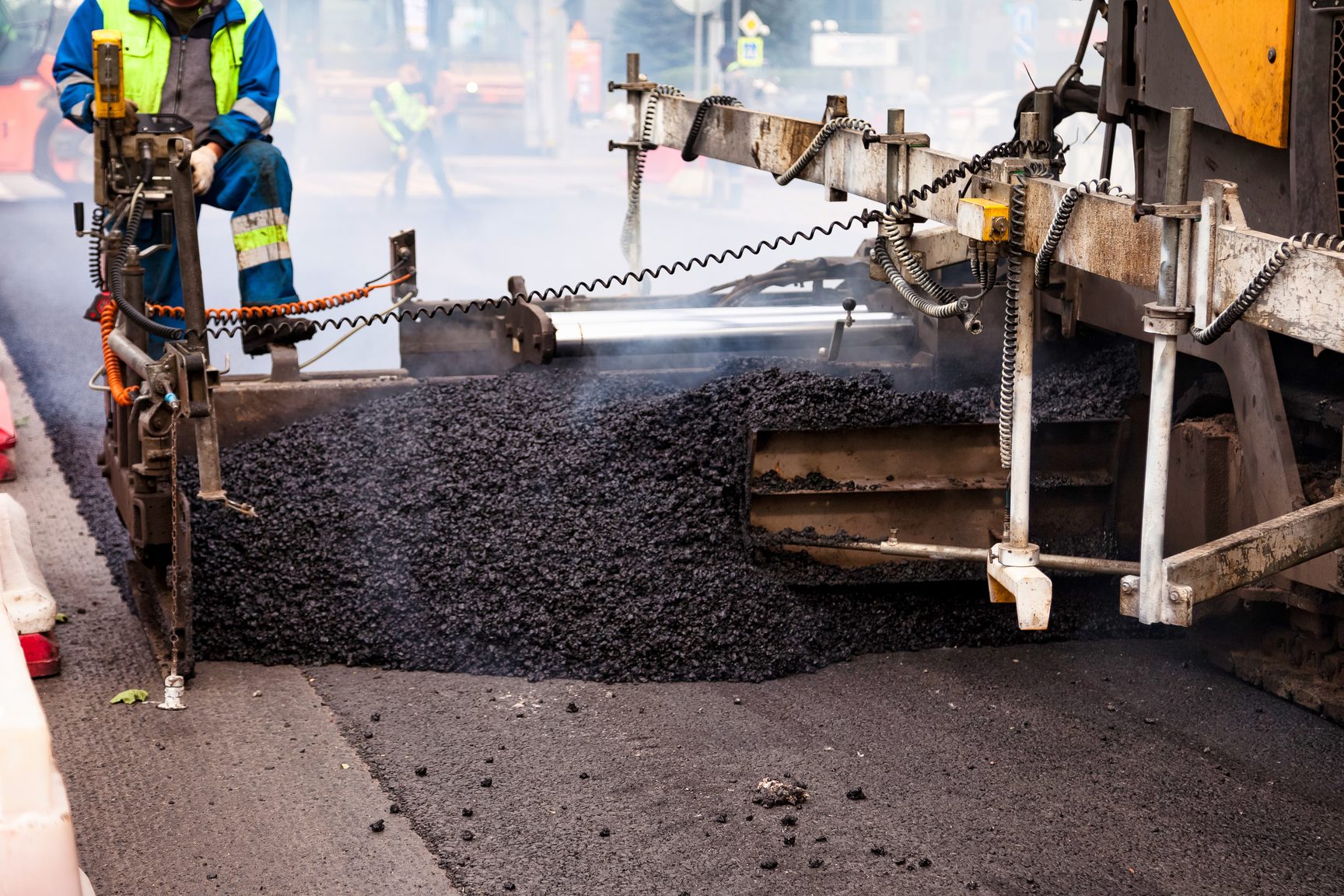
Arkansas highway work moves pavers, rollers, milling machines, dozers and loaders between counties. The machines belong on a contractors equipment floater that follows them in transit; the trucks and lowboys that haul them belong on commercial auto. Keep both schedules current, because an unscheduled machine is the classic gap after a theft or a rollover.
What the contract asks for
Read the contract’s insurance provisions for every line, limit and endorsement. A paving award usually reaches general liability, auto, workers’ comp and often an umbrella, with the department named as an additional insured. Our post on state DOT insurance requirements explains where certificates stall, and our post on bid, performance and payment bonds covers the surety side.
Workers’ comp in Arkansas
Workers’ comp is compulsory for employers in any category the law does not exempt, and the Arkansas Workers’ Compensation Commission’s basic facts page names the employee count at which most employers must carry it. Coverage comes from a policy or state approval to self-insure. An employer whose policy is canceled must replace it within the period the Commission’s rule sets.
Little Rock and Pulaski County material rules
In Pulaski County, Arkansas’s air rules restrict mixing, using or applying cutback asphalt for roadway paving except as a prime or on a day below the rule’s temperature limit. That is a petroleum solvent rule, not a coal-tar rule, but a crew working around Little Rock should know it before the product is ordered.
Before you sign
Send your agent the proposal’s insurance provisions and your equipment list as soon as the award arrives. Request a quote for an independent read. Award steps in other states are in our posts on ITD and KYTC contracts.