
Paving Contractor Insurance by State
Arkansas Paving Contractor Insurance
Arkansas licenses commercial paving through its contractors board, ties that license to a bond and workers’ compensation proof, and rates every highway bidder before a proposal goes out.
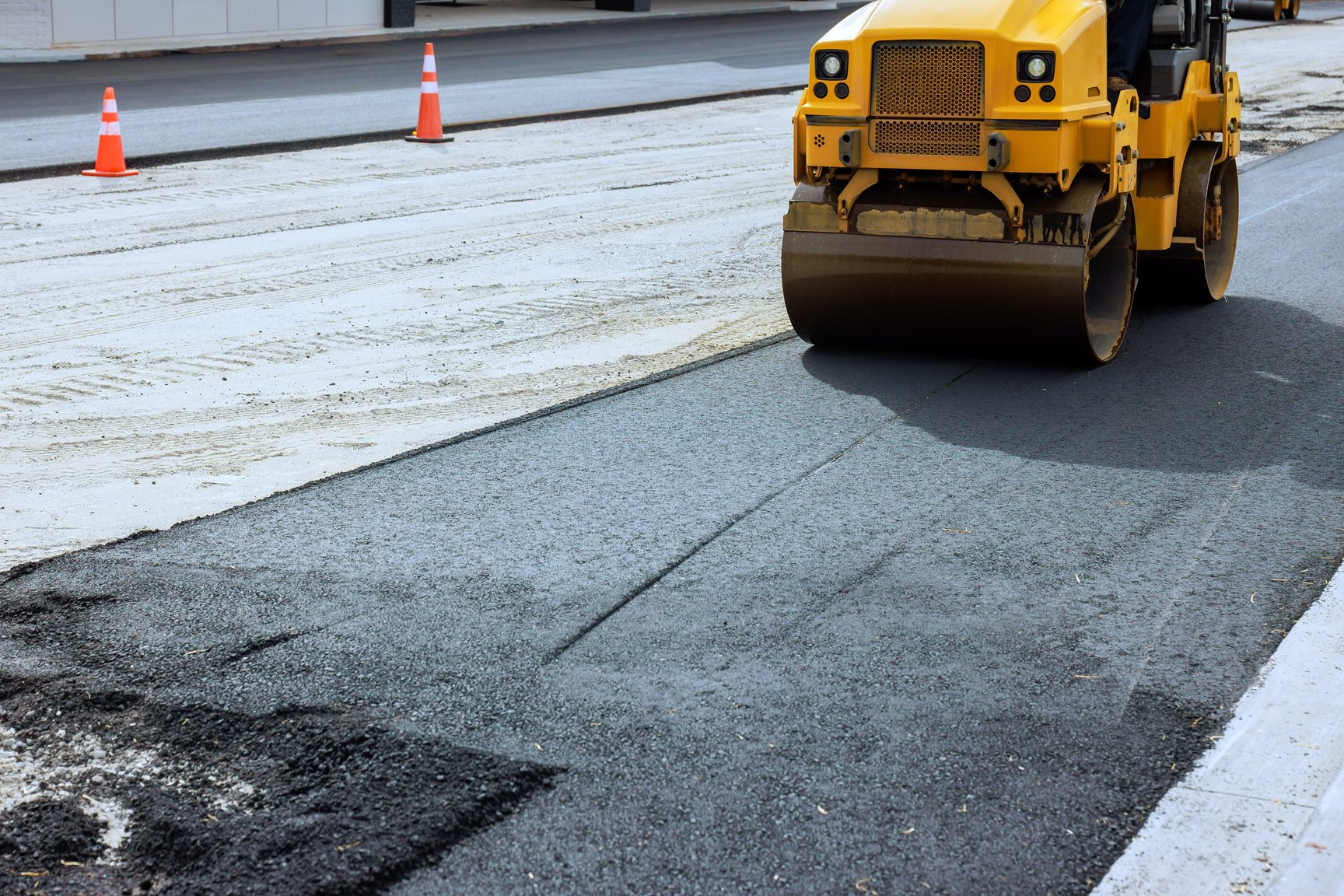
For an Arkansas paving contractor, insurance is built from the lines any paving firm carries — general liability, contractors equipment, commercial auto, workers’ compensation and property — but here several of those lines are tied to licensing and to public bidding. The commercial contractor license asks a licensed firm for proof of the compensation coverage the law requires and for a bond on file with the Board, the Arkansas Department of Transportation (ARDOT) wants bonds at bid and contract and evidence of liability coverage before work starts, and compensation is bought from private insurers because Arkansas runs no state fund.
So Arkansas meets a paving business at the licensing counter, before any customer asks for a certificate. A caution runs through the page: the official Arkansas Code sits behind a terms-gated service and could not be read for this page’s record, so statute text is quoted as the licensing board prints it in its own compilation, and the sealer question stays partly open for the same reason.
A state license for commercial paving, with a bond and comp proof attached
Arkansas puts commercial paving under a state license from the Arkansas Contractors Licensing Board. The contracting statute reaches highways, grading and any other improvement, leaving out only single-family residences, once a job’s cost reaches the figure the statute sets, and the Board’s rules place a base and paving group, which lists asphalt, hot and cold mixes and surface treatment, within the highway, railroad and airport classification, within the municipal and utility and building classifications, and as a specialty a firm can hold alone. Pavement markers appear under traffic safety; sealcoating and lot striping have no classification of their own.
Holding the license brings duties that touch an insurance program. A firm the Board must license or register has to carry workers’ compensation wherever the compensation law requires it and show the Board current proof before a license is issued or renewed, and a surety or cash bond filed with the Board is a condition of licensure. Work outside a listed classification may be a violation, and a contract made in breach of the licensing chapter cannot be enforced in court, although the contractor can still sue for unjust enrichment or quantum meruit if it pays any Board fines and applies for a license. Driveway paving at an existing home belongs instead to the Residential Contractors Committee, which sits with the Board: its home improvement license covers work on a single-family residence and the property appurtenant to it, its classifications list the same base and paving group, and jobs priced at or below a small figure the statute sets are exempt.
Authority Ark. Code Ann. §§ 17-25-101, 17-25-103(a) and (d), 17-25-316, 17-25-404(a), 17-25-502(1), 17-25-505, 17-25-513; 17 CAR §§ 255-208(i), 255-301 through 255-304, 255-308, 295-111 · read the source · checked
The license reaches as far as the statute’s definition of a contractor, which sets aside only the single-family home:
“It is the intention of this definition to include all improvements, demolition, or structures, excepting only single-family residences.”
That definition applies once a job’s cost reaches the statute’s trigger, and breaking a contract into pieces to stay beneath it is forbidden. The classification on the license then limits the work:
“(1) A contractor holding a classification may perform any of the functions listed under that classification. (2) Performing work not listed under the classification may constitute a violation.”
That leaves sealcoating and striping firms with a question this page will not answer for them. The Board’s outlines never name sealcoating or lot striping, and no Board text says which classification, if any, takes that work. If most of your season is sealer and paint, ask the Board in writing how it reads your jobs, and keep the sealcoating program and the striping program matched to the work you actually do. The stakes are real: a contract signed in violation of the chapter is unenforceable in court, and a general liability policy answers injury and damage claims, not an unpaid invoice.
Compensation coverage and the license bond
The license carries a condition that lands squarely on the insurance side:
“(a) A contractor required to be licensed or registered by the Contractors Licensing Board shall obtain and maintain workers’ compensation coverage as required under the Workers' Compensation Law, § 11-9-101 et seq.”
The Board looks for current proof before it issues or renews a license and may revoke or suspend one when coverage lapses, so a canceled workers’ compensation policy is a licensing problem too. The license bond is the other condition. It is a surety instrument rather than a policy, and it has to be on file before work begins.
Driveways at existing homes
Home driveways run through the Residential Contractors Committee, which sits with the Board and licenses home improvement contractors under a definition that reaches the grounds around a house:
“attempts to or submits a bid, or contracts, undertakes, or assumes charge in a supervisory capacity or otherwise manages the reconstruction, alteration, renovation, repair, modification, improvement, removal, demolition, or addition to any preexisting single family residence or the property and structures appurtenant thereto;”
Its classifications list the same base and paving group, with a statutory exemption for very small jobs that splitting a job cannot be used to reach. A firm doing both commercial lots and home driveways should hold the license each side requires, and its liability program should describe both kinds of customer.
Coal-tar sealer: the rules are silent, the statutes unread
Arkansas’s official rule code neither outlaws coal-tar sealer for pavement nor restricts its use, and it imposes no label on it; the only rule there that uses the phrase coal tar deals with food coloring. The Arkansas Code itself could not be searched for this record, so a statute on the product has not been ruled out.
The rule that does bind paving crews in one county concerns a petroleum product. In Pulaski County, Arkansas’s volatile organic compound rules forbid mixing, using or applying cutback asphalt for roadway paving unless it serves only to prime the surface or goes down on a day below the rule’s temperature limit, and the rule defines cutback asphalt as asphalt cement thinned with petroleum solvents, not coal tar. Because this record verified no local sealant ordinance anywhere in Arkansas, the choice of sealer rests with the property owner’s specification, the contract documents and whatever local code applies.
Authority 8 CAR §§ 41-903 and 41-905(c) (the adjacent petroleum-asphalt rule); Code of Arkansas Rules searched across all titles · read the source · checked
Read that finding for exactly what it says. The official rule code was searched across every title and restricts no coal-tar pavement sealer, but the statutes themselves could not be searched. So this page does not say Arkansas has no coal-tar law; it says the rules carry none and a statute has not been excluded.
The rule that does govern how asphalt goes down concerns a petroleum product, and its subpart is confined to Pulaski County. It reads in full:
“No person shall mix, use, or apply cutback asphalt for roadway paving except where the cutback asphalt is used solely as a penetrating prime coat or when the maximum ambient temperature on the day of application is less than fifteen degrees Celsius (15° C) (fifty-nine degrees Fahrenheit (59° F)).”
It defines that product in petroleum terms:
“asphalt cement which has been liquefied by blending with petroleum solvents (diluents)”
So it is a limit on cutback asphalt, with both exceptions intact — the prime coat and the cold-weather day — and it says nothing about coal-tar sealer. Anywhere in the state, the owner’s specification and the local code decide the product on this record, and overspray, tracking and runoff remain the exposures the sealcoating program is written around. The Arkansas Department of Energy and Environment, Division of Environmental Quality is the agency to watch for any change.
ARDOT lettings: a rating before the proposal, coverage at award
The Arkansas Department of Transportation releases bid proposals only to contractors it has prequalified. A prospective bidder files a prequalification questionnaire, prepared by a certified or registered public accountant with a financial statement and an experience record, with ARDOT’s Program Management Division, and the department rates the firm by the most work it judges the firm can prosecute at one time, counting the unfinished value of contracts already in force. The questionnaire’s work classifications include asphalt paving, asphalt surface treatment, microsurfacing and striping and pavement markings.
Prequalification works alongside the state contractor’s license rather than in place of it. On work paid for entirely with state funds whose estimated cost meets the licensing statute’s figure, a bidder must show its Contractors Licensing Board license before it is given a proposal; on federal-aid work no license is needed to bid, but an unlicensed successful bidder must file for and obtain one within the periods ARDOT sets after award or risk rejection of the bid and forfeiture of its guaranty. Nothing in the questionnaire calls for an insurance policy. Surety and liability coverage arrive later, with the bid and the signed contract: every proposal carries a guaranty, either a bank instrument or a bidder’s bond from an approved surety, and the winning bidder furnishes surety performance and payment bonds at execution, then evidence of general liability insurance before a work order issues.
Authority ARDOT Standard Specifications for Highway Construction, subsections 102.01, 102.04, 102.09, 103.02 and 103.05; ARDOT Prequalification Questionnaire, General Instructions and Work Classifications · read the source · checked
Nothing moves until the questionnaire earns a rating:
“Prospective bidders may file a questionnaire at any time; however, no proposal will be released to a bidder unless a rating has been extended based on an acceptable questionnaire.”
Because the rating rests on an accountant-prepared financial statement and an experience record, the machines a firm lists there should match the schedule on its contractors equipment floater. Several of the department’s work classifications describe this trade as printed:
Where bonds and insurance enter
The questionnaire asks for no policy. Surety and coverage arrive with the proposal and the contract:
“No proposal will be considered by the Commission unless it is accompanied by a guaranty in the form of either a bank draft, certified check, or cashier's check drawn on a solvent bank or trust company, or a bidder's bond executed by an approved surety company.”
“Before a work order is issued, the Contractor shall furnish to the Division Head, Programs & Contracts Division, evidence of the required insurance.”
Performance and payment bonds follow at execution, and missing the insurance proof with the signed contract can cost the award and the guaranty, so the liability program has to meet the specification’s limits before award, not after. Licensing runs alongside: on state-funded work above the statute’s figure the license comes before the proposal, while on federal-aid work a firm may bid unlicensed but must become licensed within the department’s deadlines after award. No statute behind prequalification turned up in the sources read, and the specifications quoted are the edition in force; a proposed replacement had not been adopted when the record was checked.
Workers’ compensation in Arkansas: a policy or approved self-insurance
Workers’ compensation is compulsory in Arkansas for employers in any category the law does not exempt, and the Arkansas Workers’ Compensation Commission says most employers at or above the employee count it names must carry it. Coverage is secured one of two ways, a workers’ compensation insurance policy or state approval to self-insure, and the Commission, which describes itself as not an insurance company, sees that covered employers buy from commercial carriers or self-insure. Arkansas has no state fund.
The count is not a safe harbor by itself: the Commission tells employers below it to check with the authorities before assuming they fall outside the law, and warns that any arrangement other than a policy or approved self-insurance may constitute fraud. An employer whose policy is canceled or terminated must obtain other coverage within the period the Commission’s rule sets or face the compensation law’s penalties, and a licensed contractor must keep its coverage on file with the Contractors Licensing Board, as described above.
Authority Arkansas Workers’ Compensation Law, Ark. Code Ann. § 11-9-101 et seq., including § 11-9-401 as the Commission’s rule cites it; 11 CAR §§ 25-103 and 25-104 · read the source · checked
“The AWCC is not an insurance company. Rather, it enforces the workers’ compensation laws to ensure that all covered employers secure insurance coverage from commercial carriers or through self-insurance programs.”
Its Special Funds Division handles certain long-term benefits once insurers finish their part and sells no coverage either. The employee count is only a starting point:
“Most employers in Arkansas with three or more employees are required by law to have Workers’ Compensation insurance coverage for their employees. There are exceptions to the three-or-more requirement, so employers with fewer than three should check with authorities before assuming they do not fall under the Workers’ Compensation laws.”
For a paving firm, the sharper rule is what happens when a policy ends:
“(b)(1) The employer whose policy has been canceled or terminated shall, on or before the thirtieth day after receiving notice of cancellation or termination, obtain other coverage in accordance with the law.”
Missing that window is treated as prima facie evidence of a violation, with the compensation law’s penalties, and for a licensed contractor it reaches the Board as well. Insurers writing these policies answer to the Arkansas Insurance Department; how a crew’s work is classified, and how working owners and subcontractors are treated, are questions for the workers’ compensation page.
Agencies an Arkansas paving firm answers to
Each office touches a different part of the business:
Arkansas markets and the department districts that serve them
Each market below sits in its county, linked to the district page that lists that county. No population or mileage figure is attached.
Little Rock
Pulaski County. Arkansas Department of Transportation district.
Pulaski County is where the cutback asphalt rule applies, so a crew priming or laying roadway asphalt here works under it. It says nothing about sealer.
Fort Smith
Sebastian County. Arkansas Department of Transportation district.
A firm based here files the same questionnaire as every other bidder, and the rating it earns belongs to the firm, not to the district.
Bentonville
Benton County. Arkansas Department of Transportation district.
Commercial lots and driveways at existing homes answer to different licenses in Arkansas, so a firm doing both here needs each one in order.
Jonesboro
Craighead County. Arkansas Department of Transportation district.
The guaranty with a proposal and the bonds at execution come from the department’s specifications, so they read the same here as anywhere in the state.
Pine Bluff
Jefferson County. Arkansas Department of Transportation district.
The insurance evidence due before a work order issues is set by the specifications, not the district office; the district page shows whose road a job is on.
Conway
Faulkner County. Arkansas Department of Transportation district.
The Pulaski County subpart does not name Faulkner County, so on this record the cutback rule is not a local rule here.
What moves the price of an Arkansas paving program
What moves the price of a paving program — the mix of paving, sealcoating and striping work, the payroll and loss history behind it, and how workers compensation is bought — is set out in our national guide to what paving contractor insurance cost depends on. This page keeps to Arkansas’s rules, agencies and markets.
Claim patterns on Arkansas paving jobs
Sealer carried indoors. Foot traffic picks up fresh sealer at the edge of a lot and carries it onto a store floor, a property damage claim the general liability page works through.
A burn at the screed. Hot mix or a heated tank injures a crew member. In Arkansas that claim is paid through a compensation policy or approved self-insurance, and a lapse in either is also a problem with the Board.
Damage below grade. Grading can strike a buried line or crack a curb, and whether the repair is a liability claim or a cost of redoing the job is decided by the policy wording, not by the owner’s invoice.
A trailer gone overnight. Equipment left at a job site is a floater claim, and the schedule has to list the machine for the policy to respond.
Arkansas: Contractor license, a state license or registration can reach this work, connected to the General Liability page. Coal-tar sealant, state code could not be fully read, connected to the Asphalt Sealcoating Insurance page. Transportation department prequalification, applies to department road work, connected to the Commercial Auto page. Workers’ compensation, bought in the open market, connected to the Workers Compensation page. The diagram pairs each state rule with the page on this site that discusses it and shows no figures.
Nearby states we also write
Arkansas shares borders with licensed states, the ones listed below among them. Their pages rest on their own records, and nothing verified here — the license, the sealer question, the department process or the compensation market — is assumed to hold on the far side of a state line.
Related coverage and services
What we insure
Coverage lines
Arkansas paving contractor insurance questions
Does paving a commercial parking lot in Arkansas require a state license?
Often, yes. The commercial license from the Arkansas Contractors Licensing Board reaches improvements of nearly every kind except single-family homes once a job’s cost reaches the figure the statute sets, and the Board’s classifications carry asphalt and hot and cold mixes in a base and paving group. Sealcoating and lot striping are not named in those classifications, so if that is most of your work, ask the Board directly how it reads your jobs.
Which license applies to resurfacing a driveway at an existing home?
The residential one. Home improvement work on an existing single-family home and the property around it belongs to the Residential Contractors Committee, which sits with the Arkansas Contractors Licensing Board, and its classifications list the same base and paving group as the commercial side. Very small jobs fall under an exemption whose figure is set by statute, and splitting a job to fit beneath it withdraws the exemption.
What happens if I sign a paving contract without the license Arkansas requires?
The statute bars a court action to enforce a contract made in violation of the licensing chapter, so collecting on the job becomes the problem. It leaves a narrower route: a claim for unjust enrichment or quantum meruit, open only to a contractor that pays whatever fines the Board has assessed and applies for the license. No insurance policy fills that gap, which is why licensing comes first.
Is coal-tar sealer banned in Arkansas?
Not by any rule in the official Arkansas rule code, which was searched and holds no ban, restriction or labeling requirement for it. The statutes themselves could not be searched for this page, so whether a statute addresses the product is still an open question. The asphalt rule that does exist covers cutback asphalt in Pulaski County, a petroleum product. Read the owner’s specification and the local code before choosing a sealer.
What does ARDOT review before releasing a bid proposal to my firm?
A prequalification questionnaire, filed on the department’s form with a financial statement from a certified or registered public accountant and an account of the firm’s experience. From it the department sets a rating: the most work it believes the firm can carry at once, net of what remains unfinished on current contracts. Until an acceptable questionnaire has earned a rating, no proposal is released.
Does ARDOT prequalification ask for proof of insurance?
No. The questionnaire asks for financial and experience information and no insurance policy. Insurance and bonds enter at later stages: a guaranty travels with every proposal, the winning bidder provides surety performance and payment bonds when the contract is signed, and evidence of general liability insurance must reach the department before it issues a work order. Missing that proof can cost the award and the guaranty.
Does a small Arkansas paving crew have to carry workers’ compensation?
Do not assume otherwise without checking. The Arkansas Workers’ Compensation Commission names an employee count at which most employers must carry coverage, but it warns smaller employers that exceptions exist and that they should ask before concluding they are outside the law. A firm the Board licenses also has to keep the compensation coverage the law requires and show proof of it to hold the license.
This page describes insurance for paving and asphalt contractors operating in this state. It is general information, not legal advice and not a statement of coverage. Licensing, permitting and environmental requirements change; verify current requirements with the agency named before relying on them.
Get a quote for your Arkansas paving work
Tell us which Arkansas license you hold, whether you bid department work and how much of your season is sealer and striping, and we will build the program from there.