
Paving Contractor Insurance by State
Utah Paving Contractor Insurance
Utah licenses asphalt, sealing and striping work through a specialty classification that asks for proof of insurance before it issues, and UDOT screens bidders before public road work.
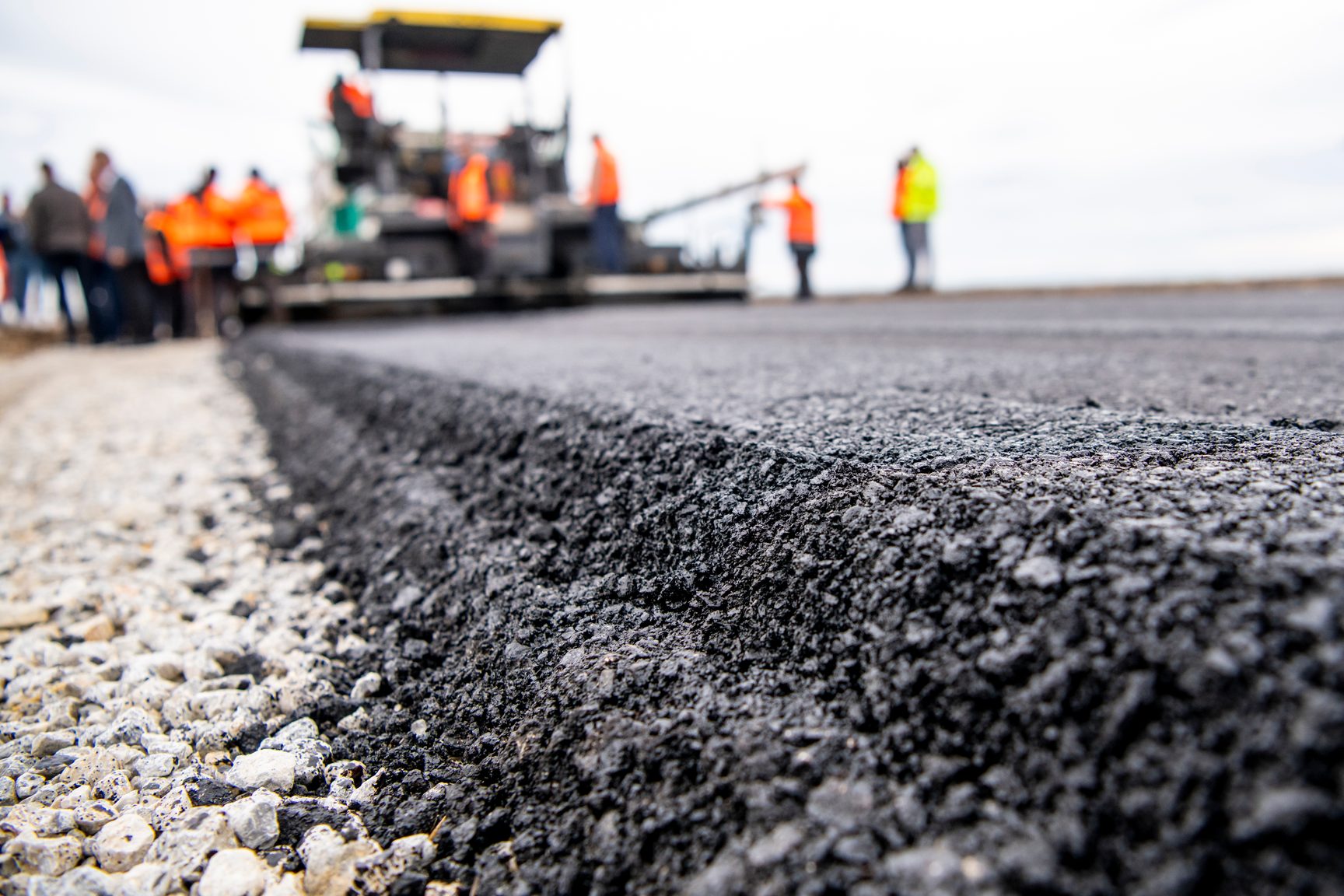
A Utah paving, sealcoating or striping company carries the same core lines it would carry anywhere: general liability, contractors equipment, commercial auto, workers compensation and property. What sets Utah apart is that the state wants to see part of that program before you may work at all, because the specialty license covering asphalt, sealing and striping is issued only after proof of liability coverage and of workers compensation or a waiver lands in the application file.
A certificate usually answers to a property manager or a general contractor; in Utah it also answers to the licensing division, and a lapse can reach the license and, through it, your right to collect on a job. Public road work adds UDOT’s prequalification and bidding rules, and an air rule limits the solvent in sealer and marking paint in the counties it lists. Our paving contractor insurance program is built around those checkpoints, taken below in the order a new Utah contractor meets them.
A state license for asphalt work, issued against proof of insurance
Paving work in Utah needs a license from the state. Under the Utah Construction Trades Licensing Act, anyone engaged in a construction trade the act licenses must hold a license from the Division of Professional Licensing before doing the work, and the act’s idea of a construction trade covers building, repairing or improving any highway, road, structure, excavation or other project. The Division’s rule creates an asphalt and concrete specialty license whose scope names asphalt overlay, chip seal, fog seal, slurry seal and sealant, and whose inclusions add striping and painted directional symbols or letters on the surface.
The license comes with insurance paperwork. Before a license issues, the applicant files proof of workers’ compensation insurance for its employees, or a Labor Commission coverage waiver if it hires no one, and proof of liability insurance at the limits the rule prints with the Division named as certificate holder; a specialty licensee is confined to the scope of its classification. A contractor that sues to collect for licensed work must allege and prove it was licensed both when it signed the contract and when the claim arose. Beyond the business license where the firm has its principal place of business, no city, county or state agency may demand another license to qualify it, apart from a state agency’s contract prequalification. The Legislature has re-enacted the act in a version published beside the current text, and that version keeps the rule that a contractor must be licensed before performing work.
Authority Utah Code 58-55-102(15) and (53); 58-55-301(1); 58-55-302(2)(b); 58-55-604; 58-55-105(1)(a) (re-enacted text); Utah Admin. Code R156-55a-301x; R156-55a-301am(2); R156-55a-302d(1) · read the source · checked
The classification that fits this trade is the asphalt and concrete specialty. Sealing sits in its scope sentence and striping in its list of inclusions, so a crew that lays hot mix, a crew that seals and a crew that paints lines all work under the same license:
“(2) Inclusions and Exclusions. The scope described in Subsection 301x(1) includes: (a) excavating, grading, compacting, and laying of fill or other related base; (b) painting or coating the surfaces, including striping, directional, and other types of symbols or letters; and (c) fabrication, construction, and installation of forms and shoring material.”
A specialty licensee is held to its classification, which is worth remembering when the business grows into work the classification does not describe. The operations description on your general liability policy should match the work you are licensed to do, so both files tell the same story.
The certificate the division holds
The rule spells out what the liability proof must show, and it makes the licensing division a certificate holder in its own right:
“(a) liability insurance in force that includes: (i) the policy number, the expiration date of the policy, the insurance company name and contact information, and coverage amounts of at least $1,000,000 for each incident and $2,000,000 in total; (ii) the Division named as a certificate holder;”
Treat the division like any other certificate holder. A renewal that moves insurers, a limit that shifts or a cancellation for nonpayment leaves the certificate it holds out of date, and that certificate stands behind the license. The workers compensation proof works the same way, a policy for a crew with employees or a waiver for an owner working alone; the workers compensation page explains when each fits.
The license also decides whether you can collect. A contractor that sues for pay must show it was licensed when it signed and when the claim arose, so a lapse becomes a receivables problem, and because the license rests on insurance proof, a coverage gap can travel the same road.
A chapter in the middle of re-enactment
The Legislature has passed a re-enacted version of the licensing act, and the official chapter file prints the current sections beside the versions that replace them. The quotes above come from the text in force when this page was checked. The replacement moves the license requirement to a new section number and keeps its substance:
“(a) A person engaged in a construction trade or acting as a contractor shall obtain a license under this chapter before performing work unless exempt from licensure under Section 58-1-307 or 58-55-110.”
The duty to be licensed before working carries across either way.
Sealer in Utah: a solvent limit, not a coal-tar rule
Utah has not written coal-tar pavement sealant into its law. No section of the Utah Code and no rule in the Utah Administrative Code bans the product, restricts where a crew may apply it or prescribes wording for its container.
The state rule that does reach sealing and striping crews regulates solvent content, not coal tar. Across Box Elder, Cache, Davis, Salt Lake, Tooele, Utah and Weber counties, Utah’s air quality rule on architectural coatings bars supplying, selling or applying a coating whose volatile organic compound content exceeds the limit its table sets, and its categories include driveway sealer for worn asphalt driveways and traffic marking coating for striping streets, parking lots and driveways. This research confirmed no local Utah ordinance on sealant either way; whatever the lot owner asks for, the job’s contract terms and the code of the town where the pavement lies decide which sealer is acceptable.
Authority Utah Code, all titles, and Utah Administrative Code, current rules, both swept; Utah Admin. Code R307-361-2, R307-361-3 and R307-361-5(1) · read the source · checked
The rule that does touch this trade is an air-quality rule on architectural coatings. It works by product category, and it reaches anyone who sells, supplies or applies a coating inside the listed counties, not only the manufacturer:
“(1) Except as provided in R307-361-4, no person shall manufacture, blend, or repackage, supply, sell, or offer for sale within the counties in R307-361-2; or solicit for application or apply within those counties any architectural coating with a VOC content in excess of the corresponding limit specified in Table 1.”
Nothing in that rule asks what the sealer is made from; it asks how much volatile content it carries, against a table this page does not reproduce. A crew based elsewhere that takes a job inside the listed counties is applying within them, so the product on the truck has to meet the limit for that job. Start with the label category and confirm it with your supplier.
For the insurance program the rule changes less than it seems. Overspray on a parked car, sealer tracked into a storefront and runoff reaching a storm drain are the same exposures whatever the product, and the sealcoating program is where the line between a liability loss and a pollution loss is settled in the policy wording. Marking paint falls under the same rule, part of why the striping program is written as its own exposure.
Bidding UDOT work: prequalify first, then security, bonds and insurance
The Utah Department of Transportation requires a firm to prequalify before it submits a bid or proposal on a department construction project, and the department may consider a bid only from a prequalified bidder. Its rating rests on the applicant’s experience, performance, safety record and financial condition, and it caps the size of any single contract the firm can win, the specialty work classifications it may bid and the most total work it may hold. The rule excuses projects advertised at or below an estimate it sets, except where a project calls for a specialty work classification, which requires prequalification as a specialty contractor whatever the project’s value. UDOT publishes a standing report of the contractors it has prequalified and their approved work types.
The prequalification rule never mentions insurance or bonds. Both enter later, at bidding and at award: every bid must carry bid security, a bidder must already hold the Utah contractor license its work calls for unless the job is a federal-aid highway project, where the license must be obtained before any work starts, the winning bidder delivers bonds executed by a surety authorized to do business in the state, and each department construction contract requires insurance protecting the department from judgments up to the limits of a state risk management rule. Contracts and subcontracts at or above the sizes the highway statute prints also require the firm to show UDOT that it offers qualified health coverage to its employees and their dependents.
Authority Utah Admin. Code R916-2-2(2)(c); R916-2-3(1), (2)(c) and (4); R916-1-6(1)(d); R916-1-8(5)(a), (6)(c) and (6)(d); R916-1-11(4); Utah Code 63G-6a-1103(1) and (3); 72-6-107.5(2) and (5)(a) · read the source · checked
The prequalification rule only makes sense read whole. It opens with the requirement, excuses projects under an advertised estimate it prints, and then takes that excuse back wherever a project calls for a specialty work classification:
“(1)(a) Unless otherwise provided in this rule, an applicant that seeks to submit a bid or proposal for one or more construction projects must first demonstrate to the department, through prequalification, that the applicant has the resources and capabilities to successfully complete an awarded contract. (b) Except as provided in Subsection (1)(c), a potential contractor does not need to participate in prequalification for a project with an advertised estimate of $3,000,000 or less. (c) An applicant seeking to participate in a transportation project that requires a specialty work classification must obtain prequalification from the department as a specialty contractor, regardless of the project's value.”
The last paragraph deserves the closest reading. A project that calls for a specialty classification can be small and still need a prequalified specialty contractor, so size alone does not tell you whether you can bid it. The department’s published report of prequalified firms and their approved work types is the quickest check on a competitor or a prospective sub.
Prequalification sits beside the state license rather than against it. The licensing act bars cities and counties from stacking extra qualification licenses on a licensed contractor, but it leaves room for a state agency’s contract prequalification, which is what UDOT runs.
Where the insurance and the bonds come in
The prequalification rule asks for neither insurance nor a bond; both arrive with the contract. Every department construction contract carries an insurance requirement whose limits sit in a separate state risk management rule:
“(d) requires a contractor to have insurance protecting the department from judgments up to the limits described in Rule R37-4; and”
The contract documents are where a bidder reads those limits, and your certificate has to meet them before work starts. The bonds follow at award, executed by a surety authorized in the state. A surety writes a bond on the firm’s finances and its record of finishing work, so bonding capacity is arranged before the bid season, not the week a proposal is due. Larger department contracts also bring a duty to show an offer of qualified health coverage to employees, which sits outside the property and casualty program but lands on the same desk.
Workers compensation in Utah: an open market with a contracted backstop
Every Utah employer must arrange for the payment of workers’ compensation benefits through one of two routes: insuring the liability with an insurer authorized under the state’s Insurance Code to transact that business, or getting approval from the Labor Commission’s Industrial Accidents Division to pay benefits directly as a self-insured employer. Any person or firm that regularly employs even one worker in the same business counts as an employer, the Labor Commission states the duty applies with few exceptions, and no state fund sells the coverage; the Insurance Code instead has the insurance commissioner contract with one carrier to write every workers’ compensation application made to it.
Hiring out work does not hand off the risk. When a business has a contractor do work that is part of its own trade and keeps supervision or control over that work, the contractor, its workers and every subcontractor below it and their workers count as the business’s employees for compensation purposes, unless the business obtains and relies on a valid certification that the contractor secured coverage or, for a firm with no employees, a coverage waiver. The Labor Commission issues those waivers to owners with no employees who hire out their services.
Authority Utah Code 34A-2-201; 34A-2-103(2)(a) and (7)(a)(ii), (7)(e); 31A-22-1001(3)(b); 31A-22-1014 · read the source · checked
Utah is a competitive state. A paving firm buys its policy from an insurer licensed to write the line, and the Utah Insurance Department regulates that market as it does the rest of the program. Beside that market, the Insurance Code arranges a contracted backstop:
“(b) Beginning no later than January 1, 2021, the commissioner shall enter into a contract with a workers' compensation insurance carrier to write all workers' compensation insurance for which application is made to the workers' compensation insurance carrier.”
That carrier is bound by contract to write the applications made to it; it is an insurer, not a government program, and the market around it stays open. The sharper Utah question for a paving contractor is the chain of subcontractors below it, because the law reaches up that chain:
“(ii) If an employer procures any work to be done wholly or in part for the employer by a contractor over whose work the employer retains supervision or control, and this work is a part or process in the trade or business of the employer, the contractor, all persons employed by the contractor, all subcontractors under the contractor, and all persons employed by any of these subcontractors, are considered employees of the original employer for the purposes of this chapter and Chapter 3, Utah Occupational Disease Act.”
Collecting a sub’s proof of coverage, or its waiver, before it starts is what keeps its crew off your policy. How payroll is split between paving, sealing and striping crews, and how a working owner is treated, are covered on the workers compensation page.
Utah agencies a paving business answers to
Each office holds a different piece of the paperwork:
Utah paving markets and their UDOT regions
UDOT runs its highway work through regional offices. Each market below is shown with its county and the region that covers it; the notes say only what the rules on this page mean for work there.
Salt Lake City
Salt Lake County. UDOT Region Two.
Its county is on the coatings rule’s list, so sealer and marking paint applied here are held to the solvent limit. City streets, commercial lots and state routes can share a week’s schedule.
Ogden
Weber County. UDOT Region One.
Shares a UDOT region with Logan, and its county is also on the coatings rule’s list. State work answers to the region; each lot owner sets its own certificate terms.
Logan
Cache County. UDOT Region One.
Same region as Ogden, different county, and that county is named in the coatings rule too. A crew working both cities deals with the same region office but separate city halls.
Provo
Utah County. UDOT Region Three.
Its county appears in the coatings rule, which matters to any sealcoating or striping crew based here. Region, city and private work each bring a different owner to satisfy.
St. George
Washington County. UDOT Region Four.
Its county is not among those the coatings rule names, so the solvent limit does not reach work here. The license, the insurance proof behind it and UDOT’s bidding rules still do.
Cedar City
Iron County. UDOT Region Four.
Shares a region with St. George, and its county is likewise outside the coatings rule’s list. State work here answers to that region; city streets answer to the city.
What moves the price of a Utah paving program
What moves the price of a paving program — the mix of paving, sealcoating and striping work, the payroll and loss history behind it, and how workers compensation is bought — is set out in our national guide to what paving contractor insurance cost depends on. This page keeps to Utah’s rules, agencies and markets.
Claim patterns on Utah paving jobs
Tires through wet sealer. A driver ignores the tape, crosses a freshly sealed section and tracks it onto a garage floor or a store entrance. The third party’s cleanup and the rework on your own surface are separate questions, and the general liability page works through which policy answers each.
A sub’s injured worker. Utah’s rule on subcontracted work means an injury on a sub’s crew can land on your workers compensation policy if the sub’s own coverage was missing. The certificate you did not collect is the claim you inherit.
Utah: Contractor license, a state license or registration can reach this work, connected to the General Liability page. Coal-tar sealant, no state rule on the product, connected to the Asphalt Sealcoating Insurance page. Transportation department prequalification, applies to department road work, connected to the Commercial Auto page. Workers’ compensation, bought in the open market, connected to the Workers Compensation page. The diagram pairs each state rule with the page on this site that discusses it and shows no figures.
Related coverage and services
What we insure
Coverage lines
Utah paving contractor insurance questions
Does a company that only sealcoats driveways and lots need a Utah license?
Yes, on the rule’s own wording. The asphalt and concrete specialty issued by the Division of Professional Licensing names sealing work, including chip, fog and slurry seal and sealant, in its own scope, and the licensing act requires the license before construction-trade work begins. A sealcoating outfit is therefore inside the classification rather than beside it. Confirm the classification with the division before you bid your first job.
What insurance proof does Utah want before it issues a contractor license?
The application file needs liability coverage in force, with a certificate naming the Division of Professional Licensing as holder and showing the limits the rule prints. It also needs workers compensation for your employees or, if you employ nobody, a coverage waiver from the Utah Labor Commission. A gap in either can hold up the license, so line up both before you apply.
I run a striping business by myself. Do I need workers compensation to get licensed?
Not if you truly have no employees. The rule lets an applicant who hires nobody file an affidavit backed by a coverage waiver issued by the Utah Labor Commission. Once you regularly employ anyone, the waiver no longer fits and a policy from an authorized insurer takes its place. Revisit the question before you hire, not after the crew has already grown.
Is UDOT prequalification needed for every state road job?
No. Smaller projects, measured against an estimate the prequalification rule itself sets, are excused, and the rule takes that excuse back for any project calling for a specialty work classification, whatever its value. So a small contract is not automatically exempt. Read the notice to contractors for the project; it tells you whether you must be prequalified before you submit.
Can I use coal-tar sealer in Utah?
No Utah statute or administrative rule bans, restricts or labels it. What does apply in the counties the air rule lists is a limit on the solvent content of driveway sealer and traffic marking coatings, whatever their base. Beyond that, the owner’s specification, the contract and any local code decide which product is acceptable, so read those before loading the tank.
My subcontractor has no workers compensation. Is that my problem in Utah?
It can be. When the work is part of your own trade and you keep control over it, Utah treats the sub and its workers as your employees for compensation purposes. The protection is to get and keep a valid certification of the sub’s coverage, or its waiver if it has no employees, before it starts. Our workers compensation page covers how that is handled.
Where does a Utah paving company buy workers compensation?
From the open market. The law lets an employer insure with an insurer authorized to write the line in Utah or, with approval from the Utah Labor Commission, carry the obligation itself. Alongside that market, the insurance commissioner keeps a contract with a carrier that must write the applications made to it, so coverage stays within reach.
This page describes insurance for paving and asphalt contractors operating in this state. It is general information, not legal advice and not a statement of coverage. Licensing, permitting and environmental requirements change; verify current requirements with the agency named before relying on them.
Get a quote for your Utah paving work
Tell us whether your Utah license file, your UDOT bids or your private lots are driving the paperwork, and we will build the program around that.