
Paving Contractor Insurance by State
Arizona Paving Contractor Insurance
Arizona licenses paving and seal coating work and ties that license to a bond; ADOT prequalifies prime bidders, and workers compensation comes from an authorized insurer or approved self-insurance.
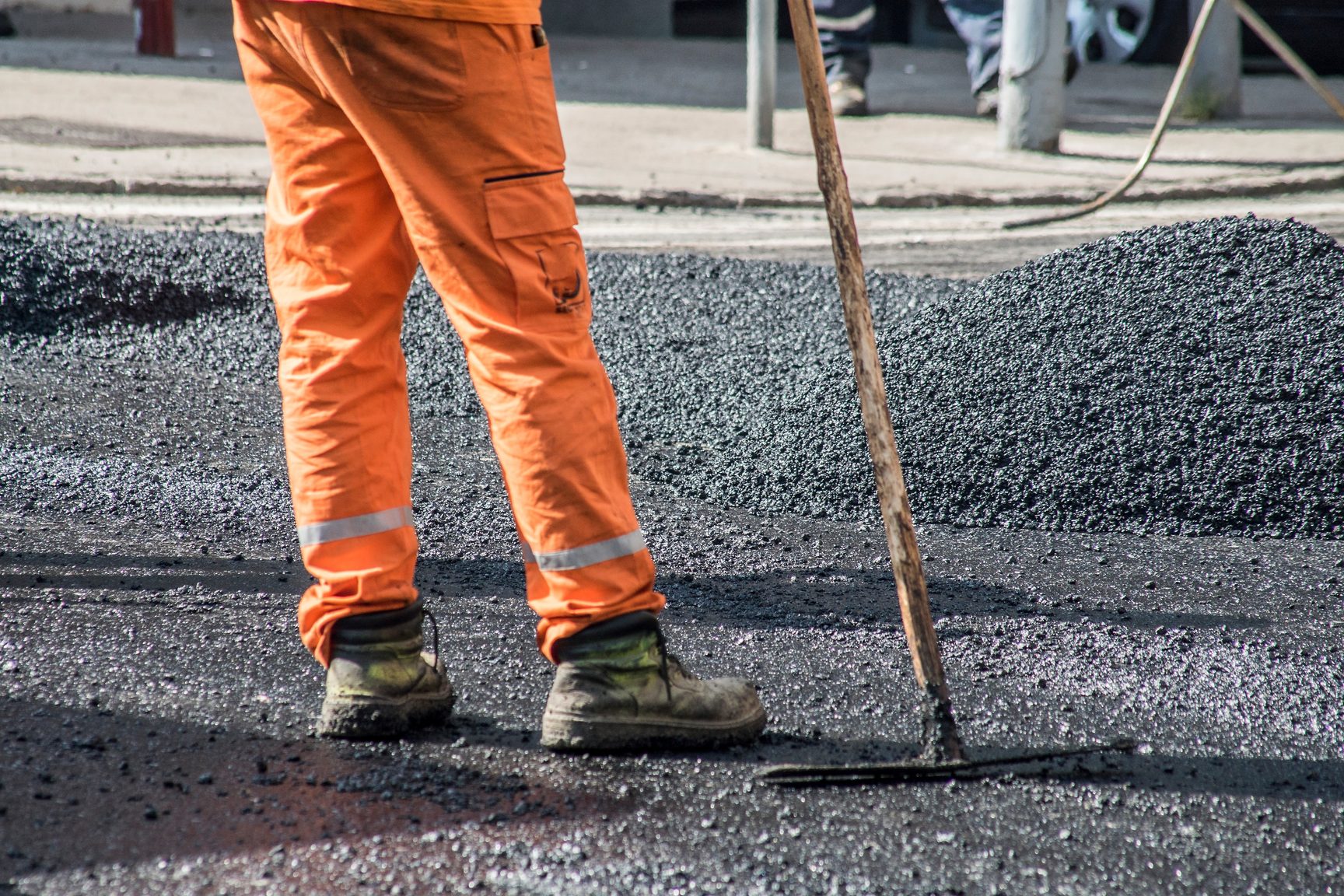
Arizona paving contractor insurance is built from the familiar lines — general liability, contractors equipment, commercial auto, workers compensation and property — set on top of a state license the rest of the program has to match. Paving and seal coating are licensed trades here, the license stays alive only while its bond does, a prime contractor bidding state highway work must be prequalified first, and workers compensation comes from an authorized insurer or from approved self-insurance, because the state sells none.
Each layer is quoted from its source below, starting with the license the bid, the bond and the certificate all have to agree with.
Arizona licenses the paving trade, and bonds the license
Arizona puts paving contractors under a statewide license issued by the Arizona Registrar of Contractors. The contracting statute lists paving among the fixed works of general engineering contracting, and the Registrar’s classifications add narrower asphalt paving and seal coating licenses for commercial, residential and dual work, the commercial seal coating scope reaching crack repair and painted marking symbols and the residential asphalt paving scope naming striping.
The license carries conditions that reach the insurance buyer. Contracting or bidding without one is unlawful unless the chapter exempts the work, the Registrar must receive a surety bond or cash deposit before it issues or renews a license, and a contractor that goes to court over pay for licensed work has to allege and prove it held a license both when the contract was signed and when the claim arose.
Authority A.R.S. §§ 32-1101, 32-1102, 32-1151, 32-1152(A), 32-1153; Ariz. Admin. Code R4-9-102 · read the source · checked
The contracting categories place paving by name, inside the category for fixed works outside residential property:
“3. General engineering contracting, which is engaging in the contracting business other than residential contracting in connection with fixed works requiring specialized engineering knowledge and skills and includes irrigation, drainage, water power, water supply, flood control, inland waterways, harbors, railroads, highways, tunnels, airport runways, sewerage, bridges, earth moving projects, paving and transmission lines.”
On top of that category the Arizona Registrar of Contractors issues narrower asphalt paving and seal coating classes, and the line between commercial and residential follows the property: work inside a residence’s property lines is residential, and anything else is commercial. A crew that seals home driveways one day and a retail lot the next is working both sides of that line. The residential paving scope is the one that names striping; this page makes no claim about which class fits a business that only stripes commercial lots, and the Registrar is the office to ask before the first bid. The chapter’s exemptions are drawn around listed persons and handyman-scale jobs, so a business that bids lots, driveways and streets should plan on holding the license.
The license bond, and what a lapse costs
Before the Registrar grants a license, and again before it renews one, it requires a surety bond or a cash deposit:
“A. Before granting an original contractor's license, the registrar shall require of the applicant a surety bond in a form acceptable to the registrar or a cash deposit as provided in this section. No contractor's license may be renewed unless the applicant's surety bond or cash deposit is in full force and effect.”
That bond is a surety instrument, not an insurance policy, and the same section sizes it by license type and annual volume. What makes it matter to an insurance buyer is what hangs from it. A bond out of force blocks renewal, bidding without a license is unlawful, and a contractor that later goes to court for payment must show it was licensed at the moments the statute names:
“No contractor as defined in section 32-1101 shall act as agent or commence or maintain any action in any court of the state for collection of compensation for the performance of any act for which a license is required by this chapter without alleging and proving that the contracting party whose contract gives rise to the claim was a duly licensed contractor when the contract sued upon was entered into and when the alleged cause of action arose.”
A lapse can therefore reach invoices on contracts already signed. Keep the bond renewal on the same calendar as the policy renewals, and keep the license, the bond and the named insured on the general liability policy in the same legal name, since the statute requires the license to be held in the name of the contracting business.
Coal-tar sealer and Arizona’s environmental law
Nothing in Arizona’s environmental statutes or its environmental quality rules touches coal-tar pavement sealant. There is no ban on it, no limit on where it may be applied and no labeling requirement, and the one environmental statute that mentions a seal coat lists it among the dustproof paving methods certain counties must require for parking areas.
That silence hands the choice of sealer to whoever controls the job. This research read no Arizona city or town ordinance aimed at sealant, so any municipal rule, the owner of the lot and the contract specifications remain the places that decide which product goes on the pavement.
Authority Arizona Revised Statutes (environment title) and Arizona Administrative Code (environmental quality title), both swept; A.R.S. § 49-474.01(A)(5) · read the source · checked
The finding is deliberately bounded: the environment title and the environmental quality rules were read in full, while the professions and trade titles were checked by section heading only. The one place that title mentions a seal coat points the other way — a duty on certain county boards that names a bituminous seal coat as one acceptable way to keep parking and access areas from raising dust:
“5. In a county with a population of two million or more persons or any portion of a county in an area designated by the environmental protection agency as a serious PM-10 nonattainment area or a maintenance area that was designated as a serious PM-10 nonattainment area, no later than March 31, 2008, adopt or amend codes or ordinances and, no later than October 1, 2008, commence enforcement of those codes or ordinances as necessary to require that parking, maneuvering, ingress and egress areas at developments other than residential buildings with four or fewer units are maintained with one or more of the following dustproof paving methods: (a) Asphaltic concrete. (b) Cement concrete. (c) Penetration treatment of bituminous material and seal coat of bituminous binder and a mineral aggregate. (d) A stabilization method approved by the county.”
That reads as a reason an owner calls, not a limit on what goes down. The one air rule the research found near this trade limits the smoke an asphalt or tar kettle may give off — a rule about the equipment, not the product. Which sealer goes on a lot is left to the owner’s specification or a local rule, and the sealcoating program is written for the exposures of applying it — overspray, tracking and runoff before cure — whatever the product. The Arizona Department of Environmental Quality administers those rules, and a later rule on sealer would appear there first.
Bidding ADOT work: prime contractors are prequalified first
A prime contractor cannot bid on Arizona Department of Transportation construction work until the department has prequalified it. A Contractor Prequalification Board reviews each applicant’s key personnel, organization, project history, equipment, licenses, type of work and financial condition, then sets the largest contract the firm may bid on; construction subcontractors go through no prequalification, and the department may waive the requirement on an individual contract or on projects made up of specialty work.
Prequalification itself asks for no insurance. Bonds and insurance come with the contract: Arizona’s highway statute lets a contract to the lowest responsible bidder once that bidder gives performance and payment bonds, requires any contractor insurance the job calls for to be placed with an insurer authorized in Arizona or an approved surplus lines insurer, and ADOT requires a commercial contractor’s license from the Registrar before award.
Authority Ariz. Admin. Code R17-3-201, R17-3-202; A.R.S. § 28-6923(E) and (I) · read the source · checked
The requirement is the department’s own, set by administrative rule rather than by a statute, and the department keeps a standing list of the firms it has prequalified. It tells bidders plainly:
“Before you can bid on any ADOT construction projects, you must submit an application for prequalification and have it approved.”
Equipment is on the board’s review list, so the equipment list in a prequalification file and the schedule on the contractors equipment floater describe the same machines and should agree, and because the rule lets surety letters support a higher prequalification amount, bonding capacity and bidding capacity move together. Among the work types the department lists for prequalification, several name this trade in its own words:
Waivers, and where a subcontractor stands
Prequalification is not absolute. The department can set it aside on a single contract, and the advertisement says when it has:
“The Department may waive the prequalification requirement on an individual contract when it is in the best interest of the state. The advertisement for bids shall identify if prequalification is waived.”
The application also provides a waiver for projects made up of specialty work — the line a striping or sealcoating firm should look for on every advertisement. A firm working under a prime sits outside the process altogether:
“There is no prequalification process for construction subcontractors. Subcontractors do not contract directly with ADOT and instead deal directly with prime contractors authorized to work with ADOT.”
A subcontractor’s requirements therefore live in the subcontract, which decides what limits, endorsements and certificates flow down; the department’s guidance adds that subcontractors are typically not asked to bond.
Award: bonds, insurance placement and a license check
Insurance and bonds arrive with the contract, not the prequalification file. The bid carries a guarantee — a certified check, a cashier’s check or a surety bond — the award carries performance and payment bonds, and where the contract calls for insurance, the statute controls where it may be placed:
“E. If contractor insurance is required for construction or reconstruction pursuant to this section, the insurance shall be placed with an insurer authorized to transact insurance in this state pursuant to title 20, chapter 2, article 1 or a surplus lines insurer approved and identified by the director of the department of insurance and financial institutions pursuant to title 20, chapter 2, article 5.”
The insurer has to be one the Arizona Department of Insurance and Financial Institutions has authorized, or a surplus lines insurer it has approved and identified, not merely one willing to quote. Type and limits come from the contract, and the winning bidder submits proof. Before award the department checks one more thing:
“A contractors commercial license to do work in Arizona is required prior to award of a contract.”
A contractor holding only a residential class therefore needs a commercial or dual classification before state highway work — a step that sends it back to the licensing office, not on to the underwriter.
Workers compensation in Arizona: insured or approved to self-insure
Arizona requires workers’ compensation of every employer that regularly employs workers other than domestic servants, and the statute allows two ways to carry it: a policy from an insurance carrier authorized by the director of the Department of Insurance and Financial Institutions to write the line, or satisfactory proof to the Industrial Commission of Arizona that it has the means to pay compensation directly or through a pool the commission has approved. No substitute product counts, and no state fund sells coverage.
An employer that leaves the obligation unmet gives up the workers’ compensation law’s protection for as long as it is out of compliance: it can be sued under any other applicable law, and in that suit it may not raise assumption of risk or contributory negligence as a defense.
Authority A.R.S. §§ 23-902(A), 23-907(A), 23-961(A) and (B) · read the source · checked
The statute lists the ways an employer may carry the obligation, and a companion subsection bars every other mechanism:
“A. Employers shall secure workers' compensation to their employees in one of the following ways: 1. By insuring and keeping insured the payment of such compensation with an insurance carrier authorized by the director of the department of insurance and financial institutions to write workers' compensation insurance in this state. 2. By furnishing to the commission satisfactory proof of financial ability to pay the compensation directly or through a workers' compensation pool approved by the commission in the amount and manner and when due as provided in this chapter.”
The second route belongs to an employer the Industrial Commission of Arizona accepts as able to pay claims itself or through an approved pool, and the commission points employers to insurer coverage data and its list of authorized self-insured employers. Without that approval, the route left is a policy from an insurer the Arizona Department of Insurance and Financial Institutions has authorized to write the line. Going without is costly in a specific way:
“A. Employers who are subject to and who fail to comply with section 23-961 or 23-962 shall not be entitled to the benefits of this chapter during the period of noncompliance, but shall be liable in an action under any other applicable law of the state. In such action the defendant shall not avail himself of the defenses of assumption of risk or contributory negligence.”
A sole proprietor may waive coverage for himself on a signed form, but every employee on the crew stays inside the law. How payroll divides between paving, sealcoating and striping, and what a subcontractor must show before stepping onto your job, is set out on the workers compensation page.
The Arizona agencies behind each requirement
Each requirement above belongs to its own office:
Arizona markets by ADOT district office
The department runs highway maintenance through districts named by direction rather than by number, and prints a main office city for each. The cities below are those offices, shown with the county each is the seat of; district lines do not follow county lines, so a county here is an address, not a boundary.
Phoenix
Maricopa County. Central District.
The license must be held in the name of the business that contracts. A firm here running several entities should make the one on the license the one on the bid and on the certificate.
Tucson
Pima County. Southcentral District.
State-route work here is let to prequalified primes, so a local firm that is not prequalified joins it on a subcontract, which makes the prime’s insurance article the document to read before mobilizing.
Flagstaff
Coconino County. Northcentral District.
A crew that also takes jobs run from other district offices puts trucks, trailers and machines on the highway between them, and both the floater and the auto schedule need to show what moves.
Prescott
Yavapai County. Northwest District.
A driveway inside a home’s property line is residential work; the shop lot next door is commercial. The class a job needs follows the property, not the size of the job.
Yuma
Yuma County. Southwest District.
A firm bidding its first department letting from here meets the bid guarantee before the award bonds, and a surety conversation is easier begun well before the advertisement.
Safford
Graham County. Southeast District.
An advertisement states whether prequalification is waived, so a firm here that is not on the list reads each one before assuming a specialty project is closed to it.
What moves an Arizona paving program’s price
What moves the price of a paving program — the mix of paving, sealcoating and striping work, the payroll and loss history behind it, and how workers compensation is bought — is set out in our national guide to what paving contractor insurance cost depends on. This page keeps to Arizona’s rules, agencies and markets.
Loss patterns on Arizona paving jobs
None of these carries a figure; they are the shapes losses take on this kind of work.
A car across uncured sealer. A driver moves a cone or ignores the tape, and the car picks up sealer or ruts a fresh mat. The car is a third-party claim; the repair to your own work is a separate question, which the general liability page works through.
A fall on a lot kept open. When an owner keeps part of a lot in use during sealing or striping, pedestrians cross fresh work, and the contract may already have shifted that risk onto you.
A payment dispute that turns on the license. Not an insurance claim, but a loss all the same: a license that lapsed between signing and the dispute can close the courthouse to an invoice, as the lawsuit condition quoted above provides.
A crew injury at the paver, roller or kettle. Burns, backing machines and strains fall under the workers compensation law, paid through an authorized insurer or an approved self-insurer.
Arizona: Contractor license, a state license or registration can reach this work, connected to the General Liability page. Coal-tar sealant, no state rule on the product, connected to the Asphalt Sealcoating Insurance page. Transportation department prequalification, applies to department road work, connected to the Commercial Auto page. Workers’ compensation, bought in the open market, connected to the Workers Compensation page. The diagram pairs each state rule with the page on this site that discusses it and shows no figures.
Nearby states we also write
The states bordering Arizona each get a page built from their own verified records. None of the licensing, sealer, highway or workers compensation findings above crosses a border, and a crew working on both sides of one needs every state it enters listed on its policies.
Related coverage and services
What we insure
Coverage lines
Arizona paving contractor insurance questions
Does Arizona require a contractor license for paving and sealcoating?
Yes. Paving sits inside general engineering contracting under the state’s contracting statute, and the Arizona Registrar of Contractors adds narrower asphalt paving and seal coating classes for commercial, residential or dual work. Contracting, bidding or offering to contract without a license in good standing is unlawful unless the chapter exempts the job. Before bidding, confirm which class your mix of work needs, especially if part of it is striping.
Is a residential license enough for a shopping center lot?
No. Arizona draws the line at the property: residential contracting is work inside a residence’s property lines, and work anywhere else is commercial. A driveway class does not reach a retail lot, a church lot or a public street. A contractor doing both kinds of job needs a commercial class beside the residential one, or a dual class that covers both — and the department checks for a commercial license before any award.
Can I use coal-tar sealer on Arizona jobs?
Arizona’s environmental statutes and environmental quality rules neither ban it nor limit it, and they require no label. That finding has edges: no city or town ordinance was read, and the professions and trade titles of the statutes were checked by section heading only. So the lot owner’s specification, the contract and any local rule decide the product. Read all three before you order material.
Does a subcontractor need ADOT prequalification?
No. The department prequalifies prime contractors only; a subcontractor contracts with the prime rather than with the department and goes through no prequalification. The subcontract then carries the requirements, including the insurance a sub must show, and the department’s guidance adds that subcontractors are typically not asked to bond. A sub still needs its own license from the Registrar for the work it performs.
What does ADOT require for insurance and bonds on a highway contract?
Prequalification asks for neither. At bidding, a guarantee is due as a certified check, cashier’s check or surety bond. At award, the winning bidder gives performance and payment bonds, and any insurance the contract calls for must be placed with an insurer authorized in Arizona or a surplus lines insurer the state has approved. The type and limits come from each contract, and the winner submits proof.
What happens if my license bond lapses?
The license cannot be renewed while the bond or cash deposit is out of force, and contracting or bidding without a license is unlawful. There is a second cost that arrives later: to sue for payment, a contractor has to prove it was licensed at signing and again at the moment its claim arose. Keep bond renewals on the same calendar as your policy renewals.
Can a paving company self-insure workers compensation in Arizona?
Only with the approval of the Industrial Commission of Arizona. An employer that proves it can pay compensation may carry the obligation itself or through a pool the commission has approved. Everyone else buys a policy from an insurer authorized to write the line, since no state fund sells it and no substitute arrangement counts. An employer left uncovered can be sued by its workers without its usual defenses.
This page describes insurance for paving and asphalt contractors operating in this state. It is general information, not legal advice and not a statement of coverage. Licensing, permitting and environmental requirements change; verify current requirements with the agency named before relying on them.
Get a quote for your Arizona paving work
Tell us which license class you hold and whether you bid state work, sub to primes or stay on private lots, and we will read the program against it.