
Paving Contractor Insurance by State
Colorado Paving Contractor Insurance
Colorado leaves paving licenses to its cities and counties, has no coal-tar sealant rule, and reaches public road work through CDOT prequalification and a bond statute.
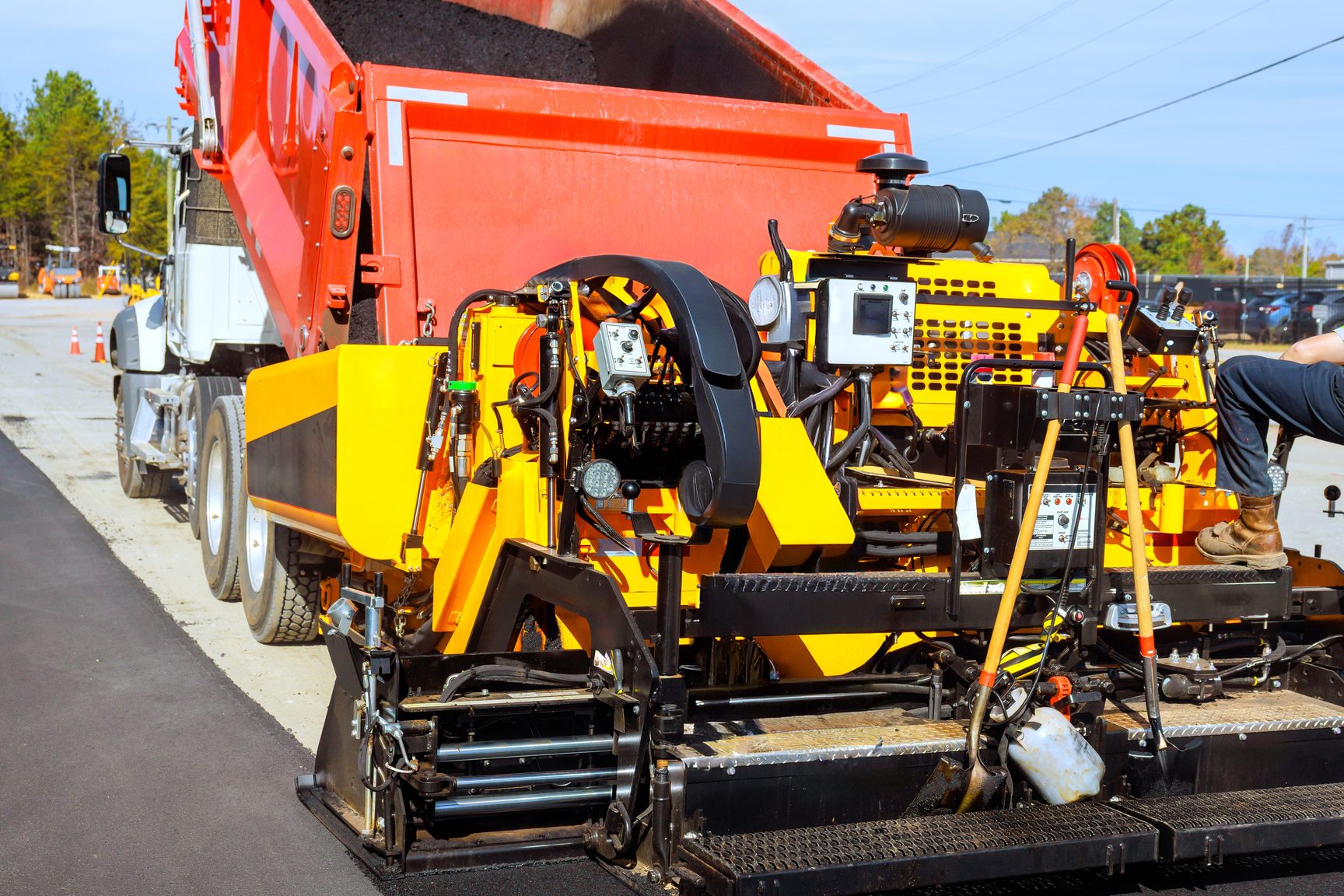
A Colorado paving, sealcoating or striping business insures the same lines it would anywhere: general liability, contractors equipment, commercial auto, workers compensation and property. Colorado’s particular pressure comes from its cities and counties, which hold the licensing power the state never used on this trade, and from CDOT, which screens every prime that bids its highway work and asks for a surety letter at the door.
Put plainly, the state layer is thin and the local layer is where a paving contractor meets paperwork. Nobody in state government issues a paving credential, and no state rule tells a sealcoater which product to spray. Workers compensation, on the other hand, is required from the first hire, and the law makes a business answer for the crews it contracts with. Public road work adds prequalification and bonding on top. The sections below go axis by axis: what the source says, where it stops, and what that means for the policies.
Licensing lives with Colorado’s cities and counties
No Colorado agency licenses general contractors statewide, and no state credential covers laying asphalt, sealcoating a lot or painting its lines. The state’s Division of Professions and Occupations lists contractor credentials for electrical and plumbing work and nothing else, and the statute defines the electrical contractor by wiring and equipment for electric light, heat and power, so neither trade reaches asphalt, sealer or pavement markings.
The licensing question moves to the city or county instead. State law lets a municipal governing body license any lawful occupation, and lets a county with an adopted building code license building contractors in its unincorporated areas. Denver shows how that plays out: the City and County of Denver requires a right-of-way license for work in its public right-of-way or on other city property, and its paving contractor license covers street and alley paving with asphalt or concrete, with a bond form and insurance requirements among the documents it asks for. Confirm the local rules where the lot sits before quoting the job.
Authority C.R.S. §§ 12-115-103(4), 31-15-501(1)(c), 30-11-125(2) · read the source · checked
The nearest state credentials are single-trade, and the electrical definition shows how narrow they are. It is written around wiring for light, heat and power, not anything that goes down on a road or a lot:
“"Electrical contractor" means any person, firm, copartnership, corporation, association, or combination thereof that undertakes or offers to undertake for another the planning, laying out, supervising, and installing or the making of additions, alterations, and repairs in the installation of wiring apparatus and equipment for electric light, heat, and power.”
The licensing power sits lower. Cities and towns may license any lawful occupation, subject to state law. Counties have a narrower power: it is permissive, it applies only outside incorporated towns, and only in a county that has adopted a building code. The statute ties its idea of a building contractor to work needing a county building permit, and whether a given paving or sealing job needs one is a county question this page does not answer:
“Subject to the requirements of this section, any county that has adopted a building code may establish a licensing program to require a person who engages in the business of being a building contractor within the unincorporated areas of the county to obtain a license from the county prior to engaging in the business.”
Denver is the one local program verified here, shown as an illustration of what a city can do rather than as a Colorado rule. Its right-of-way license applies to work on public ground, and the paving category reads like a description of this trade:
“Shall perform work relating to street and/or alley paving to include the work of laying of gravel base course, asphalt or concrete paving, laying of concrete curb and/or gutter, concrete sidewalks, driveways, and installation of drainage structures and other items of work incidental to said street or alley paving in the right-of-way or other public property of the City.”
Nothing in that program reaches a private lot. What it does show is that a city license tends to arrive with an insurance requirement and a bond form attached. The certificate sent to a right-of-way office should match the one a property manager gets, so the general liability program has to produce additional insured and primary wording quickly, city by city.
Sealer choice and the state’s cutback asphalt rule
Neither the Colorado Revised Statutes nor the Code of Colorado Regulations singles out coal-tar pavement sealant: no Colorado rule prohibits the product, confines where crews may use it or imposes a labeling duty on it.
The closest state rule targets solvent, not coal tar. Inside ozone nonattainment areas, the Air Quality Control Commission bars cutback asphalt from the paving and upkeep of roads, parking lots and driveways from March through September, unless it goes down solely as a penetrating prime coat or the user shows the Division it will release no volatile organic compounds. This record verified no sealant ordinance in any Colorado city or county, which leaves the choice of sealer to the owner’s specification, the bid documents and the local code.
Authority Colorado Revised Statutes and Code of Colorado Regulations, both swept; 5 CCR 1001-29, Section III · read the source · checked
The statute sweep read every title of the Colorado Revised Statutes in the edition the legislature’s own site served, so a bill from a later session would not show in it; the regulations were searched through the Secretary of State’s current rules. The one paving material rule that turned up is about solvent, and it is confined in place:
“The provisions of this Section III. apply to the use and storage of cutback asphalt for the paving and maintenance of all public roadways (including alleys), private roadways, parking lots, and driveways only within ozone nonattainment areas.”
Cutback asphalt means asphalt thinned with a volatile solvent. The same regulation defines emulsified asphalt broadly, but no prohibition in it refers to that definition, so it limits no sealer. A crew doing tack or patch work inside a nonattainment area in the restricted months should know the rule; a sealcoater comparing products will not find an answer in it.
Product choice is settled job by job. For the insurance, what matters is where the material ends up: on a parked car, tracked into a lobby, or washed toward a storm inlet before it cures. Those exposures belong to the sealcoating program whatever the product, and a release that reaches water may be read as a pollution loss rather than an ordinary liability claim, depending on the wording. The Colorado Department of Public Health and Environment administers the air rule and is where a future state sealant rule would surface first.
Bidding CDOT work: who has to prequalify
The Colorado Department of Transportation requires general contractors to be prequalified before they bid on its highway and bridge construction projects, and its bidding page states that subcontractors are not required to be prequalified. Under CDOT’s bidding rules the application goes to the CDOT Contracts and Market Analysis Branch, which weighs a firm’s equipment, trained personnel, organization and technical staff, financial capability, experience and past performance on CDOT contracts, and may prequalify it for one project or annually for work of a set size or kind.
Prequalification asks for no insurance, but surety enters at the application. Each applicant files a letter from its bonding agent or bonding company stating its single-project performance bond capacity, and the rules reserve CDOT’s right to require prequalification of contractors or subcontractors for certain types of construction. After award, Colorado’s public works bond statute requires a contractor on a state contract above the contract size it sets to file a bond covering performance and payment for labor and materials before starting work; contracts at or below that size fall outside the section. The enabling statute itself only permits prequalification and leaves the method to rules.
Authority 2 CCR 601-10, §§ 2.01.1, 2.02.1(j), 2.04.1, 2.05.1; C.R.S. §§ 24-92-107, 38-26-106 · read the source · checked
CDOT’s bidding page puts the requirement on the firm that submits the bid:
“must be prequalified prior to submitting a bid for a project. Subcontractors are not required to be prequalified.”
Prequalification sets the level of work a firm may bid; whether the low bidder is responsible is judged separately before award. Equipment, trained people and financial capability are among the criteria, the same facts an underwriter reads for the contractors equipment floater, so a machine list that matches the policy schedule saves questions on both sides. The rule gives examples of the work an applicant names, and several describe this trade as printed:
Where a subcontractor stands
The agency page and the rule speak at different levels. The page frees subcontractors from prequalifying; the rule keeps a door open for CDOT to require it on certain construction:
“Prospective Contractors or Subcontractors may be required to be Prequalified to perform certain types of construction. Such Prequalification will be determined by a panel of subject matter experts and must be renewed yearly;”
A paving or striping sub should read each project’s bid documents instead of relying on either sentence alone. The enabling statute itself is permissive and leaves the method to rules.
Surety before and after a CDOT award
Insurance plays no part in the prequalification file. Surety does, from the application:
“This application shall include a recently signed and dated letter from the bonding agent or bonding company indicating the single project performance bond capacity for the Contractor.”
After award, the public works bond statute, C.R.S. § 38-26-106, takes over. On a state contract larger than the size it sets, the contractor files a bond securing both performance and payment for labor and materials before work begins; a state contract at or under that size falls outside the section. A bond is not a policy. The surety pays the owner or an unpaid supplier and then looks to you for repayment, and it underwrites your balance sheet and work in progress, so capacity is something to arrange well ahead of a letting.
Workers compensation starts with the first hire
Colorado makes workers’ compensation mandatory once a business has a single employee, whether that worker is part-time, full-time or family. The Division of Workers’ Compensation describes two ways to meet the duty, commercial insurance or self-insurance, and the statute allows a policy from any stock or mutual corporation authorized to write the coverage in Colorado, or self-insurance under a permit from the executive director or a certificate of authority from the commissioner of insurance.
Construction work carries an added layer. The Division tells construction businesses they must carry a policy for their employees and must make sure the contractors they use meet the requirement too, or face fines, and the statute makes a business that contracts out any part of its work the employer of its contractors and subcontractors and their employees for compensation purposes, subject to the exceptions the section lists.
Authority C.R.S. §§ 8-44-101(1), 8-40-203(1)(b), 8-41-401(1)(a)(I) · read the source · checked
Colorado is a competitive state for this line, and the division states the reach of the duty and the routes to meet it plainly:
“If you have one or more employees working for you in Colorado, you must have workers' compensation insurance and maintain it at all times. This applies to all employers, regardless of whether the employees are part-time, full-time, or family members.”
“In Colorado, there are two ways for an employer to obtain workers' compensation coverage, commercial insurance and self-insurance.”
The Colorado Division of Insurance regulates the insurers and agencies in that market and is where an employer can confirm a company is authorized to write the line. For construction, the division adds a warning about the crews you bring in:
“If your business operates within the construction industry, you must carry a policy for your employees. If you use contractors, you must make sure that the contractors also meet workers' compensation requirements, and if they don't, you could be fined.”
That statutory-employer rule matters on a paving job, where a striping or sealcoating sub may share the lot with your own crew. If an uninsured sub’s worker is hurt, the claim can land on your policy. A current certificate collected before a sub starts, and kept on file, is the practical defense; the workers compensation page covers how subcontractors and working owners are treated when the policy is written.
Colorado agencies a paving contractor deals with
Each of these bodies owns a different piece of the picture, and none speaks for the others:
Colorado markets by CDOT region
CDOT runs the state highway system through engineering regions and prints the counties in each on its region map. Each market below carries its county, as the county seat, and the region that county sits in. No population, traffic or market-size number is attached to any of them.
Denver
Denver County. Denver Metro/Central Colorado.
A consolidated city and county, and the local licensing example this page verified. Its right-of-way license covers streets, alleys and city property; a private lot still answers to the owner’s contract and the job’s permit.
Colorado Springs
El Paso County. Southeast Colorado.
This county seat shares a CDOT region with Pueblo. State work in both cities answers to one region, while each city hall sets its own rules for everything else, so ask what each wants on file.
Pueblo
Pueblo County. Southeast Colorado.
Same region as Colorado Springs, but a different county and a different city government. Expect each owner here to write its own certificate language, even beside a road the same region maintains.
Grand Junction
Mesa County. Northwest Colorado.
The only market on this page in its CDOT region. Work spread across several regions means equipment and trucks moving between them, which is where the auto and equipment schedules have to agree.
Fort Collins
Larimer County. Northeast Colorado.
The county seat for the market in the region the map names for the state’s northeast. City streets, private lots and state highway work can share a season, and each owner asks for its own insured wording.
Durango
La Plata County. Southwest/South Central Colorado.
The county seat for the market in the region named for the southwest and south of the state. Where a machine is parked between jobs belongs on the floater, wherever the region line falls.
Pricing factors for a Colorado paving program
What moves the price of a paving program — the mix of paving, sealcoating and striping work, the payroll and loss history behind it, and how workers compensation is bought — is set out in our national guide to what paving contractor insurance cost depends on. This page keeps to Colorado’s rules, agencies and markets.
Claim patterns on Colorado paving jobs
Patterns, not statistics; nothing below carries a count.
A driver ignores the barricade. Somebody drives through cones onto fresh sealer or a warm mat. Repairing the car falls to third-party property damage; the rework on your own job is a separate question, covered on the general liability page.
A pedestrian on a wet lot. Shopping center and apartment owners keep lots open while crews work, so people walk across tacky paint or sealer. The service contract you signed decides whose problem that is.
Damage in the right-of-way. Work in a city street or on a state highway brings utilities, curbs and passing traffic into the job. A struck line or a vehicle caught in a lane closure pulls in the owner, the traffic control plan and your crew at once.
An injury around the paver. A hot-mix burn, a crew member caught by a roller in reverse, a back strained from raking. In Colorado that goes to the workers compensation policy you are required to carry, and a hurt worker from an uninsured sub can end up there too.
Colorado: Contractor license, no statewide license reaches this work, connected to the General Liability page. Coal-tar sealant, no state rule on the product, connected to the Asphalt Sealcoating Insurance page. Transportation department prequalification, applies to department road work, connected to the Commercial Auto page. Workers’ compensation, bought in the open market, connected to the Workers Compensation page. The diagram pairs each state rule with the page on this site that discusses it and shows no figures.
Nearby states we also write
Each neighboring state listed here gets its own page, researched from its own sources. Licensing, sealant rules, prequalification and workers compensation are verified state by state, and nothing on this page applies across the Colorado line.
Related coverage and services
What we insure
Coverage lines
Colorado paving contractor insurance questions
Is there a Colorado state license for asphalt paving or sealcoating?
No. The Colorado Division of Professions and Occupations issues contractor credentials only for electrical and plumbing work, and neither trade reaches hot mix, sealer or line paint. The gap is filled locally: a city can license lawful occupations, and a county with a building code can license building contractors outside its towns. Call the city or county office for the jobsite before you bid, not after the crew arrives.
Does Denver require a license to pave?
For work in its streets, alleys or on other city property, Denver requires a right-of-way license, and its paving contractor category names asphalt and concrete street and alley paving. That is one city’s rule for public ground, not a state requirement and not a license for private lots. Other Colorado cities set their own requirements, so check each one where you plan to work.
Can I still use coal-tar sealer in Colorado?
No state statute or regulation bans it, limits where it goes down or requires a label. The one air rule that touches paving limits solvent-thinned cutback asphalt inside ozone nonattainment areas for part of each year, and it says nothing operative about sealers. Your product choice is set by the owner’s specification, the bid package and any local code, so read those first.
Do subcontractors need CDOT prequalification?
CDOT’s bidding page says subcontractors need not be prequalified; primes that bid its highway and bridge work must be. The rule behind that page keeps CDOT’s right to require prequalification of subcontractors for certain types of construction, decided by a panel and renewed each year. Treat the bid documents for each project as the final word on whether a sub has to qualify.
Is insurance part of CDOT prequalification?
Not directly. The prequalification rule asks for no insurance at all. What it asks for is surety: the application carries a recent letter from your bonding agent or company stating your capacity for a single-project performance bond. Insurance comes later, in the contract you sign after award, and that is where limits and additional insured wording are set for the job.
When does a state contract in Colorado need a performance and payment bond?
Colorado’s public works bond statute sets a contract size. Above it, a contractor on a state contract files a bond before starting work that secures both completing the job and paying for labor and materials. At or below that size the section does not apply at all. Bonds are underwritten on your financial statements, so build capacity before the bid season starts.
I run a small sealcoating crew. Do I need workers compensation in Colorado?
Yes, once you have a single employee, whether part-time, full-time or family. The Colorado Division of Workers’ Compensation accepts either a policy from an insurer authorized in Colorado or self-insurance. If you hire subcontractors, the law can treat you as their employer for compensation, so collect their certificates before they start. Our workers compensation page covers how a sealcoating crew is written.
This page describes insurance for paving and asphalt contractors operating in this state. It is general information, not legal advice and not a statement of coverage. Licensing, permitting and environmental requirements change; verify current requirements with the agency named before relying on them.
Get a quote for your Colorado paving work
Tell us which Colorado cities and counties you work in and whether CDOT work is part of it, and we will read the program against those contracts.