
Paving Contractor Insurance by State
Oklahoma Paving Contractor Insurance
Oklahoma leaves paving out of its trade licensing, qualifies highway bidders through ODOT before any proposal, and expects nearly every employer to secure workers’ compensation.
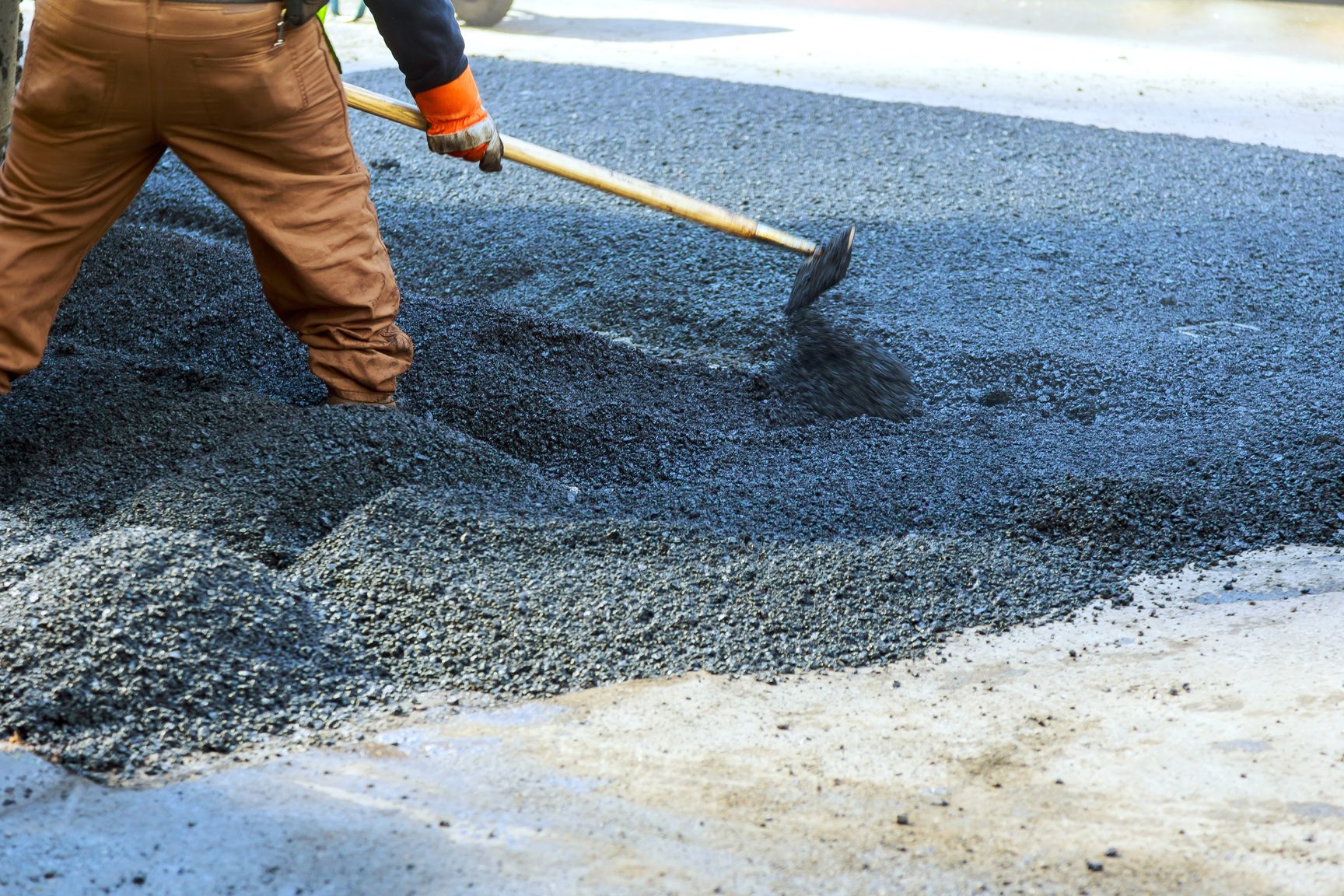
Oklahoma paving contractor insurance rests on the lines any asphalt business needs — general liability, a contractors equipment floater, commercial auto, workers’ compensation and property — and the state decides where each one gets tested. The pressure falls on highway bidding, where ODOT qualifies a firm before it may bid and wants insurance certificates when it signs, and on a workers’ compensation law that binds nearly every employer, while statewide licensing never reaches paving at all.
For a sealcoating or striping outfit that works only private lots, most of what matters arrives through the owner’s contract and the city permit desk rather than a state office. Once a firm starts chasing highway lettings, the sequence changes: a qualification file, a guaranty with each proposal, then bonds and certificates at signing.
Oklahoma licenses trades, and paving is not one of them
Oklahoma’s statewide contractor licensing is organized trade by trade, and paving is not among the trades. The Construction Industries Board regulates plumbing, electrical and mechanical work, building and home inspectors, and roofing contractors; nothing on that list reaches asphalt paving, lot sealing or line striping, and the Board states that general contractors need no state license for general contracting.
Sitting outside the Board’s trades still leaves work to do. The Board sends contractors to local jurisdictions for local requirements, and Oklahoma’s municipalities regulate their licenses by ordinance and may set the license requirements their police power supports, so each job gets checked with the city or town where it sits. Plumbing, electrical or mechanical work folded into a site job still has to be done under the trade license that covers it.
Authority 59 O.S. § 1000.2(A); 59 O.S. § 1000.4(A); 11 O.S. § 22-107 · read the source · checked
The limit is written into the statute that sets out the Construction Industries Board’s job, and its list of trades is specific:
“The Board shall regulate the plumbing, electrical and mechanical trades, the building and construction inspectors, the home inspectors, and the roofing contractors through the powers and duties set forth in the Construction Industries Board Act and in the respective licensing or registration acts for such trades, or as otherwise provided by law.”
Nothing on that list touches hot mix, a sealcoat or a painted stall line. The Board’s own public statement on general contracting reads the same way, and it closes with the part a paving firm should not skip:
“General Contractors are not currently required to have a state license in Oklahoma for general contracting. However, trade licenses/registrations are required for performing, or offering to perform, licensed/registered trade work. Further, local jurisdictions should be contacted for any local requirements.”
The local layer it points to has real teeth. Oklahoma’s municipal code gives cities and towns the power to license by ordinance:
“Municipal licenses and license fees shall be regulated by ordinance. A municipality may establish such license requirements as it deems appropriate in the exercise of its police power”
In practice that means a call before the first job in a new town: does the city license paving or parking-lot work, does it want a bond, and what proof of coverage goes with a right-of-way permit? The certificate a city asks for is the same kind of document a property manager wants, so the general liability program has to produce one quickly, with the additional insured wording each owner writes into its contract.
Trade work is the other edge. A lot job that relocates a drain line or wires parking-lot lighting brings a licensed trade onto your site; subcontract that portion to a license holder and collect that contractor’s own certificate.
Coal-tar sealcoat in Oklahoma: no state rule, a local question
No Oklahoma statute or agency rule touches pavement sealer made with coal tar or any other PAH-heavy product. The statutes and the whole Oklahoma Administrative Code were each searched for it, and neither bans the product, limits where crews may spread it or requires a label.
That settles the state layer only. No city or county ordinance was read, so the property owner’s specification, the contract documents and the local code at the site still decide which product goes down. The one state rule found that governs a paving material is about petroleum solvent, not coal tar: DEQ’s air rules forbid preparing or applying cutback asphalt without the Division Director’s prior written consent, consent the rule ties to the state’s winter non-oxidant season.
Authority Oklahoma Statutes, every title swept; Oklahoma Administrative Code, every title searched through the Secretary of State’s Administrative Code Search; OAC 252:100-39-40 (the adjacent petroleum-asphalt rule) · read the source · checked
That answer reaches as far as the state goes and no further. Oklahoma’s statutes and its agencies’ rules leave coal-tar sealer alone, but a city or county can still write its own limit, and none was read here.
The asphalt rule that did turn up concerns a different product. The Oklahoma Department of Environmental Quality air rules define cutback by its petroleum content and keep it off the job without written consent, and the definition reads best beside the consent sentence:
“"Cutback asphalt" means a basic asphalt or asphaltic concrete containing a petroleum distillate.”
“No owner, operator and/or contractor shall prepare or apply cutback liquefied asphalt without the prior written consent of the Division Director. Such consent may be granted during Oklahoma's non-oxidant season, i.e., December 1 through the last day of February.”
This is an air-quality rule about a solvent-thinned material, not a restriction on sealcoat: a crew using cutback needs the Division Director’s consent on paper first, and sealcoat choice is untouched by it.
On the sealcoating side, any product limit a crew meets comes from the job itself — an owner’s specification, a municipal ordinance or a bid package. The insurance exposure sits elsewhere: overspray on parked cars, sealer tracked into a lobby, wash-off toward a storm inlet before cure. Whether a release reaching water is a liability or a pollution claim turns on policy wording, which the sealcoating program works through.
Bidding ODOT work: a Certificate of Qualification before any proposal
Only prequalified contractors may bid for the highway construction and maintenance work the Oklahoma Transportation Commission awards on the recommendation of the Oklahoma Department of Transportation, unless a project is exempted. The Public Competitive Bidding Act lets the Commission set up that system and makes it the sole judge of a bidder’s qualifications. Under ODOT’s rule a firm applies to the Office Engineer Division for a Certificate of Qualification, a committee weighs its working capital, equipment, experience and personnel, and the Department qualifies or refuses it for paving, grade and drain, bridge or other work; projects that do not involve highway construction or maintenance, such as landscaping or right-of-way clearance, can be waived.
Prequalification is not a license and asks for no insurance; the rule mentions insurance only where an applicant lists the cash value of life insurance as an asset. Coverage and surety come at two later points, the proposal and the contract signing. Each proposal carries a proposal guaranty, the successful bidder returns the signed contract with a performance bond and a statutory and payment bond, or a letter of credit in their place, and certificates of insurance for commercial general liability and for workers’ compensation and employer’s liability go in with the contract. The bidding act has any insurance or bond it requires placed with a carrier licensed in Oklahoma, and its own bond and insurance list reaches public construction contracts only once they pass a contract-size figure printed in the act.
Authority 61 O.S. § 118(A)–(B); 61 O.S. § 134; OAC 730:25-3-1(a)–(c), (k); ODOT Standard Specifications §§ 102.01, 102.09, 103.05, 107.12 · read the source · checked
The public bidding law lets the Commission build that system and judge qualifications itself; the department’s rule turns it into a bidding condition, with a narrow door left open for projects that are not highway work:
“Except as provided in this subchapter, only prequalified contractors will be permitted to bid on construction and maintenance contracts to be awarded by the Commission on the recommendation of the Department. When projects do not encompass highway construction maintenance, the Department may waive prequalification when it is in the best interest of the State and to increase competition on individual projects of a special nature including, but not limited to:”
The committee reviewing an application looks at money, machines, experience and people, and it sorts the outcome by kind of work. The rule names the categories this way:
“The Department will qualify, or refuse to qualify, any prospective bidder for paving, grade and drain, bridge or other Department construction work in accordance with such prospective bidder's experience and financial condition.”
Because the committee weighs equipment, the fleet a firm describes to the department is the same fleet its contractors equipment floater should be scheduling, machine by machine. The statute is also careful about what qualification is not:
“Prequalification to bid or perform work pursuant to this section does not constitute a license. Except as provided in subsection B of this section, prequalification shall not serve as a substitute for a license otherwise required by law.”
So a Certificate of Qualification is a permission to bid, not a license to work, and it leaves every local license question from the first section standing.
Proposal, signing and the paper that goes with each
Qualification itself asks for no insurance. Coverage demands arrive later, and the department’s specifications want the certificates delivered alongside the signed contract:
“Provide the Department with copies of Certificates of Insurance evidencing coverage as to commercial general liability and worker’s compensation and employer's liability with the signed Contract for inclusion in the contract file.”
The bidding act then adds a condition on where that coverage and any bond may be placed:
“Any insurance or bond required by this act shall be secured from an insurance or indemnity carrier licensed to do business in the State of Oklahoma.”
Put on a calendar, a guaranty goes in with every bid, and bonds and certificates follow at signing. Surety capacity is underwritten on the firm’s finances and the work already on hand, so it is arranged before the season’s lettings open; the certificates depend on a program that is already bound and already names the right parties.
Oklahoma workers’ compensation: a duty on employers, bought in the market
Oklahoma’s Administrative Workers’ Compensation Act binds every employer and every employee unless the act says otherwise, and it lists the ways an employer secures compensation: a policy from a stock, mutual or other insurer holding Oklahoma authority for workers’ compensation, guaranty insurance, proof to the Oklahoma Workers’ Compensation Commission of the financial ability to pay, membership in a group self-insurance association, or other security the Commission and the Insurance Department approve. Oklahoma runs no state fund for this coverage; the one insurer the legislature created is organized by statute as a private mutual insurance company, which makes it a carrier rather than a fund.
Skipping the duty does not erase it. An employer without the required security is guilty of a misdemeanor on conviction and is still obligated to pay compensation under the act, and on a job with subcontractors the prime contractor becomes liable to an uninsured subcontractor’s employees unless an intermediate subcontractor carries coverage. Contested claims are heard by the Oklahoma Workers’ Compensation Commission, the agency that adjudicates injured workers’ cases.
Authority 85A O.S. § 3(A); 85A O.S. § 36(A); 85A O.S. § 38(A), (C); 85A O.S. § 40(A)(1) · read the source · checked
The first route the act lists for meeting that duty is an insurance policy:
“A. An employer shall secure compensation to employees under this act in one of the following ways: 1. By insuring and keeping insured the payment of compensation with any stock corporation, mutual association, or other concerns authorized to transact the business of workers' compensation insurance in this state.”
The insurer the legislature created is organized as a mutual company, which makes it one of those carriers rather than a separate state system. Going without coverage is an offense, and it does not take the obligation to pay benefits away:
“Any employer who fails to secure compensation required under the Administrative Workers' Compensation Act, upon conviction, shall be guilty of a misdemeanor”
The contracting chain carries its own rule, and it matters most to a paving prime that hands striping or sealcoating to another firm:
“If a subcontractor fails to secure compensation required by the Administrative Workers' Compensation Act, the prime contractor shall be liable for compensation to the employees of the subcontractor unless there is an intermediate subcontractor who has workers' compensation coverage.”
That is why a current certificate from every subcontractor belongs in the job file before the sub’s crew sets foot on site, and why the workers’ compensation page spends time on how subcontractors and working owners are treated when coverage is written. When a claim is contested, it goes to the Oklahoma Workers’ Compensation Commission, which describes its role in a sentence:
“The Oklahoma Workers' Compensation Commission is the agency responsible for adjudicating cases of injured workers.”
The Oklahoma Insurance Department regulates insurers and the agencies that sell their policies, including the carriers writing workers’ compensation in this market.
The Oklahoma agencies a paving firm deals with
Each of these touches a different corner of the business, and none of them speaks for the others:
Oklahoma markets and the ODOT field district behind each
ODOT maintains the state highway system through field districts, and each district’s page lists the counties it maintains. Every card pairs a market with the county it is the seat of and the district that county sits in, and leaves population and market size out.
Oklahoma City
Oklahoma County. Field District 4.
State highways here are maintained out of this district, but qualification is statewide: a firm qualified by the department bids with the same standing in every district. Work for the city itself answers to whatever licenses the city’s ordinances set.
Tulsa
Tulsa County. Field District 8.
A firm doing city lots and state routes here answers to separate owners with separate paperwork: the city through its ordinances and permits, the department through specifications that want certificates delivered with the signed contract.
Norman
Cleveland County. Field District 3.
Cleveland County falls in its own district. When a season’s jobs cross county lines, the district named on the paperwork can change while the qualification, the bonds and the certificates the department asks for stay the same.
Lawton
Comanche County. Field District 7.
The cutback rule applies here exactly as it does statewide. A crew using a petroleum-thinned cutback in this district needs the Division Director’s written consent before it starts, and the rule ties that consent to its winter season.
Muskogee
Muskogee County. Field District 1.
Local licensing is set town by town under the municipal code, so a crew that works across several city limits in a week should ask each clerk what that town requires rather than carry one answer from town to town.
Durant
Bryan County. Field District 2.
Sealcoat choice here rests on the owner’s specification and any local ordinance. No state statute or rule restricts the product, so the question left is a local one, checked on each job.
Pricing factors for an Oklahoma paving program
What moves the price of a paving program — the mix of paving, sealcoating and striping work, the payroll and loss history behind it, and how workers compensation is bought — is set out in our national guide to what paving contractor insurance cost depends on. This page keeps to Oklahoma’s rules, agencies and markets.
Loss patterns on Oklahoma paving and sealcoating jobs
Described as patterns, with no counts or dollar figures attached.
Sealer on a customer’s car. Overspray drifts onto vehicles parked at the edge of a lot, or a driver ignores the cones and rolls through a wet coat. Whoever owns the car has a third-party property claim, while redoing your own work is a separate matter the general liability page explains.
A fall at a curb or wheel stop. A newly striped lot reopens and a pedestrian catches a displaced wheel stop or slips on paint that has not fully set. An owner’s indemnity wording can push that claim toward the contractor.
A lane closure gone wrong. Traffic runs alongside an ODOT crew all day, and a crash inside the closure draws in the traffic control setup, the department and the contractor together. The certificates handed over at signing are what that claim will test.
An injury on the crew. Hot-mix burns, a laborer caught by a reversing roller, a back strained shoveling. Under Oklahoma’s act the employer’s policy answers, and on a job with subcontractors the prime may answer for a sub’s uninsured crew as well.
A machine lost from the job site. A skid steer or small roller left on site overnight is exposed to theft and vandalism, which is the work the equipment floater is written to do.
Oklahoma: Contractor license, no statewide license reaches this work, connected to the General Liability page. Coal-tar sealant, no state rule on the product, connected to the Asphalt Sealcoating Insurance page. Transportation department prequalification, applies to department road work, connected to the Commercial Auto page. Workers’ compensation, bought in the open market, connected to the Workers Compensation page. The diagram pairs each state rule with the page on this site that discusses it and shows no figures.
Nearby states we also write
Oklahoma’s neighbors in our licensed footprint each have a page built from their own verified record. What this page says about licensing, sealcoat rules, ODOT and workers’ compensation belongs to Oklahoma alone and should not be read across a border.
Related coverage and services
What we insure
Coverage lines
Oklahoma paving contractor insurance questions
Does Oklahoma issue a state license for asphalt paving or sealcoating?
No. The Construction Industries Board licenses particular trades and inspectors, and asphalt paving, sealcoating and striping sit outside its list. That does not settle every job, though. Oklahoma cities and towns set their own license rules by ordinance, so ask the clerk or permit office in each town you work in what it expects, including any bond or proof of coverage attached to a permit.
Can my paving crew handle the plumbing or electrical part of a lot job?
Only through someone who holds the matching trade license. Oklahoma licenses plumbing, electrical and mechanical work at the state level, so a parking-lot project that relocates a drain line or wires light poles brings licensed work onto the site. A paving firm can subcontract that portion to a licensed trade contractor and collect its certificate of insurance before the work begins.
Is coal-tar pavement sealer restricted anywhere in Oklahoma law?
Not at the state level. The state statutes and the official compilation of every agency’s rules were searched without turning up a ban, a limit on use or a labeling rule. No city ordinance was checked, so treat the owner’s specification and the local code as the working answer on each job.
What is Oklahoma’s cutback asphalt rule, and does it reach sealcoat?
It reaches asphalt thinned with a petroleum distillate, not sealcoat. The Oklahoma Department of Environmental Quality air rules bar mixing or laying cutback unless the Division Director has consented in writing, and they link that consent to a winter season printed in the rule. If a crew uses cutback, get the consent on paper before the work starts; sealcoating falls outside this rule.
What does ODOT review before a firm may bid on highway work?
An application filed with the department’s Office Engineer Division. A committee looks at the firm’s finances, its fleet, its record of past work and its people, then qualifies it, or declines to, by kind of work such as paving or bridge work. The department can waive the step on special projects that are not highway construction or maintenance, and the bid documents say which applies.
Which insurance and bonds does an ODOT contract call for, and at what point?
None at the qualification stage. A proposal guaranty accompanies each bid. At signing, the successful bidder posts its performance and statutory-and-payment bonds, or substitutes a letter of credit, and hands over certificates covering general liability plus workers’ compensation with employer’s liability. Under the bidding act, any insurance or bond it demands has to come from a carrier licensed to do business in Oklahoma.
Can a small Oklahoma paving business go without workers’ compensation?
Do not assume it can. The act reaches every employer and employee except where it says otherwise, so any exemption has to be found in the act itself. Failing to secure coverage is a misdemeanor and leaves the duty to pay benefits in place, and a prime contractor can answer for an uninsured sub’s employees. Disputed claims are heard by the Oklahoma Workers’ Compensation Commission.
This page describes insurance for paving and asphalt contractors operating in this state. It is general information, not legal advice and not a statement of coverage. Licensing, permitting and environmental requirements change; verify current requirements with the agency named before relying on them.
Get a quote for your Oklahoma paving work
Send us your mix of ODOT lettings and private lots, plus the subcontractors you rely on, and we will match an Oklahoma program to the work.