
Paving Contractor Insurance by State
Kansas Paving Contractor Insurance
Kansas hands contractor licensing to its cities and counties, qualifies state highway bidders through KDOT every year, and requires nearly every employer to secure workers compensation.
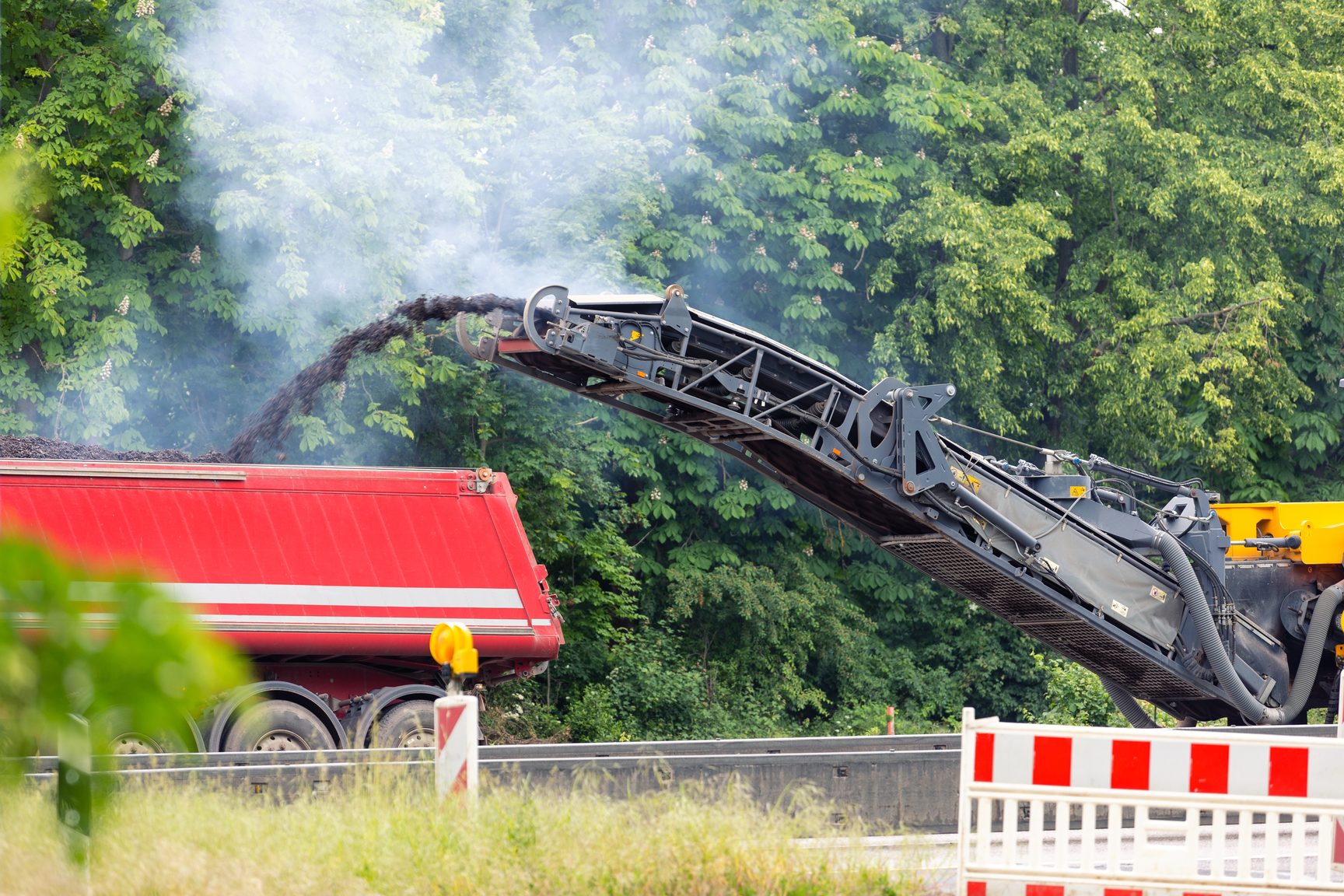
Insurance for a Kansas paving contractor comes down to the usual lines — general liability, a contractors equipment floater, commercial auto, workers compensation and property — and to knowing which Kansas authority will ask about each one. Kansas leaves contractor licensing to its cities and counties, KDOT qualifies a firm before it may bid state highway work and wants a surety bond once a contract is awarded, and the workers compensation act makes coverage a duty for nearly every employer.
Which of those layers a business actually meets depends on where its pavement is. A crew sealing and striping retail lots in a single city deals mostly with that city’s code, the owner’s contract and the certificate a property manager asks for. A firm chasing KDOT lettings adds a qualification file, renewed yearly, and a bond sized to each contract. And a company based across a state line has a Kansas tax filing to finish before its first job begins — a duty that lives in the tax code, not in any trade license.
Kansas leaves contractor licensing to cities and counties
No state license exists in Kansas for a general contractor, and no Kansas credential covers putting down asphalt, sealing a parking lot or painting stalls and arrows on it. The statewide contractor credentials Kansas does keep are narrow ones, such as the Attorney General’s roofing registration and the state fire marshal’s elevator contractor license, and neither reaches pavement.
Two layers still apply. Kansas law expects cities and counties to do the licensing: a county or city that licenses general, building or residential contractors may examine them, and each may adopt and enforce whatever contracting codes, standards and regulations its governing body sees fit, so the jurisdiction where the pavement sits sets the license and permit terms. And a contractor based outside Kansas has a separate state duty under the tax code, whose definition of contractor names roads and streets: unless it is a foreign corporation authorized to do business in Kansas, it registers each contract above the price the statute prints with the secretary of revenue and files a tax bond, and work cannot begin until that bond is on file.
Authority K.S.A. 12-1540(d); K.S.A. 12-1557(a); K.S.A. 12-1558(b); K.S.A. 50-6,122(d); K.S.A. 50-6,123(a); K.S.A. 44-1807(a); K.S.A. 79-1008; K.S.A. 79-1009; K.S.A. 79-1010 · read the source · checked
The state’s contractor statutes read like a toolkit handed to local government. They set out an examination a county or city may use, and only if that county or city has decided to license contractors at all:
“Any county or city requiring the licensure of general contractors, building contractors and residential contractors practicing within the county or city may conduct examinations designated by K.S.A. 12-1556 for the purpose of determining the competency of applicants for such licensure and shall not be allowed to ask further questions not designated on such examination.”
The following section goes further and lets each city or county write its own contracting rules, so neighboring towns can land in very different places. The chapter’s idea of a general contractor is built around buildings and structures in any case, an awkward fit for a parking lot or a county road.
Where Kansas does run a statewide contractor credential, it runs it for a single trade. The Attorney General of the State of Kansas registers roofers, and the registration is tied to roofing by its own words:
“No person shall engage in the business of or act in the capacity of a roofing contractor within this state without having a valid registration certificate as required by this act.”
Nothing there reaches hot mix, sealer or paint on a lot. The license question is therefore asked city by city and county by county. Before the first job in a new jurisdiction, call its codes or permit office and ask whether it licenses paving or parking-lot contractors, whether it examines them, and what proof of insurance it wants with a right-of-way or building permit. The certificate a city wants is the same document a property manager requests, so the general liability program has to turn out additional insured wording that matches each owner’s contract, often on short notice.
A tax duty for firms based outside Kansas
The one statewide obligation in this section comes from the revenue title, and it reaches a paving company because the definition of a contractor there names roads and streets in so many words:
“"contractor" includes individuals, partnerships, firms or corporations, or other associations of persons engaged in the business of the construction, alteration, repairing, dismantling or demolition of buildings, roads, bridges, viaducts, sewers, water and gas mains, streets,”
For an out-of-state company the order of events is fixed: put the contract on file with the revenue department, post the tax bond, and only then mobilize. That bond secures the tax side of the contract; it says nothing about workmanship and licenses no one to pave. A surety writes it on the company’s finances, apart from the insurance program, and because work cannot start without it, it belongs on the checklist for every job that brings a crew across the state line.
Coal-tar sealer: the statutes are silent, the regulations went unread
Kansas statutes contain no provision on sealing pavement with coal tar or with any sealer high in PAHs. A full-text search of the Kansas Statutes Annotated finds nothing that forbids the product, confines crews to certain surfaces or sets any labeling duty for it.
That answer covers the statutes only. The Kansas Administrative Regulations could not be read for this record, since the official compilation sits behind a human-verification check and KDHE’s own copy of its air regulations would not open, so a rule adopted by a state agency cannot be ruled out, and this record read no municipal ordinance. Until those layers are checked, which product may go down on a particular lot is a question for the city’s or county’s code, the property owner’s spec sheet and the job’s bid documents.
Authority Kansas Statutes Annotated, full text swept through the Revisor of Statutes search; Kansas Administrative Regulations not searched · read the source · checked
That finding is deliberately narrow, and this page keeps it narrow. The statutes are silent; the agency regulations and city ordinances that went unread may or may not be, so this page stops short of calling the product unregulated in Kansas.
Until the missing layers are checked, the job answers the product question. An owner’s spec sheet, a bid package or a city code can each name a sealer or bar one, and those documents are worth reading before the tank is filled. The insurance side turns on what the sealer does once it leaves the lot: drift onto parked vehicles, residue walked into a storefront, wash-off heading for an inlet before cure. Those exposures are what the sealcoating program is built for, and whether a release into water is answered as a liability claim or a pollution claim turns on policy wording rather than on any statute.
The Kansas Department of Health and Environment publishes the air regulations this record tried and failed to open, which makes it the office to ask before a heavy sealcoating season. A rule that surfaces there later would change this section, and the checked date above says when it was last true.
Bidding KDOT work: yearly prequalification, then surety at award
To bid on state highway construction in Kansas, a contractor first has to be prequalified by the Kansas Department of Transportation, and that standing lapses unless it is renewed every year. KDOT reviews a Contractor’s Qualification Statement and Experience Questionnaire and approves the firm for particular work classes; one class is aimed at small contractors taking on narrow jobs, and the examples KDOT gives include cold milling and asphalt crack repair.
Qualifying with KDOT is a matter of experience, equipment and finances; the department’s prequalification page asks for no insurance certificate. Surety comes at award instead. The highway statute has KDOT let highway construction and maintenance contracts at a public letting to the lowest responsible bidder whenever a contract costs more than a small figure the statute prints, bars an award to an out-of-state firm with no permanent Kansas office, and requires the winning contractor to file a surety bond from a company authorized in Kansas, set by the secretary at no less than the contract price, conditioned on faithful performance and on paying what is owed for supplies, materials and labor.
Authority K.S.A. 68-410 · read the source · checked
The department states the condition plainly on its own page:
“If you want to bid on state highway construction contracts, you must be prequalified with KDOT. This prequalification must be renewed annually.”
Kansas writes no prequalification statute. The highway statute tells the secretary to make rules for bids and lettings, and the Kansas Department of Transportation states the requirement itself, which is why this page quotes the department for it. For a smaller paving or sealcoating firm, the useful part of that page is its answer about a class meant for narrow jobs:
“This class is geared toward small contractors who may not be qualified for larger projects but may be qualified for small specific projects (e.g., Concrete Pavement Patching, Cold Milling, Pressure/Compaction Grouting, Joint Repair, Asphalt Crack Repair, Storm/Sanitary Sewer, Concrete Grinding/Grooving, Demolition, Concrete Diamond Grinding/Sawing/Sealing, Intersection Curb/Gutter, and Sidewalk Construction).”
Several entries in that answer describe pavement maintenance, and KDOT prints them this way:
Because KDOT weighs a firm’s equipment alongside its experience and finances, the machine list in a qualification file and the schedule on the contractors equipment floater should agree line for line; a roller on one and missing from the other invites questions from both sides. The page asks for no insurance certificate at this step. That answer is scoped to the page, so for the coverage a particular letting wants, read that letting’s own proposal.
The award statute: a Kansas office, then a bond
Once a bid wins, the highway statute takes over. It lets the secretary write the rules for bids and lettings, and it shuts out a nonresident firm with no permanent Kansas office:
“The secretary shall adopt necessary rules and regulations covering the making and receiving of bids and letting of contracts: Provided, That no contract shall be awarded to a nonresident individual, partnership or corporation unless the same has established a permanent office in the state of Kansas so that service can be had and taxes collected from said nonresident”
The bond follows in the same section. Its amount is fixed by the secretary and cannot fall below the contract price, and it answers both for performance and for what the job owes for labor and materials. A surety underwrites it on the balance sheet and the work already on hand rather than on loss history, so capacity is arranged before a letting season opens, and a prime that hands striping or sealcoating to another firm has good reason to see that firm insured and documented before its crew arrives.
Kansas workers compensation: a duty, and the ways to meet it
Every employer covered by the Kansas workers compensation act must secure the payment of compensation, and the statute allows three routes: coverage bought from an insurance carrier holding Kansas authority for workers compensation, proving to the director a financial ability to carry the risk as a self-insurer, or belonging to a qualified group-funded pool. The Workers Compensation Division of the Kansas Department of Labor administers the law, and private employers cannot buy this coverage from any state-run fund.
Agricultural employment and small payrolls sit outside the act. Agricultural pursuits are excluded, and so is an employer whose gross annual payroll stays at or below a figure the statute prints, though an excluded employer can opt in by filing an election or joining a pool. For everyone else, knowingly and intentionally failing to secure compensation is a crime, graded a class A misdemeanor, and after a hearing the director can also impose a civil penalty, and the Division warns that an employer who fails to secure coverage or report accidents may face fines and could even be closed down.
Authority K.S.A. 44-532(b), (c) and (d); K.S.A. 44-505(a) and (b); K.S.A. 44-575(a) and (b); K.S.A. 75-5708(a) · read the source · checked
For a paving firm the first route is the familiar one: a policy from an authorized carrier, placed alongside the rest of the program. Self-insurance means satisfying the director that the business can pay its own claims, and a pool means joining a qualified group and living under its rules. Whichever route a firm picks, going without is an offense:
“The knowing and intentional failure of an employer to secure the payment of workers compensation to the employer's employees as required in subsection (b) of this section is a class A misdemeanor.”
The office that administers all of this describes its own job plainly:
“The Kansas Department of Labor Workers Compensation Division is responsible for the administration of the Kansas workers compensation laws and rules.”
The exclusions in the act are narrow for this trade, and a company running a paving crew should not assume one fits without reading it. How a crew is split between paving, sealcoating and striping, how a working owner is treated, and what a subcontractor has to show before it starts are the questions the workers compensation page works through. The Kansas Department of Insurance regulates insurers and the agencies that sell their policies, including every carrier writing workers compensation in this market.
State offices a Kansas paving business answers to
Each of these offices covers a different piece of the business, and none speaks for another:
Kansas markets and the KDOT district behind each
KDOT maintains state routes through districts, each with a published list of the counties it covers. Every card below pairs a market with the county it is the seat of and the district that county belongs to; population and market size are left off on purpose.
Wichita
Sedgwick County. District 5 South Central Kansas.
City streets, county roads and private lots can all fall inside one week’s schedule here, and each owner writes its own insurance article. Inside the city limits the city’s code decides licensing; outside them the county commission decides its own.
Olathe
Johnson County. District 1 Northeast Kansas.
This card and the next share a district, so state-route work in both answers to the same KDOT district. Off the state routes, each city keeps its own contracting code, and a crew moving between them checks each one separately.
Topeka
Shawnee County. District 1 Northeast Kansas.
A county seat in the same district as the card before it. A lot inside the city and a lot just past its limits can sit under different contracting codes, so the address on the work order is where the license question starts.
Salina
Saline County. District 2 North Central Kansas.
Prequalification with KDOT does not change from one district to the next. A firm based here that takes state work in another corner of Kansas carries the same standing there, renewed on the same yearly cycle.
Independence
Montgomery County. District 4 Southeast Kansas.
A firm based outside Kansas that takes a job here meets the tax registration and bond before any work starts, exactly as it would anywhere else in the state; the city’s own code then decides any local license.
Garden City
Finney County. District 6 Southwest Kansas.
KDOT’s small-contractor class lists narrow jobs such as crack repair and cold milling, the kind of work a smaller crew can bid in this district without qualifying for large projects first.
What moves the price of a Kansas paving program
What moves the price of a paving program — the mix of paving, sealcoating and striping work, the payroll and loss history behind it, and how workers compensation is bought — is set out in our national guide to what paving contractor insurance cost depends on. This page keeps to Kansas’s rules, agencies and markets.
Kansas job-site losses, described without figures
What follows are patterns, with no counts or dollar amounts attached.
Sealer on a customer’s windshield. A gust carries spray across the row of cars nearest the work, or a delivery van ignores the tape and rolls through a wet coat. Paying for someone else’s vehicle and redoing your own coat are separate questions, and the general liability page explains which policy meets each.
A trip over a fresh wheel stop. A lot reopens before the paint has set or after a wheel stop has shifted, and a shopper goes down. The owner’s indemnity clause often points that claim at the contractor who last worked there.
A pickup through the cones on a state route. A distracted driver enters the closure and strikes a truck or a flagger. The award bond was never written for that; the liability and auto programs are, and the owner’s contract decides whose policy answers first.
Hurt at the screed or the roller. Hot asphalt splashed on an ankle, a foot caught under a backing machine, a back wrenched lifting forms. Under the Kansas act the employer’s coverage answers, whichever route secured it.
Kansas: Contractor license, no statewide license reaches this work, connected to the General Liability page. Coal-tar sealant, state code could not be fully read, connected to the Asphalt Sealcoating Insurance page. Transportation department prequalification, applies to department road work, connected to the Commercial Auto page. Workers’ compensation, bought in the open market, connected to the Workers Compensation page. The diagram pairs each state rule with the page on this site that discusses it and shows no figures.
Nearby states we also write
Each state along the Kansas line has its own page, built from its own verified record. What this page says about local licensing, the tax bond, KDOT and workers compensation belongs to Kansas alone and should not be carried across a border.
Related coverage and services
What we insure
Coverage lines
Kansas paving contractor insurance questions
Is there a Kansas state license for asphalt paving or parking-lot sealing?
No. Kansas issues no statewide credential for laying asphalt, sealing lots or painting stalls, and its general contractor definitions exist so that local governments can share an examination. Licensing, where it exists, belongs to the city or county where the job sits. Before working in a new town, ask its codes or permit office whether it licenses paving work and what proof of coverage it wants with a permit.
Our company is based outside Kansas. What must we handle before a Kansas job starts?
A tax filing, not a trade license. Unless your firm is a foreign corporation already authorized to do business in Kansas, each contract above a price set in the tax code is registered with the secretary of revenue, and a bond guaranteeing the resulting taxes is filed. Work may not begin until that bond is on file, so arrange it with your surety well before mobilizing.
Can we use coal-tar sealer on a Kansas lot?
Nothing in the Kansas statutes forbids it, but that is only half the answer. The state’s administrative regulations could not be opened when this was checked, and city ordinances were not read, so an agency rule or a local ban remains possible. Read the owner’s specification and the local code for each job, and check with the Kansas Department of Health and Environment before a large sealcoating season.
What does KDOT’s small-contractor class mean for a crack-repair or milling crew?
It is a way to qualify for narrow jobs without qualifying for large projects. KDOT describes the class as aimed at smaller firms, and its examples include asphalt crack repair, cold milling, joint repair and pavement patching. The firm still files the qualification statement and questionnaire, still renews every year, and still bids through KDOT’s lettings once approved.
Does KDOT ask for insurance or a bond from a highway contractor?
The prequalification page itself asks for no insurance certificate; it looks at experience, equipment and finances. For the coverage a particular job wants, read that letting’s proposal. Bonding comes at award. The highway statute requires the winning firm to file a surety bond of at least the contract price, covering both performance and payment of what it owes for labor and materials.
Is workers compensation optional for a small Kansas paving crew?
Almost never. The act covers employers with workers in Kansas, and its exclusions are narrow ones, such as farm work and the smallest employers. Failing on purpose to secure coverage is a crime, and the Kansas Department of Labor Workers Compensation Division can add a civil penalty after a hearing. Treat coverage as required unless you have confirmed an exclusion applies.
Can a Kansas contractor buy workers compensation from the state?
No. A private employer secures coverage through a carrier authorized to write it in Kansas, through self-insurance approved by the director on proof of financial ability, or through membership in a qualified group-funded pool. No state-run fund sells it to a paving firm, so the policy is placed in the private market alongside the liability, equipment and auto lines.
This page describes insurance for paving and asphalt contractors operating in this state. It is general information, not legal advice and not a statement of coverage. Licensing, permitting and environmental requirements change; verify current requirements with the agency named before relying on them.
Get a quote for your Kansas paving work
Tell us which Kansas cities you work in, whether you bid KDOT lettings, and where your company is based, and we will fit a program to that work.