
Paving Contractor Insurance by State
New Mexico Paving Contractor Insurance
New Mexico licenses paving, sealcoating and striping by classification, requires workers compensation of every licensed employer, and prequalifies NMDOT bidders.
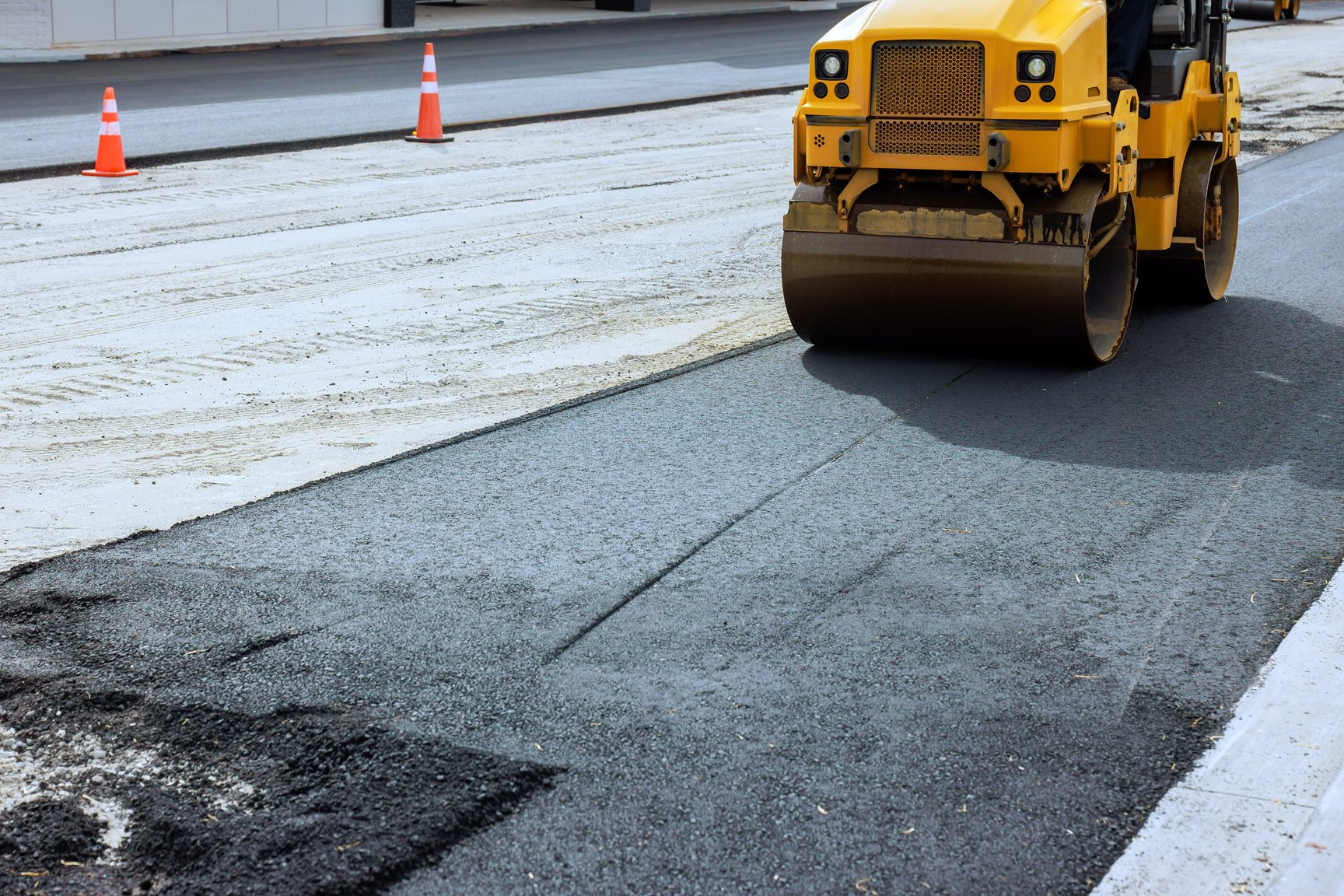
Insuring a New Mexico paving business starts with the usual lines — general liability, contractors equipment, commercial auto, property and workers compensation — but here the state sets more of the terms than it does in many places. Its construction licensing law sorts asphalt, sealcoat and striping work into classifications, its compensation act reaches every licensed contractor with employees whatever the size of the crew, and its transportation department will neither open a bid nor pay a subcontractor that lacks prequalified status.
Those requirements lean on each other. A lapse in compensation coverage is a ground for losing the construction license, and on department work the order of events — status, bid, bond, award — decides whether a firm reaches the insurance questions at all. The sections below follow that chain and quote the text each link rests on.
A New Mexico license, classified for each part of the job
New Mexico requires a license from the Construction Industries Division of the Regulation and Licensing Department before anyone acts as a contractor, and the Construction Industries Licensing Act counts building, altering or repairing a road, highway, bridge or parking area as contracting. The division’s classification rule gives this trade a group of its own, asphalt, bitumen and concrete construction: its streets, roads and highways class covers parking lots and driveways and applying sealcoat, its maintenance and repair class covers patching, and applying seal coat on driveways and on parking lots; its striping class covers painting directional stripes on paved roads and parking lots. The general building class also takes in seal coating and striping of driveways and parking lots.
The license has to match the job. Work in another classification is open to a licensee only if it is incidental or supplemental to the licensed trade, and the commission must revoke or suspend a license for contracting beyond its scope or for failing to maintain the workers’ compensation insurance the compensation act requires. No license is issued or renewed until the applicant furnishes proof of responsibility, a bond underwritten by a corporate surety authorized in New Mexico. Operating unlicensed is a crime classed as a misdemeanor, and the unlicensed firm may neither bring suit over pay for licensed work nor file a mechanic’s lien.
Authority NMSA 1978, § 60-13-3(A); § 60-13-12(A) and (B); § 60-13-23(B) and (I); § 60-13-30; § 60-13-49; § 60-13-52(A); 14.6.6.9 NMAC · read the source · checked
The operative rule is short. Holding a license is not enough on its own; the license has to be classified for the work:
“No person shall act as a contractor without a license issued by the division classified to cover the type of work to be undertaken.”
The division’s classification rule then spells out what each class in the asphalt group may do. For a paving, sealcoating or striping firm, these are the passages that matter:
“Clear, align, fill, compress, compact, build up or remove earth and do all work necessary to prepare, within the assigned rights-of-way, the land to accept a streets, roads, highways including culverts and tunnels, and alleys; includes parking lots, sidewalks or driveways; place and finish concrete or bituminous materials and apply sealcoat.”
“Fix, maintain, repair, patch, mend, cover, fill or replace with materials of like substances to that currently existing on streets, roads, highways, parking lots, driveways, sidewalks and alleys; apply seal coat to driveways and parking lots. Install rumble strips.”
“Paint directional stripes on paved roads, streets, highways, alleys and parking lots; install auto parking bumpers or stops and highway lane markers/reflectors.”
Sealcoat appears in more than one of those classes, while striping stands apart in its own. A firm that holds a paving class and takes on a striping contract, or the reverse, should confirm the class it holds names the work before it signs, because outside work is open to it only when incidental or supplemental to its licensed trade.
The classification on the license and the operations described on the liability policy should tell the same story. When a renewal application says paving and the crew spends much of its season striping retail lots, the mismatch surfaces at claim time, which is why the general liability program should describe each class of work the firm actually performs.
The proof-of-responsibility bond the finding mentions is a licensing instrument, written by a surety on the firm’s finances and separate from any bond a public owner asks for. For a subcontractor chasing an unpaid invoice, the sharpest edge in the act is what an unlicensed firm gives up:
“Any contractor operating without a license as required by the Construction Industries Licensing Act shall have no right to file or claim any mechanic's lien as now provided by law.”
Sealer in New Mexico: no product rule, and a county permit for cutback
No New Mexico statute, and no rule in the swept parts of the New Mexico Administrative Code, deals with coal-tar sealer or with any pavement sealer high in PAHs. New Mexico has not banned the product, restricted which surfaces it may coat or attached a labeling duty to it.
The one statute that reaches into paving materials is about recycled tires: it lets the Department of Transportation use rubberized asphalt in paving mixtures on state and local highway projects. The nearest rule on a paving product is local and concerns a petroleum material: in Bernalillo County, the Albuquerque-Bernalillo County Air Quality Control Board requires a permit from the Albuquerque Environmental Health Department before cutback asphalt, paving asphalt thinned with petroleum solvents, goes onto paved surfaces in more than the quantity its rule prints, and it exempts naphtha-cut penetrating coats on existing driveways and parking lots except in a summer window, when a permit is required again. This record read no municipal or county sealer rule, so the product used on a particular parking lot comes down to local code, the owner’s own choice of material and the terms of the contract.
Authority NMSA 1978, § 74-13-18; 20.11.65.18 NMAC; New Mexico Statutes Annotated and the environmental protection and highway titles of the New Mexico Administrative Code, swept · read the source · checked
The local rule that finding points to comes from the air board serving Albuquerque and Bernalillo County, and it reads:
“No person shall cause, allow, or permit the use of cutback asphalt in quantities greater than 100 pounds per application directly onto existing or new paved surfaces without first obtaining a permit for such use from the department.”
Precision matters here, because the rule is easy to misfile. Cutback is a petroleum-solvent product, and this is an air-quality permit for applying it. It is not a coal-tar rule, it says nothing about PAH content, and it reaches only Bernalillo County. A crew that primes or penetrates existing lots in that county should check the quantity and the calendar before the job, because the exemption for naphtha-cut coats closes for part of the summer. The recycled tire statute in the finding is no sealer rule either; it only permits rubberized mixes on highway projects.
With no product rule to follow, what the sealcoating program has to answer stays the same whichever product goes down: a coat that drifts onto vehicles, a lot reopened before it has set, material that finds a drain before it cures. A release that reaches water may sit inside the liability policy or may need pollution wording, depending on the form, so read it before the season starts, and keep the owner’s written specification in the job file.
NMDOT work: prequalified before the bid opens, bonded after it
The New Mexico Department of Transportation makes prequalification a condition of bidding. Under the department’s Contractor Prequalification Rule, a prime contractor needs prequalified status, granted by the department’s Office of Inspector General on a timely, complete and conforming packet, before a bid opens, and a bid submitted without it is found non-responsive and rejected. Subcontractors at any tier must hold prequalified status before performing any work on the project, and work done without it is not compensated.
Prequalification screens responsibility; it is not a license and it carries no insurance requirement. The rule says prequalified status grants no license to do business and no right to bid or to an award, lets a firm apply before it holds a construction industries license, and still limits the department’s highway construction work to contractors licensed in New Mexico, while the licensing act lets a contractor bid a federally funded highway project first and apply for its license on becoming the apparent successful bidder. The rule’s prequalification project is a major construction project let by competitive sealed bid, with maintenance and work procured by other methods expressly left out, and on those projects the department may apply a rolling average of each prime contractor’s past-performance factors when it evaluates bids. Surety attaches at bidding and at award: the highway statute requires the successful bidder to furnish a bond in the amount the commission sets, and the Procurement Code requires bid security and performance and payment bonds backed by sureties with authority in New Mexico on construction contracts above the prices it prints.
Authority 18.27.5.2, 18.27.5.7(Q), 18.27.5.8, 18.27.5.10, 18.27.5.11 NMAC; NMSA 1978, § 67-3-43; § 60-13-12(C); § 13-1-134; § 13-1-146; § 13-4-18(A) · read the source · checked
The rule states the cost of missing the deadline for a prime in plain terms:
“A prime contractor’s submitting a bid without timely obtaining prequalified status shall result in a determination that its bid is non-responsive and the bid shall be rejected.”
Subcontractors meet the same requirement at a different moment, as the department’s own page puts it:
“Subcontractors shall obtain prequalified status before performing any work or supplying goods or services to the project.”
That sentence is the one a sealcoating or striping sub has to read closely. Status is needed before the crew sets foot on the project rather than before a bid, and unqualified work goes unpaid, so a prime that brings a striping crew onto a department job without checking its status puts that crew’s invoice at risk, and its own schedule with it.
Status is also not a license, and the rule says so:
“Obtaining prequalification status, a performance factor, or a prequalification factor rolling average does not grant a license to do business, a right to bid or to be awarded a contract.”
Scope matters for this trade. The rule is written for major projects let by competitive sealed bid and leaves maintenance out, so a patching or sealing contract procured another way may never touch prequalification; the solicitation is the place to check. Whatever insurance a department contract asks for comes from that contract, not from prequalification.
Surety at the letting and at the award
“The successful bidder is required to furnish satisfactory bond in such amount as may be determined by the commission. The commission may adopt rules and regulations providing for the exclusion of contractors from bidding and for the determination of a responsible bidder pursuant to the provisions of the Public Purchases Act.”
Surety credit is a separate conversation from insurance: the surety reads the financial statements and the backlog of open work, and it wants them before the letting season rather than in the week a bid is due.
Workers compensation reaches every licensed New Mexico contractor
New Mexico’s Workers’ Compensation Act reaches employers with the number of workers it sets and, at any headcount, every employer engaged in activities that require a license under the Construction Industries Licensing Act, so a licensed paving, sealcoating or striping firm with employees is covered however small it is. A covered employer has its insurance carrier file a certificate of coverage from an authorized insurer with the Workers’ Compensation Administration, or proves to the director that it is financially solvent and receives a certificate excusing insurance. New Mexico has no state fund.
The Workers’ Compensation Administration’s Employer Compliance Bureau puts contractors engaged in contracting or licensed under the construction licensing act at the top of its list of those who need coverage. Private insurers write the policies, one of them created by the legislature and organized as a domestic mutual insurance company that is not a state agency and must compete with other insurers. An employer that has complied with the act’s insurance provisions is shielded from other liability for a worker’s injury or death, and the construction licensing act makes failing to maintain the required coverage a cause to revoke or suspend a contractor’s license.
Authority NMSA 1978, § 52-1-6(A); § 52-1-4(A); § 52-1-8; § 52-9-4; § 52-9-21; § 60-13-23(I) · read the source · checked
“The provisions of the Workers' Compensation Act shall apply to employers of three or more workers; provided that act shall apply to all employers engaged in activities required to be licensed under the provisions of the Construction Industries Licensing Act [Chapter 60, Article 13 NMSA 1978] regardless of the number of employees.”
The second clause of that sentence is the one that governs this trade. Once the work requires a construction license, the headcount test drops away, so a small sealcoating outfit stands where a large paving firm does. The routes to compliance are an authorized insurer or the director’s certificate:
“The required certificate must be provided by an authorized insurer as defined in Section 59A-1-8 NMSA 1978. In case any employer is able to show to the satisfaction of the director that he is financially solvent and that providing insurance coverage is unnecessary, the director shall issue him a certificate to that effect, which shall be filed in lieu of the certificate of insurance.”
Because a lapse is a ground to revoke or suspend the license, a renewal date on the compensation policy deserves the same attention as a license renewal, and a subcontractor’s proof of coverage belongs in the job file before the sub mobilizes. The workers compensation page explains how a crew’s work is described to an insurer, how an owner who works alongside the crew is handled and what a sub should show before starting.
New Mexico offices that touch a paving job
New Mexico paving markets and the NMDOT districts behind them
The department runs the state highway network through numbered districts, each named for an office city. Every card lists a market’s county and the district that county sits in, and no population or market-size figure.
Albuquerque
Bernalillo County. District 3 – Albuquerque and surrounding area.
The cutback permit described above belongs to this county. A crew priming or penetrating existing lots here should check the quantity and the season before the distributor is loaded.
Las Cruces
Doña Ana County. District 1 – Deming and surrounding area.
Its district is named for a different city, so state road work here answers to an office elsewhere, while city and private jobs bring their own permit and certificate terms.
Santa Fe
Santa Fe County. District 5 – Santa Fe and surrounding area.
The district carries this city’s name. A property manager, the city and the department can all want different additional insured wording on certificates issued in the same month.
Roswell
Chaves County. District 2 – Roswell and surrounding area.
A county seat whose district bears its name. A firm based here that bids department work should keep its prequalified status current, since a prime’s bid submitted without it is rejected.
Las Vegas
San Miguel County. District 4 – Las Vegas and surrounding area.
The district carries this city’s name. A small crew here is inside the compensation act as soon as it holds a construction license and hires, however few people it employs.
Gallup
McKinley County. District 6 – Grants/Milan and surrounding area.
Its district is named for other towns. Trailer runs between a yard and a job in another county belong on the auto schedule, and every machine hauled belongs on the equipment floater.
Pricing factors for a New Mexico paving program
What moves the price of a paving program — the mix of paving, sealcoating and striping work, the payroll and loss history behind it, and how workers compensation is bought — is set out in our national guide to what paving contractor insurance cost depends on. This page keeps to New Mexico’s rules, agencies and markets.
Losses New Mexico paving crews run into
Tire marks in a fresh mat. A driver goes around a cone before the surface has set, and the vehicle owner and the lot owner both look to the contractor. The general liability page sets out which part of that loss a liability policy answers and which part is the contractor’s own work to redo.
A collision beside a lane closure. On department work the crew labors next to moving vehicles, and a crash inside the closure pulls the traffic control plan, the department and the contractor into the same file.
An injury on the crew. Hot-mix burns and strains while loading a trailer are compensation claims, and in New Mexico they land on a policy the act requires of every licensed contractor with employees; a gap in that policy becomes a licensing problem too.
New Mexico: Contractor license, a state license or registration can reach this work, connected to the General Liability page. Coal-tar sealant, no state rule on the product, connected to the Asphalt Sealcoating Insurance page. Transportation department prequalification, applies to department road work, connected to the Commercial Auto page. Workers’ compensation, bought in the open market, connected to the Workers Compensation page. The diagram pairs each state rule with the page on this site that discusses it and shows no figures.
Nearby states we also write
The states listed below share a border with New Mexico, and each has its own page built from its own verified record. A crew that crosses the line with its equipment should read the neighboring page before the first job there, because licensing and compensation are decided state by state and nothing on this page carries over.
Related coverage and services
What we insure
Coverage lines
New Mexico paving contractor insurance questions
Which New Mexico license classification covers sealcoating and striping?
Sealcoat is named in more than one class of the asphalt group the Construction Industries Division, New Mexico Regulation and Licensing Department licenses under: the class for streets, roads and lots, and the maintenance and repair class. Striping has a class of its own, and the general building class also reaches sealing and striping on driveways and lots. Work outside a held class is allowed only when incidental or supplemental, so confirm the class before bidding.
Does a very small New Mexico paving crew need workers compensation?
Yes, if the business does work that requires a construction license and has employees. The act’s headcount threshold stops mattering once the work needs that license, so a paving, sealcoating or striping firm is covered at any size. An insurer files the certificate of coverage, or the director excuses insurance for an employer that proves it is solvent. Letting coverage lapse can also cost the firm its license.
Is coal-tar sealer banned or restricted in New Mexico?
Not by the state. Neither the statutes nor the administrative rules that were swept address coal-tar or high-PAH sealer, and no labeling duty applies to it. No city or county sealer ordinance was read for this page either, so the product question is settled by local code, the owner’s specification and the contract. Check the job’s written specification before the sealer is mixed.
What does the Albuquerque cutback asphalt permit cover?
It is a Bernalillo County air-quality rule on cutback asphalt, meaning paving asphalt thinned with petroleum solvents. Above the quantity the rule prints, putting it on paved surfaces takes a permit from the city’s environmental health department. Penetrating coats cut with naphtha on existing lots and driveways are exempt except during a summer window. It says nothing about coal tar, and it reaches only that county.
Must a striping subcontractor on an NMDOT project be prequalified?
Yes. The department’s rule requires subcontractors at every tier to hold prequalified status before they perform work on the project, and its own page adds supplying goods or services. Work done without status is not compensated. A prime bringing in a striping or sealing crew should see that status confirmed in writing before the crew mobilizes, the same way it checks the crew’s certificate of insurance.
Does NMDOT prequalification require insurance or a bond?
Prequalification does not; it is a responsibility screen with no insurance condition in it. Surety comes separately, at the bid and at the award: the winning bidder on a highway contract posts a bond sized by the commission, and the Procurement Code adds bid security and performance and payment bonds on larger construction contracts. Any insurance a department contract asks for is set by that contract itself.
What does working outside our license classification risk?
Contracting beyond a license’s scope is a ground on which the commission has to revoke or suspend it. Work in another class is allowed only when it is incidental or supplemental to the licensed trade. Working with no license at all is a misdemeanor, and the firm loses both the right to sue for its pay and the right to a mechanic’s lien. The Construction Industries Division, New Mexico Regulation and Licensing Department can confirm what a class reaches.
This page describes insurance for paving and asphalt contractors operating in this state. It is general information, not legal advice and not a statement of coverage. Licensing, permitting and environmental requirements change; verify current requirements with the agency named before relying on them.
Get a quote for your New Mexico paving work
Tell us which CID classifications you hold and whether NMDOT lettings are on your calendar, and we will match the program to the work you are licensed for.