
Paving Contractor Insurance by State
Louisiana Paving Contractor Insurance
Louisiana licenses paving through its statewide contractor board, and DOTD work runs on that license, a per-project registration and bonds rather than a separate qualification rating.
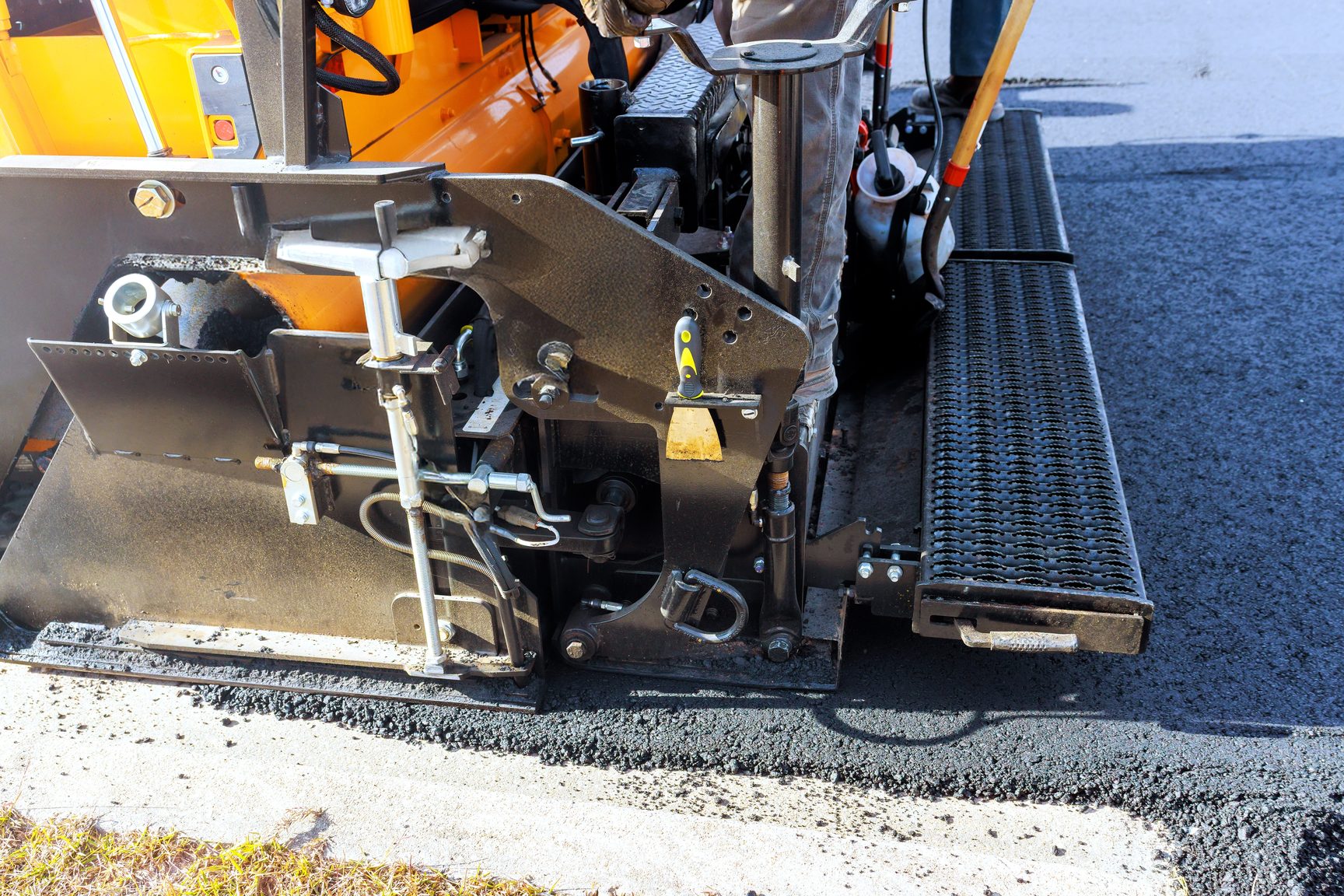
Louisiana paving contractor insurance begins with the familiar core — general liability, contractors equipment, commercial auto, workers compensation and property — and then answers to a state that licenses the work itself. Louisiana puts paving inside its statewide contractor license, has written no rule on coal-tar sealer, gives its transportation department no qualification program apart from that license, and lets employers choose among competing routes for workers compensation.
The license is the thread running through everything else on this page. It decides whether a contract for licensed work is written the way the law requires, whether a lien is available when an owner stops paying, and whether a bid on a department letting can be accepted at all. The insurance program sits on top of it: before anyone asks for a certificate on a Louisiana job, the written contract should already carry the license number.
A statewide license that names highways, drives and parking lots
Louisiana licenses paving work at the state level through its State Licensing Board for Contractors. The contractor definition in the licensing law names highways and roads among the construction it reaches, and the Board’s classification rule places general paving of sidewalks, driveways and parking lots inside the highway, street and bridge construction classification, with narrower subclassifications for asphalt highways and streets and for driveways, parking areas, asphalt and concrete. Acting as a contractor without an active license is unlawful.
A missing license costs a contractor more than a fine. Where the law required a license, an unlicensed contractor may not file a statement of claim or a lien for money owed under the contract, and a contract for licensed work has to be in writing with the contractor’s license number on it. The classification texts never mention sealcoating or pavement striping; one subclassification covers maintenance and repair of asphalt pavements, but whether a sealing-only or striping-only job falls under it is a question the text leaves open, and commercial and residential jobs each reach the license at the project values the statute sets.
Authority La. R.S. 37:2150.1(4)(a); La. R.S. 37:2156.1(A); La. R.S. 37:2159(A) and (D); La. R.S. 37:2163(A)(1); LAC 46:XXIX.301 · read the source · checked
The statute’s definition of a contractor names roads among the work it reaches, but the Board’s classification rule is where paving stops being implied. The major classification for road building lists it by example:
“25. Highway, Street, and Bridge Construction: construction, maintenance, or repair of highways, streets, bridges, and all related work, including general earthwork and general paving such as sidewalks, driveways, and parking lots.”
Narrower subclassifications sit beneath it, and the one written for lots and drives reads as printed:
“11. Driveways, Parking Areas, Asphalt, and Concrete: the construction, maintenance, or repair of asphalt or concrete pavements. Includes sidewalks, parking areas, and driveways. Driveways, Parking Areas, Asphalt, and Concrete is a subclassification of Building Construction and Highway, Street, and Bridge Construction.”
Residential construction and home improvement run under separate classifications with triggers of their own, so a firm that paves apartment lots and house driveways in the same season should ask the Louisiana State Licensing Board for Contractors which classification each kind of job calls for.
None of this is paperwork for its own sake. The law makes unlicensed contracting unlawful in plain words, and it removes the remedy a paving firm relies on when a receivable goes bad:
“A.(1) It shall be unlawful for any person to engage or to continue in this state in the business of contracting, or to act as a contractor as defined in this Chapter, unless he holds an active license as a contractor in accordance with the provisions of this Chapter.”
“D. No contractor who fails to obtain a license as provided for in this Chapter shall be entitled to file a statement of claim or a statement of lien or privilege with respect to monetary sums allegedly owed under any contract, whether express, implied, or otherwise, when any provision of this Chapter requires that the contractor possess a license in order to have properly entered into such a contract.”
No policy replaces an unpaid invoice. What the program can do is keep the certificate side of the file as clean as the license side: the general liability page works through the additional insured and primary wording a certificate may have to show. The scope question for the striping and sealing side of a business is one to settle with the Board before those jobs are bid.
Coal tar, cutback asphalt and what the state leaves to the job
Coal-tar pavement sealant goes unregulated by Louisiana’s state government: neither the Revised Statutes nor the Louisiana Administrative Code forbids selling or spreading it, confines crews to particular surfaces or requires a warning on its container.
The one state rule near this work regulates a different material. A Department of Environmental Quality air rule forbids manufacturing, storing, using or applying cutback paving asphalt, or emulsified paving asphalt that contains volatile organic compounds, without the department’s approval, and it sets solvent ceilings for seal coats among its approval terms; it is a petroleum asphalt rule and says nothing about coal tar. No parish or city sealant ordinance was checked for this record, so a crew should look to local code, to what the property owner calls for and to the contract before picking a sealer.
Authority Louisiana Revised Statutes and Louisiana Administrative Code, both swept; LAC 33:III.2127 · read the source · checked
The sweep behind that finding covered the Revised Statutes and the Administrative Code together, and the only rule it turned up regulates petroleum asphalt rather than coal tar — cutback and emulsified paving asphalt carrying volatile organic compounds, administered by the Louisiana Department of Environmental Quality. The rule is published only in a form the quotation check cannot read, so it is described and cited here rather than quoted. A crew that works with cutback or emulsion products can read it through the department and judge whether its materials fall under the approval terms; this page does not make that call.
Coal-tar product choice sits with the parish or city, the property owner and the contract, and no local ordinance was read for this page. An owner who writes a named sealer into the contract has also chosen what the crew will answer for if it tracks, drifts or runs off before it cures. That exposure is what the sealcoating program is written for, whatever the drum says, and the pollution language in the policy decides how a spill that reaches water is handled.
DOTD lettings run on the license, not on a qualification rating
The Louisiana Department of Transportation and Development does not rate or prequalify road contractors through a program of its own. Its standard specifications keep a section headed prequalification of bidders, but the only thing that section asks is compliance with the rules of the State Licensing Board for Contractors, and the licensing law tells every awarding authority to require bidders to certify an active license on the bid. On top of the license, a firm has to register online for each project, and DOTD will not accept a bid from one that has not.
Surety and insurance attach to the bid and the contract rather than to any standing qualification. Bids above a size set by statute must come with a bid bond from a surety qualified in Louisiana, the successful bidder supplies payment and performance bonds when the contract is executed, and the specifications require the contractor to keep workers’ compensation, commercial general liability and business automobile coverage, plus a separate owner’s and contractor’s protective policy naming the department, in force until final acceptance. Once a subcontract reaches the size those specifications name, the subcontractor answers to the same licensing rules.
Authority Louisiana Standard Specifications for Roads and Bridges, Sections 102.1, 102.2, 102.9, 103.5 and 107.2; La. R.S. 37:2165(A); La. R.S. 48:253(A); La. R.S. 48:255(D) · read the source · checked
The word to be careful with here is prequalification. The department’s specification book keeps the heading, but what sits under it is a licensing requirement and nothing more:
“102.1 PREQUALIFICATION OF BIDDERS To qualify for submission of a bid, the bidder shall comply with all rules and regulations of the Louisiana State Licensing Board for Contractors.”
The step that does behave like a gate is administrative. A firm bidding a letting registers for that project online, and the department’s notice is blunt about a firm that skips it:
“If a bidder does not register for a project, the bid will not be accepted by LA DOTD.”
So the file the Louisiana Department of Transportation and Development sees is assembled project by project rather than kept on standing record, and the license and the registration have to be current every time a bid goes in. The department can still find a bidder not responsible, but the statute gives that bidder notice and an informal hearing first. Once a subcontract passes a size the specifications name, a paving subcontractor answers to the same licensing rules as the prime.
Insurance attaches at execution, not at the bid
The bid itself carries no insurance requirement. Proof of every required policy comes before the contract is executed, and the specifications list the lines — workers compensation, commercial general liability written on a per-project aggregate, business automobile liability, and a policy that is easy to miss:
“c) A separate Owner’s and Contractor’s Protective Liability (OCP) Policy shall be furnished by the contractor naming the Louisiana Department of Transportation and Development as the named insured.”
Because the specifications call it a separate policy, the protective coverage is a placement of its own rather than an endorsement on the contractor’s general liability, and it names the department as insured. The limits for every line sit in a table in the specifications; the per-project aggregate wording is covered on the general liability page, and the business auto side on the commercial auto page.
Bid, performance and payment bonds
“At the time of execution of the contract, the successful bidder shall furnish, as provided below, the following performance and payment bonds on the forms provided by the Department, and may, at the successful bidder’s option, furnish a retainage bond.”
The bid bond runs on a statutory line. Above a project size the statute sets, a bid must arrive with a bid bond from a surety qualified to write in Louisiana; at or below that size, the specifications say plainly that none is required. Separately, the statute calls for a performance bond above a smaller size. The statutes also restrict which sureties may write these bonds, which makes the surety relationship something to settle before a letting season rather than in the week a proposal is due.
Workers compensation: competitive routes and the statutory employer
Louisiana requires an employer to secure workers’ compensation for its employees, choosing among the routes the statute sets out: insure with a stock corporation, mutual association or other concern authorized to transact that business in Louisiana, join a group self-insurance fund, enter an interlocal risk management agency, or prove to the assistant secretary of the Office of Workers’ Compensation Administration that the employer can pay the compensation itself. The Office monitors whether employers comply but pays no benefits.
Most employees are covered from their first day of work, and the Office takes reports of employers without coverage through its fraud and compliance section. Liability can also run up a contracting chain: when work a contractor does is contemplated by the principal’s own contract with someone else, Louisiana makes the principal a statutory employer who owes compensation to that contractor’s workers, with a right to indemnity from whoever should have paid it.
Authority La. R.S. 23:1168(A); La. R.S. 23:1061(A)(2) and (B); La. R.S. 23:1171.1 · read the source · checked
“A. An employer shall secure compensation to his employees in one of the following ways: (1) By insuring and keeping insured the payment of such compensation with any stock corporation, mutual association, or other concern authorized to transact the business of workers' compensation insurance in this state.”
That is the first route on the statute’s list; the others are group self-insurance funds, interlocal risk management agencies and approved self-insurance. Louisiana is a competitive state, and the Office of Workers’ Compensation Administration puts the obligation in terms an employer cannot mistake:
“Employers are required to have workers compensation insurance or to be approved to self-insure.”
The provision that reaches furthest into a paving firm’s contracts, whether it works under a general contractor or hires subcontractors of its own, is the statutory employer rule:
“(2) A statutory employer relationship shall exist whenever the services or work provided by the immediate employer is contemplated by or included in a contract between the principal and any person or entity other than the employee's immediate employer.”
Read from either end of a subcontract, that rule changes what a certificate is for. A prime can owe compensation to a subcontractor’s injured worker when the sub’s work is part of the prime’s own contract with the owner, and the indemnity the statute gives back is only as good as the party that owes it. Collecting those certificates, and how a working owner is treated, are covered on the workers compensation page.
Louisiana offices that touch a paving business
Each of these holds a different piece of the picture, and none of them answers for the others:
Louisiana markets and the DOTD district over each
The department organizes its road work by district, each listed with an office city, and its district map shows which parishes each district takes in. Every market below carries its parish and the district the map places it in; the parish is ordinary geography, and no population or market-size figure is attached.
New Orleans
Orleans Parish. Bridge City.
The district that takes in this parish carries a different office city’s name. On a state route the department’s specifications set the insurance and bond terms; on a city street or private lot, the owner’s contract does.
Baton Rouge
East Baton Rouge Parish. Baton Rouge.
The district map prints this city as a district office inside its own parish. State work, city streets and private lots sit close together, so the same certificate may have to satisfy a department specification and a property manager in the same week.
Shreveport
Caddo Parish. Bossier City.
The district over this parish is named for a different office city. A firm based here that bids department work answers to a district whose name is not its own city’s.
Lafayette
Lafayette Parish. Lafayette.
The district map places a district office in this city, inside its parish. A contract for licensed work here goes in writing, with the license number on it, before the crew mobilizes.
Lake Charles
Calcasieu Parish. Lake Charles.
The district map places a district office here, inside its parish. Lots, drives and streets fall under the same classification rule as everywhere else in the state; only the owner and the contract change.
Monroe
Ouachita Parish. Monroe.
The district map prints this city as a district office inside its parish. Lettings here run through the same per-project registration as every district, so the registration belongs in the bid file.
What moves the premium for a Louisiana paving firm
What moves the price of a paving program — the mix of paving, sealcoating and striping work, the payroll and loss history behind it, and how workers compensation is bought — is set out in our national guide to what paving contractor insurance cost depends on. This page keeps to Louisiana’s rules, agencies and markets.
Where Louisiana paving losses come from
Damage past the edge of the work. Sealer drifting onto a parked car, paint tracked across a storefront threshold, a roller scraping a curb that belonged to someone else. Which of those the policy answers is the question the general liability page takes apart.
An unpaid job with no lien behind it. Not an insurance claim at all, but a loss Louisiana makes worse for a contractor whose license lapsed or never covered the work: the statute closes the lien route, and the invoice becomes a collection problem.
A subcontractor’s injured worker. Under the statutory employer rule, an injury on a sub’s crew can arrive at the prime, and whether the sub’s own coverage was in force that day decides who ends up paying.
A motorist in a department work zone. On a state route the public drives past the paver all day, and a claim there can reach the department, the prime and the sub at once — the reason the specifications demand a protective policy in the department’s name.
Louisiana: Contractor license, a state license or registration can reach this work, connected to the General Liability page. Coal-tar sealant, no state rule on the product, connected to the Asphalt Sealcoating Insurance page. Transportation department prequalification, no prequalification for paving work, connected to the Commercial Auto page. Workers’ compensation, bought in the open market, connected to the Workers Compensation page. The diagram pairs each state rule with the page on this site that discusses it and shows no figures.
Nearby states we also write
Louisiana’s neighbors on the department’s district map are all inside the licensed footprint, and each has a page built from its own verified record. Nothing said here about licensing, bidding or workers compensation crosses a state line; a crew working on both sides of one should have every state it works in named when the program is written.
Related coverage and services
What we insure
Coverage lines
Louisiana paving contractor insurance questions
Does a paving company need a contractor license in Louisiana?
Yes, for the work the licensing law reaches. The Louisiana State Licensing Board for Contractors issues a statewide license, and its classification rule puts general paving of lots, drives and sidewalks inside the road-building classification. Both commercial and residential work cross into the license at project values the statute sets, and working without an active license where one is needed is unlawful and can cost a contractor the right to file a lien.
Is a sealing-only or striping-only job inside a Louisiana license classification?
The rule does not say. Neither the statute nor the classification rule uses the words sealcoating or striping, and the subclassification for asphalt pavement maintenance and repair may or may not be read to reach that work. We make no claim either way. Before bidding a job that is only sealer or only paint, ask the Louisiana State Licensing Board for Contractors which classification, if any, it requires.
Can I still use coal-tar sealer on Louisiana jobs?
No state statute or rule stops you: the state code and administrative code carry no ban, surface limit or labeling rule for coal-tar sealer. Parish and city codes were not checked for this page, though, and a property owner or a bid specification can name the product. The only related state rule, from the Louisiana Department of Environmental Quality, governs cutback and emulsified paving asphalt, not coal tar.
Do I have to be prequalified by DOTD to bid a Louisiana road job?
No. The department has no rating or prequalification program of its own. The specification section that carries that heading asks only that a bidder follow the licensing board’s rules, so the contractor license does the qualifying. What the department adds is a registration: a firm registers online for each project it bids, and a bid from an unregistered firm is not accepted.
What insurance does a DOTD contract call for?
Insurance attaches when the contract is executed, not at the bid. The specifications list workers compensation, commercial general liability on a per-project aggregate and business automobile liability, each at limits set in the specifications’ own table, plus a separate owner’s and contractor’s protective policy with the department as named insured. Proof of every required policy comes before execution, and coverage stays in force until final acceptance.
Will a DOTD job need a bid bond or a performance bond?
It depends on size. Above a project size the statute sets, a bid needs a bid bond from a surety qualified in the state, and at or below that size the specifications require none. A performance bond is required above a smaller statutory size, and the successful bidder furnishes payment and performance bonds when the contract is executed. Statutes also limit which sureties may write them.
Can a general contractor owe workers compensation to my crew?
Under Louisiana’s statutory employer rule, yes. When the work a subcontractor does is part of what the principal promised someone else in its own contract, the principal can owe compensation to the subcontractor’s injured workers, with a right to recover from whoever should have paid. That cuts both ways for a paving firm: as a prime it can answer for a sub’s crew, and as a sub its certificate is what protects the prime.
This page describes insurance for paving and asphalt contractors operating in this state. It is general information, not legal advice and not a statement of coverage. Licensing, permitting and environmental requirements change; verify current requirements with the agency named before relying on them.
Get a quote for your Louisiana paving work
Send us the contracts behind your Louisiana work — DOTD lettings, parish and city streets or private lots — and we will build the program to match them.