
Paving Contractor Insurance by State
Wisconsin Paving Contractor Insurance
Wisconsin’s builder credential covers houses, not driveways. Coal-tar sealer is a Dane County matter rather than a state one, and WisDOT prequalifies a bidder before it hands over a proposal.
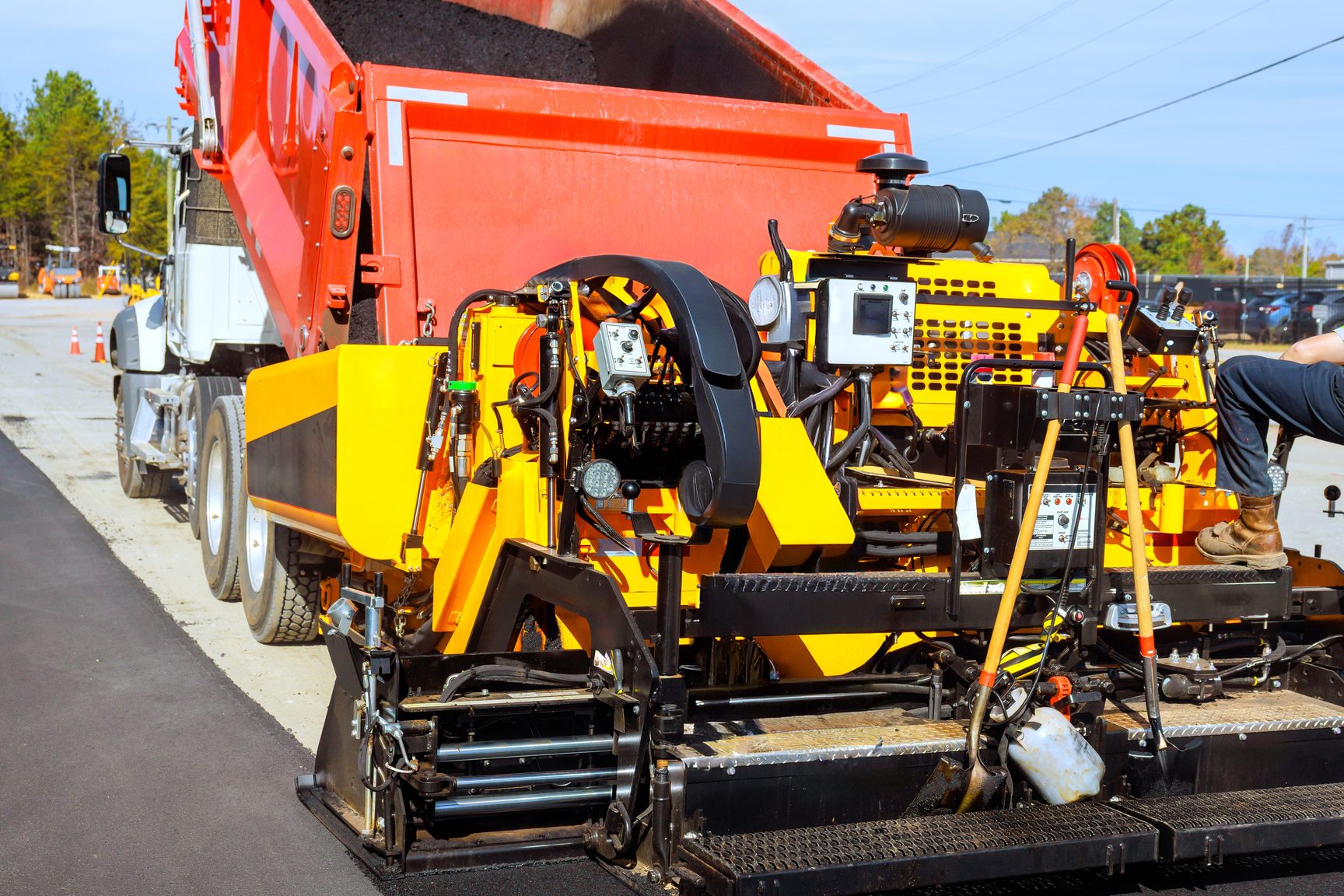
Insurance for a Wisconsin asphalt business is built from general liability, contractors equipment, commercial auto and property coverage, plus workers compensation, which state law requires of a covered employer and which only private insurers sell. Wisconsin’s own requirements arrive at particular doors: no state license reaches driveway or lot work, coal-tar sealer is barred in Dane County rather than statewide, and the state transportation department releases a bidding proposal only to a firm it has rated first.
Which of those applies depends on who signs the contract: a homeowner, a commercial property owner or a public road agency. The sections below quote the governing text, then say what it means for the paving contractor program.
A builder credential that stops at the driveway
No Wisconsin credential licenses paving, sealcoating or striping contractors. The one broad builder credential the state issues, the dwelling contractor certification from the Department of Safety and Professional Services, is residential by design: it is what a contractor must hold to pull a building permit on a house covered by the uniform dwelling code, and that code says in its own scope clause that it does not extend to driveways. A driveway, and any commercial lot or public road, sits outside it.
Residential jobs still carry a state rule, and local ones can add more. The consumer protection rule on home improvement practices counts building or repairing a driveway on residential or non-commercial property as home improvement, and it requires a written contract whenever the buyer pays anything before the work is done or the seller solicited the job away from its regular place of business. For licensing, Wisconsin law lets a city council carry out its powers by license, so the city or village where the pavement lies decides whether a local license applies.
Authority Wis. Stat. § 101.654(1)(a); Wis. Admin. Code SPS 305.003(20), SPS 305.31(1), SPS 320.02(6); ATCP 110.01(2), ATCP 110.05(1); Wis. Stat. § 62.11(5) · read the source · checked
The credential in that finding is a permit condition for houses, and the rule that creates it opens by tying it to the building permit:
“Pursuant to s. 101.654 (1) (a), Stats., no person may obtain a building permit for a one- or 2-family dwelling unless the person complies with all of the following, except as provided under s. 101.654 (1) (b) and (c) 2., Stats.:”
The code that permit enforces then writes driveways out of its own reach:
“Except for construction erosion control, the scope of this code does not extend to driveways, sidewalks, landscaping and other similar features not having an impact on the dwelling structure.”
So a certificate from the Department of Safety and Professional Services is not a paving license, and a paving firm should not present it as one on a bid or a website. A firm holding one for house work still lays its driveways outside the code, apart from the erosion-control work the scope clause keeps inside.
Homeowner driveways and the written-contract rule
What does reach a residential driveway is a consumer-protection rule. The Department of Agriculture, Trade and Consumer Protection writes the home improvement rules, and they put driveways inside them by name. The writing duty and its first trigger read:
“The following home improvement contracts and all changes in the terms and conditions thereof, shall be in writing:”
“Contracts requiring any payment of money or other consideration by the buyer prior to completion of the seller’s obligation under the contract.”
A homeowner job with a deposit therefore needs a signed contract before the crew arrives, and a door-to-door sealcoating route, which sells away from the shop, needs one whether or not money moves first. If sealer ends up on a garage floor, that contract is the first thing anyone reads, before the question of whether the general liability policy answers. Local licensing is left to the city or village where the pavement lies, so ask the local office what it requires before the first job in a new town.
Coal-tar sealer: nothing statewide, a ban in Dane County
Neither Wisconsin’s statutes nor its administrative code mention coal-tar sealer or any sealer rich in PAHs. At the state level the product is not banned, its use is confined to no particular surfaces, and no label duty attaches to it.
Local law fills part of that gap. Dane County’s ordinance forbids anyone to put down coal-tar sealer, or any sealant product the ordinance classes as high in PAHs, anywhere in the county, to let one be applied on property a person owns or controls, or to sell or display one for sale there, and it makes sealant sellers post a notice of the ban. A Department of Natural Resources air rule also reaches line painting: during the ozone season it limits the volatile organic compounds in traffic marking material applied on any paved surface in the counties it lists, Milwaukee, Waukesha and Racine among them. No other county or city sealant ordinance was read here; elsewhere in Wisconsin the sealer is chosen under local code, the property owner’s specs and the job’s contract documents.
Authority Wisconsin Statutes and Wisconsin Administrative Code swept; Dane County Code of Ordinances ch. 80, s. 80.08 (a county example only); Wis. Admin. Code NR 422.17 · read the source · checked
Where a rule does exist, a county wrote it for itself, and Dane County’s reaches both the crew and the counter:
“No person shall apply any coal tar sealant product or high PAH sealant product within Dane County.”
“No person shall sell, offer to sell, or display for sale any coal tar sealant product or high PAH sealant product within Dane County.”
Read it as a county rule and nothing more. It binds work inside Dane County, and this page makes no claim about any other Wisconsin county or city, because no other ordinance was read for it. If a barred product goes down by mistake, whether the sealcoating program responds to any part of the removal cost turns on policy wording, so keep the supplier’s ingredient sheet in each Dane County job file.
Line paint and the ozone-season rule
The finding also points to an air rule aimed at striping rather than sealing. The Wisconsin Department of Natural Resources limits volatile organic compounds in traffic marking material during the ozone season, in the counties the rule lists:
“This section applies after April 30, 1996, to the application of traffic marking material on any paved surface during the ozone season in Kenosha, Kewaunee, Manitowoc, Milwaukee, Ozaukee, Racine, Sheboygan, Washington, and Waukesha counties.”
For a striping contractor the practical step is keeping the product data sheet that shows the paint complies, filed with the certificates the striping program produces for each property owner.
Getting a WisDOT bidding proposal, and what comes after
The Wisconsin Department of Transportation gives a bidding proposal only to a firm it has prequalified, unless the notice to contractors for that contract says prequalification will not be required. Its prequalification policy rests on the state’s public works statute, which lets a public body demand a sworn statement of a bidder’s financial ability, equipment and experience before releasing bid forms, and bars it from receiving a bid from anyone it asked for that statement who has not filed it. From the statement the department sets an overall capacity rating and ratings by class of work; the classes include asphaltic pavement and an incidental construction class that lists pavement marking.
Prequalification asks for no policy of insurance. Surety and coverage attach at two later points, bid time and contract execution: the department rejects a proposal that comes in without a proposal guaranty, whose accepted forms include a proposal bid bond or an annual bid bond on the department’s form, and the winning bidder deposits a surety bond covering performance and payment when the contract is submitted for execution. The standard specifications then require commercial general liability, workers’ compensation, employers’ liability and commercial automobile coverage to be kept in force until the engineer determines the work is complete, with the department named as an additional insured on the liability and automobile policies, and those requirements apply with equal force to work a subcontractor performs. By statute, award is made to whichever bidder the department judges the lowest competent and responsible one.
Authority Wis. Stat. § 66.0901(2)–(3); Wis. Stat. § 84.06(2)(a); WisDOT Standard Specifications §§ 102.1, 102.2(2), 102.8, 103.5, 107.26 · read the source · checked
Order matters on department work. A firm cannot price a job without the proposal, and the specifications put the rating in front of it:
“To obtain the bidding proposal, the prospective bidder must prequalify as specified in 102.1 unless the department indicates in the notice to contractors that prequalification will not be required.”
The rating is set by class of work, and two of the classes describe this trade:
“ASPHALTIC PAVEMENT. The construction of all types of asphaltic surface courses to include plant mix, road mix, and the application of bitumen, and other associated construction included in the proposal.”
“INCIDENTAL CONSTRUCTION. Work involving sidewalks, curb and gutter, small concrete structures, storm sewers, guard rail, fencing, pavement marking, furnishing and planting of plant materials, cutting and spraying weeds, lighting, signing, signals, and other work of a minor or incidental character.”
Hot-mix surface courses fall in the asphaltic pavement class; a striping firm finds pavement marking under incidental construction. The sworn statement behind the rating covers finances, equipment and experience, the same facts an underwriter reads for the contractors equipment floater, so the statement and the policy schedule should describe the same fleet.
Guaranty, bond and insurance, in that order
Prequalification asks for no insurance. Surety comes first, at the bid and again at execution:
“The department will reject and will not post a proposal submitted without a proposal guaranty in the amount designated and payable to the party designated in the notice to contractors.”
“At the time of submitting the contract for execution by the department, deposit a valid surety bond with the department in the amount designated on the bond form covering both performance and payment.”
Neither is an insurance policy. Each is a surety’s promise to the department, and the contractor stays answerable to the surety if it ever has to pay. Insurance comes with the contract, and it follows the work down the chain:
“The above insurance requirements apply with equal force whether the contractor or a subcontractor, or anyone directly or indirectly employed by either, performs work under the project.”
Any sub on a department project should read that twice. A paving or striping sub carries the prime’s insurance requirements, including the additional insured status the finding describes, so its general liability and commercial auto policies need that wording in place before mobilization.
Covering a Wisconsin crew: a compulsory law, private insurers and a pool
Wisconsin requires every employer its worker’s compensation law covers to insure payment of compensation with an insurer holding authority to operate in Wisconsin. A private employer escapes that duty only through one of the statute’s narrow exemptions, chiefly a written order from the Department of Workforce Development granted to an employer that proves it can pay claims itself. The state sells no coverage; the department’s Worker’s Compensation Division says the State of Wisconsin does not write or provide it. An employer that the private market will not insure applies through the Wisconsin Compensation Rating Bureau, which administers the state’s worker’s compensation pool.
Who is covered turns on the headcount and quarterly payroll tests in the statute’s definition of employer, and liability can reach past a contractor’s own payroll: an employer is answerable for compensation to the workers of a contractor or subcontractor under it that has not insured, with a right to recover what it pays from that contractor. Going without required coverage draws a forfeiture of at least the premium that should have been paid, stepping up for repeat violations, while the Uninsured Employers Fund pays benefits to workers hurt on the job for illegally uninsured employers.
Authority Wis. Stat. § 102.28(2)(a)–(b); § 102.04(1); § 102.06; § 102.85(1) · read the source · checked
The statute states the duty directly:
“Unless exempted under par. (b) or (bm) or sub. (3), every employer, as described in s. 102.04 (1), shall insure payment for compensation under this chapter in an insurer authorized to do business in this state.”
The state sells no coverage, and the division that runs the system says so:
“The State of Wisconsin does not write or provide worker's compensation insurance coverage.”
A firm the voluntary market turns down still has a route, through a pool run by the rating bureau the finding names:
“The Bureau acts as administrator and trustee of the Wisconsin Worker's Compensation Pool.”
Two parts of the finding reach a paving firm directly. An uninsured striping or sealcoating sub can leave its injured worker’s claim at the prime’s door; how subcontractor certificates fit into the rest of the program is set out on the workers compensation page. And a firm that goes without coverage faces the forfeiture itself, even though a separate fund steps in to pay its injured worker.
Wisconsin offices that touch a paving business
Each of these agencies governs a different piece of the work, and a question sent to the wrong one usually comes back unanswered:
Wisconsin paving markets by WisDOT region
The department runs its highway program by region and publishes the counties each region covers. The cards name a market, its county and its region, with no size or population figure.
Milwaukee
Milwaukee County. Southeast Region.
Milwaukee County appears in the county list of the ozone-season marking rule quoted above, so a striping crew here in season should carry the product sheet that shows its paint complies.
Madison
Dane County. Southwest Region.
The Dane County sealant ordinance governs every job in this county. Choose the sealer before the bid goes out, and keep the supplier’s ingredient sheet with the job file.
Green Bay
Brown County. Northeast Region.
Brown County is not among the counties the marking rule lists, and no sealant ordinance for this area was read for this page. Ask the city what it requires before the first job.
Eau Claire
Eau Claire County. Northwest Region.
A firm based here bidding department work meets the same prequalification, guaranty and bond steps as one based anywhere else in the state. The auto schedule should reflect where the trucks actually go.
Wausau
Marathon County. North Central Region.
Whether a local license applies is the city’s decision under state law, so the permits office is the first call before a new job here, not the last.
La Crosse
La Crosse County. Southwest Region.
This city shares its department region with Madison but sits outside Dane County, so the county sealant ban does not follow a crew here. A firm working both places should track which product went where.
Pricing factors for a Wisconsin asphalt program
What moves the price of a paving program — the mix of paving, sealcoating and striping work, the payroll and loss history behind it, and how workers compensation is bought — is set out in our national guide to what paving contractor insurance cost depends on. This page keeps to Wisconsin’s rules, agencies and markets.
Losses that follow Wisconsin asphalt jobs
Patterns only; no count or figure is attached to any of them.
Sealer carried into a house. On a residential drive the family is close by, and a fresh coat walked across a carpet or a garage floor becomes a property damage claim against the contractor. The written contract the consumer rule requires is usually the first document read when that happens.
An uninsured sub’s injured worker. When a sub on your job has no compensation policy, the statute can place its worker’s claim with the firm above it. The certificate you collected, or did not, decides how that conversation starts.
Traffic through a lane closure. Highway resurfacing puts crews beside moving cars for the whole job. A driver who strikes a barrel line or a flagger draws the traffic control plan, the department and every contractor on the project into one claim, which is where the additional insured wording the specifications require gets tested.
A crew injury around hot material. Contact with mix, a slip on a tack coat or a strike from a reversing truck lands on the compensation policy Wisconsin requires the firm to buy from a private insurer.
Wisconsin: Contractor license, no statewide license reaches this work, connected to the General Liability page. Coal-tar sealant, no state rule on the product, connected to the Asphalt Sealcoating Insurance page. Transportation department prequalification, applies to department road work, connected to the Commercial Auto page. Workers’ compensation, bought in the open market, connected to the Workers Compensation page. The diagram pairs each state rule with the page on this site that discusses it and shows no figures.
Nearby states we also write
Wisconsin’s neighbors in the licensed footprint each have a page built from their own verified records. Licensing, sealer rules and workers compensation all change at a state line, so a crew that works on both sides of one needs every state named when its program is written.
Related coverage and services
What we insure
Coverage lines
Outside authorities
Wisconsin paving contractor insurance questions
Does the dwelling contractor certification cover driveway paving in Wisconsin?
No. That credential from the Department of Safety and Professional Services exists so a contractor can pull a building permit on a house under the uniform dwelling code, and the code itself sets driveways outside its scope. Holding it does not make a firm a licensed paver, and lacking it does not bar driveway work. Local licensing is a separate question for the city or village where the job sits.
When does a homeowner sealcoating job in Wisconsin need a written contract?
Under the home improvement rule the Department of Agriculture, Trade and Consumer Protection enforces, a driveway job on residential property counts as home improvement. A written contract is required when the homeowner pays anything before the work is finished, or when the job was sold away from your usual place of business, such as at the door. Put any later change in writing too.
Is coal-tar sealer banned anywhere in Wisconsin?
Not by the state. No Wisconsin statute or administrative rule addresses it. Dane County is different: its own ordinance bars applying coal-tar or high-PAH sealer inside the county and bars selling or displaying it there. That is a county rule, and it stops at the county line. For a job anywhere else, check the local code and the owner’s specification.
Does the ozone-season rule reach parking lot striping?
It can. The Wisconsin Department of Natural Resources rule limits volatile organic compounds in traffic marking material applied to any paved surface during the ozone season, in the counties the rule lists. A private lot is a paved surface, so a striping crew working one of those counties in season should confirm its paint meets the rule and keep the product data sheet on hand.
What must happen before I can bid a WisDOT paving job?
The Wisconsin Department of Transportation rates your firm first, from a sworn statement of finances, equipment and experience, unless the notice for that contract waives it. At bid time you submit a proposal guaranty, such as a bid bond. If you win, you deposit a performance and payment bond and show the required insurance before the contract is executed.
Can I buy workers compensation from the state if insurers turn my crew down?
No. Wisconsin itself sells no coverage. A covered employer insures through a private insurer authorized in the state, and a firm the voluntary market declines applies to the state’s worker’s compensation pool, which a rating bureau administers. The duty to insure does not pause while you look, so start the application as soon as a declination arrives.
Am I liable if my striping sub has no workers compensation?
You can be. Wisconsin makes an employer answerable for compensation owed to the workers of a contractor or subcontractor beneath it that failed to insure, with a right to recover what it pays from that firm. The safer course is a current certificate in hand before the sub starts, checked again on long jobs.
This page describes insurance for paving and asphalt contractors operating in this state. It is general information, not legal advice and not a statement of coverage. Licensing, permitting and environmental requirements change; verify current requirements with the agency named before relying on them.
Get a quote for your Wisconsin paving work
Tell us where in Wisconsin you work and whether homeowners, property owners or WisDOT sign your contracts, and we will build the program around that paperwork.