
Paving Contractor Insurance by State
Iowa Paving Contractor Insurance
Iowa registers every construction contractor, asphalt paving included, and makes workers’ compensation proof a condition of registration. Its highway lettings add a qualified list, then bonds and insurance at bid and award.
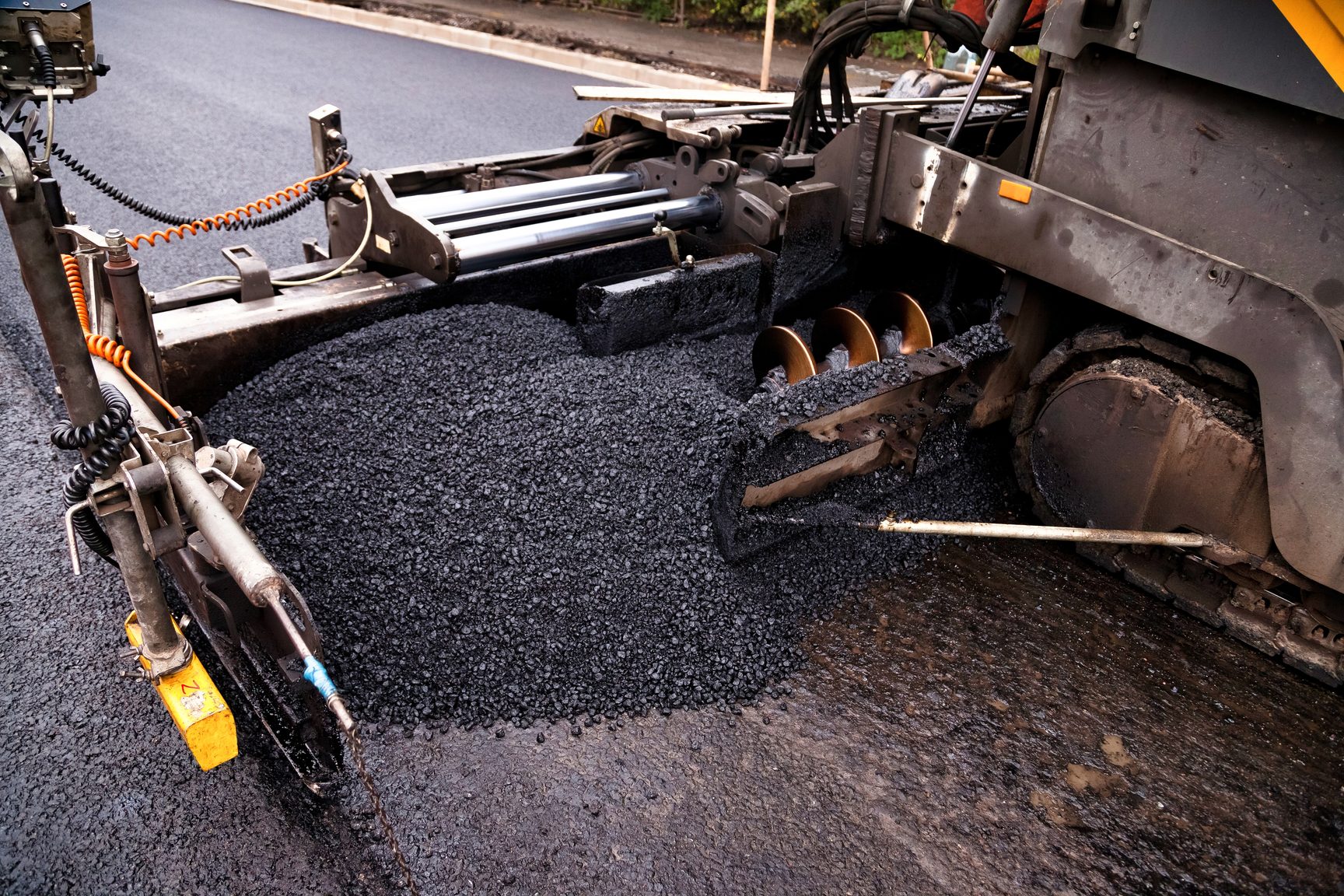
An Iowa paving business needs part of its insurance in place before it can even register with the state, because proof of workers’ compensation is a condition of the statewide contractor registration. Around that sit the lines every paving firm carries — general liability, contractors equipment, commercial auto and property — and on Iowa Department of Transportation work a current liability certificate has to be on file before a contract is awarded.
Iowa’s layers run in a particular order. Registration comes first and reaches the paving trade by definition, whatever the job. Department lettings then add a qualified list for prime contractors, a guaranty with every bid and a bond and certificate at signing. Workers’ compensation is compulsory and bought from private insurers. The one question Iowa leaves to the job site is which sealer goes down.
Each section below gives the verified finding, the authority behind it, and what it means for a paving contractor insurance program.
Iowa registers contractors, and the definition reaches the parking lot
Iowa makes every construction contractor doing business in the state register with the Iowa Department of Inspections, Appeals, and Licensing, and the paving trade sits squarely inside the definition. The statute borrows its idea of construction from a workforce rule whose list names asphalt paving of roads and streets, asphalting and blacktop work on private driveways and parking areas, and parking lot construction; that list is silent on sealcoating and on painting lines, although the department itself calls the definition very broad. The credential is a registration, with no exam or trade classification, and a person earning below a small yearly figure from construction, or working only on their own property, is outside it.
What registration asks for is proof of compliance rather than proof of skill. Each year the contractor shows workers’ compensation coverage, an approved release from carrying it, or a statement that none is required, and the insurer must tell the department if the policy is canceled; a contractor based outside Iowa must also either file a surety bond with the department or show that the Iowa Department of Transportation has prequalified it. An unregistered firm cannot be awarded state work, a subcontractor needs its own registration rather than riding on the general contractor’s, and the department directs contractors to the city or county for whatever local rules apply to a project.
Authority Iowa Code 91C.1(1); 91C.2; 91C.7(1); 481 IAC 465.2; 871 IAC 23.82(2) · read the source · checked
The registration statute does not write its own definition of the trade. The department’s rule sends it to the state’s employment-security law instead:
“means a person who engages in the business of construction as the term is defined in rule 871—23.82(96), for purposes of the Iowa employment security law, including subcontractors and special trade contractors.”
That workforce rule is a long list of construction activities, and several entries describe this trade as plainly as a job ticket would:
“Asphalt paving; roads, public sidewalks and streets—contractors”
“Asphalting of private driveways and private parking areas—contractors”
“Parking lot construction—contractors”
Sealcoating and line striping do not appear on it. The list is silent about them and no more than that: it neither names them nor sets them aside, and the agency that runs registration describes its own reach this way:
“The definition of construction is very broad.”
A firm whose season is mostly sealer and paint should put the question to the Iowa Department of Inspections, Appeals, and Licensing rather than read the silence as an answer. What the statute asks of a registered contractor is tied directly to insurance:
“The contractor shall be in compliance with the laws of this state relating to workers’ compensation insurance and shall provide evidence of workers’ compensation insurance coverage annually, of relief from the insurance requirement pursuant to section 87.11, or a statement that the contractor is not required to carry workers’ compensation coverage. Notice of a policy’s cancellation shall be provided to the director by the insurance company.”
The last sentence of that passage matters to the program as much as the first. The insurer, not the contractor, tells the department when a policy is canceled, so a lapse in the workers compensation policy reaches the registration file whether or not anyone mentions it. A firm based in another state carries one further condition:
“An out-of-state contractor shall either file a surety bond, as provided in section 91C.7, with the department in the amount of twenty-five thousand dollars or shall provide a statement to the department that the contractor is prequalified to bid on projects for the department of transportation pursuant to section 314.1.”
Either route works; they are alternatives, and neither is an insurance policy. The consequence of skipping registration falls hardest on public work:
“A contractor who is not registered with the director as required by this chapter shall not be awarded a contract to perform work for the state or an agency of the state.”
“Sub-contractors are not covered under the general contractor's registration.”
For a paving contractor that hires sealcoating or striping subcontractors, that second sentence has a practical twin. Each subcontractor needs its own registration and should bring its own certificate; the general liability program is where a sub’s missing certificate turns into your claim.
Sealer choice in Iowa is left to the job, not the statute book
Iowa has written no rule on coal-tar pavement sealer, or on any sealer high in polycyclic aromatic hydrocarbons, into its Code or its Administrative Code. At the state level nothing forbids the product, restricts which surfaces crews may spread it on, or tells anyone how it must be labeled.
The only statute that uses the word sealcoating is a tort clause shared by the state’s claims law and the local-government claims law, and it treats sealcoating an existing road as maintenance rather than reconstruction; it has nothing to say about which sealer goes down. This record verified no Iowa city or county ordinance on coal-tar sealant, so the job-level answer comes from local code, the owner’s specifications and the contract documents.
Authority Iowa Code and Iowa Administrative Code, swept through the Iowa Legislature’s document search; Iowa Code 670.4(1)(g) and 669.14 · read the source · checked
The one sentence in Iowa law that uses the word sits in the claims statutes, where it sorts work on an existing road into maintenance rather than reconstruction. It is a tort provision about claims against government, not a rule about materials:
“In respect to highways and roads, sealcoating, asphalting, patching, resurfacing, ditching, draining, repairing, graveling, rocking, blading, or maintaining an existing highway or road does not constitute reconstruction.”
For a sealcoating operation the working question is therefore the owner’s specification, the contract and local code, and the insurance question is where the material ends up — on a customer’s car, on a storefront floor, in a storm drain before it cures. Whether a spill that reaches water is a liability claim or a pollution one is settled by policy wording, not by the state’s silence.
Department lettings: the qualified list, a lighter path for marking, and paper at the letting
The Iowa Department of Transportation considers a prime contractor’s proposals on its highway lettings only after it has approved the firm’s financial, experience and equipment statement and put the firm on its qualified list, and filing the statement is not qualification by itself. Iowa law lets any agency awarding highway, bridge or culvert contracts require such a statement from bidders, and a firm the department has prequalified is treated as qualified for another agency’s letting. Subcontractors do not prequalify, and proposals made up only of certain listed work, pavement marking among it, skip the full review but must still come from a recognized contractor in that class of work that holds every license and certificate the job needs.
Prequalification itself asks for neither insurance nor a bond. Both come later, at bid time and at signing: a proposal without its proposal guaranty is not read, the contract bond needs a surety allowed to operate in Iowa, and the contractor needs a current certificate of liability insurance on file before award, with coverage reaching work done by its subcontractors.
Authority Iowa Code 314.1(1) and (3); Iowa DOT Standard Specifications, Articles 1102.01, 1102.11, 1103.05 and 1107.02 · read the source · checked
The obligation on the department’s own lettings comes from its specifications, and they draw a line between filing and approval:
“The filing of this statement does not in itself constitute qualification. A prospective bidder shall receive definite approval of this statement to be placed on the qualified list before the bidder's proposals will be considered.”
The statute is looser. It gives any agency letting a road, bridge or culvert contract the option of asking bidders for a statement, without requiring one:
“The agency having charge of the receipt of bids and the award of contracts for the construction, reconstruction, improvement, or repair or maintenance of a highway, bridge, or culvert may require, for any highway, bridge, or culvert contract letting, that each bidder file with the agency a statement showing the bidder’s financial standing, equipment, and experience in the execution of like or similar work.”
So a county or city letting may or may not ask, and its bid documents say which. Because the review weighs equipment and experience, the schedule a firm files with the department and the one on its contractors equipment floater ought to describe the same machines. Its own list of prequalified work, as printed:
Pavement marking gets different treatment. Proposals made up only of certain listed work skip the full review, and the same article attaches its own condition in the next breath:
“For proposals involving only the furnishing of materials, granular surfacing, lighting, buildings, asbestos removal, salvage and removal, debris removal, wells, traffic signals, pavement marking, traffic signs, clearing and grubbing, or mowing, the following shall apply in lieu of the above requirements of this article: Bidders submitting proposals must be recognized contractors engaged in the class of work provided for in the contract documents, and must possess all necessary licenses, certificates and resources to complete the work.”
Both halves count. A striping contractor bidding a marking-only proposal skips the full review, and still has to be recognized in that class of work and hold every license and certificate the job needs.
Guaranty, bond and certificate arrive with the bid and the contract
Nothing in prequalification asks for insurance or a bond. The first arrives with the proposal:
“Each proposal shall be supported by a proposal guaranty in the form and amount prescribed in the proposal. Bids not so supported will not be read.”
The contract bond follows at signing and must come from a surety authorized in Iowa. Because a surety underwrites the balance sheet rather than the loss history, bonding capacity is best arranged before the letting season. The liability certificate goes on file before award, and since the requirement reaches work by subcontractors, the prime’s certificate answers for the whole job.
Workers’ compensation in Iowa: compulsory, privately insured, and costly to skip
An Iowa employer covered by the compensation law must insure that liability with a corporation, association or organization the commissioner of insurance approves, unless it proves to the insurance commissioner that it is solvent and able to pay benefits itself, or deposits security, and is relieved of the duty to insure. Employer groups may form approved mutual associations for the same purpose, insurers must share out the applicants who cannot find coverage the ordinary way; Iowa runs no state fund.
Doing business without coverage or that relief is forbidden by statute, and the Workers’ Compensation Division says employers who skip it face criminal or civil penalties. An uninsured employer can also be sued at law by an injured worker, with the injury presumed to result from the employer’s negligence and the common-law defenses of contributory negligence, assumption of risk and the fellow servant rule taken away. The Division, part of the Iowa Department of Inspections, Appeals, and Licensing, resolves disputes but does not pay benefits.
Authority Iowa Code 85.3(1); 87.1(1); 87.4(1); 87.11(1)(a); 87.14A; 87.21; 515A.15(1) · read the source · checked
The statute leaves no room for an employer to operate bare:
“An employer subject to chapter 10A, subchapter III, this chapter, and chapters 85, 85A, and 85B, shall not engage in business without first obtaining insurance covering compensation benefits or obtaining relief from insurance as provided in this chapter.”
What happens to an employer that goes ahead without coverage is the part that should shape the program. The injured worker gains a lawsuit, the employer carries a presumption of fault, and the ordinary defenses are gone:
“The burden of proof shall rest upon the employer to rebut the presumption of negligence, and the employer shall not be permitted to plead or rely upon any defense of the common law, including the defenses of contributory negligence, assumption of risk and the fellow servant rule.”
“Employers that do not carry workers' comp insurance may receive criminal or civil penalties. They will also lose the protection of workers' comp laws.”
For a paving crew the working questions — how hot-mix, sealer and striping work are classified, how an owner who runs a roller is treated, what a subcontractor must show before starting — are the ones the workers compensation page works through. The Iowa Insurance Division regulates the insurers in this market, along with every other line in the program.
The Iowa agencies behind each requirement
Registration, lettings, insurance, the environment and workers’ compensation each sit with a different office:
Iowa markets and the DOT district each one falls in
The department runs its road network through districts and lists the counties each one covers. Each market below is shown with its county and district; no population or market-size figure is attached.
Des Moines
Polk County. Iowa DOT Central district.
Registration is statewide, but the local rules for a lot or a driveway here are the city’s or the county’s. The department sends contractors to them project by project.
Cedar Rapids
Linn County. Iowa DOT East Central district.
A subcontractor sealing or striping behind a general contractor here carries its own registration. The general contractor’s does not stretch to cover it.
Waterloo
Black Hawk County. Iowa DOT Northeast district.
Department lettings in this district read a prime contractor’s proposals only once it is on the qualified list; that rule comes from the specifications, not the district office.
Sioux City
Woodbury County. Iowa DOT Northwest district.
A striping crew bidding a marking-only department proposal here takes the lighter path, and still needs every license and certificate the job calls for.
Council Bluffs
Pottawattamie County. Iowa DOT Southwest district.
A paving firm headquartered outside Iowa that takes work here meets the same registration, plus the bond-or-prequalification condition set for out-of-state firms.
Ottumwa
Wapello County. Iowa DOT Southeast district.
The liability certificate for a department contract in this district goes on file before award, and it has to reach work done by subcontractors too.
What moves an Iowa paving premium
What moves the price of a paving program — the mix of paving, sealcoating and striping work, the payroll and loss history behind it, and how workers compensation is bought — is set out in our national guide to what paving contractor insurance cost depends on. This page keeps to Iowa’s rules, agencies and markets.
Claim patterns on Iowa paving and sealcoating jobs
These are patterns, not statistics, and none carries a figure.
Tires through wet sealer. A driver ignores the tape and tracks fresh sealer into a lobby. The cleanup and the vehicle are third-party claims under the general liability policy; redoing your own work is a separate question.
Paint on the wrong surface. Striping on a windy day puts overspray on parked cars, and a mislaid layout means grinding off lines the owner did not want. The striping program is written with both in mind.
A crash at the edge of a lane closure. On a city street or a state route, a claim draws in the traffic control plan, the road owner and the contractor together, and it is where contract limits get tested.
An injury behind the screed. A burn from hot mix or a worker struck by a backing truck goes to a policy bought from a private insurer, and going without one strips away the defenses quoted above, so the workers compensation line is the one not to let lapse.
Iowa: Contractor license, a state license or registration can reach this work, connected to the General Liability page. Coal-tar sealant, no state rule on the product, connected to the Asphalt Sealcoating Insurance page. Transportation department prequalification, applies to department road work, connected to the Commercial Auto page. Workers’ compensation, bought in the open market, connected to the Workers Compensation page. The diagram pairs each state rule with the page on this site that discusses it and shows no figures.
Related coverage and services
What we insure
Coverage lines
Iowa paving contractor insurance questions
Is Iowa contractor registration the same thing as a paving license?
No. It is a registration with the Iowa Department of Inspections, Appeals, and Licensing: there is no exam, no trade classification and no test of skill. What the state asks for is proof of compliance, chiefly that your workers’ compensation obligations are met. The registration still matters a great deal, because an unregistered firm cannot be awarded state work, and your city or county may add rules of its own.
Does Iowa registration reach sealcoating and parking-lot striping?
The workforce rule the registration statute borrows names asphalt paving, blacktop and asphalt work on private lots and driveways, and parking lot construction. It does not name sealcoating or line painting. That silence is all the list says; it does not put either trade outside the definition, and the department calls the definition very broad. If most of your work is sealer and paint, ask the Iowa Department of Inspections, Appeals, and Licensing directly.
What does a paving company based in another state need to register in Iowa?
The same registration an Iowa firm files, with its workers’ compensation proof, plus one more condition. An out-of-state contractor either files a surety bond with the department or shows that the Iowa Department of Transportation has prequalified it to bid. A bond here is a surety instrument, arranged on your financials and separate from the insurance program, so it is worth starting before the first Iowa job is signed.
Can I still use a coal-tar sealer on an Iowa lot?
Nothing in the Iowa Code or the Iowa Administrative Code bans it, limits where it goes or sets a label for it, and no city or county ordinance on the product was verified for this page. So the answer comes from the job itself: local code, the owner’s specification and the contract documents. Read all three before the sealer is ordered, because any of them can name the product.
Does a striping-only bid on an Iowa DOT project need full prequalification?
Not the full review. The department’s specifications set a separate path for proposals made up only of certain listed work, and pavement marking is on that list. The same article then sets its own condition: the bidder must be a recognized contractor in that class of work, holding every license, certificate and resource the job needs. The lighter path still has an entry requirement.
When does Iowa DOT ask to see my bond and liability insurance?
Not at prequalification, which looks at financial standing, equipment and experience. The bond and insurance questions come at the letting and the contract: a proposal must travel with its guaranty or it is not read, the contract bond needs a surety authorized in Iowa, and a current certificate of liability insurance has to be on file before award, reaching work performed by subcontractors.
Who writes workers’ compensation in Iowa if there is no state fund?
Private insurers the insurance commissioner approves, which makes Iowa a competitive state. An employer can instead prove it can pay benefits directly and be relieved of insuring, and groups of employers can form approved mutual associations. A firm that cannot find coverage in the ordinary way is shared out among insurers. The Iowa Insurance Division regulates that market.
This page describes insurance for paving and asphalt contractors operating in this state. It is general information, not legal advice and not a statement of coverage. Licensing, permitting and environmental requirements change; verify current requirements with the agency named before relying on them.
Get a quote for your Iowa paving work
Tell us whether your Iowa work is private lots, department lettings or city and county jobs, and whether you are based in the state, and we will build the program around that.