
Paving Contractor Insurance by State
Washington Paving Contractor Insurance
Washington bans coal-tar pavement sealer by statute, requires paving contractors to register with L&I, and leaves workers compensation to the state fund or self-insurance.
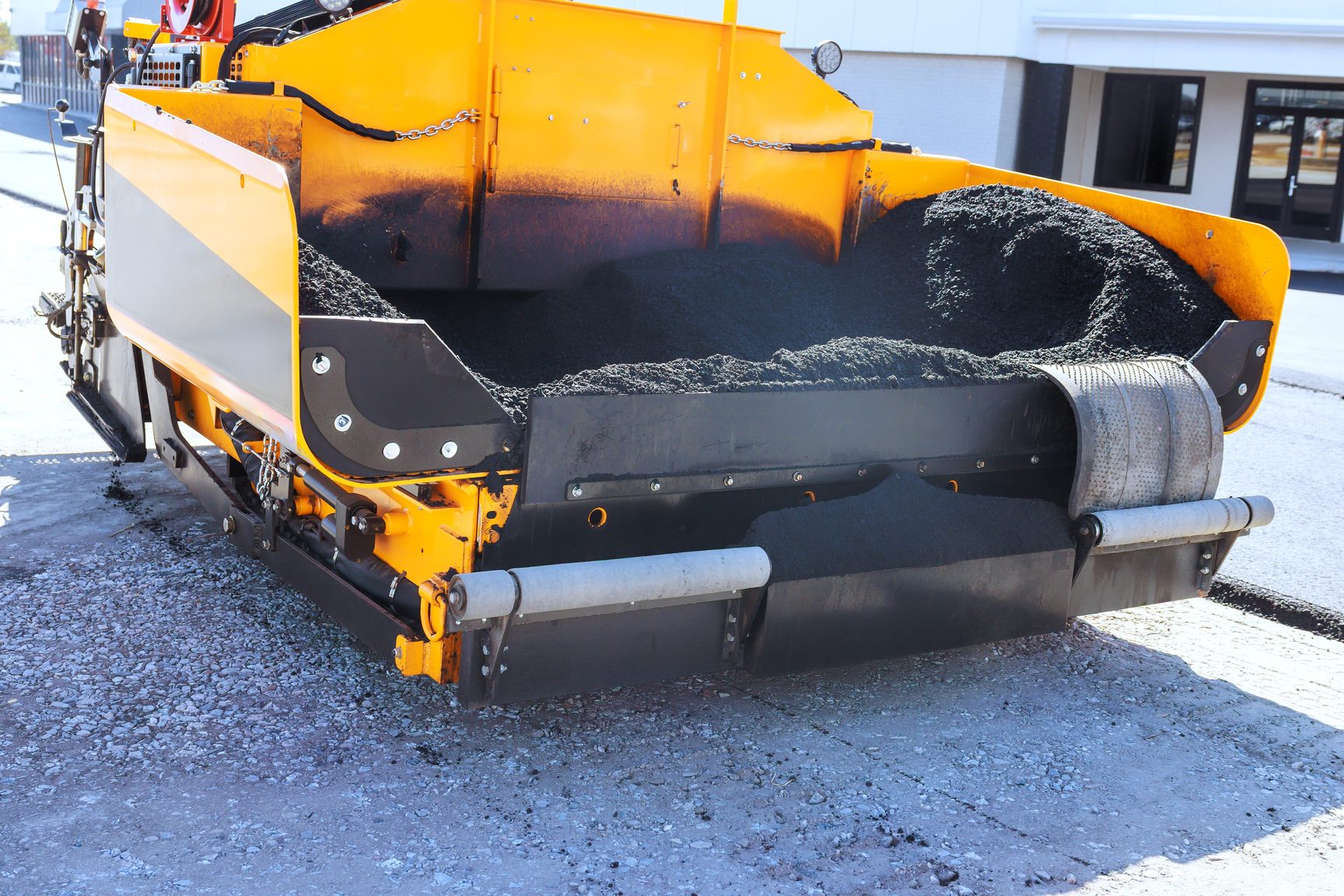
Insuring a paving, sealcoating or striping business in Washington means general liability, contractors equipment, commercial auto and property coverage placed with insurers, while workers compensation is secured through the state fund that the Washington State Department of Labor & Industries runs, or through self-insurance, because the law names no other route. Washington’s sharpest rule for this trade is about material: coal-tar sealer labeled as such may not be sold, coal-tar sealer of any labeling may not go down on a driveway or parking lot, and the business doing the work must hold an L&I registration backed by a bond and liability insurance.
Each layer meets a contractor at a different moment. Registration comes before the first bid and stays tied to the policy for as long as the business works. The coal-tar rule meets a sealcoater at the supplier’s counter and again at the curb. WSDOT prequalification comes before a firm can see a bid proposal, and its security arrives with the bid. Workers compensation runs down the contracting chain to every subcontractor. The sections below quote each authority and say what it changes in the paving contractor program.
Washington registers contractors; it does not examine them
Washington does not license paving crews by exam, but it requires every construction contractor to hold a registration from the Department of Labor & Industries before bidding or working. The registration law reaches anyone who builds, repairs or improves a highway, road or other improvement attached to real estate, and L&I’s registration rules carry a specialty written for this trade, Paving/striping/seal coating, which covers asphalt on streets, driveways and parking lots along with crack filling, sealants and striping.
Registration is conditioned on a surety bond or assigned savings account and on liability insurance or an assigned account, and a canceled policy or bond suspends it automatically. Working or bidding unregistered is a gross misdemeanor, an unregistered contractor cannot sue to collect for the work, and a specialty registrant may subcontract only work incidental to its specialty. Contractors that WSDOT has prequalified for highway construction, reconstruction or maintenance are exempt from registration for that work.
Authority RCW 18.27.010(1)(a), (12); RCW 18.27.020; RCW 18.27.040(1); RCW 18.27.050(1)–(2); RCW 18.27.080; RCW 18.27.090(16); WAC 296-200A-016 · read the source · checked
Registration is the statute’s word, and the right one to keep. The duty itself is short:
“Every contractor shall register with the department.”
The department’s rules then sort registrants by the work they do, and one specialty reads almost as a description of this trade:
“A contractor in this specialty installs, excavates, grades, compacts, and repairs the application of asphalt/cement to streets, driveways, parking lots, boat ramps, and landing strips and taxiways for an airport. Also includes the filling of cracks and voids in existing surfaces, the application of sealants and the installation of precast bumpers, nonelectrical traffic signs/markers and striping on the surface.”
What registration asks of the bond and the policy
The statute writes the conditions out with the amounts in its own words:
“Each applicant shall file with the department a surety bond issued by a surety insurer who meets the requirements of chapter 48.28 RCW in the sum of $30,000 if the applicant is a general contractor or $15,000 if the applicant is a specialty contractor.”
“At the time of registration and subsequent reregistration, the applicant shall furnish insurance or financial responsibility in the form of an assigned account in the amount of fifty thousand dollars for injury or damages to property, and one hundred thousand dollars for injury or damage including death to any one person, and two hundred thousand dollars for injury or damage including death to more than one person.”
Those amounts are what registration demands, not what a job will. An owner, a general contractor or a public agency writes its own limits into its contract, read contract by contract against the general liability program. The bond is a different instrument: a surety stands behind your obligations to the public and looks to you afterward, so it is placed on your finances rather than your claims record. The condition that needs watching is continuity:
“An expiration, cancellation, or revocation of the insurance policy or withdrawal of the insurer from the insurance policy automatically suspends the registration issued to the registrant until a new insurance policy or reinstatement notice has been filed and approved as provided in this section.”
A policy that lapses over a missed renewal takes the registration down with it, and the finding above spells out what working unregistered costs. Keep the policy and bond renewals on one calendar, with each new filing confirmed at L&I before the old one expires.
Subcontracting, and the highway exemption
Specialty registration limits what can be handed down the chain, so settle whether a piece of a job is incidental to paving before the subcontract is signed:
“A specialty contractor may only subcontract work that is incidental to the specialty contractor's work.”
And registration steps aside for one kind of work:
“Contractors on highway projects who have been prequalified as required by RCW 47.28.070, with the department of transportation to perform highway construction, reconstruction, or maintenance work;”
Those words reach highway projects. A prequalified firm that also seals private lots should ask L&I how the exemption applies to that side of its work rather than assume it travels.
Coal-tar sealer: a sale rule keyed to the label, an application rule that is not
Washington prohibits coal-tar pavement sealer by statute, in two separate rules. Sellers may not offer, at wholesale or retail, any coal tar pavement product whose label says it contains coal tar, and no one may put a coal tar pavement product down on a driveway or a parking area, whatever its label says. The law defines that product as a material containing coal tar that is intended for use as a pavement sealant.
The Department of Ecology can issue a notice of corrective action to anyone who breaks either rule, and a city or county may adopt its own ordinance to enforce them, sharing jurisdiction with Ecology. For a sealcoating crew the application rule is the one that binds on the job: it turns on what is in the product, not on how the container is marked.
Authority RCW 70A.440.010; RCW 70A.440.020 (formerly RCW 70.295.010 and 70.295.020) · read the source · checked
This is the Washington rule a sealcoater cannot plan around. The chapter divides the product’s path at the counter and at the curb. At the counter, the test is the label:
“no person may sell at wholesale or retail a coal tar pavement product that is labeled as containing coal tar.”
On the job, the test is the material, and the surfaces are named:
“After July 1, 2013, a person may not apply a coal tar pavement product on a driveway or parking area.”
Side by side, the difference is the point. A drum that says nothing about coal tar can still be unlawful to spread on a driveway or a lot if coal tar is in it, because the application rule never mentions a label. The question a crew has to answer is what the sealer is, and a written statement of composition from the supplier, kept with the job file, is the plainest way to show the answer when an owner or an inspector asks.
Enforcement belongs to the Washington State Department of Ecology, and local government can join in:
“A city or county may adopt an ordinance providing for enforcement of the requirements of subsection (1) or (2) of this section. A city or county adopting an ordinance has jurisdiction concurrent with the department to enforce this section.”
Where a city or county has such an ordinance, a complaint about a sealing job can reach either office. The department’s own summary of the law reads more broadly than its text:
“Bans the sale and use of coal tar sealants, a potential source of polycyclic aromatic hydrocarbons (PAHs).”
The chapter itself is narrower: the sale rule turns on the label, the application rule on the product and the surface. This page follows the statute and leaves the summary attributed to the agency that wrote it.
For the sealcoating program, the rule changes what goes in the tank, not what the policy is there for: overspray drifting onto a parked car, sealer tracked into a storefront, a wash-out heading for a storm drain. Whether a release that reaches water is answered as property damage or as pollution depends on the policy wording, so read it before the season starts.
WSDOT work: prequalified before the proposal, secured at the bid
The Washington State Department of Transportation hands a bid proposal only to contractors it has already prequalified, and its rule bars awarding any contract to build, improve or repair a state highway, or another public highway the department awards and administers, to a contractor that has not first been prequalified for the work. By statute a bidder files a sworn questionnaire and financial statement showing its financial ability and experience, renewed each year, and WSDOT’s Contract Ad & Award Office handles prequalification. The department’s work classes include asphalt concrete paving and paint striping.
Prequalifying adds no insurance requirement: neither the statute, WSDOT’s rule chapter nor its questionnaire calls for a policy. Security attaches to the bid and the award instead, since every bid must carry a deposit or surety bond, and a successful bidder loses that deposit if it fails to sign the contract and furnish a satisfactory bond within the period the statute sets. For the smaller contracts its small-works rules cover, the department may adopt an alternative prequalification route, though the standard route always remains sufficient.
Authority RCW 47.28.070; RCW 47.28.090; RCW 47.28.100; RCW 47.28.030(2)(c); WAC 468-16-010 · read the source · checked
The rule is plain about sequence — without prequalification there is no proposal form:
“No contract for the construction, improvement or repair of any state highway, or of any other public highway to be awarded and administered by the department of transportation, may be awarded to any contractor who has not first been prequalified to perform the work. Bidding proposals will be issued only to prequalified contractors.”
Among the work classes on the department’s questionnaire, these describe this trade:
“Asphalt Concrete Paving Production and placing Asphalt Concrete Plant Mix Pavement.”
“Paint Striping Painting bars, letters, symbols, and striping.”
Nothing in prequalifying asks for a certificate of insurance. Security arrives with the bid instead:
“All bids shall be under sealed cover and accompanied by deposit in cash, certified check, cashier's check, or surety bond in an amount equal to five percent of the amount of the bid, and a bid shall not be considered unless the deposit is enclosed with it.”
The deposit and the bond that follows the award are surety business, written on the balance sheet and the backlog, so a firm planning a WSDOT season does its bonding work in the off-season and keeps the financial statement it swears to consistent with the ones its surety and insurers see. Liability limits on a department job come from the contract documents, and the machines it puts on the road belong on the contractors equipment floater before the crew mobilizes.
Workers compensation runs through the state fund or self-insurance
Washington is a monopolistic workers’ compensation state. Its law gives an employer only two ways to secure compensation: insure through the state fund, which the Department of Labor & Industries runs as the insuring agency, or qualify as a self-insurer. L&I describes the fund it manages as the Washington State Fund and tells employers that coverage is bought through L&I.
The duty reaches down a contracting chain. Whoever lets a contract is primarily responsible for the premiums on the work, unless the subcontractor meets every one of the statute’s tests, among them that it is registered as a contractor and has an industrial insurance account in good standing with L&I or is a self-insurer; a city, county or town may not issue a building permit to anyone who has not reported payroll and paid premium or shown self-insured status.
Authority RCW 51.14.010; RCW 51.08.175; RCW 51.12.070; RCW 51.04.010 · read the source · checked
The statute lists the routes, and the list stops there:
“Every employer under this title shall secure the payment of compensation under this title by: (1) Insuring and keeping insured the payment of such benefits with the state fund; or (2) Qualifying as a self-insurer under this title.”
The fund is not a separate company; in law it is the department itself, acting as insurer, and the department describes the arrangement to employers in its guide:
“The "state of Washington industrial insurance fund" means the department when acting as the agency to insure the industrial insurance obligation of employers.”
“L&I manages all claims and pays benefits out of an insurance pool called the Washington State Fund.”
For a paving business that moves the conversation. There is no competing quote for this line; the account is opened with the Washington State Department of Labor & Industries, and the questions the workers compensation page takes up — how work is reported, and how crew members who move between paving, sealing and striping are treated — are answered inside that account.
Premium runs down the contracting chain
Washington puts the contractor that lets work out on the hook for the premium on it:
“The provisions of this title apply to all work done by contract; the person, firm, or corporation who lets a contract for such work is responsible primarily and directly for all premiums upon the work, except as provided in subsection (2) of this section.”
The way out is a set of tests the subcontractor has to meet, and one is the account itself:
“The subcontractor has an industrial insurance account in good standing with the department or is a self-insurer.”
Before a striping or sealcoating sub starts, a prime has every reason to see its registration and its account standing, because a sub that fails a test leaves its premium with the prime.
The Washington offices a paving contractor deals with
Each office holds a different piece of the paperwork, and one department sits on both sides:
Washington paving markets by WSDOT region
The department runs its highway work through regional offices. Each market shows the county the city sits in and the region that covers it, as the department names it.
Seattle
King County. Northwest Region.
City, county and private owners can share a contractor’s calendar here, each with its own certificate request and additional insured wording.
Tacoma
Pierce County. Olympic Region.
A county street and the city street beside it can belong to different owners; read each contract’s insurance article on its own terms.
Spokane
Spokane County. Eastern Region.
A job in another region means a trailer run on public roads, so the auto schedule must name every truck that makes it.
Vancouver
Clark County. Southwest Region.
The certificate, the bond filing and the registration number go to different desks here, and all of them must be current on the same day.
Yakima
Yakima County. South Central Region.
When sealing and paving share a crew, describe the split honestly at renewal; the exposures behind each are different.
Wenatchee
Chelan County. North Central Region.
Registration, the coal-tar rule and the state fund apply here exactly as they do anywhere else in the state.
What moves a Washington paving premium
What moves the price of a paving program — the mix of paving, sealcoating and striping work, the payroll and loss history behind it, and how workers compensation is bought — is set out in our national guide to what paving contractor insurance cost depends on. This page keeps to Washington’s rules, agencies and markets.
Losses that recur on Washington paving jobs
The wrong sealer on the wrong surface. Here a product problem can also be a legal one: coal-tar sealer on a driveway can bring a corrective-action notice as well as an unhappy owner, and a policy answers those differently, if it answers the notice at all.
Paint and sealer where they do not belong. Overspray on a parked car, fresh sealer walked across a lobby floor: third-party property damage, and the general liability page explains why damage to your own finished work sits on different terms.
An injury behind the paver. For an employer insured through the fund, a hot-mix burn or a worker struck by a backing roller goes to the Washington State Department of Labor & Industries, not to an insurer; the rest of the program answers for whatever else the incident touches.
Written separately with the state fund, not placed in this program, so no connector is drawn.
Washington: Contractor license, a state license or registration can reach this work, connected to the General Liability page. Coal-tar sealant, a state rule governs its use or sale, connected to the Asphalt Sealcoating Insurance page. Transportation department prequalification, applies to department road work, connected to the Commercial Auto page. Workers’ compensation, bought only from the state fund, which is written separately and has no connector. The diagram pairs each state rule with the page on this site that discusses it and shows no figures.
Nearby states we also write
The neighbors below each have a page built from that state’s own verified record, and nothing here carries across the line. Workers compensation is where a crew leaving Washington should look first: the state-fund-only arrangement described above is not something to assume anywhere else.
Related coverage and services
What we insure
Coverage lines
Washington paving contractor insurance questions
Is an L&I contractor registration the same thing as a paving license?
No, and the difference matters when you describe your business. Washington sets no examination for paving work; it requires registration with the Washington State Department of Labor & Industries before a contractor bids or works, under a specialty that fits paving, striping and seal coating. Registration depends on keeping a bond and liability insurance in place, so it behaves more like a standing financial condition than a credential earned once.
Can a Washington sealcoater use a coal-tar product if the label does not say coal tar?
Not on a driveway or a parking area. The label matters only to the sale rule; the application rule looks at what the sealer actually contains, so an unmarked product with coal tar in it is still barred from those surfaces. Get the composition from the supplier in writing before the season, keep it with the job file, and leave any product you cannot vouch for off the truck.
Who can act against a contractor that spreads coal-tar sealer in Washington?
The Washington State Department of Ecology can issue a notice of corrective action, and a city or county that has adopted its own enforcement ordinance shares jurisdiction with the department. A complaint from a neighbor or a property manager can therefore land with either office, so it is worth knowing whether the city or county you work in has adopted such an ordinance.
What happens to our registration if the liability policy is canceled?
The registration is suspended automatically until a new policy or a reinstatement notice is filed and approved, and a canceled bond has the same effect. While suspended, the business is not registered, which exposes it to the criminal charge for unregistered work and undercuts its right to sue for payment. Set renewal reminders well ahead of each expiration and confirm the new filing reached L&I.
Does prequalifying with WSDOT mean proving we carry insurance?
No. The prequalification statute, the department’s rule chapter and its questionnaire do not ask for a policy. The department reviews a sworn statement of financial ability and experience, renewed every year. Security shows up at the bid instead: each bid carries a deposit or surety bond, and the winner forfeits it by failing to sign and bond the contract in time. Insurance terms come from the contract itself.
Can a private insurer write workers compensation for our Washington crews?
Washington law lets an employer secure compensation through the state fund, which the Washington State Department of Labor & Industries runs as the insurer, or by qualifying to self-insure, and it names no other route. A paving business therefore opens its account with the department and pays premium there. The liability, auto, equipment and property lines are still placed with insurers in the usual way.
As the prime, can we end up paying premium for a subcontractor’s crew?
Yes, unless the subcontractor passes every test the statute sets. The contractor that lets the work is primarily responsible for premiums on it, and relief depends on conditions that include the sub being registered and holding a current industrial insurance account with L&I, or being self-insured. Ask for proof of both before a striping or sealcoating sub mobilizes, and keep it with the subcontract.
This page describes insurance for paving and asphalt contractors operating in this state. It is general information, not legal advice and not a statement of coverage. Licensing, permitting and environmental requirements change; verify current requirements with the agency named before relying on them.
Get a quote for your Washington paving work
Send us your L&I registration details and the next Washington contract you expect to sign, and we will set the program against what that contract and the state both ask for.