
Paving Contractor Insurance by State
Oregon Paving Contractor Insurance
Oregon licenses paving, sealcoating and striping firms through its contractor board, and the license itself asks for liability coverage, a surety bond and the right endorsement.
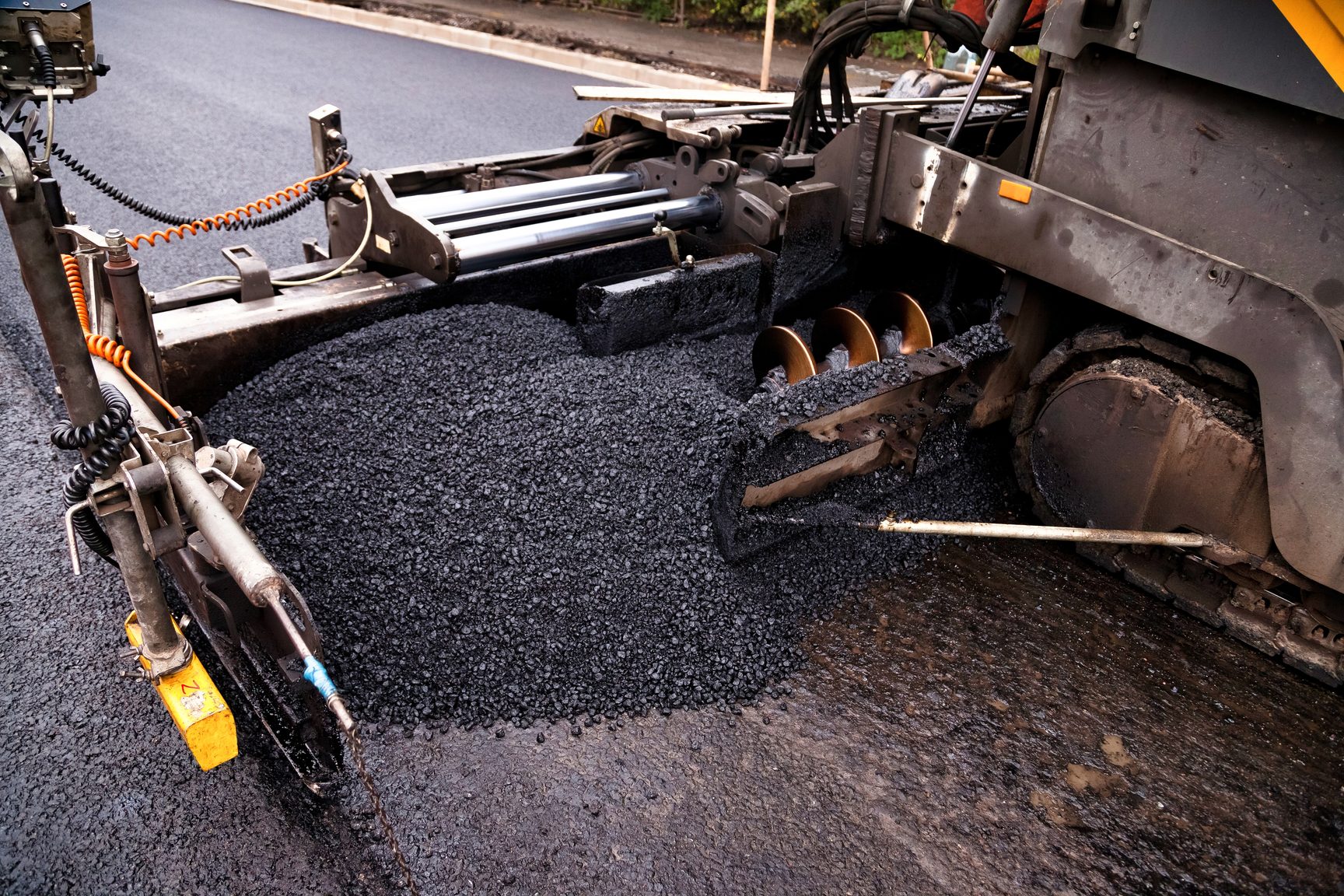
Covering an Oregon paving, sealcoating or striping firm starts with the usual core lines: general liability, contractors equipment, commercial auto, workers’ compensation and property. What sets Oregon apart is that the state license asks for part of that program itself, since a contractor licensed by the Oregon Construction Contractors Board must keep liability coverage in force, completed operations included, and must post a surety bond with the Board.
Around that license sit the other state layers: compulsory workers’ compensation, department prequalification for primes on highway and bridge lettings, and bonds and insurance set at bid and award. On coal-tar sealer the statutes and the rules are both silent, which leaves the product to the owner and the local code.
A Board license, endorsed by the structure the work serves
Oregon puts paving work under a state license from its Construction Contractors Board. The contractor chapter reaches anyone who, for pay, builds, repairs, alters or improves a highway, a road, an excavation or any other improvement fixed to land, and such a firm needs a current Board license plus an endorsement matched to the structure its work serves, whether residential, small commercial or large commercial. Paving, sealcoating and pavement striping are never named in the chapter, so each is caught by that general wording rather than by a trade class of its own.
The license comes with insurance and surety terms. Each licensee must keep liability coverage in force that takes in products and completed operations, at no less than the minimum its endorsement sets, and must post a surety bond with the Board, while a commercial licensee in the exempt class, one with no employees, still has to carry workers’ compensation. A contractor that was not properly licensed and endorsed when it bid and throughout the work generally loses the right to perfect a construction lien, file a Board complaint, arbitrate or sue for its pay, subject to narrow exceptions the statute lets the Board, an arbitrator or a court apply. Driveways carry one carve-out: a landscape contracting business working inside its own landscape license, and meeting that license’s bond rule, may build driveways without a Board license.
Authority ORS 701.005(1), (5)(a); ORS 701.010(9)(a); ORS 701.021(1)–(4); ORS 701.035(5); ORS 701.068(1); ORS 701.073(1)–(2); ORS 701.131 · read the source · checked
The reach of the license comes from the chapter’s definition of a contractor, which is built around the work rather than around any trade name:
“A person that, for compensation or with the intent to sell, arranges or undertakes or offers to undertake or submits a bid to construct, alter, repair, add to, subtract from, improve, inspect, move, wreck or demolish, for another, a building, highway, road, railroad, excavation or other structure, project, development or improvement attached to real estate, or to do any part thereof.”
Roads, highways and excavation are named there; paving is not, and neither is sealcoating nor striping. A crew resealing an apartment lot or laying out stalls behind a store is repairing or improving something attached to land, and that general wording is what brings it in. The endorsement is where a paving firm makes its first real choice, and the Board’s own chart explains that it tracks what gets built, not which trade does the building:
“Selecting an endorsement is related to the type of structure that an applicant intends to construct or develop.”
For a paving operation, then, the customer mix decides the endorsement, and the endorsement sets the insurance minimum and the bond. Those amounts live in the statute and on the Board’s chart, not on this page.
Coverage and a bond as terms of the license
Liability insurance is written into the license itself, and the statute spells out what the policy has to reach:
“A contractor who possesses a license as required under this chapter shall have in effect public liability, personal injury and property damage insurance covering the work of the contractor that is subject to this chapter, including the covering of liability for products and completed operations according to the terms of the policy and subject to applicable policy exclusions, for an amount not less than the applicable amount set forth in ORS 701.081 or 701.084.”
Completed operations is named in so many words. A lot whose patch breaks up after the crew has gone, or a driveway edge that crumbles under a visitor’s foot, is exactly the exposure that part of a general liability policy answers, and in Oregon carrying it is a condition of holding the license, not merely a preference in somebody’s contract. The bond runs beside it:
“An applicant for issuance or renewal of a contractor license shall file with the Construction Contractors Board a surety bond with one or more corporate sureties authorized to do business in this state in the amount set forth in ORS 701.081 or 701.084.”
The bond and the policy answer to different parties. The surety stands behind the firm’s duties under the chapter and expects the firm to repay anything it pays out, while the policy responds to covered losses, so each is placed and renewed on its own paperwork.
The driveway exemption belongs to landscapers
One carve-out touches this trade directly. The chapter lets a landscape business build driveways inside the scope of its own license:
“Constructs fences, decks, arbors, patios, landscape edging, driveways, walkways or retaining walls and meets the applicable bonding requirements under ORS 671.690; or”
It is a narrow door that relieves a paving firm of nothing; its main effect is explaining why a competing driveway bid can arrive with no Board license behind it. Our paving contractor program serves the licensed side of that comparison.
Coal-tar sealer: a clean statute book and a clean rule book
Neither the Oregon Revised Statutes nor the Oregon Administrative Rules contain anything that reaches coal-tar pavement sealer: no statute or agency rule bans it, fences off the places it may go down or puts a labeling duty on it.
A quiet statute book and rule book leave the decision about the sealer to the people on the job. No Oregon municipal or county sealer ordinance was examined, so a crew settles which product it may use by checking the property owner’s specification, its contract documents and the local code in force at the site. In the environmental rules, coal tar appears only in an air rule for kettles that melt coal tar pitch on roofing jobs, which does not reach pavement.
Authority Oregon Revised Statutes, every chapter file swept; Oregon Administrative Rules, every chapter searched through the Secretary of State’s Rule Text Search · read the source · checked
The administrative rules are where an environmental agency such as the Oregon Department of Environmental Quality would place a product restriction if it adopted one, and a search of every chapter found none aimed at pavement sealer. The state layer is therefore settled; the local one is not, because no city or county code was read for this page.
Oregon’s rules do reach a neighboring material. The Oregon Department of Environmental Quality air rules keep solvent-thinned cutback asphalt off roads and parking areas for most of the paving season:
“Use of any cutback asphalts for paving roads and parking areas is prohibited during the months of April, May, June, July, August, September, and October, except as provided for in section (2).”
That limits when a paving product may go down, for air quality; sealcoat sits outside it, and the exceptions the rule allows follow in the sections after the one quoted.
On a given lot, the owner’s specification, the contract and the local code decide the product. For insurance, where the sealer ends up matters more than which kind it is: overspray on a row of cars, sealer walked into a lobby and rinse water running toward a storm drain are the losses the sealcoating program is built around, and whether a release reaching water reads as a liability loss or a pollution one turns on the policy’s own wording.
ODOT lettings: prequalified primes, bonded contracts
The Oregon Department of Transportation requires prequalification of prime contractors, and only of them, for the highway and bridge projects it advertises through its electronic bidding system. Each advertisement sets a class of work, and a prime must hold prequalification in that class to be eligible to bid; subcontractors and suppliers are not asked to prequalify, and public improvement projects that ODOT’s regions let through OregonBuys ask for project experience in its place. The application’s class list names asphalt concrete paving with chip, crack, slurry and fog sealing, and pavement markings.
Prequalifying carries no insurance condition of its own; policies and surety attach later, at bidding and at contract award. Oregon’s public contracting law has the agency pick the lowest responsible bidder, and responsibility means holding the licenses the work requires, carrying the liability and other insurance the solicitation sets, and qualifying as a carrier-insured or self-insured employer. A bid for a public improvement may not be received from a bidder that lacks a Construction Contractors Board or State Landscape Contractors Board license. Above a contract value the statute prints, lower for highway, bridge and other transportation work, bidders post bid security and the winner delivers performance and payment bonds from a surety authorized in Oregon; below that value the statute does not impose them, and a contracting agency may exempt contracts or classes of contracts or still require bonds on an exempted one. A firm prequalified with ODOT is presumed qualified for the same kind of work with any other Oregon contracting agency, a presumption another agency can rebut.
Authority ORS 279C.430(1); ORS 279C.435; ORS 279C.365(1)(k), (5)–(6); ORS 279C.375(1), (3)(b); ORS 279C.380(1), (3), (5); ORS 279C.390 · read the source · checked
The department states the scope of its requirement plainly, and it stops at the prime:
“ODOT only requires prime contractors to become prequalified to bid on highway and bridge projects. subcontractors and suppliers do not need to become prequalified.”
A striping or sealcoating firm working as a subcontractor on a state highway job therefore does not prequalify at all; the prime does, in the class the advertisement names. Work the regions let through OregonBuys runs on a different test:
“No, public improvement projects let through OregonBuys are procured through the ODOT - Region team. Contractors intending to bid on these projects are required to submit project experience for three similar size and scope projects, prequalification is not necessary.”
The classes on the department’s application read, in places, like a description of this trade as printed:
Where insurance and surety enter a public bid
Prequalifying asks for no policy of its own. Insurance enters when a contracting agency decides whether the low bidder is responsible, and the solicitation sets the amounts:
“Is covered by liability insurance and other insurance in amounts the contracting agency requires in the solicitation documents.”
The license from the first section returns at bid opening as well, since an agency may not consider a bid from an unlicensed firm. Surety follows a threshold that the statute sets and this page does not print. Bid security and performance and payment bonds attach to larger contracts, with a lower trigger on transportation projects, while an agency may waive them for a class of contracts or demand them on one it has waived. Whoever writes them must hold Oregon authority:
“Each performance bond and each payment bond must be executed solely by a surety company or companies holding a certificate of authority to transact surety business in this state.”
Bonding capacity rests on the balance sheet, so arrange it before a letting season, and keep the equipment list behind a public submission identical to the schedule on the contractors equipment floater.
Workers’ compensation: coverage in place before anyone starts
Oregon brings every employer of subject workers in the state within its workers’ compensation law, and each must keep assurance on file with the Department of Consumer and Business Services’ director that its injured workers will be paid, by qualifying either as a carrier-insured employer or as a self-insured employer. Operating as a subject employer before that coverage is in place is prohibited.
The Workers’ Compensation Division tells employers they may buy a policy from any insurer authorized to provide the coverage in Oregon, and those the open market turns away can get one through an assigned risk plan that every workers’ compensation insurer must belong to; the statute also names a public corporation the legislature created to write workers’ compensation insurance, which is one insurer among the rest and not a required route. When the director believes an employer is working without coverage, the director serves it with a proposed order declaring it a noncomplying employer, along with any civil penalty, and an injured worker of that employer is still compensated through an assigned claims agent.
Authority ORS 656.023; ORS 656.017(1); ORS 656.052(1)–(2); ORS 656.054(1); ORS 656.407(1); ORS 656.751(1); ORS 656.752(1) · read the source · checked
“Every employer subject to this chapter shall maintain assurance with the Director of the Department of Consumer and Business Services that subject workers of the employer and their beneficiaries will receive compensation for compensable injuries as provided by this chapter and that the employer will perform all duties and pay other obligations required under this chapter, by qualifying: (a) As a carrier-insured employer; or (b) As a self-insured employer as provided by ORS 656.407.”
The prohibition standing behind that duty is short:
“No person shall engage as a subject employer unless and until the person has provided coverage pursuant to ORS 656.017 for subject workers the person employs.”
Coverage therefore has to be bound before a season’s crew is hired. A policy arranged the week after the paver starts leaves the firm operating as a subject employer without it, which is the situation the director’s noncomplying-employer order is written for. Buying it is an open-market transaction, and the division describes both the ordinary route and the fallback for a firm the market turns down:
“You can get insurance from any insurer authorized to provide workers’ compensation coverage in Oregon.”
“Oregon law requires workers’ compensation insurers to belong to an insurance plan for employers who cannot get insurance on the open market.”
Remember the license term from the first section too: a commercial licensee with no employees still owes this coverage. The Oregon Division of Financial Regulation regulates the insurers that write it and every other line in the program. The workers’ compensation page takes up the practical side: payroll split across paving, sealcoating and striping, a working owner’s treatment, and what to collect from a sub before it steps onto the job.
The Oregon agencies behind each requirement
Each governs a different part of the work:
Oregon paving markets by ODOT region
Each city is shown with the county it is the seat of and the department region that county falls in. No population, road-length or market-size figure is attached.
Portland
Multnomah County, county seat. Region 1 Portland Metro.
A metro base can put apartment drives, retail lots and city streets into a single week. Those customers can sit under different endorsements, so confirm that the one on file with the Board covers the structures actually being priced.
Salem
Marion County, county seat. Region 2 Northwest Oregon.
Salem shares its department region with Eugene, so state highway work from either city answers to the same regional office. The contractor license is statewide regardless; the region only sorts where the highway work is let and managed.
Eugene
Lane County, county seat. Region 2 Northwest Oregon.
A residential driveway crew here meets the landscape exemption in practice: some rival bids for driveway work will come from landscape businesses working under their own license rather than a contractor license from the Board.
Medford
Jackson County, county seat. Region 3 Southwest Oregon.
The southwest region’s county seat on this list. Private lots and city streets here answer to different owners, and each writes its own insurance article, so every certificate is checked against the contract it answers.
Bend
Deschutes County, county seat. Region 4 Central Oregon.
A county seat in the central region. Trailer moves between job sites and equipment parked overnight belong on the auto and equipment schedules, wherever in the region the next lot happens to be.
Pendleton
Umatilla County, county seat. Region 5 Eastern Oregon.
The eastern region’s county seat on this list. A firm that takes a job across a state line should name that state on its program, because nothing about Oregon’s license or its workers’ compensation law travels with the crew.
Factors that price an Oregon paving account
What moves the price of a paving program — the mix of paving, sealcoating and striping work, the payroll and loss history behind it, and how workers compensation is bought — is set out in our national guide to what paving contractor insurance cost depends on. This page keeps to Oregon’s rules, agencies and markets.
Where Oregon paving losses come from
These are described as patterns, with no count or dollar amount attached.
A finished job that fails later. Well after the crew has left, a patch lifts or an edge crumbles and a shopper falls. That is a completed-operations claim, the part of the policy Oregon’s license statute names by type, and the general liability page explains how it is triggered.
Traffic through wet work. Someone lifts the tape at an entrance and drives across fresh sealer or a newly painted row. Damage to the vehicle is a third-party claim, while redoing the marred surface is a separate question about your own work.
An injury on the spread. Hot mix at the screed, a reversing roller, a strain from hand work at the edges. In Oregon that claim lands on a policy from an authorized insurer or on a self-insured employer, and a firm with neither faces a noncomplying-employer order while the worker is still compensated.
Oregon: Contractor license, a state license or registration can reach this work, connected to the General Liability page. Coal-tar sealant, no state rule on the product, connected to the Asphalt Sealcoating Insurance page. Transportation department prequalification, applies to department road work, connected to the Commercial Auto page. Workers’ compensation, bought in the open market, connected to the Workers Compensation page. The diagram pairs each state rule with the page on this site that discusses it and shows no figures.
Nearby states we also write
Oregon’s neighbors in the licensed footprint each have a page of their own verified findings. Washington’s page records a workers’ compensation system that works differently from Oregon’s, and every neighbor has its own licensing law, so a crew that crosses a state line should have each state named when its program is written.
Related coverage and services
What we insure
Coverage lines
Oregon paving contractor insurance questions
Does Oregon require a contractor license for paving, sealcoating or striping?
Yes. Oregon’s contractor law reaches anyone paid to build, repair or improve a road or any other improvement fixed to land, and that wording carries all three trades even though none is named. A firm needs a current license from the Oregon Construction Contractors Board and an endorsement that fits the structures it works on, and the license brings a bond and liability coverage that includes completed operations.
Can a landscaper put in a driveway in Oregon without a contractor license?
Within limits, yes. The exemption belongs to a landscape business operating under its own landscape license and satisfying the bond requirement attached to that license; such a business may put in driveways without a Board contractor license. The pass is the landscaper’s alone. A paving company pricing the same driveway still needs its own contractor license and a suitable endorsement.
What happens to an Oregon paving firm that works without the right license?
The damage lands on collections. A contractor that was not licensed and properly endorsed when it bid, and for the whole job, generally cannot perfect a construction lien, bring a complaint to the Board, arbitrate or sue to get paid. The statute allows only narrow exceptions, so the endorsement belongs on the checklist before the bid goes in, not after a payment dispute starts.
Is coal-tar sealer banned anywhere in Oregon law?
Not at the state level: every chapter of the statutes and of the administrative rules was searched, and nothing bans it, limits where it goes or requires a label. No local ordinance was checked, so go by the owner’s specification, the contract and the local code at the site.
Do subcontractors on ODOT highway jobs have to prequalify?
No. The department asks only prime contractors bidding its highway and bridge projects to prequalify, in the class of work each advertisement names; subcontractors and suppliers are left out. Projects the regions let through OregonBuys ask bidders for similar project experience instead. A sub still needs its own contractor license, and the subcontract it signs with the prime will set the insurance it expects.
Where does insurance come into an Oregon public paving bid?
Not at prequalification, which carries no insurance condition. It arrives when an agency decides whether the low bidder is responsible: the bidder must be covered for liability and other insurance in the amounts the solicitation names, and must be insured or self-insured for workers’ compensation. Larger contracts add bid security plus performance and payment bonds written by a surety authorized in Oregon.
Can an Oregon paving business insure its own workers’ compensation?
The statute allows it: an employer may meet its duty through an insurer’s policy or by qualifying to self-insure. The Oregon Workers’ Compensation Division frames its buying guidance around purchasing a policy from any authorized insurer, and a firm the open market declines can reach coverage through the assigned risk plan every insurer must join. Either way, coverage comes before the crew starts.
This page describes insurance for paving and asphalt contractors operating in this state. It is general information, not legal advice and not a statement of coverage. Licensing, permitting and environmental requirements change; verify current requirements with the agency named before relying on them.
Get a quote for your Oregon paving work
Send us the endorsement your Oregon license carries and a sense of how much of your work is public, and we will match the program to the contracts behind it.