
Paving Contractor Insurance by State
Delaware Paving Contractor Insurance
Delaware registers every construction firm before it works, taxes contracting under a separate license, and lets its transportation department’s record of past performance decide who bids.
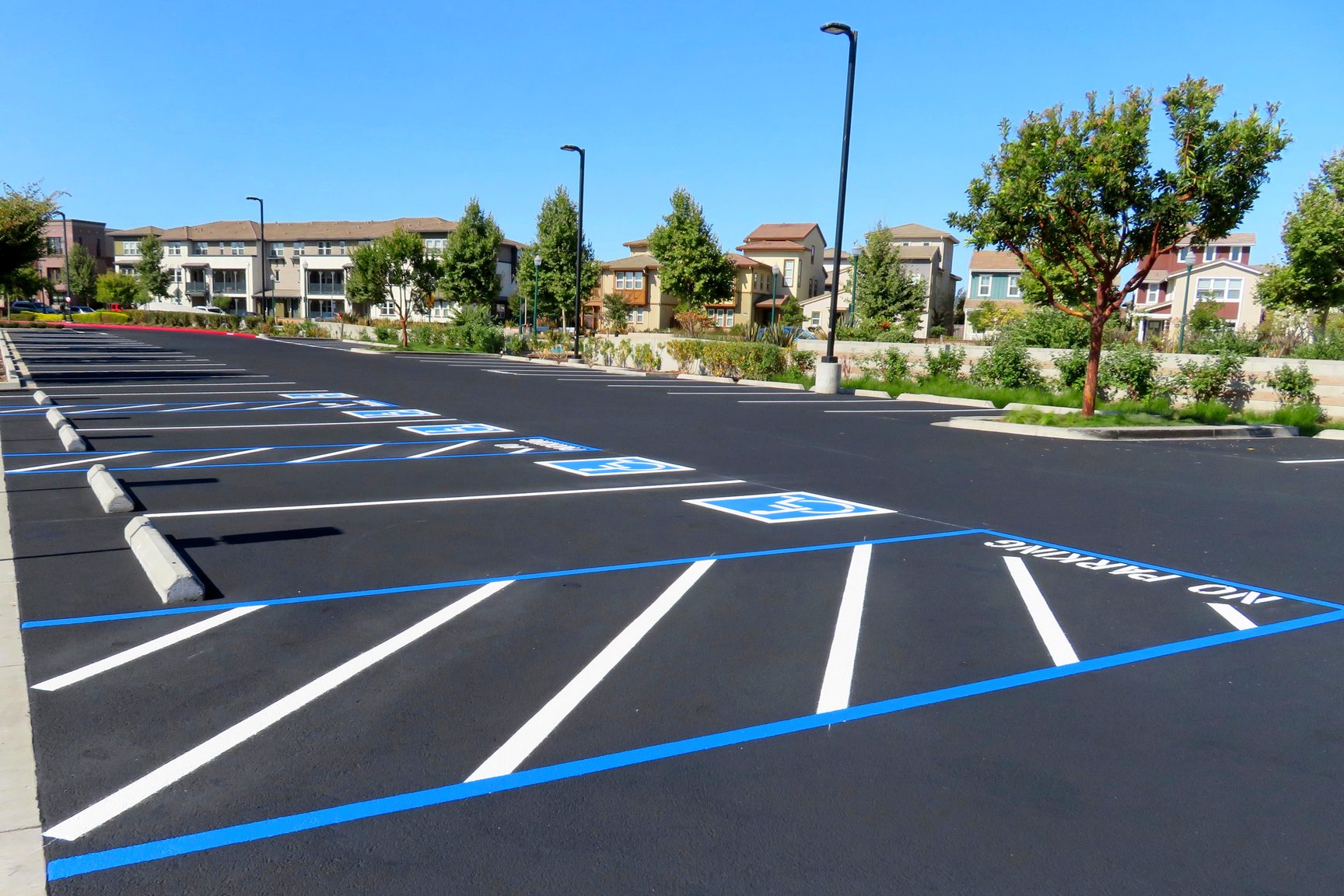
Coverage for a Delaware paving, sealcoating or striping business rests on the usual contractor lines: general liability, contractors equipment, commercial auto, workers’ compensation and property. Delaware shapes that program through paperwork rather than a trade exam, with a labor-department registration required before any construction work, a separate tax license on contracting receipts, a performance rating that governs who may bid DelDOT’s larger road contracts, and a workers’ compensation law that follows the work down to the independent contractors a firm brings in.
Registration before the first job, and a license that is really a tax
Delaware puts every construction business, subcontractors and lower-tier firms included, on a state registration: the Delaware Contractor Registration Act requires a contractor to register with the Department of Labor’s Office of Contractor Registration ahead of any construction services or maintenance. The Act’s idea of construction services reaches highways, streets and improvements of any type, and it calls the repair of existing facilities maintenance, which puts paving a lot or a road within its reach; nothing in the Act tests skill or sorts firms by trade, and because it never mentions sealcoating or line painting, an outfit that only seals or only paints lines is caught by the maintenance and improvement language rather than by name.
The registration is a gate made of paperwork an insurance buyer will recognize. The application must carry proof of Delaware workers’ compensation insurance, proof of a state business license and a safety plan that meets the Occupational Safety and Health Administration’s requirements, and a registered firm that uses an unregistered subcontractor risks its own certificate. The business license is a separate tax duty: Delaware’s tax title requires anyone contracting for work on buildings, roads or other improvements to real property to hold a contractor’s license from the Division of Revenue and pay a tax on gross receipts, the Division withholds that license until the contractor has filed a certificate of workers’ compensation coverage or of self-insurer status, and the Division says a city or county may require a business license of its own.
Authority 19 Del. C. §§ 3602, 3603, 3604, 3605(b), 3607(a); 30 Del. C. §§ 2501(1), 2502(a)–(c) · read the source · checked
The duty itself fits in a sentence:
“A contractor must register under this chapter before performing construction services or maintenance.”
Its reach comes from the definitions. The Act never lists paving as a trade; it defines construction work broadly enough to take roads in, and it names the repair of what already exists as a category of its own:
“‘Construction services’ includes all building or work on a building, structure, or improvement of any type, including bridges, dams, plants, highways, parkways, streets, tunnels, sewers, mains, power lines, pumping stations, heaving generators, railways, airports, terminals, docks, piers, wharves, buoys, jetties, breakwaters, levees, canals, dredging, shoring, rehabilitation and reactivation of plants, scaffolding, drilling, blasting, excavating, clearing and landscaping, including tree cutting.”
“‘Maintenance’ means the repair of existing facilities when the size, type, or extent of such facilities is not changed or increased.”
Read together, those definitions leave a crew little room to decide it sits outside the Act, whether it lays new lots or reseals and restripes old ones. The registration measures no skill; it records that the firm is known to the state and has filed what the application demands. A prime that hires an unregistered sub can lose its own certificate, so the subcontract file should hold each sub’s registration beside its certificate of insurance.
The contractor’s license in the tax title
Delaware also issues something called a contractor’s license, and the name misleads. The Delaware Division of Revenue issues it under the tax title, and it concerns gross receipts, not competence. It still bears on the program: the revenue office holds it back until workers’ compensation coverage or self-insurer approval is on file, and the registration asks for it in turn, so the coverage has to exist before either door opens. Local government can add a layer of its own:
“Depending on where you are located in Delaware, your city and/or county may also require a city and/or county business license, in addition to a State of Delaware business license.”
Any proof of coverage a local office wants comes off the same general liability program as the certificate a property manager asks for, with the additional insured and primary wording ready to show.
No coal-tar rule, but air rules that name sealer and marking paint
Neither the Delaware Code nor the state’s Administrative Code says anything about sealing pavement with coal-tar products or with any other sealer high in PAHs. Nothing at the state level stops anyone from selling or spreading such a product, restricts which pavements it may cover, or attaches a labeling duty to it.
Delaware’s environmental agency, the Department of Natural Resources and Environmental Control, does keep two air rules that touch the trade, though coal tar figures in neither. Its architectural coatings rule sets limits on the volatile organic compound content of the coatings it covers, defines driveway sealers and traffic marking coatings among them, and binds both the businesses that make or sell those coatings for use in Delaware and anyone who applies them there. Its asphalt rule forbids cutback asphalt during the ozone season unless the Department approves it for long-life stockpile storage or for use only as a penetrating prime coat, and in that season it bars emulsified asphalt containing any volatile organic compound. No Delaware town or county sealant ordinance was read for this record, so which sealer a given job uses is left to the municipality where the pavement lies, the property owner’s written specification and the contract.
Authority Delaware Code and Delaware Administrative Code, both swept in full; 7 DE Admin. Code 1141 § 1.0; 7 DE Admin. Code 1124 § 34.0 · read the source · checked
Sealcoaters and stripers do not have to guess whether the coatings rule reaches their products, because it defines both:
“‘Driveway sealer’ means, for products manufactured on or after March 1, 2017, a coating labelled and formulated for application to worn asphalt driveway surfaces to perform one or more of the following functions: (1) fill cracks, or (2) seal the surface to provide protection, or (3) restore or preserve the appearance.”
“‘Traffic marking coating’ means a coating labeled and formulated for marking and striping streets, highways, or other traffic surfaces including, but not limited to, curbs, berms, driveways, parking lots, sidewalks, and airport runways.”
The content limits sit in the rule’s own table, not on this page; the working step is a supplier data sheet showing the sealer or traffic paint meets them, kept in the job file. The asphalt rule reaches road crews more than sealcoaters, and its seasonal restriction on emulsions is broad:
“34.3.3 During the ozone season, no person shall cause, allow, or permit the manufacturing, mixing, storage, or use of emulsified asphalt that contains any volatile organic compound (VOC).”
For the insurance, the product in the tank matters less than where it lands. Mist settling on a customer’s car, sealer carried indoors on shoes and runoff reaching a drain before it cures are the losses the sealcoating program and the striping program are written around. Local ordinances were outside the sweep, so on any given lot the owner’s written specification and the contract settle the product question, and the Delaware Department of Natural Resources and Environmental Control is the office to check again before a large sealing season.
DelDOT bids: a performance rating decides eligibility
The Delaware Department of Transportation qualifies bidders on its large public works contracts through a performance-based rating. State procurement law requires every DelDOT project other than a municipal street aid contract to include a performance-based rating system, and DelDOT’s rule makes each contractor’s rating at the time of bid its prequalification to bid; the rating averages the evaluations DelDOT writes on the construction companies it hires for its projects.
The rule has two halves, and both matter. A contractor whose rating meets DelDOT’s minimum may bid; one whose rating falls short may still bid, but only by signing an agreement that lets DelDOT withhold retainage from each progress payment, and a bid without that signed agreement is rejected. A firm with no recent DelDOT history gets a provisional rating until real evaluations exist. No insurance is demanded by the rating itself; bonds and coverage come from the same procurement statute, which rejects any bid not accompanied by a bid bond from a corporate surety authorized in Delaware or other security, requires a performance bond when the contract is signed unless the contract accepts an irrevocable letter of credit or other collectible security instead, and requires every successful bidder to purchase adequate insurance for the performance of the contract. DelDOT’s bid proposals also require bidders to be registered with DelDOT and to submit a copy of the firm’s Delaware business license with the bid.
Authority 29 Del. C. § 6962(c)(12), (d)(8), (d)(9)a., g. and h.; 2 DE Admin. Code 2408 §§ 2.0, 5.2, 6.0 · read the source · checked
The requirement starts in procurement statute, which carves out municipal street aid work and nothing else:
“A Department of Transportation project, excluding a municipal street aid contract, must include a performance-based rating system.”
The department’s regulation then turns the rating itself into the test at bid time:
“The Performance Rating, as calculated in subsection 5.1, for a Contractor shall be utilized as a prequalification to bid at the time of bid.”
A firm’s record on past department jobs is therefore part of every bid. Clear the minimum and it bids on ordinary terms; fall short and it may still bid, provided it signs an agreement letting the department keep retainage out of each progress payment, and a bid arriving without that signature is thrown out. Retainage held back is working capital the firm cannot use, and it shows on the same balance sheet a surety reads.
The rating asks nothing about insurance. The coverage duty sits in the procurement statute and binds the winner however its bid was secured:
“each successful bidder, regardless of the type of the security posted or waived, as the case may be, must purchase adequate insurance for the performance of the contract”
That sentence does not define adequate, so the contract’s insurance article, with its limits and additional insured wording, is what the program gets checked against. Bonds come from the same statute, and surety capacity is underwritten on financial statements and the equipment list; keep that list identical to the schedule on the contractors equipment floater, and file the tax-title business license with each proposal the Delaware Department of Transportation asks it for.
Workers’ compensation that follows the work to your subs
Delaware makes each employer that its workers’ compensation law reaches either buy coverage from an insurer the Department of Labor has approved and that holds authority to sell workers’ compensation in Delaware, or prove to the Department that its finances let it carry the benefits itself as a self-insurer. The Office of Workers’ Compensation describes the routes as a licensed carrier or an approved self-insurance program, and Delaware runs no state fund.
Contracting work carries a stricter rule. For anyone licensed as a contractor under Delaware’s tax title, or doing business in a way that calls for that license, the independent contractors it uses are covered by the law and must either buy their own coverage or be insured by the contractor that engages them, and a contracting entity that fails to get and keep a certificate of their coverage or of an officer exemption is treated as insuring their claims. Sole proprietors and partners fall outside the law unless they elect coverage, though not when they work as independent contractors under that rule. An employer that neglects the duty owes civil penalties keyed to the premium it did not pay, and one that keeps neglecting it after notice answers to its injured employees for compensation or in a suit for damages, and in that suit the employee’s own negligence, an assumption of risk and a co-worker’s negligence are all barred as defenses.
Authority 19 Del. C. §§ 2306(a), 2308(b), 2311(a)(4)–(5), 2372(a), 2374(d)–(e) · read the source · checked
“Every employer to whom this chapter applies shall insure and keep insured the employer’s liability for compensation in some corporation, association or organization approved by the Department and authorized to transact the business of workers’ compensation insurance in this State or shall furnish to the Department satisfactory proof of the employer’s financial ability to pay directly the compensation, in the amount and manner and when due, as provided in this chapter.”
Delaware runs no state fund, and the Office of Workers’ Compensation, Delaware Department of Labor puts the rule to employers in plain terms:
“All employers with one or more employees must carry workers’ compensation insurance through a licensed carrier or an approved self-insurance program.”
For a contracting business the statute goes further, and its reach matters on any paving job that brings in an owner-operator truck or a striping sub:
“Independent contractors shall have an option to purchase coverage to satisfy this requirement, or alternatively shall be insured by the general contractor, subcontractor or other contracting entity for which they perform work or provide services.”
The consequence runs uphill. A sub working without its own policy is treated as insured by the firm that engaged it, so the claim comes back to the prime unless a certificate sits in the file. Whether an uncertified sub’s payroll lands on the prime’s audit, and how payroll splits across paving, sealcoating and striping, are worked through on the workers’ compensation page. Every insurer writing this coverage, and each other line in the program, answers to the Delaware Department of Insurance.
The Delaware offices behind each requirement
Each governs a different part of the work:
Delaware paving markets by DelDOT district
Each market appears with its county, as the state’s municipal charters list it, and the department district serving that county. Population and size figures are left off; each card keeps to what bears on the insurance.
Wilmington
New Castle County, municipality the Delaware municipal charters site lists under this county. North District.
City work can carry a city business license on top of the state’s, as the revenue office’s own guidance warns. Ask the city what it requires before mobilizing, and keep the registration certificate where the crew can show it.
Newark
New Castle County, municipality the Delaware municipal charters site lists under this county. North District.
Private lot work here meets the statewide registration and little else from the state, so the owner’s contract writes the insurance terms. Read its indemnity and additional insured clauses before the price is final.
Dover
Kent County, municipality the Delaware municipal charters site lists under this county. Central District.
A firm that bids department contracts from here carries its evaluations into every later bid, so a weak closeout on one job can shape the terms of the next. Punch lists and paperwork are part of keeping the rating.
Harrington
Kent County, municipality the Delaware municipal charters site lists under this county. Central District.
A crew that takes district road work and private lots in the same season moves its machines between owners with very different paperwork. The floater schedule and the vehicle list should follow the equipment, not the yard address.
Georgetown
Sussex County, municipality the Delaware municipal charters site lists under this county. South District.
When a paving firm here brings in a striping sub or an owner-operator hauler, the state’s compensation law can leave an uncovered worker’s claim with the firm that engaged them. Collect a current certificate before the sub arrives.
Rehoboth Beach
Sussex County, municipality the Delaware municipal charters site lists under this county. South District.
Sealing and restriping lots here puts sealer and traffic paint under the state’s coatings rule, which binds whoever applies them. A supplier data sheet for each product belongs in the job file beside the certificate.
What an underwriter weighs on a Delaware paving account
What moves the price of a paving program — the mix of paving, sealcoating and striping work, the payroll and loss history behind it, and how workers compensation is bought — is set out in our national guide to what paving contractor insurance cost depends on. This page keeps to Delaware’s rules, agencies and markets.
Claim patterns on Delaware lots and roads
Patterns only, with no count or dollar figure attached.
A car on an uncured surface. A driver pulls around a barricade onto a lot sealed an hour earlier. The tracked sealer and the car’s finish make a third-party claim, while fixing your own surface is a separate question the general liability page sorts out.
A sub’s worker hurt on your job. A hired striping hand is struck while laying out stalls, and the sub’s policy turns out to have lapsed. Under Delaware’s rule for contractors, that claim can land on the firm that brought the sub in.
An injury at the screed. A laborer is scalded by hot mix or caught by a reversing roller. The claim runs to a privately placed policy or an approved self-insurance program, and proof of that coverage is the same document the registration and the tax license required, and the reason for the paving contractor program to keep it current.
Delaware: Contractor license, a state license or registration can reach this work, connected to the General Liability page. Coal-tar sealant, no state rule on the product, connected to the Asphalt Sealcoating Insurance page. Transportation department prequalification, applies to department road work, connected to the Commercial Auto page. Workers’ compensation, bought in the open market, connected to the Workers Compensation page. The diagram pairs each state rule with the page on this site that discusses it and shows no figures.
Nearby states we also write
Delaware’s neighbors in the licensed footprint are listed here, each written from its own verified record. Registration, the tax license and the compensation rules above stop at the state line, so every state a crew works in should be named when the program is written.
Related coverage and services
What we insure
Coverage lines
Outside authorities
Delaware paving contractor insurance questions
Does a paving company have to register with the state of Delaware?
Yes. Before doing construction or maintenance work, a contractor registers with the Office of Contractor Registration, Delaware Department of Labor, and the statutory definitions reach roads, streets and the repair of surfaces already in place, which takes in paving, sealing and restriping. Registration is not a license: there is no exam and no trade class. The application must show Delaware workers’ compensation coverage, a state business license and a safety plan meeting federal workplace-safety rules.
Is the Delaware contractor’s business license a trade credential?
No. It is a tax license from the Delaware Division of Revenue, issued under the state’s tax title and tied to gross receipts from contracting on roads, buildings and similar improvements. It tests no skill. It does connect to insurance, because it is withheld until the contractor files proof of workers’ compensation coverage or approved self-insurance. A city or county may ask for a business license of its own as well.
Is coal-tar sealer allowed in Delaware?
Nothing at the state level forbids it: no Delaware statute or administrative rule bans, limits or labels coal-tar or other high-PAH sealers. The state’s coatings rule does set volatile organic content limits for driveway sealers and traffic paint, and it binds the applicator. Local ordinances were outside the review behind this page, so the owner’s specification and the contract settle the product.
What happens if my DelDOT performance rating falls below the minimum?
You can still bid, but only after signing an agreement that lets the department hold back retainage from each progress payment, and a bid missing that signed agreement is rejected. A firm at or above the minimum bids without the condition, and a firm new to department work bids on a provisional rating until evaluations of its jobs exist.
Does the DelDOT rating require insurance or a bond?
The rating does not. Both come from the state procurement statute: a bid must come with a surety bond from a company authorized in Delaware or other security, the winner signs a performance bond with the contract unless an irrevocable letter of credit or similar security is accepted, and each successful bidder must buy adequate insurance. The contract’s insurance article sets the working terms.
Do independent contractors I hire need their own workers’ comp in Delaware?
They should carry it. For a business that needs the state’s contractor license, the independent contractors it engages fall under the compensation law and must either buy coverage or be insured by the firm that hires them. Without a certificate on file showing their policy or an officer exemption, and kept there, the law treats you as their insurer. Ask for it before they start.
Where does a Delaware paving employer buy workers’ compensation?
From an insurer the state labor department approves that is authorized to write the coverage in Delaware, or through self-insurance for an employer that satisfies the Office of Workers’ Compensation, Delaware Department of Labor it can pay benefits directly. There is no state fund. An employer that ignores the duty faces civil penalties, and continued neglect after notice exposes it to suits by injured workers stripped of its usual defenses.
This page describes insurance for paving and asphalt contractors operating in this state. It is general information, not legal advice and not a statement of coverage. Licensing, permitting and environmental requirements change; verify current requirements with the agency named before relying on them.
Get a quote for your Delaware paving work
Send us your registration certificate, any DelDOT evaluations you hold and the contracts you expect this season, and we will build the Delaware program around them.