
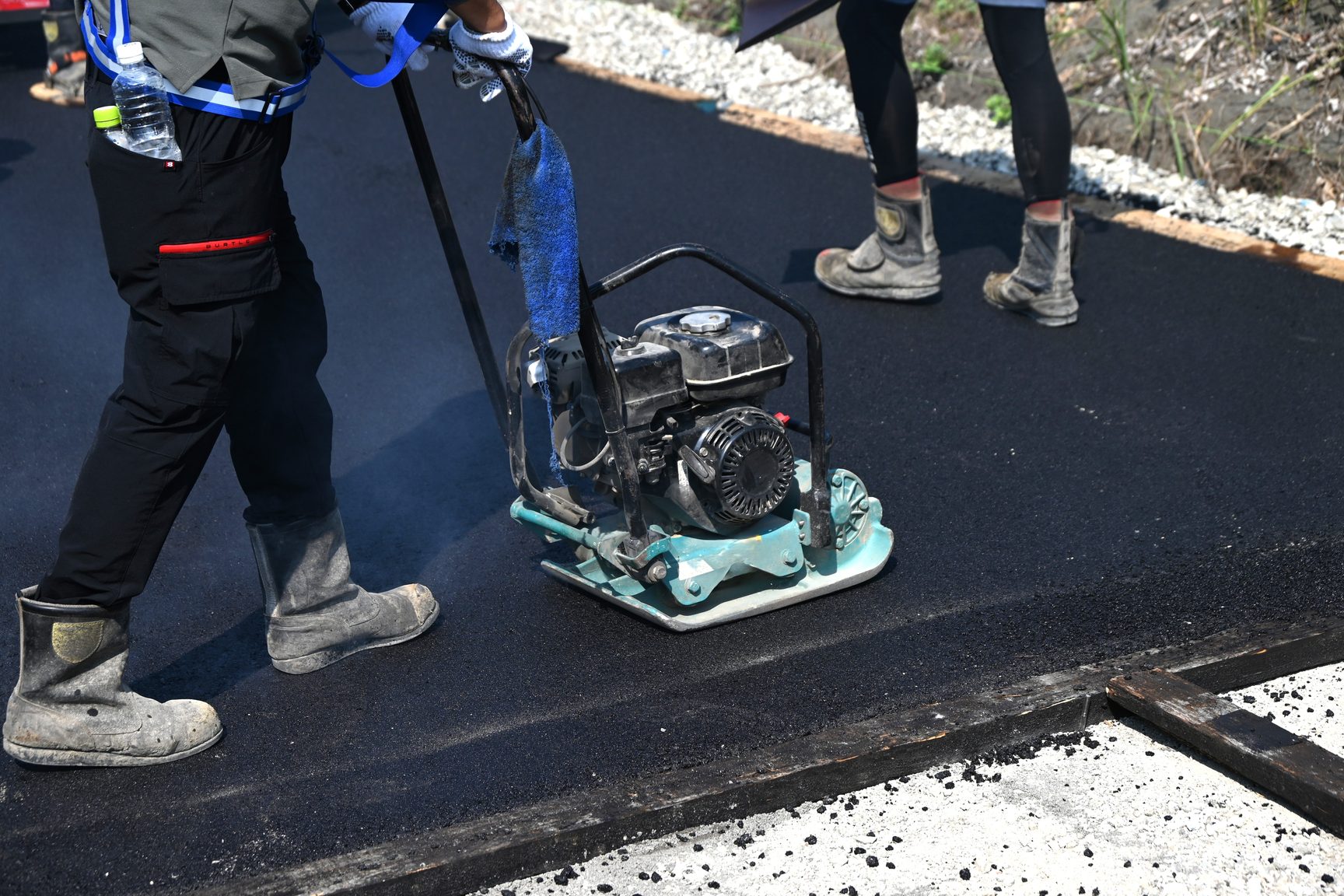
The best commercial insurance for a small paving contractor business is a program built around the work you actually sell, starting with general liability, commercial auto and workers’ comp, and placed with a carrier that writes paving accounts on purpose. The cheapest single policy is rarely the best one, because a small paving company’s biggest risk is a claim that falls through a gap nobody noticed at the quote.
Start with the three policies customers ask for
General liability answers for injury and property damage to others, from a car tracking fresh sealer to a customer tripping over a form board. Commercial auto covers the trucks and trailers. Workers’ compensation covers your crew and, in most states, becomes mandatory with your first employee. Those three are what homeowners, property managers and towns ask to see on a certificate.
Add the next layers as you grow
As you buy a paver, a roller or a sealcoating rig, schedule each machine on a contractors equipment floater so it is covered on the job and in transit. When a commercial customer or a town names limits higher than your liability policy carries, an umbrella fills the gap; our post on umbrella and excess liability explains how it sits on top.
What makes a cheap policy expensive
The searches for cheap, affordable and top-rated paving insurance all lead to the same question: what does the low price leave out? Check four things before you compare premiums:
- The description of operations. If the policy names only sealcoating and you also pave, a paving claim may be denied.
- Classification limitations. Some policies cover only the work classes listed; our post on the classification limitation endorsement shows how they read.
- Completed operations. Cracking, ponding and drainage complaints arrive after you leave the job.
- Subcontractor conditions. Some policies exclude or surcharge work done by uninsured subs.
What top-rated should mean
A top-rated insurer for a small paving business has a strong financial strength rating from an independent rating agency and writes paving accounts on purpose. Ask your agent for both. A carrier that only tolerates paving work is the one most likely to walk away at renewal.
Where a small business buys it
An independent agency that places contractor accounts can compare several carriers that want small paving firms, which is usually the fastest route to a program that fits. Our post on which insurance agencies specialize in asphalt and paving contractors explains what to ask an agency.
Keep the price reasonable
A clean description of your work, a written safety routine and careful drivers do more for price than shopping alone. Our post on how paving contractors lower their insurance costs has the specifics. When you are ready, request a quote and tell us what your crew does.