
Paving Contractor Insurance by State
Vermont Paving Contractor Insurance
Vermont registers contractors who pave for homeowners and licenses no one for commercial lots or public roads — and the registration law writes a liability minimum into the credential.
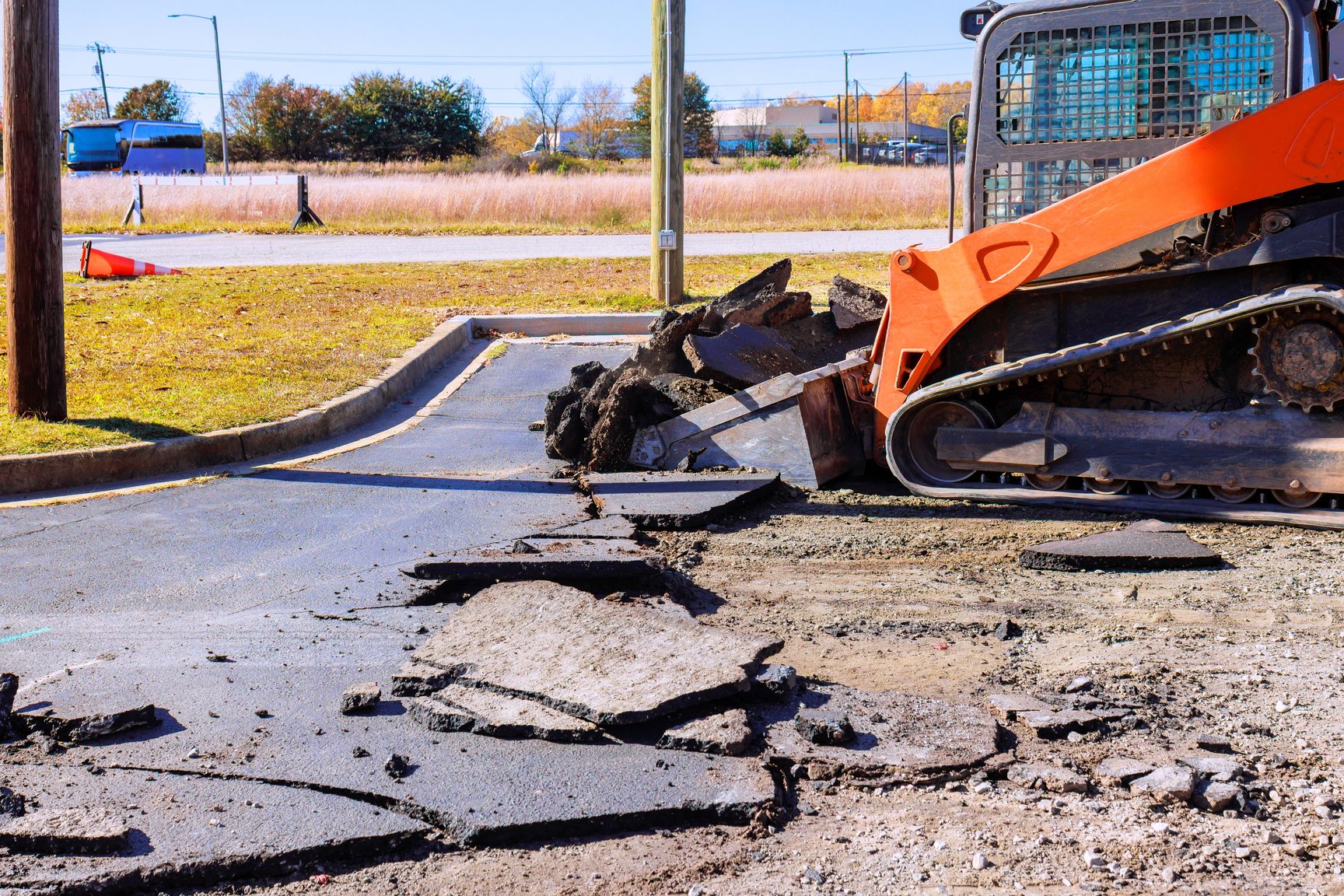
A Vermont paving, sealcoating or striping business is insured with the same core program it would carry anywhere: general liability, contractors equipment, commercial auto, workers’ compensation and property. What Vermont adds is a registration that attaches to the homeowner’s driveway but not to the shopping-center lot, an insurance minimum written into that registration law, and a transportation agency that rates its bidders before it lets a road contract.
So the question that sorts a Vermont job is who signed the contract. Sign with a homeowner for work on a house, and the registration chapter can reach you, with insurance terms of its own. Sign with a property manager, a town or another contractor, and there is no state credential to hold; the terms come from the owner and the contract, and on state roads from the agency’s specifications.
Registration for homeowner paving, and no license for the rest
Vermont has no statewide contractor license for commercial paving, sealcoating or pavement striping, yet a contractor who deals directly with a homeowner must register with the Office of Professional Regulation, and the registration statute lists paving by name. It reaches residential construction on a single home or on a building or premises with no more than the handful of units the statute prints, once the price of the job passes the figure written into the law. Sealcoating and line striping are never named, so a homeowner’s contract for sealer alone, or for lot lines alone, has to be measured against the definition’s renovation, repair and painting wording, and the Office’s rules for the profession are still listed as proposed.
Registered contractors carry duties an insurance program has to meet. The statute sets a minimum liability coverage for every registrant, lets the Office demand proof of it before issuing or renewing a registration, requires a written contract above the same price figure, and treats a lapse in liability or workers’ compensation coverage as unprofessional conduct. Work sold only to another contractor rather than to the homeowner does not trigger registration, and commercial lots and public roads fall outside a definition built around dwellings. Separately, Vermont’s criminal code makes fraud in land improvement, a term that covers paving driveways and roads whether or not they serve a home, an offense of its own.
Authority 26 V.S.A. § 5501(a)–(b); § 5502; § 5509(a); § 5510(c)(2); 13 V.S.A. § 2029(a)(2) · read the source · checked
The finding turns on a definition. The registration duty itself is short, and it keys on the customer and the price rather than on the trade:
“A person shall register with the Office of Professional Regulation prior to contracting with a homeowner to perform residential construction in exchange for consideration of more than $10,000.00, including labor and materials.”
Paving enters through the meaning of residential construction, listed alongside roofing and painting:
“means to build, demolish, or alter a residential dwelling unit, or a building or premises with four or fewer residential dwelling units, in this State and includes interior and exterior construction, renovation, and repair; painting; paving; roofing; weatherization; installation or repair of heating, plumbing, solar, electrical, water, or wastewater systems; and other activities the Office specifies by rule consistent with this chapter.”
So the credential is a registration with the Office of Professional Regulation, not a license, and it reaches work on a dwelling, contracted directly with the homeowner, above the price the statute prints. A store’s parking lot, a municipal street and a state highway sit outside it, and for that work Vermont has no contractor license at all. Sealcoating and striping are the harder case: neither word appears in the definition, so ask the Office before treating a homeowner job for sealer or lines alone as outside the chapter.
The liability minimum that comes with registering
The registration chapter writes an insurance requirement into the credential itself:
“A person registered under this chapter shall maintain minimum liability insurance coverage in the amount of $1,000,000.00 per occurrence and $2,000,000.00 aggregate, evidence of which may be required as a precondition to issuance or renewal of a registration.”
With a lapse also counted as unprofessional conduct, that makes liability limits a condition of doing residential work at all, not a matter of what a particular homeowner asks for. A certificate showing the right limits has to be ready at renewal, and a lapse, whether a cancellation for nonpayment or a gap between policies, is a registration problem as well as an insurance one. How per-occurrence and aggregate limits work together is set out on the general liability page.
Subcontracting under someone else’s contract
Not every crew on a house job deals with the homeowner. The Office of Professional Regulation answers the subcontractor question directly:
“If you are a subcontractor and you are contracted by another contractor and not the homeowner directly, you are not required to register with OPR.”
The duty follows the contract, not the work. Paving a driveway under a general contractor’s agreement brings no registration duty; signing with the owner of the house does. For the sub, the general contractor’s agreement decides what has to be shown, and the additional insured and waiver wording it asks for is read against the paving contractor program before the job starts.
Sealer, cutback asphalt and marking paint under Vermont rules
No Vermont statute or rule outlaws coal-tar or high-PAH sealer for pavement, restricts the pavements it may go on, or requires any warning or label on it.
Two state rules still touch the products a sealcoating or striping crew handles, and neither is about coal tar. The Agency of Natural Resources’ air rules bar cutback and emulsified asphalt with volatile content at or above a set share of weight, except medium curing cutback for stockpiled patching mix and for a prime coat on aggregate base before paving; and the paint product stewardship law counts driveway sealer and road and traffic marking paint, sold in small containers, as nonindustrial coatings among the paint products whose leftovers a producer stewardship program must plan to collect. This research did not find or read any Vermont town ordinance on sealer, which leaves the product choice to the owner’s specification, the contract and whatever rules the local town has adopted.
Authority Vermont Statutes and Code of Vermont Rules, swept; Vermont Air Pollution Control Regulations § 5-253.15(c)(1); 10 V.S.A. § 6672(8) and (9)(A); 10 V.S.A. § 6673(a)(3) · read the source · checked
What Vermont does regulate sits close by and is easy to mistake for a sealer rule. The air rules restrict a class of liquid asphalt by its volatile content, and they are quoted here whole, exceptions included:
“No person shall cause, allow, or permit the manufacture, mixing, storage, or use of cutback asphalts or emulsified asphalts which contain 5% by weight or greater volatile organic compounds, as determined in accordance with test methods and procedures specified by the Air Pollution Control Officer, with the following exceptions: (i) A medium curing cutback asphalt may be used for the manufacture of and long-term stockpile storage of patching mixes used in pavement maintenance. (ii) A medium curing cutback asphalt may be used as a penetrating prime coat for aggregate bases prior to paving.”
It speaks to cutback and emulsified asphalt and names no coal tar. The paint stewardship law in the finding concerns leftovers rather than use, and its duties fall on producer programs, not on the contractor applying the product. Choice of sealer therefore stays with the owner’s specification, the contract and whatever the town has adopted, and no town ordinance was read for this page, so a job in an unfamiliar town is worth a call first. Whatever is in the tank, overspray on a parked car or sealer carried into a lobby is a liability question, and runoff reaching a drain before it cures may turn on pollution wording rather than general liability; that seam is what the sealcoating program is built around.
Prequalified before the bid, insured before the signature
A firm cannot bid a construction contract the Vermont Agency of Transportation advertises until it holds both of the Agency’s prequalifications: an annual one, filed as an experience questionnaire and financial statement for the Prequalification Committee, and a contract-specific one requested for each job. The Committee turns the annual filing into limits on how much work, how many contracts and which kinds of work the firm may bid, and its work classifications include crack sealing and pavement maintenance and pavement markings. The contract-specific form is for prospective prime contractors; VTrans says subcontractors need not file it, though its policy lets it require prequalification of a subcontractor in some circumstances.
No insurance is asked for at the prequalification stage; coverage and surety arrive with the contract. The Agency’s duties statute directs it to require a performance bond and a separate bond for labor and material claims from the contractor on its transportation construction projects, each written by a surety company that holds authority to do business in Vermont, while letting the Secretary accept other security or waive either bond on contracts at or below the size the statute sets. Before the contract is executed, the Agency’s standard specifications require a certificate of insurance on file, and the contractor must make sure its subcontractors carry workers’ compensation too.
Authority 19 V.S.A. §§ 7 and 10(1), (8), (9); VTrans Policies and Procedures for Prequalification §§ 1.01 D, 3.05 C, Appendix A; VTrans Standard Specifications for Construction § 103.04 · read the source · checked
The Committee’s ratings rest on a financial statement, the same kind of reading a surety does, so the statement filed with it and the one handed to a bonding company should agree. The Vermont Agency of Transportation publishes its work classifications, and several read as a description of this trade, as printed:
The marking classification reads as a description of a striping crew’s day:
“Pavement Markings – This work shall consist of furnishing and placing temporary and/or permanent pavement markings using paint, durables, or other specified materials or the removal of such existing markings when required.”
A striping or crack-sealing firm that works under primes should still ask early whether a particular job calls for its own prequalification.
Certificates, subcontractors and surety at contract time
No insurance question is asked while the Committee rates a firm. It is asked at execution, in the standard specifications:
“Before the Contract is executed, the Contractor shall file with the Agency a certificate of insurance, executed by an insurance company or its licensed agents, on a form satisfactory to the Agency, stating that with respect to the Contract awarded, the Contractor carries insurance in accordance with the following requirements.”
“The Contractor shall also ensure that all subcontractors carry workers’ compensation insurance in accordance with 21 V.S.A., Chapter 9 for all work performed by them.”
The limits that specification sets are printed in it and in each job’s contract documents, and are not repeated here. The subcontractor sentence matters to a prime: a sub’s missing workers’ compensation certificate becomes the prime’s problem under that clause.
The bond provisions are each split: the agency requires the bonds, and the Secretary may accept other security or waive them on smaller contracts. The bid documents say which side of that line a job falls on. Surety capacity is written on the balance sheet rather than on loss history, so arrange it before a letting, not after the bid package arrives.
Workers’ compensation: a private market, enforced on the job site
Every private Vermont employer must secure workers’ compensation, and the statute gives it four routes: a policy from a corporation or a reciprocal or interinsurance exchange holding Vermont authority for the line, guarantee insurance from an authorized company, proof to the Commissioner of Labor of the financial responsibility to pay benefits itself, or membership in an approved nonprofit self-insurance corporation. Vermont runs no state fund, and the Department of Labor calls the coverage mandatory for all Vermont employers.
The Commissioner enforces the duty on the job site. An employer found without coverage after investigation is ordered to stop work until it is insured, unless the Commissioner decides that halting the work would immediately threaten public safety or health, and it faces daily administrative penalties on top of the order. If an uninsured employer’s worker is hurt, the statute makes the corporation’s officers and majority stockholders, the partners, or the business’s principals personally liable for the benefits owed.
Authority 21 V.S.A. § 687(a) and (b); 21 V.S.A. § 692(a)–(b) · read the source · checked
“Employers, not including State, county, or municipal bodies, shall secure compensation for their employees in one or more of the following ways:”
For a paving crew the weight is in enforcement, and the stop-work order comes with its qualification:
“If an employer fails to comply with the provisions of section 687 of this title after investigation by the Commissioner, the Commissioner shall issue an emergency order to that employer to stop work until the employer has secured workers’ compensation insurance. If the Commissioner determines that issuing a stop-work order would immediately threaten the safety or health of the public, the Commissioner may permit work to continue until the immediate threat to public safety or health is removed.”
A job stopped with a mat half laid is an expensive way to learn the policy lapsed, and for a registered residential contractor the registration chapter treats the same lapse as unprofessional conduct. The Vermont Department of Financial Regulation regulates the insurers in this market. How payroll is split between paving, sealcoating and striping, how a working owner is treated, and what a sub has to show are worked through on the workers’ compensation page.
The Vermont offices behind these rules
Each covers a different part of the work:
Vermont paving markets by maintenance district
Each market is shown with its county, its relation to that county under the statutes on shire towns, and the maintenance district whose list of towns includes it. No population or market-size figure is attached.
Burlington
Chittenden County, shire town (the statute’s term for county seat). Colchester.
The district serving this city is named for a different town. Here the registration line runs through the customer list: a driveway sold to the owner of the house and a lot sold to a property manager land on opposite sides of it.
Rutland
Rutland County, shire town (the statute’s term for county seat). Rutland.
City and district share a name. A firm based here that bids state work and also paves driveways answers to the Agency’s certificate terms and the registration chapter’s minimum at once, and one program has to satisfy both.
Montpelier
Washington County, shire town (the statute’s term for county seat). Berlin - Capitol Region.
Served by a district named for a different town, with the capitol region in its name. Town, state and private owners sit close together here, and each writes its own insurance article into the contract.
St. Albans
Franklin County, shire town (the statute’s term for county seat). St. Albans.
City and district share a name. A crack-sealing or marking firm based here that subcontracts to primes on state jobs should learn early whether a given job asks it to be prequalified, before the crew is scheduled.
Bennington
Bennington County, shire town, shared with Manchester. Bennington.
A shire town shared with another town, in a district that carries this town’s own name. What a homeowner job asks of a paving contractor here is set by the same statewide chapter as anywhere else in the state.
Brattleboro
Windham County, town in the county. Dummerston.
Not the shire town of its county, and served by a district named for another town. For a sealcoating crew the product question here is a local one: no state rule chooses the sealer, so the owner’s specification and any town rule do.
What sets the price of a Vermont paving program
What moves the price of a paving program — the mix of paving, sealcoating and striping work, the payroll and loss history behind it, and how workers compensation is bought — is set out in our national guide to what paving contractor insurance cost depends on. This page keeps to Vermont’s rules, agencies and markets.
Loss patterns on Vermont paving and striping jobs
Described as patterns, with no count or dollar figure attached.
Tires in a fresh driveway. On a residential job the homeowner, a family member or a delivery driver pulls in before the surface is ready. The damage to their vehicle is a third-party claim; the rework on your own surface is a separate question, and the general liability page explains which policy answers which half.
Sealer carried indoors. Shoes and tires carry wet sealer into a house, a lobby or a store, and flooring claims follow.
An injury on the crew. Burns, a backing machine, a strain late in the day. In Vermont that claim goes to a privately placed policy, and the stop-work order is the reminder that the policy has to be in force before the crew arrives.
Vermont: Contractor license, a state license or registration can reach this work, connected to the General Liability page. Coal-tar sealant, no state rule on the product, connected to the Asphalt Sealcoating Insurance page. Transportation department prequalification, applies to department road work, connected to the Commercial Auto page. Workers’ compensation, bought in the open market, connected to the Workers Compensation page. The diagram pairs each state rule with the page on this site that discusses it and shows no figures.
Nearby states we also write
Vermont’s neighbors in the footprint are listed here, and each is written up from its own verified findings. None of this page’s answers on registration, sealer or workers’ compensation carries across a border, so a crew that works on both sides should have every state named when the program is written.
Related coverage and services
What we insure
Coverage lines
Vermont paving contractor insurance questions
Must I register before I pave a homeowner’s driveway in Vermont?
If you contract directly with the homeowner for work on a dwelling and the job is priced above the figure in the statute, yes: register with the Office of Professional Regulation first. The definition of residential construction names paving. It does not name sealcoating or line striping, so a sealer-only or lines-only job for a homeowner is less clear, and the Office is the place to ask before assuming it is outside the chapter.
Is a state license needed to pave commercial lots or town roads in Vermont?
No. Vermont has no statewide license for commercial paving, sealcoating or striping, and the registration chapter is written around dwellings and homeowner contracts, so a retail lot, a municipal street or a state highway sits outside it. Requirements for that work come from the owner, the contract and, on state jobs, the transportation agency’s prequalification and specifications rather than from a state credential.
What insurance does a registered residential contractor have to keep?
The registration statute sets a minimum general liability limit per occurrence and in the aggregate, and the Office may ask for evidence of it before it issues or renews a registration. Letting liability or workers’ compensation coverage lapse is listed as unprofessional conduct. In practice that means the certificate has to be current at renewal and the policies cannot be allowed to gap.
I pave for general contractors on house jobs. Do I have to register?
Not on that basis, according to the Office of Professional Regulation: a subcontractor hired by another contractor, rather than by the homeowner, is not required to register. The answer follows the contract, not the work. If your firm also signs jobs directly with homeowners above the statute’s price, those jobs bring the registration and its liability minimum with them, and your program should be written for that.
Can I still use coal-tar sealer on Vermont jobs?
No state statute or rule bans, restricts or labels it. The state rules that do touch these products are an air rule limiting volatile content in cutback and emulsified asphalt, and a paint stewardship law that counts driveway sealer and marking paint among covered coatings. No town ordinance was checked for this page, so read the owner’s specification and ask the town before a large job.
What does VTrans ask of a firm before it can bid a state paving job?
Prequalification, annual and per contract: a yearly filing the Committee rates, and a request tied to each contract the firm wants to bid. Neither asks about insurance. Coverage comes at execution, when the contractor files a certificate before the contract is signed and takes on the duty to see that its subcontractors carry workers’ compensation. Bonds are handled under the agency’s duties statute.
Can a Vermont paving business buy workers’ compensation from a state fund?
No. Vermont has no state fund. An employer insures with a carrier authorized in the state or qualifies with the Vermont Department of Labor to carry the obligation another way the statute allows. Going without is costly: the Commissioner can order work stopped until coverage is in place, add penalties, and the owners of an uninsured business can be personally liable for an injured worker’s benefits.
This page describes insurance for paving and asphalt contractors operating in this state. It is general information, not legal advice and not a statement of coverage. Licensing, permitting and environmental requirements change; verify current requirements with the agency named before relying on them.
Get a quote for your Vermont paving work
Tell us how your Vermont work splits between homeowners, commercial owners and state jobs, and we will build the program around the contracts you sign.