
Paving Contractor Insurance by State
Maine Paving Contractor Insurance
Maine licenses no paving trade, yet a door-to-door seller license can reach driveway work, coal-tar sealer is barred by statute, and state road awards turn on prequalification.
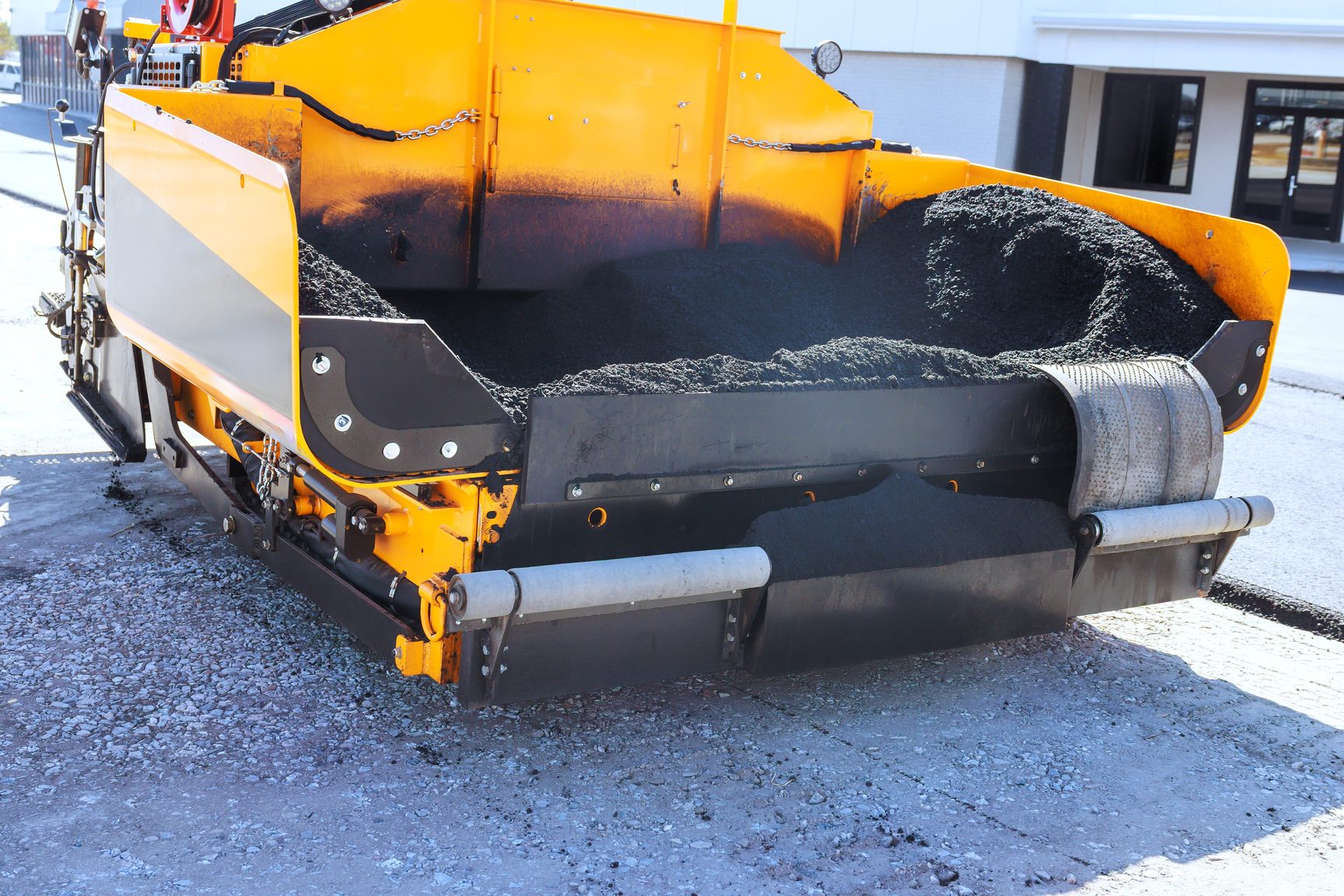
A Maine paving, sealcoating or striping business is insured through the same core program used in any state: general liability, contractors equipment, commercial auto, workers’ compensation and property. What Maine adds sits around that program rather than inside it — a coal-tar sealer ban written into its environmental statutes, a door-to-door seller license that can reach a driveway crew working away from home, prequalification and surety on state road contracts, and a compensation law that binds every private employer.
Each of those rules is triggered by a kind of job rather than by the company itself: a lot restriped for a property manager never meets the seller license, while the same lot resealed meets the sealer ban. The sections below take them in turn, with the text each one rests on.
One state license touches driveways, and only at the door
Maine issues no statewide license to general contractors or to firms that pave, seal or stripe, yet one narrow state license does reach driveway work. A home repair seller that solicits or sells door to door in a town where it keeps no permanent place of business must first be licensed by the Office of Professional and Occupational Regulation, and the statute’s description of home repair services lists building, installing, replacing, improving or cleaning driveways.
Most paving jobs never meet that license. It follows the door-to-door sale to a home, so a commercial lot, a public road or a driveway sold from an office in the same town sits outside it, and neither sealcoating nor lot striping appears anywhere in the statute’s wording. Where it does apply it adds to any license the trade already needs, and going without it is a crime. Everything else is local: Maine’s home rule statute lets a municipality exercise by ordinance any power the Legislature has not denied it, so the municipality where the job sits may add requirements of its own.
Authority 32 M.R.S. §14501, sub-§§6 and 9; 32 M.R.S. §14504, sub-§1; 30-A M.R.S. §3001 · read the source · checked
The absence runs across the whole trade: no state credential exists for a general contractor, and none for paving, sealcoating or striping as such. The license that does exist is aimed at a way of selling rather than a kind of work, and the statute defines it through the seller:
“"Transient seller of home repair services," "transient seller" or "seller" means a home repair seller who engages in the business of door-to-door solicitations or sales of home repair services who does not have, at the time of the solicitation or contract, a permanent place of business in the municipality in which the door-to-door solicitation or sale occurs.”
A sealcoater knocking on doors in the town where it keeps its yard is not a transient seller there; the same crew several towns away is, and the covered services put driveways inside:
“"Home repair services" includes, but is not limited to, the construction, installation, replacement, improvement or cleaning of driveways”
“A transient seller of home repair services must be licensed by the department and acquire a door-to-door sales license in the manner as set under section 14505 before engaging in the door-to-door sales of home repair services. The licensing requirement under this section is in addition to the licensing requirements applicable to the occupation, trade or profession for which a license is required.”
This license stacks on top of any other credential rather than replacing it. For the insurance program the point is paperwork: a residential crew that sells at the door should be able to show its seller license alongside a certificate, and the general liability program behind that certificate should describe residential driveway work as part of the business. Beyond that, the field belongs to municipalities, and this page describes no particular town’s ordinance; before a first job in a new one, ask its code office whether it licenses, permits or bonds paving work.
Coal-tar sealer is barred from Maine driveways and parking areas
Maine takes coal-tar sealer off driveways and parking areas by statute. Its environmental law bars selling, wholesale or retail, any sealant product that carries a coal tar label and is made for those surfaces, and from a later date the same section bars spreading such a product on them. The Maine Department of Environmental Protection says it is responsible for compliance.
The test in the statute is the product’s label and intended surface. It covers sealer labeled as containing coal tar and made for driveways or parking areas; roads are not named, and the section imposes no labeling duty of its own. An exemption comes only from the Commissioner of Environmental Protection, on a written request giving the reason, and only for research into the product’s environmental effects or work on a substitute technology whose development requires the product.
Authority 38 M.R.S. §419-E · read the source · checked
Of every rule on this page, this one lands hardest on a sealcoating crew. The statute closes the market and the job in sequence, sale first and application afterward:
“Beginning October 1, 2023, a person may not sell at wholesale or retail a coal tar sealant product that is labeled as containing coal tar and that is designed to be applied on a driveway or parking area.”
“Beginning October 1, 2024, a person may not apply on a driveway or parking area a coal tar sealant product that is labeled as containing coal tar and that is designed to be applied on a driveway or parking area.”
The label is the practical test, so the pail or tote is the first document to check — before a season’s stock is ordered, and again before a customer’s leftover product goes down. The application rule speaks to whoever puts the product on the surface, so stock bought before the sale ban changes nothing.
The commissioner’s exemption grounds describe research, not ordinary sealing work for a customer. Enforcement sits with the Maine Department of Environmental Protection, which puts it this way on its own page:
“The Department is responsible for ensuring compliance with the law.”
For the program, the ban moves the question from which product may be used to what happens when a job goes wrong anyway: sealer misted onto vehicles at the edge of a lot, or a rain shower carrying uncured material toward a catch basin. Those losses belong to the sealcoating program whatever is in the tank, and whether material that reaches water is a liability loss or a pollution loss is settled by the policy wording.
State road contracts: prequalified to win, bonded to sign
Maine’s Department of Transportation awards its construction contracts only to firms that pass its prequalification, where the project’s Notice to Contractors calls for it. Any contractor may bid, but award goes only to a bidder that meets the qualification requirements, and a low bidder without prequalification at bid opening waits while its application is reviewed. The statute gives the department full power to prequalify bidders for construction, demolition and maintenance under its written procedures, and the procedure lists Paving among the project types a firm may be prequalified for.
Prequalification is a pass or fail review by a department committee of experience, personnel, bonding capability and safety, environmental and civil rights records; it asks for no insurance policy, though the packet must include a bonding company’s letter stating the firm’s bonding capacity and a copy of its experience rating modifier for workers’ compensation. Pavement crack sealing is named as specialty work that does not generally need a prequalification category, and smaller contracts are generally exempt. Surety attaches at later stages: each bid carries a bid guaranty under the department’s specifications, and Maine’s public works bond law requires performance and payment bonds before award on public contracts above the size it prints, but not on contracts at or below it.
Authority 23 M.R.S. §4243; 14 M.R.S. §871, sub-§3; MaineDOT Contractor’s Prequalification Procedure · read the source · checked
The statute behind that finding gives the Maine Department of Transportation a free hand to write its own qualification rules:
“The department has the full power to prequalify bidders for construction, demolition and maintenance projects based on factors contained in the department's written prequalification procedures.”
and the department states the consequence without softening it:
“Bids will be received from any contractor; however, the contract will only be awarded to contractors passing the qualification requirements.”
So a bid is open to anyone, but the contract is not. A paving firm aiming at department work applies for a category, and the application lists the work types this way:
The review asks for no insurance policy, yet it overlaps with the program: the experience modifier in the packet comes from the compensation side, covered on the workers’ compensation page, and the machines a firm describes to the committee should match its contractors equipment floater.
For a sealcoating and crack-filling outfit, one line on the department’s page matters more than the rest:
“Other contracts considered to be "specialty work" that do not generally require a prequalification category are bridge painting, pavement crack sealing and demolition.”
It is phrased as a general rule, so the notice to contractors on a particular project still has the final word.
Bid guaranty and public works bonds
Surety runs alongside prequalification rather than inside it, starting with the bid:
“Each bidder must accompany its bid with a bid guaranty in accordance with the department's specifications.”
Past the bid, the performance and payment bond duty depends on contract size, and an owner’s documents may ask for bonds the statute does not. A surety reads financial statements and the backlog rather than claims history, so the capacity letter the prequalification packet needs should be settled well ahead of the application.
Workers’ compensation reaches every private employer in Maine
Maine’s workers’ compensation law reaches every private employer, including an independent contractor that hires and pays employees, and requires it to secure compensation for all of its employees either by buying a workers’ compensation policy or by self-insuring as the Act provides. Self-insurance, individually or in a group, requires the Superintendent of Insurance to accept proof of solvency and posted security. There is no state fund; a statute-created mutual insurer writes coverage and must take employers the voluntary market does not cover.
Skipping coverage costs a private employer its protection in court: if an employee sues over a work injury, the uninsured employer cannot use the defense the Act otherwise gives it, and the employee may instead claim compensation under the Act. The Bureau of Insurance also tells employers that going uninsured does not relieve them of paying claims and that the Workers’ Compensation Board may impose penalties. The Act’s exemptions cover domestic service and certain agricultural or aquacultural labor, not paving crews.
Authority 39-A M.R.S. §401, sub-§1; 39-A M.R.S. §403; 24-A M.R.S. §3703; 24-A M.R.S. §3705; 24-A M.R.S. §3711, sub-§1 · read the source · checked
“Every private employer, including an independent contractor who hires and pays employees, is subject to this Act and shall secure the payment of compensation with respect to all employees by purchasing a workers' compensation policy or self-insuring as set forth in section 403.”
The phrase that matters most for this trade is the one about independent contractors. A paving outfit that thinks of itself as a subcontractor is still an employer the moment it hires and pays a crew, and it has to secure coverage by one of the routes the Act allows. The self-insured routes, alone or in a group, need the Superintendent of Insurance to accept proof of solvency and security first, so a policy is the route this page assumes.
Maine runs no state fund. A mutual insurer created by statute writes coverage in Maine and has to accept employers the voluntary market leaves uncovered, so a crew with a difficult loss record still has somewhere to place its policy. The cost of going without is written into the same subsection:
“A private employer who has not secured the payment of compensation by purchasing a workers' compensation policy or self-insuring as set forth in section 403 is not entitled, in a civil action brought by an employee or the employee's representative for personal injuries or death arising out of and in the course of employment, to the defense set forth in section 103. The employee of any such employer may, instead of bringing a civil action, claim compensation from the employer under this Act.”
The Maine Bureau of Insurance spells out the practical side in its guide for employers:
“The Workers’ Compensation Board may impose penalties for failure to have coverage when required by law. Failure to obtain coverage does not relieve the employer of their responsibility for payments required due to a workers’ compensation claim.”
Skipping the policy does not make a claim go away; it only removes the insurer from it. The pricing and paperwork questions — how payroll divides between paving, sealcoating and striping crews, how a working owner is treated, what a subcontractor must show before starting — are taken up on the workers’ compensation coverage page.
The Maine agencies behind each rule
Each of these offices owns a different piece of what a paving business meets in Maine:
Maine paving markets across the transportation regions
Each market below is placed by its county and by the region the Maine Department of Transportation assigns it, with a note on how this page’s rules land there. Nothing about size is attached.
Portland
Cumberland County. Southern (Region 1).
A crew based here selling sealing work on doorsteps in a neighboring town is a transient seller there, though not at home. The license follows the town of the sale, not the town on the truck.
Lewiston
Androscoggin County. Southern (Region 1).
A lot behind an apartment block or a store is where the sealer ban’s words about parking areas do their work. Keep each product label in the job file beside the certificate.
Augusta
Kennebec County. Midcoast (Region 2).
Public work here can mean department lettings, where a bonding letter and prequalification come before award, or municipal jobs, where the town’s own bid documents set the terms.
Farmington
Franklin County. Western (Region 3).
A crew working outward from here crosses municipal lines often, and each municipality may add rules of its own under the home rule grant. Ask each town before the first job there.
Bangor
Penobscot County. Eastern (Region 4).
Crack filling for the department may be treated as specialty work outside the categories, while a resurfacing contract in the same region calls for the paving category. The notice to contractors on each project says which applies.
Presque Isle
Aroostook County. Northern (Region 5).
A crew that takes subcontract work from a prime on a state job should be ready to show its compensation coverage first. The Act binds any firm that hires and pays a crew, including one that describes itself as an independent contractor.
Pricing factors for a Maine paving and sealcoating account
What moves the price of a paving program — the mix of paving, sealcoating and striping work, the payroll and loss history behind it, and how workers compensation is bought — is set out in our national guide to what paving contractor insurance cost depends on. This page keeps to Maine’s rules, agencies and markets.
Where Maine paving losses tend to start
Described as patterns, with no count or amount attached.
Sealer where it was not supposed to go. Wind carries spray across a lot line onto cars and siding, or a tenant tracks wet product into a lobby. Both reach the general liability policy first, and its wording on pollution and on your own work decides the rest.
A driveway customer who says the job was sold wrong. Residential work sold at the door produces disputes over what was promised. Much of that is contract rather than insurance, and where the crew needed a transient seller license and lacked one, the dispute arrives with a licensing problem attached that no policy fixes.
A car or a pedestrian in a live lot. Property owners keep lots open while sealing and striping go on around them, so a slip on fresh paint or a car rolling through the cones becomes a third-party claim against the crew.
A worker hurt around hot mix or a backing machine. Burns, crush injuries and strains go through the compensation policy, and an uninsured Maine employer meets that claim without the protection the Act gives an insured one.
Maine: Contractor license, a state license or registration can reach this work, connected to the General Liability page. Coal-tar sealant, a state rule governs its use or sale, connected to the Asphalt Sealcoating Insurance page. Transportation department prequalification, applies to department road work, connected to the Commercial Auto page. Workers’ compensation, bought in the open market, connected to the Workers Compensation page. The diagram pairs each state rule with the page on this site that discusses it and shows no figures.
Nearby states we also write
New Hampshire, listed below, has its own page and its own verified findings, and nothing on this page crosses that line. A firm in southern Maine that also takes work in Massachusetts should read that state’s page on its own terms as well; no finding here carries over to it.
Related coverage and services
What we insure
Coverage lines
Maine paving contractor insurance questions
Does Maine license paving, sealcoating or striping contractors?
Not as a trade. There is no statewide credential for a general contractor, and none for a firm that paves, seals or stripes. The one state license that can touch this work is a seller’s license from the Office of Professional and Occupational Regulation, needed only when home repair is sold door to door by a firm with no permanent place of business in that town. Check local rules too.
When does a driveway sealer need Maine’s transient seller license?
When it sells the job at the customer’s door in a municipality where it keeps no permanent place of business at the time of the sale. The statute’s list of covered services names driveway work, so resealing or resurfacing a home driveway can qualify. Working without it is a crime. A job sold from an office the firm keeps in that same town falls outside it.
Can a Maine sealcoating crew still use coal-tar sealer on a lot?
Not on a driveway or parking area when the product is labeled as containing coal tar and made for those surfaces. State law first stopped its sale and later stopped its application, and the Maine Department of Environmental Protection is responsible for compliance. The commissioner’s exemption is limited to research into the product’s effects or development of a substitute that needs it. Check every label.
What does the state transportation department review before awarding a paving contract?
Whether the bidder has passed prequalification in the category the project’s notice calls for, such as paving. A committee weighs the firm’s experience and staff, its bonding capability, and its record on safety, the environment and civil rights. The packet carries a capacity letter from the surety and the firm’s compensation experience modifier, but no insurance policy. A low bidder that has not qualified waits for review before any award.
Does crack sealing on a state job need a prequalification category?
Usually not. The department lists pavement crack sealing among its specialty jobs, alongside bridge painting and demolition, that as a rule sit outside the categories. That is a general statement rather than a promise, so the notice to contractors on each project still controls, and a firm that also resurfaces or overlays for the department should plan on holding the paving category for that work.
Does a small Maine paving crew have to carry workers’ compensation?
Yes, from the moment it hires and pays anyone. The Act covers every private employer and names independent contractors with employees expressly. Coverage is secured by a policy or by approved self-insurance. There is no state fund, and a mutual insurer set up by statute takes employers the open market turns away. The Maine Workers’ Compensation Board can penalize an employer found without coverage it was required to have.
What happens if an uninsured Maine paving employer is sued by an injured worker?
It loses the defense the Act gives an employer that did secure compensation, so the lawsuit goes forward without that protection, and the worker may instead choose to claim compensation under the Act. The Maine Bureau of Insurance adds that lacking a policy does not excuse the employer from paying on a claim. Either way the cost lands on the business rather than on an insurer.
This page describes insurance for paving and asphalt contractors operating in this state. It is general information, not legal advice and not a statement of coverage. Licensing, permitting and environmental requirements change; verify current requirements with the agency named before relying on them.
Get a quote for your Maine paving work
Tell us where your Maine crews spend the season, from doorstep driveways to state road lettings, and we will match the program to the paperwork each job brings.